
 A SCHOLARLY BOOK REPOSITORY
9 start with D start with D
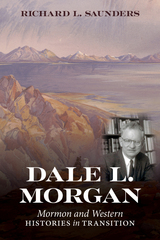
This is the first biography of Dale L. Morgan, preeminent Western historian of the fur trade, historic trails, and the Latter Day Saint movement. The book explores how, despite personal struggles, Morgan committed his life to tracking down sources and interpreting the past on the strength of documentary evidence. Connecting Morgan’s life with some of the broad cultural changes that shaped his experiences, this book engages with methodological shifts in the historical profession, the mid-twentieth-century collision of interpretations within Latter Day Saint history, and the development of a descriptive, scholarly approach to that history.
Morgan’s body of work and commitment to serious scholarship signaled the start of new ways of understanding, studying, and retelling history, and he motivated a generation of historians from the 1930s to the 1970s to transform their historical approaches. Sounding board, mentor, and close friend to Nels Anderson, Fawn Brodie, Juanita Brooks, Bernard DeVoto, Wallace Stegner, and Leonard Arrington, Dale Morgan is the common factor linking this influential generation of mid-twentieth-century historians of western America.
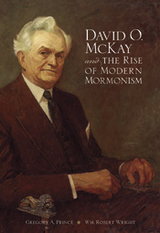
Ordained as an apostle in 1906, David O. McKay served as president of the Church of Jesus Christ of Latter-day Saints from 1951 until his death in 1970. Under his leadership, the church experienced unparalleled growth—nearly tripling in total membership—and becoming a significant presence throughout the world.
The first book to draw upon the David O. McKay Papers at the J. Willard Marriott Library at the University of Utah, in addition to some two hundred interviews conducted by the authors, David O. McKay and the Rise of Modern Mormonism focuses primarily on the years of McKay's presidency. During some of the most turbulent times in American and world history, McKay navigated the church through uncharted waters as it faced the challenges of worldwide growth in an age of communism, the civil rights movement, and ecumenism. Gregory Prince and Robert Wright have compiled a thorough history of the presidency of a much-loved prophet who left a lasting legacy within the LDS Church.
Winner of the Evans Handcart Award.
Winner of the Mormon History Association Turner-Bergera Best Biography Award.
As a social institution, Mormonism is shaped around cultural notions, systems, and ideas that have currency in the United States but make less sense beyond the land of its genesis. Even as an avowedly international religion some 183 years out from its inception, it makes few allowances for diverse international contexts, with Salt Lake City prescribing programs, policies, curricula, leadership, and edicts for the church’s international regions. While Mormonism’s greatest strength is its organizational coherence, there is also a cost paid for those at the church’s peripheries.
Decolonizing Mormonism brings together the work of 15 scholars from around the globe who critically reflect on global Mormon experiences and American-Mormon cultural imperialism. Indigenous, minority, and Global South Mormons ask in unison: what is the relationship between Mormonism and imperialism and where must the Mormon movement go in order to achieve its long-cherished dream of equality for all in Zion? Their stories are both heartbreaking and heartening and provide a rich resource for thinking about the future of Mormon missiology and the possibilities inherent in the work of Mormon contextual theology.

Laurie Lee Hall’s growing-up years were defined by the conflict between her physical condition as a boy and her inherent identity as a girl. Unable to explain or resolve her gender dysphoria, she committed to living her adult life as a male. She joined the Church of Jesus Christ of Latter-day Saints, eventually becoming chief architect of its temples and an ecclesiastical leader. In her church and community, rigid adherence to gender roles is not only the norm, but the defining issue of a faith that doctrinally declares one’s gender as an “eternal identity.” Against this traditional backdrop, Hall finally received spiritual confirmation and personally accepted that she was transgender and always had been. In this remarkable memoir, Laurie Lee details how she risked everything to live true to her long-suppressed gender identity.
Through the power of lived experience, Laurie Lee’s story affirms the reality of gender identity and the strength and joy of self-acceptance.
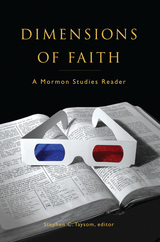
In these seventeen articles on things Mormon—prominent people, religious experience, memory, media, literature, and investigative theory—there is an obvious respect for the past and simultaneous desire to get to the bottom of things, to test the boundaries of knowledge. For instance, Jonathan Stapley and Kristine Wright look at the history of ritual healing within Mormonism, including the use of magic handkerchiefs and blessings performed by women. Matthew Bowman’s essay on “A Mormon Bigfoot” looks at the story retold in Sunday school and elsewhere about an early Church apostle who saw the biblical Cain. Brian Stuy examines Church President Wilford Woodruff’s account of the American founding fathers reaching from beyond the grave—a summons the prophet responded favorably to—requesting temple baptisms on their behalf. Unknown to Woodruff, this ordinance had been performed the year before. And Kathleen Flake looks at how the First Vision and other founding narratives were not emphasized in the Church until the twentieth century.
Other contributors include Gary James Bergera, Martha Bradley, Newell Bringhurst, Samuel Brown, Claudia Bushman, Brian Cannon, Douglas Davies, Rebecca de Schweinitz, Lawrence Foster, Reinhold Hill, and Jacob Olmstead.
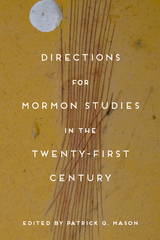
In previously unpublished essays, the volume’s distinguished authors offer new insights on a number of essential themes: a (re)assessment of twentieth-century Mormonism; the dynamic interplay of Mormonism’s American roots with its international expansion and encounter with global diversity; the ways Mormonism has shaped and been shaped by modern theories and discourses of race; new modes of thinking about the individual Mormon subject; and reflections on theory and method in Mormon studies. These essays display Mormon studies in its emergent interdisciplinarity, with contributions from religious studies, history, economics, literary criticism, sociology, and anthropology. Simultaneously erudite and accessible, the collection will help readers ask new questions and discover new answers.
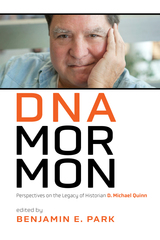
This compilation is a rigorous and riveting assessment of Quinn’s legacy. In this volume, scholars examine him as a historical figure who helps us better understand modern Mormonism. They also probe his role as a historiographical titan. These essays enable us to analyze his influence on scholarship that both preceded and followed him. More than an investigation into his life and work, DNA Mormon uncovers the world in which he lived.
READERS
Browse our collection.
PUBLISHERS
See BiblioVault's publisher services.
STUDENT SERVICES
Files for college accessibility offices.
RECENTLY PUBLISHED


UChicago Accessibility Resources
home | accessibility | search | about | contact us
BiblioVault ® 2001 - 2026
The University of Chicago Press