 A SCHOLARLY BOOK REPOSITORY
5 start with J start with J


Incisive and illuminating, Joseph Fielding Smith examines the worldview and development of an influential theologian and his place in American religious and intellectual history.
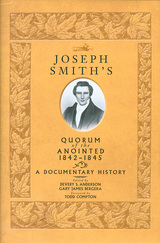
Preparations to initiate the first members of Joseph Smith’s Quorum of the Anointed, or Holy Order, as it was also known, were made on May 3, 1842. The walls of the second level of the Red Brick Store were painted with garden-themed murals, the rooms fitted with carpets, potted plants, and a veil hung from the ceiling. All the while, the ground level continued to operate as Joseph Smith’s general mercantile.
In this companion volume to The Nauvoo Endowment Companies and The Development of LDS Temple Worship, 1846-2000: A Documentary History, the editors have assembled all available primary references to the Anointed Quorum and its regular gatherings, both in the Red Brick Store and elsewhere (women were initially washed and anointed in Emma Smith’s bedroom and then escorted to the store) prior to the opening of the Nauvoo Temple. The sources include excerpts from the diaries of William Clayton, Joseph Fielding, Zina D. H. Jacobs, Heber C. Kimball, John Taylor, Willard Richards, George A. Smith, Joseph Smith, Wilford Woodruff, and Brigham Young; autobiographies and reminiscences by Joseph C. Kingsbury, George Miller, and Mercy Fielding Thompson; letters from Vilate Kimball and Lucius N. Scoville; the Manuscript History of Brigham Young; General Record of the Seventies, Book B; Bathsheba W. Smith’s unedited testimony from the 1892 Temple Lot Case; other manuscripts such as the Historian’s Office Journal and “Meetings of Anointed Quorum”; and published records such as the History of the Church, Latter Day Saints’ Messenger and Advocate and Times and Seasons.
from the jacket flap:
Despite the secrecy imposed upon members of the Anointed Quorum, word of the gatherings above Joseph Smith’s store soon spread. In one instance, housekeeper Maria Jane Johnston helped prepare the special ceremonial clothing for John Smith to wear at the group’s meetings. In another, Ebenezer Robinson innocently opened the upstairs door at the mercantile and was startled to see church apostle John Taylor in a long white robe and “turban,” carrying a sword. Only Nauvoo’s elite were invited to participate in these new ceremonies?never more than ninety individuals and even fewer during Joseph Smith’s lifetime?and, as the editors of the current volume write, only those who had been introduced to the prophet’s doctrine of plural marriage.
An unusual aspect of the Quorum of the Anointed, compared to the membership in the Nauvoo Masonic Lodge, was that women were initiated as regular members. However, the women effectively disappear after Brigham Young’s assumption of leadership in 1844, following Joseph Smith’s death, and remain virtually absent until the Nauvoo Temple is completed nearly a year and a half later. Readers will also note some of the differences in protocol between what Smith instigated and what Young eventually settled on, for instance that members could be washed and anointed repeatedly but were “endowed” only once. There were not yet proxy ordinances.
Among Latter-day Saints today, temple worship is a sensitive topic; but the editors of this volume do not reveal anything that would be considered invasive or indelicate. In fact, the accounts, which come almost exclusively from the early LDS leadership itself, manifest discretion about what to report.
Never before have these primary, authoritative sources been correlated by date for comparison and fuller understanding of the gradual development of the temple ceremonies. Readers may find an added benefit in discovering some of their own ancestors’ names included in these records; but in fact, anyone interested in LDS temple worship will find this compilation of primary documents to be invaluable.
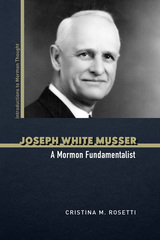
Musser’s devotion to Joseph Smith’s vision and the faith’s foundational texts reflected a widespread uneasiness with, and reaction against, changes taking place across society. Rosetti analyzes how Musser’s writing and thought knit a disparate group of outcast LDS believers into a movement. She also places Musser’s eventful life against the backdrop of a difficult period in LDS history, when the Church strained to disentangle itself from plural marriage and leaders like Musser emerged to help dissident members make sense of their lives outside the mainstream.
The first book-length account of the Mormon thinker, Joseph White Musser reveals the figure whose teachings helped mold a movement.
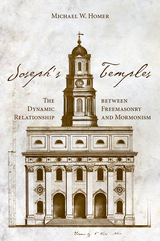
There are indications that Freemasonry was a pervasive foundational element in Mormonism and that its rituals and origin legends influenced not just the secret ceremonies of the LDS temples but also such important matters as the organization of the Mormon priesthood, the foundation of the women’s Relief Society, the introduction and concealment of polygamy, and the church’s position on African Americans’ full membership. Freemasonry was also an important facet of Mormons’ relations with broader American society.
The two movements intertwined within a historical context of early American intellectual, social, and religious ferment, which influenced each of them and in varying times and situations placed them either in the current or against the flow of mainstream American culture and politics. Joseph’s Temples provides a comprehensive examination of a dynamic relationship and makes a significant contribution to the history of Mormonism, Freemasonry, and their places in American history.
Recipient of the Meritorious Book Award from the Utah Division of State History
READERS
Browse our collection.
PUBLISHERS
See BiblioVault's publisher services.
STUDENT SERVICES
Files for college accessibility offices.
RECENTLY PUBLISHED



UChicago Accessibility Resources
home | accessibility | search | about | contact us
BiblioVault ® 2001 - 2026
The University of Chicago Press