
 A SCHOLARLY BOOK REPOSITORY
9 start with A start with A
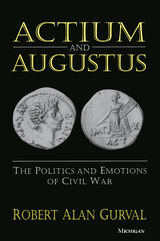
Actium and Augustus marks a turning point as well. Robert Alan Gurval's unusual approach is to examine contemporary views of the battle and its immediate political and social consequences. He starts with a consideration of the official celebration and public commemoration of the Actian victory and then moves on to other questions. What were the "Actian" monuments that Octavian erected on the battle site and later in Rome? What role did the Actian victory play in the political formation of the Principate and its public ideology? What was the response of contemporary poetry? Throughout, this volume concentrates on contemporary views of Actium and its results.
Written to include the general reader, Actium and Augustus presents a thoughtful examination of a complex period. All Greek and Latin quotations are translated, and extensive illustrations present graphic evidence about the issues Romans faced.
Robert Alan Gurval is Associate Professor of Classics, University of California, Los Angeles, and has been a recipient of the Rome Prize awarded by the American Academy in Rome.
Despite the dramatic economic growth and rise in income levels, questions remain as to the general quality of life during this era. Was the improvement in income widely shared? How did economic growth affect the nature of work? Did higher levels of income lead to improved health and longevity? The authors address these questions by analyzing new estimates of labor force participation, real wages, and productivity, as well as of the distribution of income, height, and nutrition.
“The ghosts of the Civil War never leave us, as David Blight knows perhaps better than anyone, and in this superb book he masterfully unites two distant but inextricably bound events.”―Ken Burns
Standing on the steps of the Lincoln Memorial on August 28, 1963, a century after the signing of the Emancipation Proclamation, Martin Luther King, Jr., declared, “One hundred years later, the Negro still is not free.” He delivered this speech just three years after the Virginia Civil War Commission published a guide proclaiming that “the Centennial is no time for finding fault or placing blame or fighting the issues all over again.”
David Blight takes his readers back to the centennial celebration to determine how Americans then made sense of the suffering, loss, and liberation that had wracked the United States a century earlier. Amid cold war politics and civil rights protest, four of America’s most incisive writers explored the gulf between remembrance and reality. Robert Penn Warren, the southern-reared poet-novelist who recanted his support of segregation; Bruce Catton, the journalist and U.S. Navy officer who became a popular Civil War historian; Edmund Wilson, the century’s preeminent literary critic; and James Baldwin, the searing African-American essayist and activist—each exposed America’s triumphalist memory of the war. And each, in his own way, demanded a reckoning with the tragic consequences it spawned.
Blight illuminates not only mid-twentieth-century America’s sense of itself but also the dynamic, ever-changing nature of Civil War memory. On the eve of the 150th anniversary of the war, we have an invaluable perspective on how this conflict continues to shape the country’s political debates, national identity, and sense of purpose.
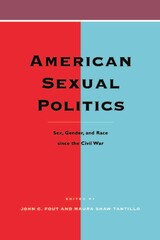
Included are Anthony S. Parent, Jr., and Susan Brown Wallace on childhood and sexual identity under slavery; Martha Hodes on white women and Black men in the South; Kevin J. Mumford on male sexual impotence and Victorian Culture; Jesse F. Battan on language, authority, and sexual desire; Joan Smith Iversen on the antipolygamy controversy, 1880-1890; Angus McLaren on sex radicalism in the Canadian Pacific Northwest, 1890-1920; Pamela S. Haag on ideologies of love, modern romance, and women's sexual subjectivity; Ann duCille on the novels of Jessie Fauset and Nella Larsen; Robyn Wiegman on the anatomy of lynching; Sonya Michel on sexuality in postwar films; Carole Joffe on abortion before legalization; Roy Cain on disclosure and secrecy among gay men; Joshua Gamson on condoms; Lillian Faderman on the return of butch and femme; Katherine Cummings on teaching AIDS; and Arthur Flannigan-Saint-Aubin on "black gay male" discourse.
This diverse overview of American sexual politics will interest students and scholars of the history of sexuality, gender studies, women's studies, and gay studies.
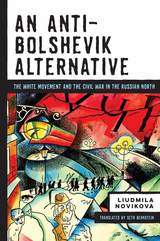
Novikova draws on declassified archives and sources in both Russia and the West to reveal the White movement in the North as a complex social and political phenomenon with a distinct regional context. She documents the politics of the Northern Government and its relations with the British and American forces who had occupied the ports of Murmansk and Arkhangelsk at the end of World War I. As the civil war continued, the increasing involvement of the local population transformed the conflict into a ferocious "people's war" until remaining White forces under General Evgenii Miller evacuated the region in February 1920.
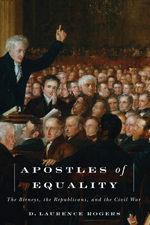
The first biographical account of the life of James Gillespie Birney in more than fifty years, this fabulously insightful history illuminates and elevates an all-but-forgotten figure whose political career contributed mightily to the American political fabric. Birney was a southern-born politician at the heart of the antislavery movement, with two southern-born sons who were major generals involved in key Union Army activities, including the leadership of the black troops. The interaction of the Birneys with historical figures (Abraham Lincoln, Harriet Beecher Stowe, and Henry Clay) highlights the significance of the family’s activities in politics and war. D. Laurence Rogers offers a unique historiography of the abolition movement, the Civil War, and Reconstruction through the experiences of one family navigating momentous developments from the founding of the Republic until the late 19th century.
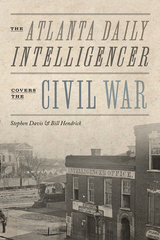
Confederate newspapers were beset by troubles: paper shortages, high ink prices, printers striking for higher pay, faulty telegraphic news service, and subscription prices insufficient to support their operations. But they also had the potential to be politically powerful, and their reporting of information—accurate or biased—shaped perceptions of the Civil War and its trajectory.
The Atlanta Daily Intelligencer Covers the Civil War investigates how Atlanta’s most important newspaper reported the Civil War in its news articles, editorial columns, and related items in its issues from April 1861 to April 1865. The authors show how The Intelligencer narrated the war’s important events based on the news it received, at what points the paper (and the Confederate press, generally) got the facts right or wrong based on the authors’ original research on the literature, and how the paper’s editorial columns reflected on those events from an unabashedly pro-Confederate point of view.
While their book focuses on The Intelligencer, Stephen Davis and Bill Hendrick also contribute to the scholarship on Confederate newspapers, emphasizing the papers’ role as voices of Confederate patriotism, Southern nationalism, and contributors to wartime public morale. Their well-documented, detailed study adds to our understanding of the relationship between public opinion and misleading propaganda
READERS
Browse our collection.
PUBLISHERS
See BiblioVault's publisher services.
STUDENT SERVICES
Files for college accessibility offices.
RECENTLY PUBLISHED


UChicago Accessibility Resources
home | accessibility | search | about | contact us
BiblioVault ® 2001 - 2024
The University of Chicago Press