
 A SCHOLARLY BOOK REPOSITORY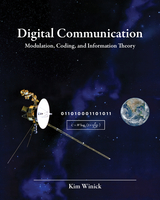
Kim A. Winick is Professor Emeritus of Electrical Engineering and Computer Science at the University of Michigan-Ann Arbor. His research interests include glass and crystal integrated optics, atmospheric optics, quantum optics, digital communication, and information theory.
His research group, together with his collaborators, was one of the first to refine and apply a technique using ultrafast laser pulses to fabricate optical devices, a technology which was subsequently widely adopted by others. His group is also known for its work on rare earth-doped integrated optical devices and ion-exchange.
Dr. Winick received his Ph.D. degree from the University of Michigan in 1981. He was a member of the technical staff at the Massachusetts Institute of Technology from 1981-1988, where he worked on microwave and optical satellite communication systems before returning to the University of Michigan as a faculty member in 1988. He is a Fellow of the Optical Society of America (now Optica) and served as an Associate Editor of Optics Letters from 2004-2007. He received the University of Michigan Department of Electrical Engineering and Computer Science Teaching Excellence Award in 1997.

Russia has deployed cyber operations to interfere in foreign elections, launch disinformation campaigns, and cripple neighboring states—all while maintaining a thin veneer of deniability and avoiding strikes that cross the line into acts of war. How should a targeted nation respond? In Russian Cyber Operations, Scott Jasper dives into the legal and technical maneuvers of Russian cyber strategies, proposing that nations develop solutions for resilience to withstand future attacks.
Jasper examines the place of cyber operations within Russia’s asymmetric arsenal and its use of hybrid and information warfare, considering examples from French and US presidential elections and the 2017 NotPetya mock ransomware attack, among others. A new preface to the paperback edition puts events since 2020 into context. Jasper shows that the international effort to counter these operations through sanctions and indictments has done little to alter Moscow’s behavior. Jasper instead proposes that nations use data correlation technologies in an integrated security platform to establish a more resilient defense.
Russian Cyber Operations provides a critical framework for determining whether Russian cyber campaigns and incidents rise to the level of armed conflict or operate at a lower level as a component of competition. Jasper’s work offers the national security community a robust plan of action critical to effectively mounting a durable defense against Russian cyber campaigns.
READERS
Browse our collection.
PUBLISHERS
See BiblioVault's publisher services.
STUDENT SERVICES
Files for college accessibility offices.
RECENTLY PUBLISHED






UChicago Accessibility Resources
home | accessibility | search | about | contact us
BiblioVault ® 2001 - 2026
The University of Chicago Press