
 A SCHOLARLY BOOK REPOSITORY
10 start with A start with A
American methods of policy implementation and dispute resolution are more adversarial and legalistic when compared with the systems of other economically advanced countries. Americans more often rely on legal threats and lawsuits. American laws are generally more complicated and prescriptive, adjudication more costly, and penalties more severe. In a thoughtful and cogently argued book, Robert Kagan examines the origins and consequences of this system of "adversarial legalism."
Kagan describes the roots of adversarial legalism and the deep connections it has with American political institutions and values. He investigates its social costs as well as the extent to which lawyers perpetuate it. Ranging widely across many legal fields, including criminal law, environmental regulations, tort law, and social insurance programs, he provides comparisons with the legal and regulatory systems of western Europe, Canada, and Japan that point to possible alternatives to the American methods.
Kagan notes that while adversarial legalism has many virtues, its costs and unpredictability often alienate citizens from the law and frustrate the quest for justice. This insightful study deepens our understanding of law and its relationship to politics in America and raises valuable questions about the future of the American legal system.
In the first edition of this groundbreaking book, Robert Kagan explained why America is much more adversarial—likely to rely on legal threats and lawsuits—than other economically advanced countries, with more prescriptive laws, more costly adjudications, and more severe penalties. This updated edition also addresses the rise of the conservative legal movement and anti-statism in the Republican party, which have put in sharp relief the virtues of adversarial legalism in its ability to empower citizens, lawyers, and judges to mount challenges to the arbitrary or unlawful exercise of government authority.
“This is a wonderful piece of work, richly detailed and beautifully written. It is the best, sanest, and most comprehensive evaluation and critique of the American way of law that I have seen. Every serious scholar concerned with justice and efficiency, and every policymaker who is serious about improving the American legal order, should read this trenchant and exciting book.”
—Lawrence Friedman, Stanford University
“A tour de force. It is an elegantly written, consistently insightful analysis and critique of the American emphasis on litigation and punitive sanctions in the policy and administrative process.”
—Charles R. Epp, Law and Society Review
A Foreign Affairs Best Book of the Year
“An intellectual excursion of a kind rarely offered by modern economics.”
—Foreign Affairs
Thomas Piketty’s Capital in the Twenty-First Century is the most widely discussed work of economics in recent years. But are its analyses of inequality and economic growth on target? Where should researchers go from there in exploring the ideas Piketty pushed to the forefront of global conversation? A cast of leading economists and other social scientists—including Emmanuel Saez, Branko Milanovic, Laura Tyson, and Michael Spence—tackle these questions in dialogue with Piketty.
“A fantastic introduction to Piketty’s main argument in Capital, and to some of the main criticisms, including doubt that his key equation…showing that returns on capital grow faster than the economy—will hold true in the long run.”
—Nature
“Piketty’s work…laid bare just how ill-equipped our existing frameworks are for understanding, predicting, and changing inequality. This extraordinary collection shows that our most nimble social scientists are responding to the challenge.”
—Justin Wolfers, University of Michigan
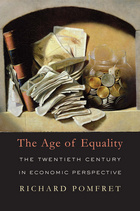
In 1900 the global average life expectancy at birth was thirty-one years. By 2000 it was sixty-six. Yet, alongside unprecedented improvements in longevity and material well-being, the twentieth century also saw the rise of fascism and communism and a second world war followed by a cold war. This book tells the story of the battles between economic systems that defined the last century and created today's world.
The nineteenth century was a period of rapid economic growth characterized by relatively open markets and more personal liberty, but it also brought great inequality within and between nations. The following century offered sharp challenges to free-wheeling capitalism from both communism and fascism, whose competing visions of planned economic development attracted millions of people buffeted by the economic storms of the 1930s. The Age of Equality describes the ways in which market-oriented economies eventually overcame the threat of these visions and provided a blueprint for reform in nonmarket economies. This was achieved not through unbridled capitalism but by combining the efficiency and growth potential of markets with government policies to promote greater equality of opportunity and outcome. Following on the heels of economic reform, rapid catch-up growth in countries such as China, India, Indonesia, Brazil, and Poland helped to reduce global inequality.
At a time when inequality is on the rise in nations as disparate as the United States and Egypt, Pomfret’s interpretation of how governments of market economies faced the challenges of the twentieth century is both instructive and cautionary.



The volume begins with a discussion of the risks and merits of 401(k) plans. Subsequent chapters present recent analysis of the growth of Medicare costs; the different aspects of disability; and the evolution of health, wealth, and living arrangements over the life course. Keeping with the global tradition of previous volumes, Analyses in the Economics of Aging also includes comparative studies on savings behavior in Italy, the Netherlands, and the United States; an examination of household savings among different age groups in Germany; and a chapter devoted to population aging and the plight of widows in India.
Carefully compiled and containing some of the most cutting-edge research and analysis available, this volume should be of interest to any specialist or policymaker concerned with ongoing changes in savings and retirement behaviors.

In the midst of global recession, angry citizens and media pundits often offer simplistic theories about how bad decisions lead to crises. Many economists, however, base their analyses on rational choice theory, which assumes that decisions are made by well-informed, intelligent people who weigh risks, costs, and benefits. Taking a more realistic approach, the field of anthropology carefully looks at the underlying causes of choices at different times and places.
Using case studies of choices by farmers, artisans, and bureaucrats drawn from Michael Chibnik's research in Mexico, Peru, Belize, and the United States, Anthropology, Economics, and Choice presents a clear-eyed perspective on human actions and their economic consequences. Five key issues are explored in-depth: choices between paid and unpaid work; ways people deal with risk and uncertainty; how individuals decide whether to cooperate; the extent to which households can be regarded as decision-making units; and the "tragedy of the commons," the theory that social chaos may result from unrestricted access to commonly owned property.
Both an accessible primer and an innovative exploration of economic anthropology, this interdisciplinary work brings fresh insight to a timely topic.
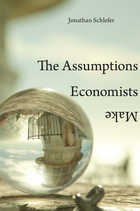
Economists make confident assertions in op-ed columns and on cable news—so why are their explanations often at odds with equally confident assertions from other economists? And why are all economic predictions so rarely borne out? Harnessing his frustration with these contradictions, Jonathan Schlefer set out to investigate how economists arrive at their opinions.
“A lucid, plain-spoken account of the major economic models, which [Schlefer] introduces in chronological order, creating a kind of intellectual history of macroeconomics. He explains what the models assume, what they actually demonstrate—and where they fall short.”
—Binyamin Applebaum, New York Times blog
“Fascinating...[Schlefer’s] book is a tough critique of economics, but a deeply informed and sympathetic one.”
—Justin Fox, Harvard Business Review blog
“This book is an impressive and informative analysis of the economics literature—and it presents some useful insights about how a more eclectic, catholic approach might allow economics to progress more convincingly into the future.”
—Michelle Baddeley, Times Higher Education
“The Assumptions Economists make [is] a knowledgeable...broadside against neoclassical economics...Schlefer’s gripes concern model-building run amok...His criticisms of these models are original and sophisticated.”
—Christopher Caldwell, Literary Review

With The Atlantic Divide in Antitrust, Daniel J. Gifford and Robert T. Kudrle explore many of the main contested areas of contemporary antitrust, including mergers, price discrimination, predatory pricing, and intellectual property. After identifying how prevailing analyses differ across these areas, they then examine the policy ramifications. Several themes run throughout the book, including differences in the amount of discretion firms have in dealing with purchasers, the weight given to the welfare of various market participants, and whether competition tends to be viewed as an efficiency-generating process or as rivalry. The authors conclude with forecasts and suggestions for how greater compatibility might ultimately be attained.
READERS
Browse our collection.
PUBLISHERS
See BiblioVault's publisher services.
STUDENT SERVICES
Files for college accessibility offices.
RECENTLY PUBLISHED





UChicago Accessibility Resources
home | accessibility | search | about | contact us
BiblioVault ® 2001 - 2024
The University of Chicago Press