
 A SCHOLARLY BOOK REPOSITORY
But who is the man behind the words? How did he arrive at his profound and poetic insights, inspiring generations of environmentalists? Building on past scholarship and a fresh study of Leopold's unpublished archival materials, Julianne Lutz Newton retraces the intellectual journey generated by such passion and intelligence.
Aldo Leopold's Odyssey illuminates his lifelong quest for answers to a fundamental issue: how can people live prosperously on the land and keep it healthy, too? Leopold's journey took him from Iowa to Yale to the Southwest to Wisconsin, with fascinating stops along the way to probe the causes of early land settlement failures, contribute to the emerging science of ecology, and craft a new vision for land use.
More than a biography, this articulate volume is a guide to one man's intellectual growth, and an inspirational resource for anyone pondering the relationships between people and the land.
A decade later, as our very concept of wilderness is changing, Warren frames Leopold’s work in the context of the Anthropocene. With a new preface and foreword by Bill McKibben, the book underscores the ever-growing importance of Leopold’s ideas in an increasingly human-dominated landscape.
Drawing on unpublished archives, Warren traces Leopold’s quest to define and preserve land health. Leopold's journey took him from Iowa to Yale to the Southwest to Wisconsin, with fascinating stops along the way to probe the causes of early land settlement failures, contribute to the emerging science of ecology, and craft a new vision for land use.
Leopold’s life was dedicated to one fundamental dilemma: how can people live prosperously on the land and keep it healthy, too? For anyone compelled by this question, the Tenth Anniversary Edition of Aldo Leopold’s Odyssey offers insight and inspiration.
John Muir and His Legacy is at once a biography of this remarkable man—the first work to make unrestricted use of all of Muir’s manuscripts and personal papers—and a history of the century-old fight to save the natural environment. Stephen Fox traces the conservation movement's diverse, colorful, and tumultuous history, from the successful campaign to establish Yosemite National Park in 1890 to the movement's present day concerns of nuclear waste and acid rain.
Conservation has run a cyclical course, Fox contends, from its origins in the 1890s when it was the province of amateurs, to its takeover by professionals with quasi-scientific notions, and back, in the 1960s to its original impetus. Since then man’s view of himself as “the last endangered species” has sparked an explosion of public interest in environmentalism.
First published in 1981 by Little, Brown, this book was warmly received as both a biography of Muir and a history of the American conservation movement. It is now available in this new Wisconsin paperback edition.
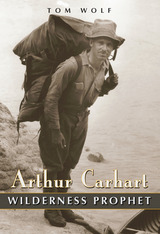
Arthur Carhart, the first biography of this Republican environmentalist and major American thinker, writer, and activist, reveals the currency of his ideas. Tom Wolf elucidates Carhart 's vision of conservation as "a job for all of us," with citizens, municipal authorities, and national leaders all responsible for the environmental effects of their decisions. Carhart loved the local and decried interest groups - from stockmens' associations to wilderness lobbies - as cliques attempting blanket control. He pressured land management agencies to base decisions on local ecology and local partnerships. A lifelong wilderness advocate who proposed the first wilderness preserve at Trappers Lake, Colorado, in 1919, Carhart chose to oppose the Wilderness Act, heartsick at its compromises with lobbies.
Because he shifted his stance and changed his views in response to new information, Carhart is not an easy subject for a biography. Wolf traces Carhart's twists and turns to show a man whose voice was distinctive and contrary, who spoke from a passionate concern for the land and couldn't be counted on for anything else. Readers of American history and outdoor writing will enjoy this portrait of a historic era in conservation politics and the man who so often eschewed politics in favor of the land and people he loved.
Written when Grange was in his sixties, As the Twig Is Bent conveys how a leading conservationist was formed through his early relationship to nature. In beautifully composed vignettes, he details encounters both profound and minute, from the white-footed mice attracted by cookie crumbs in his boyhood clubhouse to the sounds of great horned owls echoing through the wintry woods. As he develops his own understanding of the natural world, he comes to an awareness of the dramatic and devastating role of humankind on ecosystems. Grange’s poignant observations still resonate today amid global conversations about the fate of our natural resources and climate change.
Winner of the Wallace Stegner Prize in American Environmental or Western History
Fredrick Swanson tells the story of Guy M. Brandborg and his impact on the practices of the U.S. Forest Service. As supervisor of Montana’s Bitterroot National Forest from 1935 to 1955, Brandborg engaged in a management style that promoted not only the well-being of the forest community but also the social and economic welfare of the local people. By relying on selective cutting, his goal was to protect the watersheds and wildlife habitats that are devastated by clear-cutting, and to prevent the job losses that follow such practices. Following his retirement, he became concerned that his agency was deviating from the practice of sustained-yield management of the forest’s timber lands, and led a highly visible public outcry that became known as the Bitterroot controversy. Brandborg’s behind-the-scenes lobbying contributed materially to the passage of the National Forest Management Act of 1976, the single most important law affecting public forestry since the creation of the Forest Service.
Winner of the Western Writers of America Spur Award for Best Western Nonfiction-Contemporary.
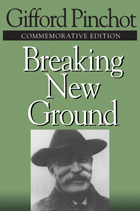
Vigorous, colorful, bold and highly personal, Breaking New Ground is the autobiography of Gifford Pinchot, founder and first chief of the Forest Service. He tells a fascinating tale of his efforts, under President Theodore Roosevelt, to wrest the forests from economic special interests and to bring them under management for multiple- and long-range use. His philosophy of "the greatest good for the greatest number over the longest time" has become the foundation upon which this country's conservation policy is based.
In a new introduction for this special commemorative edition, Char Miller of Trinity University and V. Alaric Sample of the Pinchot Institute for Conservation trace the evolution of Gifford Pinchot's career in the context of his personal life and the social and environmental issues of his time. They illuminate the courage and vision of the man whose leadership is central to the development of the profession of forestry in the United States. Breaking New Ground is essential reading for anyone interested in understanding the basis of our present national forest policy, and the origins of the conservation movement.
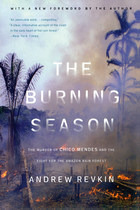
"In the rain forests of the western Amazon," writes author Andrew Revkin, "the threat of violent death hangs in the air like mist after a tropical rain. It is simply a part of the ecosystem, just like the scorpions and snakes cached in the leafy canopy that floats over the forest floor like a seamless green circus tent."
Violent death came to Chico Mendes in the Amazon rain forest on December 22, 1988. A labor and environmental activist, Mendes was gunned down by powerful ranchers for organizing resistance to the wholesale burning of the forest. He was a target because he had convinced the government to take back land ranchers had stolen at gunpoint or through graft and then to transform it into "extractive reserves," set aside for the sustainable production of rubber, nuts, and other goods harvested from the living forest.
This was not just a local land battle on a remote frontier. Mendes had invented a kind of reverse globalization, creating alliances between his grassroots campaign and the global environmental movement. Some 500 similar killings had gone unprosecuted, but this case would be different. Under international pressure, for the first time Brazilian officials were forced to seek, capture, and try not only an Amazon gunman but the person who ordered the killing.
In this reissue of the environmental classic The Burning Season, with a new introduction by the author, Andrew Revkin artfully interweaves the moving story of Mendes's struggle with the broader natural and human history of the world's largest tropical rain forest. "It became clear," writes Revkin, acclaimed science reporter for The New York Times, "that the murder was a microcosm of the larger crime: the unbridled destruction of the last great reservoir of biological diversity on Earth." In his life and untimely death, Mendes forever altered the course of development in the Amazon, and he has since become a model for environmental campaigners everywhere.
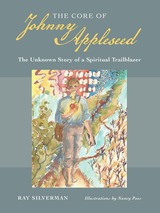
Recent biographies of John Chapman, better known as Johnny Appleseed, have portrayed him as anything from a schizophrenic wandering ascetic to a hedonistic pleasure-seeker. But who was the real man behind the misconceptions?
In this spiritual biography, Ray Silverman explores the stories and the popular misconceptions about Johnny Appleseed as well as the truths behind the legends. As a businessman, Chapman owned nineteen nurseries and twenty other land holdings throughout Pennsylvania, Ohio, and Indiana, brokering deals that belie the popular image of him as a wandering nomad with a tin pot on his head. But it is only once we talk about Chapman’s spiritual convictions that we come to the core of who he was: a thoughtful and also joyful Christian who was deeply moved by the writings of Emanuel Swedenborg.
The picture that emerges is of a lighthearted person whose convictions led him to seek harmony not only in nature but in the spiritual realms also—and to share his bounty with as many people as he could.

This beautifully illustrated, comprehensive guide explains how to design creative, yet practical, landscapes that treat on-site stormwater management as an opportunity to enhance site design. Artful Rainwater Design has three main parts: first, the book outlines five amenity-focused goals that might be highlighted in a project: education, recreation, safety, public relations, and aesthetic appeal. Next, it focuses on techniques for ecologically sustainable stormwater management that complement the amenity goals. Finally, it features diverse case studies that show how designers around the country are implementing principles of artful rainwater design.
Artful Rainwater Design is a must-have resource for landscape architects, urban designers, civil engineers, and architects who won't let stormwater regulations cramp their style, and who understand that for a design to truly be sustainable, people must appreciate and love it. It is a tool for creating landscapes that celebrate rain for the life-giving resource it is— and contribute to more sustainable, healthy, and even fun, built environments.

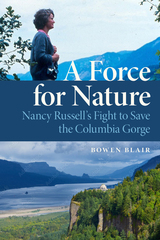
The 85-mile-long Columbia Gorge forms part of the border between Oregon and Washington and is one of the nation’s most historic and scenic landscapes. Many of the region’s cultural divisions boil over here—urban versus rural, west of the mountains versus east—as well as clashes over private property rights, management of public lands, and tribal treaty rights.
In the early 1980s, as a new interstate bridge linked the City of Portland to rural counties in Washington, the Gorge’s renowned vistas were on the brink of destruction. Nancy Russell, forty-eight years old and with no experience in advocacy, fundraising, or politics, built a grassroots movement that overcame 70 years of failed efforts and bitter opposition from both Oregon and Washington governors, five of the six Gorge counties, 41,000 Gorge residents, and the Reagan administration. While building her campaign, Russell stopped subdivisions, factories, and government neglect through litigation brought by her organization, Friends of the Columbia Gorge, and last-second land purchases by the Trust for Public Land (TPL). Initially ignored, then demonized, Russell’s tires were slashed and her life threatened.
The Columbia River Gorge National Scenic Area Act barely passed—on the last day of the congressional session in 1986—and was signed by a reluctant President Reagan hours before the bill would die. Russell positioned the Friends to be a watchdog and orchestrated the purchase of thousands of acres of land for the public. Bowen Blair, an attorney, former executive director of Friends of the Columbia Gorge, and TPL senior vice president, brings an insider’s perspective to the tumultuous and inspiring story of this conservation battle.
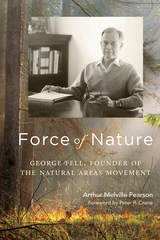
Efforts to preserve wild places in the United States began with the allure of scenic grandeur: Yosemite, Yellowstone, the Grand Canyon. But what about the many significant natural sites too small or fragile to qualify as state or federal parks? Force of Nature reveals how George Fell initiated the natural areas movement to save those areas. Fell transformed a loose band of ecologists into The Nature Conservancy, drove the passage of the influential Illinois Nature Preserves Act, and helped spark allied local and national conservation organizations in the United States and beyond.
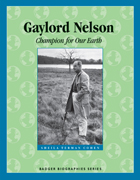
Born in Clear Lake, Wisconsin, in 1916, Gaylord grew up as immersed in his parents' political work and community service as he was in playing practical jokes and exploring the natural world surrounding his home town. Along the way he encountered experiences that would shape him in fundamental ways: as a man who stood up for what he believed in the face of opposition and yet who also understood how to treat his opponents with respect. Both traits would serve him well as he rose from law student to state senator to Wisconsin governor and finally to three terms as a United States Senator.
Nelson fought to treat all races equally and to condemn McCarthy-era paranoia, but his greatest contribution was to sound the alarm about another battle: the fight to save the natural world and the earth itself. It was his idea to use teach-ins to let people know that the environment needed their help. Thanks to him, more natural resources were conserved and new laws demanded clean air and water. Now, every year on April 22, people all over the world plant trees and pick up litter to celebrate Earth Day. The Earth and its inhabitants aren't safe yet, but Gaylord Nelson demonstrated that even one person can help to save the world.
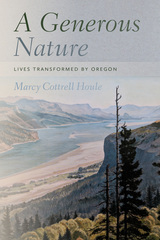
A Generous Nature: Lives Transformed by Oregon offers profiles of twenty-one conservationists and activists who have made enduring contributions to the preservation of Oregon’s wild and natural places and high quality of life. These stories speak to their courage, foresight, and actions—at times against great odds— to enact legislation and motivate others to cherish and protect the places that make Oregon unique.
Taken from personal interviews conducted by the author over a decade, these stories will help readers understand the histories of Oregon’s exceptional places, innovative planning efforts, and laws. They provide insight into the principles and values that motivated individuals to preserve the beauty and natural resources of Oregon, craft legislation to further protect them, and educate others about their value. Houle features locations as diverse as the Columbia River Gorge Natural Scenic Area, the wild and scenic Sandy River, and Tryon Creek State Park, along with background on critical laws and organizations such as the Beach Bill, Diack Act, Senate Bill 100, SOLVE, and the High Desert Partnership.
These stories do more than educate. They will inspire readers and demonstrate that individually we can make a difference. A Generous Nature is a crucial reminder of our responsibility to stand for and defend the places, ideals, and laws that make Oregon a progressive model for the rest of the nation.
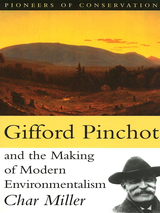
Gifford Pinchot and the Making of Modern Environmentalism, the first new biography in more than three decades, offers a fresh interpretation of the life and work of the famed conservationist and Progressive politician. In addition to considering Gifford Pinchot's role in the environmental movement, historian Char Miller sets forth an engaging description and analysis of the man -- his character, passions, and personality -- and the larger world through which he moved.
Char Miller begins by describing Pinchot's early years and the often overlooked influence of his family and their aspirations for him. He examines Gifford Pinchot's post-graduate education in France and his ensuing efforts in promoting the profession of forestry in the United States and in establishing and running the Forest Service. While Pinchot's twelve years as chief forester (1898-1910) are the ones most historians and biographers focus on, Char Miller also offers an extensive examination of Pinchot's post-federal career as head of The National Conservation Association and as two-term governor of Pennsylvania. In addition, he looks at Pinchot's marriage to feminist Cornelia Bryce and discusses her role in Pinchot's political radicalization throughout the 1920s and 1930s. An epilogue explores Gifford Pinchot's final years and writings.
Char Miller offers a provocative reconsideration of key events in Pinchot's life, including his relationship with friend and mentor John Muir and their famous disagreement over damming Hetch Hetchy Valley. The author brings together insights from cultural and social history and recently discovered primary sources to support a new interpretation of Pinchot -- whose activism not only helped define environmental politics in early twentieth century America but remains strikingly relevant today.
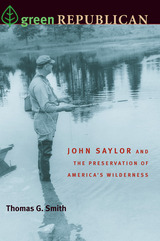
Green Republican chronicles the life of Congressman John Saylor and his personal legacy as an environmental champion. Saylor believed the wilderness was intrinsic to the American experience-that our concepts of democracy, love of country, conservation, and independence were shaped by our wilderness experiences. Through his ardent protection of national parks and diligent work to add new areas to the parks system, Saylor helped propel the American environmental movement in the three decades following Word War II.
At the height of the federal dam-building program in the 1950s and 1960s, Saylor blocked efforts to erect hydroelectric dams whose impounded waters would have invaded Dinosaur National Monument and the Grand Canyon. During the energy crisis of the early 1970s, Saylor denounced attempts to open the Alaska National Wildlife Refuge to oil drilling. He was the House architect of the Wilderness Act of 1964 and the Wild and Scenic Rivers Act of 1968. Because Saylor represented a coal-mining district, he doggedly promoted the use of coal, instead of atomic or hydropower, to generate electricity, and repeatedly won the support of his constituents over thirteen terms between 1949 and 1973. But he also fervently supported legislation to purify the air and water and redeem stripped lands.
Considered both a maverick and a pioneer, John Saylor won respect on both sides of the aisle because he was direct, hardworking, and passionate about conservation at a time when the cause was not popular. Environmental leaders dubbed him “St. John” because he tenaciously advocated their proposals and battled resistance by resource-use proponents.
Based on extensive research and numerous interviews with Saylor's colleagues and members of the conservationist community, Thomas G. Smith assembles the remarkable story of John Saylor, arguably the leading congressional conservationist of the twentieth century, and a major force in the preservation of America's wilderness.
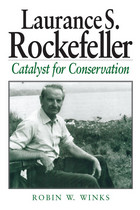
Despite his status as a scion of one of the wealthiest and most famous families in the United States and an enormously successful businessman in his own right, Laurance S. Rockefeller is unknown to all but a small circle of Americans. Yet while he has been neither Vice President nor Governor nor chairman of the world's largest bank, his contribution to society has been at least as great as that of his more famous brothers.
In Laurance S. Rockefeller: Catalyst for Conservation, noted historian Robin W. Winks brings Laurance to the forefront, offering an intimate look at his life and accomplishments. While Rockefeller has played a vital role in the business world as one of the most astute venture capitalists of our time -- providing seed money for, among other endeavors, Eastern Airlines, Intel Corporation, and Apple Computers -- his driving passion throughout his life has been the environment. In addition to the millions of dollars he has donated and the numerous conservation organizations he has helped to found, he served under five consecutive presidents in environmental advisory capacities.
Perhaps most significantly, Rockefeller served under Presidents Eisenhower and Kennedy as chairman of the Outdoor Recreation Resources Review Commission (ORRRC), brilliantly orchestrating an assessment of the recreation and conservation needs and wants of the American people and the policies and programs required to meet those needs. The reports issued by the Commission represent a groundbreaking achievement that laid the framework for nearly all significant environmental legislation of the following three decades.
Winks uses a combination of historical insight and extensive access to Rockefeller and government archives to present the first in-depth examination of Laurance Rockefeller's life and work. His deftly argued and gracefully written volume explains and explores Rockefeller's role in shaping the transition from traditional land conservation to a more inclusive environmentalism. It should compel broader interpretation of the history of environmental protection, and is essential reading for anyone concerned with the past or future of conservation in America.
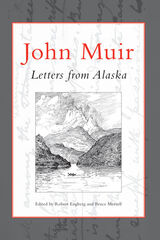
John Muir (1838–1914), founder of the Sierra Club, was one of the most famous and influential environmental conservationists of all time. From 1879 to 1880 Muir traveled the waters of southeastern Alaska in a Tlingit Indian dugout canoe and reported his encounters in a series of letters published in the San Francisco Daily Evening Bulletin. Collected here are Muir’s original letters, bearing the immediacy and candor of his best work and providing a rare account of southeastern Alaska history, alongside breathtaking observations of glaciers and the untamed landscape. Through Muir we encounter gold miners, rogue towns, Taku Inlet, Glacier Bay, profiles of Tlingit Indians, and the infancy of the tourist industry. This collection of work by one of America’s foremost naturalists provides a magnificent look into early conservationist thought and one individual’s encounter with nature.
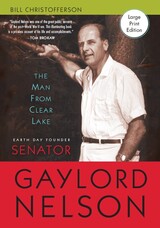
On Earth Day 1970 twenty million Americans displayed their commitment to a clean environment. It was called the largest demonstration in human history, and it permanently changed the nation’s political agenda. By Earth Day 2000 participation had exploded to 500 million people in 167 countries.
The seemingly simple idea—a day set aside to focus on protecting our natural environment—was the brainchild of U.S. Senator Gaylord Nelson of Wisconsin. It accomplished, far beyond his expectations, his lifelong goal of putting the environment onto the nation’s and the world’s political agendas.
A remarkable man, Nelson ranks as one of history’s leading environmentalists. He also played a major role as an early, outspoken opponent of the Vietnam War, and as a senate insider was a key player in civil rights, poverty, civil liberties and consumer protection issues.
The life of Nelson, a small town boy who learned his values and progressive political principles at an early age, is woven through the political history of the twentieth century. Nelson’s story intersects at times with Fighting Bob La Follette, Joe McCarthy, and Bill Proxmire in Wisconsin, and with George McGovern, Lyndon Johnson, Hubert Humphrey, Russell Long, Walter Mondale, John F. Kennedy, and others on the national scene.
Winner, Elizabeth A. Steinberg Prize, University of Wisconsin Press
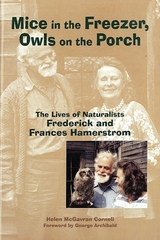
Mice in the Freezer, Owls on the Porch is in many ways a love story—about a quiet scientist and his flamboyant wife, but also about their passions for hunting, for wild lands, and for the grouse and raptor species that they were instrumental in saving from destruction.
From the papers and letters of Frederick and Frances Hamerstrom, the reminiscences of contemporaries, and her own long friendship with this extraordinary couple who were her neighbors, Helen Corneli draws an intimate picture of Fran and "Hammy" from childhood through the genesis and maturation of a romantic, creative, and scientific relationship. Following the Hamerstroms as they give up a life of sophisticated convention and comfort for the more "civilized" (as Aldo Leopold would have it) pleasures of living and conducting on-the-spot research into diminishing species, Corneli captures the spirit of the Hamerstroms, their profession, and the natural and human environments in which they worked. A nuanced account of the labors, adventures, and achievements that distinguished the Hamerstroms over the years—and that inspired a generation of naturalists—this book also provides a dramatic account of conservation history over the course of the twentieth century, particularly in Wisconsin during the eventful years from the 1920s through the 1970s.
In eight engaging and diverse biographies—John Muir, Ding Darling, Aldo Leopold, Rachel Carson, Chico Mendes, Billy Frank Jr., Wangari Maathai, and Gro Harlem Brundtland—we meet individuals who have little in common except that they all made a lasting mark on our world. Some famous and some little known to readers, they spoke out to protect wilderness, wildlife, fisheries, rainforests, and wetlands. They fought for social justice and exposed polluting practices. They marched, wrote books, testified before Congress, performed acts of civil disobedience, and, in one case, were martyred for their defense of nature. Nature’s Allies pays tribute to them all as it rallies a new generation of conservationists to follow in their footsteps.
These vivid biographies are essential reading for anyone who wants to fight for the environment against today’s political opposition. Nature’s Allies will inspire students, conservationists, and nature lovers to speak up for nature and show the power of one person to make a difference.
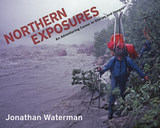
North of the sixtieth parallel, the sun shines for less than six hours in the winter, and towering mountains are the only skyscrapers. Pristine waters serve caribou, moose, and bears in an unbroken landscape. At any given moment in this spectacular scenery, there’s a chance that Jonathan Waterman is present, trekking across the land. A masterful adventurer, Waterman has spent decades exploring the farthest reaches of our beautiful spaces. The essays and photographs collected in Northern Exposures are a product of this passion for exploration and offer an unparalleled view into adventuring in the north and beyond.
Picking up after In the Shadow of Denali, his first book of essays, Northern Exposures collects twenty-three stories from Waterman’s thirty-year career that show the evolution of the adventurer’s career and work, from ducking avalanches near the Gulf of Alaska, to searching for the most pristine tundra on the continent, and from writing haiku on Denali in the depth of winter to decrying oil development in the Arctic National Wildlife Refuge. Ninety-six spectacular photographs taken by Waterman during his expeditions lend a broader context and allow readers to fully understand his heartfelt argument for protecting these places. Whether active, aspiring, or just armchair adventurers, readers will be inspired by Waterman’s daring spirit.
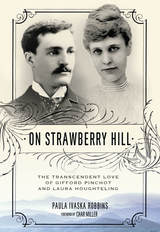
At its core, Paula Ivaska Robbins’s On Strawberry Hill: The Transcendent Love of Gifford Pinchot and Laura Houghteling is a human interest story that cuts a neat slice across nineteenth-century America by bringing into juxtaposition a wide array of topics germane to the period—the national fascination with spiritualism, the death scourge that was tuberculosis, the rise of sanitariums and tourism in the southern highlands, the expansion of railroad travel, the rage for public parklands and playgrounds, and the development of professional forestry and green preservation―all through the very personal love story of two young blue bloods.
Born into a wealthy New York family, Gifford Pinchot (1865–1946) served two terms as Pennsylvania’s governor and was the first chief of the US Forest Service, which today manages 192 million acres across the country. Pinchot also created the Society of American Foresters, the organization that oversees his chosen profession, and the Yale School of Forestry and Environmental Studies, the oldest forestry school in America. Ultimately, he and his friend President Theodore Roosevelt made forestry the focus of a national land conservation movement.
But before these accomplishments, Gifford Pinchot fell in love with Laura Houghteling, daughter of the head of the Chicago Board of Trade, while she recuperated from “consumption” at Strawberry Hill, the family retreat in Asheville, North Carolina. In his twenties at the time and still a budding forester, Pinchot was working just across the French Broad River at George Vanderbilt’s great undertaking, the Biltmore Estate, when the young couple’s relationship blossomed. Although Laura would eventually succumb to the disease, their brief romance left an indelible mark on Gifford, who recorded his ongoing relationship, and mental conversations, with Laura in his daily diary entries long after her death. He steadfastly remained a bachelor for twenty years while accomplishing the major highlights of his career.
This poignant book focuses on that phenomenon of devotion and inspiration, providing a unique window into the private practice of spiritualism in the context of Victorian mores, while offering new perspectives on Pinchot and early American forestry. In addition, preeminent Pinchot biographer Char Miller contributes an excellent foreword.
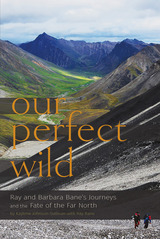
This book tells their story, a tale of dedication and tireless labor in the face of suspicion, resistance, and even violence. At a time when Alaska’s natural bounty remains under threat, Our Perfect Wild shows us an example of the commitment—and love—that will be required to preserve it.
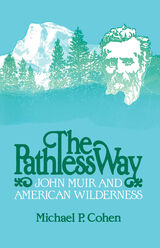
"A tour de force, a remarkable narrative of spiritual and political development. . . . [Cohen's] oft unanswered, and unanswerable, questions, his views of Muir's spiritual, intellectual, and political growth are insightful, challenging, and new. They deserve an audience with scholars and Muir devotees."—Shirley Sargent, Pacific Historian
In this powerful study, Michael Cohen captures as never before the powerful consciousness, vision, and legacy of the pioneering environmentalist John Muir. Ultimately, Cohen stresses, this ecological consciousness would generate an ecological conscience.
It was no longer enough for Muir to individually test and celebrate his enlightenment in the wild. His vision, he now felt, must lead to concrete action, and the result was a protracted campaign that stressed the ecological education of the American public, governmental protection of natural resources, the establishment of the National Parks, and the encouragement of tourism.
Anyone interested in environmental studies, in American history and literature, or in the future of our natural heritage will be drawn by the very bracing flavor of his wilderness odyssey, evoked here by one of his own—a twentieth-century mountaineer and literary craftsman.
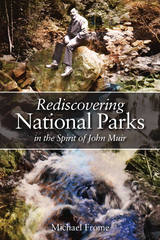
As a journalist, advocate, and professor, Michael Frome has spent decades engaged with conservation topics and has taken particular interest in America’s national parks. He draws on this experience and knowledge to address what remains to be done in order to truly value and preserve these special places. Part memoir, part history, and part broadside against those who would diminish this heritage, Rediscovering National Parks in the Spirit of John Muir, through thoughtful reflections and ruminations, bears witness to the grandeur of our parks and to the need for a renewed sense of appreciation and individual responsibility for their care.
In recollections of his encounters and conversations with key people in national park history, Frome discusses park politics, conflicts between use and preservation, and impacts of commercialization. He proposes a dedicated return to the true spirit in which the parks were established, in the manner of John Muir. He advocates maintaining these lands as wild sanctuaries, places where we can find inspiration, solitude, silence, balance, and simplicity, reminding us why we must preserve our national treasures and why we need to connect with the deeper values they hold.
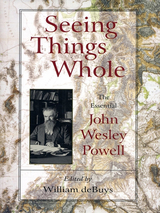
John Wesley Powell was an American original. He was the last of the nation's great continental explorers and the first of a new breed of public servant: part scientist, part social reformer, part institution builder. His work and life reveal an enduringly valuable way of thinking about land, water, and society as parts of an interconnected whole; he was America's first great bioregional thinker.
Seeing Things Whole presents John Wesley Powell in the full diversity of his achievements and interests, bringing together in a single volume writings ranging from his gripping account of exploring the Colorado River through the Grand Canyon to his views on the evolution of civilization, along with the seminal writings in which he sets forth his ideas on western settlement and the allocation and management of western resources.
The centerpiece of Seeing Things Whole is a series of selections from the famous 1878 Report on the Lands of the Arid Region and related magazine articles in which Powell further develops the themes of the report. In those, he recommends organizing the Arid Lands into watershed commonwealths governed by resident citizens whose interlocking interests create the checks and balances essential to wise stewardship of the land. This was the central focus of John Wesley Powell's bioregional vision, and it remains a model for governance that many westerners see as a viable solution to the resource management conflicts that continue to bedevil the region.
Throughout the collection, award-winning writer and historian William deBuys brilliantly sets the historical context for Powell's work. Section introductions and extensive descriptive notes take the reader through the evolution of John Wesley Powell's interests and ideas from his role as an officer in the Civil War through his critique of Social Darwinism and landmark categorization of Indian languages, to the climatic yet ultimately futile battles he fought to win adoption of his land-use proposals.
Seeing Things Whole presents the essence of the extraordinary legacy that John Wesley Powell has left to the American people, and to people everywhere who strive to reconcile the demands of society with the imperatives of the land.
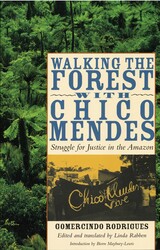
A close associate of Chico Mendes, Gomercindo Rodrigues witnessed the struggle between Brazil's rubber tappers and local ranchers—a struggle that led to the murder of Mendes. Rodrigues's memoir of his years with Mendes has never before been translated into English from the Portuguese. Now, Walking the Forest with Chico Mendes makes this important work available to new audiences, capturing the events and trends that shaped the lives of both men and the fragile system of public security and justice within which they lived and worked.
In a rare primary account of the celebrated labor organizer, Rodrigues chronicles Mendes's innovative proposals as the Amazon faced wholesale deforestation. As a labor unionist and an environmentalist, Mendes believed that rain forests could be preserved without ruining the lives of workers, and that destroying forests to make way for cattle pastures threatened humanity in the long run. Walking the Forest with Chico Mendes also brings to light the unexplained and uninvestigated events surrounding Mendes's murder.
Although many historians have written about the plantation systems of nineteenth-century Brazil, few eyewitnesses have captured the rich rural history of the twentieth century with such an intricate knowledge of history and folklore as Rodrigues.
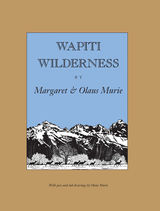
In alternate chapters, Olaus tells of his work as a field biologist for the old U.S. Bureau of Biological Survey and recounts stories of his studies of the elk and the other great animals of the West. And Mrs. Murie, from her side, describes their life together, on the trail, in the various camps, and nature adventures in that wilderness in all seasons. The book is replete with stories of Jackson Hole people, "pioneer poets," and the wild creatures that made their way into the Murie household. Olaus Murie's evocative pen-and-ink drawings illuminate each chapter, and four pages of photographs help complete the picture of what life was like in the wapiti wilderness.

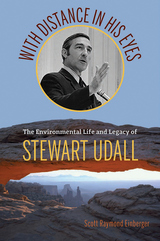
What can we learn from this farsighted individual?
In a day and age of partisan politics, poor congressional approval ratings, and global warming and climate change, this captivating biography offers a profound and historical record into Udall’s life-long devotion to environmental issues he cared about most deeply—issues more relevant today than they were then. Intimate moments include Udall’s learning of the Kennedy assassination, his push for civil rights for African Americans, his meeting in the U.S.S.R. with Nikita Khrushchev—the first Kennedy cabinet member to do so—and his warnings about global warming 50 years prior to Al Gore’s Nobel Prize-winning film.
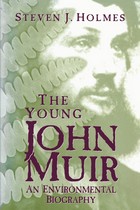
From his childhood in Scotland and Wisconsin through his young adulthood in the Midwest and Canada, Muir struggled—often without success—to find a place for himself both in nature and in society. Far from granting comfort, the natural world confronted the young Muir with a full range of practical, emotional, and religious conflicts. Only with the help of his family, his religion, and the extraordinary power of nature itself could Muir in his late twenties find a welcoming vision of nature as home—a vision that would shape his lifelong environmental experience, most immediately in his transformative travels through the South and to the Yosemite Valley.
More than a biography, The Young John Muir is a remarkable exploration of the human relationship with wilderness. Accessible and engaging, the book will appeal to anyone interested in the individual struggle to come to terms with the power of nature.
READERS
Browse our collection.
PUBLISHERS
See BiblioVault's publisher services.
STUDENT SERVICES
Files for college accessibility offices.
RECENTLY PUBLISHED




UChicago Accessibility Resources
home | accessibility | search | about | contact us
BiblioVault ® 2001 - 2024
The University of Chicago Press