
 A SCHOLARLY BOOK REPOSITORY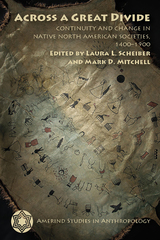
The contributors address a series of interlocking themes. Several consider the role of indigenous agency in the processes of colonial interaction, paying particular attention to gender and status. Others examine the ways long-standing native political economies affected, and were in turn affected by, colonial interaction. A third group explores colonial-period ethnogenesis, emphasizing the emergence of new native social identities and relations after 1500. The book also highlights tensions between the detailed study of local cases and the search for global processes, a recurrent theme in postcolonial research.
If archaeologists are to bridge the artificial divide separating history from prehistory, they must overturn a whole range of colonial ideas about American Indians and their history. This book shows that empirical archaeological research can help replace long-standing models of indigenous culture change rooted in colonialist narratives with more nuanced, multilinear models of change—and play a major role in decolonizing knowledge about native peoples.

All Faithful People was first published in 1983. Minnesota Archive Editions uses digital technology to make long-unavailable books once again accessible, and are published unaltered from the original University of Minnesota Press editions.
In 1924 Robert and Helen Lynd went to Middletown (Muncie, Indiana) to study American institutions and values. The results of their work are the classic studies Middletown (1929) and Middletown in Transition (1937). In the late 1970s a team of social scientists returned to Middletown to gauge the changes that have taken place in the fifty years since the Lynds' first visit. The Middletown III Project, by replicating the earlier work, in some cases by using the same questions, provides an unprecedented portrait of a small American town as it adapts to changing times. Its first report, Middletown Families, was published by Minnesota in 1982.
This book explores the role of religion in the life of Middletown. Using the Lynds' magnificent cache of empirical data as a base, social scientists on the Middletown III Project attempted to gauge how religious beliefs and practices have changed. For the most part, their findings show that the current perception of a trend toward a more secular society is not true. In Middletown, religion seems to be more important than ever.
All Faithful People also covers the history of Middletown's churches, the differences between the town's Protestants and Catholics, religious participation among young people, and the role in Middletown life of private devotions and public rituals. In conclusion, the authors of All Faithful People evaluate Middletown as a representative community. They attempt to explain the myth of the death of organized religion, and briefly compare religion in America to religion in other Western countries.
Fifty years after the Lynds first made Middletown famous, a team of social scientists returned to find out how American values have changed. This, their second report, focuses on religion. What does religion mean to Middletown today? Has America become a secular society? Those are some of the questions discussed in All Faithful People.
In The American Business Cycle, some of the most prominent macroeconomics in the United States focuses on the questions, To what extent are business cycles propelled by external shocks? How have post-1946 cycles differed from earlier cycles? And, what are the major factors that contribute to business cycles? They extend their investigation in some areas as far back as 1875 to afford a deeper understanding of both economic history and the most recent economic fluctuations.
Seven papers address specific aspects of economic activity: consumption, investment, inventory change, fiscal policy, monetary behavior, open economy, and the labor market. Five papers focus on aggregate economic activity. In a number of cases, the papers present findings that challenge widely accepted models and assumptions. In addition to its substantive findings, The American Business Cycle includes an appendix containing both the first published history of the NBER business-cycle dating chronology and many previously unpublished historical data series.
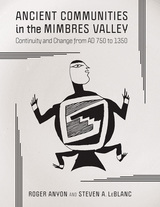
Expanding beyond studies that focus on a single pueblo, this volume represents the final report on the excavations of the Mimbres Foundation. It brings together data from a range of pithouse and pueblo sites of different sizes and histories in diverse locations—to refine the current understandings of Mimbres region archaeology in the context of the Greater Southwest.
From the end of the Late Pithouse period through the Black Mountain phase, the book provides excellent documentation of the artifacts and data recovered from the sites, addresses models of Mimbres community, and tracks change and continuity in the valley over centuries. In addition, the authors consider the nature of the relationship between the Classic Mimbres period population of the valley and the people of the succeeding Black Mountain phase, as well as relationships among the Black Mountain phase people and those of neighboring parts of the region, including the Casas Grandes world and the Jornada Mogollon area.
In Ancient Communities in the Mimbres Valley two leading archaeologists bring together a trove of unpublished investigations, expanding understandings and setting a course for the future.
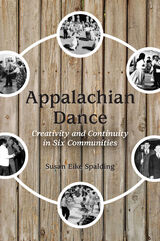
Spalding analyzes how issues as disparate as industrialization around coal, plantation culture, race relations, and the 1970s folk revival influenced freestyle clogging and other dance forms like square dancing in profound ways. She reveals how African Americans and Native Americans, as well as European immigrants drawn to the timber mills and coal fields, brought movement styles that added to local dance vocabularies. Placing each community in its sociopolitical and economic context, Spalding analyzes how the formal and stylistic nuances found in Appalachian dance reflect the beliefs, shared understandings, and experiences of the community at large, paying particular attention to both regional and racial diversity.
Written in clear and accessible prose, Appalachian Dance is a lively addition to the literature and a bold contribution to scholarship concerned with the meaning of movement and the ever-changing nature of tradition.
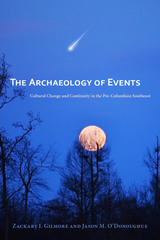
Across the social sciences, gradualist evolutionary models of historical dynamics are giving way to explanations focused on the punctuated and contingent “events” through which history is actually experienced. The Archaeology of Events is the first book-length work that systematically applies this new eventful approach to major developments in the pre-Columbian Southeast.
Traditional accounts of pre-Columbian societies often portray them as “cold” and unchanging for centuries or millennia. Events-based analyses have opened up archaeological discourse to the more nuanced and flexible idea of context-specific, rapidly transpiring, and broadly consequential historical “events” as catalysts of cultural change.
The Archaeology of Events, edited by Zackary I. Gilmore and Jason M. O’Donoughue, considers a variety of perspectives on the nature and scale of events and their role in historical change. These perspectives are applied to a broad range of archeological contexts stretching across the Southeast and spanning more than 7,000 years of the region’s pre-Columbian history. New data suggest that several of this region’s most pivotal historical developments, such as the founding of Cahokia, the transformation of Moundville from urban center to vacated necropolis, and the construction of Poverty Point’s Mound A, were not protracted incremental processes, but rather watershed moments that significantly altered the long-term trajectories of indigenous Southeastern societies.
In addition to exceptional occurrences that impacted entire communities or peoples, southeastern archaeologists are increasingly recognizing the historical importance of localized, everyday events, such as building a house, crafting a pot, or depositing shell. The essays collected by Gilmore and O’Donoughue show that small-scale events can make significant contributions to the unfolding of broad, regional-scale historical processes and to the reproduction or transformation of social structures.
The Archaeology of Events is the first volume to explore the archaeological record of events in the Southeastern United States, the methodologies that archaeologists bring to bear on this kind of research, and considerations of the event as an important theoretical concept.
Vasili Rukhadze examines the factors that contributed to post-uprising leadership durability in the Ukraine, Kyrgyzstan, and Georgia in 2004–12, after these countries underwent their so-called “Color Revolutions.” Using structured, focused comparison and process tracing, he argues that the key independent variable influencing post-mobilization leadership durability is ruling coalition size and cohesion. He demonstrates that if the ruling coalitions are large and fragmented, as in the Ukraine and Kyrgyzstan, the coalitions disintegrate, thus facilitating the downfall of the governments. Alternatively, if the ruling coalition is small and cohesive, as in Georgia, the coalition maintains unity, hence helping the government to stay in power.
This study advances the debate on regime changes. By drawing a clear distinction between political leaderships that come to power as a result of popular uprisings and governments that take power through normal democratic processes, military coup, or any other means, the research offers one of the first studies on post-mobilization leadership. Rukhadze helps scholars differentiate between the factors that affect durability of post-uprising leadership from those factors that impact durability of all other political leadership, in turn equipping researchers with new tools to study power politics.


Focusing on Minangkabau proper, and treating several adjacent areas as well, this collection examines the resilience and adaptability of the Minangkabau in the face of outside political and economic pressures and of distortions in social science and legal theory. Individual studies address issues of kinship and other forms of social organization, ideology, and political and economic life. Together, they emphasize the integrity of Minangkabau social forms while revealing fascinating patterns of continuity and change in Minangkabau culture.
This collection will be of particular interest to anthropologists specializing in Southeast Asia, but it will also be important reading for those concerned with the issue of change and continuity in the third world generally.

The authors present the first comprehensive examination of the shifting role of the Courts of Appeals, investigating changes over time and presenting the first systematic analyses of those changes. Their work is the first book to utilize the database of the U.S. Courts of Appeals, analyzing over 15,000 cases to examine trends between 1925 and 1988. The book answers questions such as who are the judges? What are their decisional tendencies? What has been the role of region and partisan politics? Who are the litigants? And who has won and who has lost throughout the twentieth century? It is the only current, up-to-date book on the Courts of Appeals and an essential read for all scholars and students interested in American politics and judicial behavior.
Donald R. Songer is Professor of Political Science, University of South Carolina. Reginald S. Sheehan is Associate Professor of Political Science and Director of the Program for Law and Juridical Politics, Michigan State University. Susan B. Haire is Assistant Professor of Political Science, University of Georgia
Through thoughtful essays linking historical concepts, current issues, and areas for future research, Matthew Holden, Jr., argues that the study of public administration is indispensable to understanding politics. Essentially, public administration consists of making decisions about information, money, and force-three crucial sources of power: politics and administration cannot be separated, and no political system can be sustained when its administrative core collapses.
Holden explores issues in administration as reflected in political theory and discusses the specifics of organization, bureaucratic, and management theory. He considers such concepts as executive leadership and the emergence of administrative law and turns an unblinking eye on the practice of public administration today, buffeted by changes in communications technology and by ethnic diversity.
This collection of essays by Alexander Gerschenkron, who has been called “the doyen of economic history in the United States,” is a companion volume to the author’s highly acclaimed Economic Backwardness in Historical Perspective. The essays range over a wide variety of subjects, but the major theme, as in Gerschenkron’s previous book, is the conditions of industrial development, particularly in regard to nineteenth-century Europe.
The book is divided into three parts. In Part I, Methodology, the essays are: “On the Concept of Continuity in History,” “Some Methodological Problems in Economic History,” and “Reflections on Ideology as a Methodological and Historical Problem.” Part II, Problems in Economic History, deals with “The Typology of Industrial Development as a Tool of Analysis,” “The Industrial Development of Italy: A Debate with Rosario Romeo,” “The Modernization of Entrepreneurship,” “Russia: Agrarian Policies and Industrialization, 1861–1914,” and “City Economies Then and Now.” In Part III, The Political Framework, the essays are: “Reflections on the Economic Aspects of Revolution,” “The Changeability of a Dictatorship,” and “The Stability of Dictatorships.” A series of appendices presents reviews and review articles by Gerschenkron.
There is widespread agreement that the South has changed dramatically since the end of World War II—the essays in The Disappearing South address the ongoing debate
There is widespread agreement that the South has changed dramatically since the end of World War II. Social, demographic, economic, and political changes have altered significantly the region long considered the nation’s most distinctive. There is less agreement, however, about the extent to which the forces of nationalization have eroded the major elements of Southern distinctiveness. Although this volume does not purport to settle the debate on Southern political change, it does present a variety of recent evidence that helps put this important debate into perspective. In the process it helps clarify the contemporary politics of the South for readers ranging from the scholar to the more casual observer.
The essays in The Disappearing South address the ongoing debate. Contributors, in addition to the editors, include E. Lee Bernick, Earl Black, Merle Black, Lewis Bowman, Edward G. Carmines, Patrick Cotter, Thomas Eamon, Douglas G. Feig, John C. Green, James L. Guth, William E. Hulbary, Anne E. Kelley, Lyman A. Kellstedt, David M. Olson, John Shelton Reed, Harold Stanley, James G. Stovall, John Theilmann, Stephen H. Wainscott, and Allen Wilhite.
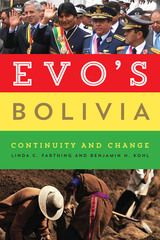
In this compelling and comprehensive look at the rise of Evo Morales and Bolivia’s Movimiento al Socialismo (MAS), Linda Farthing and Benjamin Kohl offer a thoughtful evaluation of the transformations ushered in by the western hemisphere’s first contemporary indigenous president. Accessible to all readers, Evo’s Bolivia not only charts Evo’s rise to power but also offers a history of and context for the MAS revolution’s place in the rising “pink tide” of the political left. Farthing and Kohl examine the many social movements whose agendas have set the political climate in Bolivia and describe the difficult conditions the administration inherited. They evaluate the results of Evo’s policies by examining a variety of measures, including poverty; health care and education reform; natural resources and development; and women’s, indigenous, and minority rights. Weighing the positive with the negative, the authors offer a balanced assessment of the results and shortcomings of the first six years of the Morales administration.
At the heart of this book are the voices of Bolivians themselves. Farthing and Kohl interviewed women and men in government, in social movements, and on the streets throughout the country, and their diverse backgrounds and experiences offer a multidimensional view of the administration and its progress so far. Ultimately the “process of change” Evo promised is exactly that: an ongoing and complicated process, yet an important example of development in a globalized world.
Folk religion, transmitted by the common people from generation to generation, has greatly conditioned the political, economic, and cultural development of Japan and continues to satisfy the emotional and religious needs of the people. Hori examines the organic relationship between the Japanese social structure—the family kinship system, village and community organizations—and folk religion. A glossary with Japanese characters is included in the index.
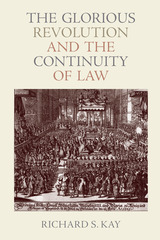

As the twenty-first century began, this political dynamic began to shift. Partisan conflict in the capitol grew less rancorous, legislative gridlock eased, and ballot initiatives lost their central role in defining Oregon politics. Less visible changes reshaped issues from agricultural policy to tribal government. This shifting dynamic coincided with significant transformations in Oregon’s economy and cultural life.
The state’s economy sustained severe blows twice in the early 2000s, but by 2014, Oregon boasted one of the fastest-growing economies in the nation. Along with economic expansion, Oregon’s population grew in both size and diversity. Despite these powerful forces of change, other aspects of Oregon political life remained entrenched, including the deep urban-rural divide and the state’s problematic fiscal system.
With contributions from 27 leading experts and political insiders, Governing Oregon: Continuity and Change offers insight into the people, political practices, governing institutions, and public policies of Oregon. It will be of tremendous value to political scientists, public servants, and engaged citizens alike.
Contributors:
Warda Ajaz is a PhD candidate in the School of Public Policy at Oregon State University.
Jeannine Beatrice is Chief of Staff with the Oregon Department of Human Services (DHS).
David Bernell is an Associate Professor of Political Science in the School of Public Policy at Oregon State University.
Joe Bowersox is the Dempsey Endowed Chair of Environmental Policy and Politics in the Department of Environmental and Earth Science at Willamette University.
Alexandra Buylova is a PhD candidate in the School of Public Policy at Oregon State University.
Paul De Muniz retired as Chief Justice of the Oregon Supreme Court in 2012 after serving for twelve years on the court. De Muniz currently teaches at Willamette University College of Law as a Distinguished Jurist in Residence.
Mark Edwards is Professor of Sociology in the School of Public Policy at Oregon State University.
Leanne Giordono is a PhD candidate in the School of Public Policy at Oregon State University and a National Science Foundation Graduate Research Fellow.
Daniel Gray is a Master of Public Policy (MPP) student in the School of Public Policy at Oregon State University.
Sajjad Haider is a PhD candidate at the School of Management, Lanzhou University (China), and a visiting research scholar at the Mark O. Hatfield School of Government, Portland State University.
Jordan Hensley earned a Master of Public Policy (MPP) degree from the School of Public Policy at Oregon State University.
Allison L. Hurst is an Associate Professor of Sociology in the School of Public Policy at Oregon State University.
Abdullah Husain is a PhD candidate in Environmental Sciences at Oregon State University.
Phil Keisling is Director of the Center for Public Service at Portland State University’s Mark O. Hatfield School of Government. He was Oregon Secretary of State from 1991–1999 and a Member of the Oregon House of Representatives from 1989–1991.
Chris Koski is Associate Professor of Environmental Studies and Chair of the Political Science Department at Reed College.
Justin Martin owns and operates, Perseverance Strategies, Inc., a government relations and public affairs firm.
Melissa Buis Michaux is Associate Professor of Politics at Willamette University.
Douglas Morgan is Professor Emeritus of Public Administration and Director of the Executive MPA Program in the Hatfield School of Government at Portland State University.
Sanne A. M. Rijkhoff is a former adjunct assistant professor of political science at Portland State University. She is currently an Eyes High Postdoctoral Associate at the University of Calgary.
Ethan Seltzer is an Emeritus Professor in the Toulan School of Urban Studies and Planning at Portland State University.
Brent S. Steel is Professor and the Director of the Graduate Program in the School of Public Policy at Oregon State University.
Casey L. Taylor is a Postdoctoral Research Associate in the Department of Political Science at Idaho State University.
Rebecca Warner is Professor of Sociology in the School of Public Policy at Oregon State University.
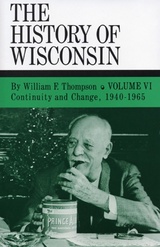
The sixth and final volume in the History of Wisconsin series examines the period from 1940-1965, in which state and nation struggled to maintain balance and traditions. Some of the major developments analyzed in this volume include: coping with three wars, racial and societal conflict, technological innovation, population shifts to and from cities and suburbs, and accompanying stress in politics, government, and society as a whole. Using dozens of photographs to visually illustrate this period in the state's history, this volume upholds the high standards set forth in the previous volumes.
With the two-thousand-year history of the Japanese experience as his foundation, Edwin O. Reischauer brings us an incomparable description of Japan today in all its complexity and uniqueness, both material and spiritual. His description and analysis present us with the paradox that is present-day Japan: thoroughly international, depending for its livelihood almost entirely on foreign trade, its products coveted everywhere—yet not entirely liked or trusted, still feared for its past military adventurism and for its current economic aggressiveness.
Reischauer begins with the rich heritage of the island nation, identifying incidents and trends that have significantly affected Japan’s modern development. Much of the geographic and historical material on Japan’s earlier years is drawn from his renowned study The Japanese, but the present book deepens and broadens that earlier interpretation: our knowledge of Japan has increased enormously in the intervening decade and our attitudes have become more ambivalent, while Japan too has changed, often not so subtly.
Moving to contemporary Japanese society, Reischauer explores both the constants in Japanese life and the aspects that are rapidly changing. In the section on government and politics he gives pithy descriptions of the formal workings of the various organs of government and the decision-making process, as well as the most contentious issues in Japanese life—pollution, nuclear power, organized labor—and the elusive matter of political style.
In what will become classic statements on business management and organization, Reischauer sketches the early background of trade and commerce in Japan, contrasts the struggling prewar economy with today’s assertive manufacturing, and brilliantly characterizes the remarkable postwar economic miracle of Japanese heavy industry, consumer product development, and money management. In a final section, “Japan and the World,” he attempts to explain to skeptical Westerners that country’s growing and painful dilemma between neutrality and alignment, between trade imbalance and “fair” practices, and the ever-vexing issue of that embodiment of Japanese specialness, a unique and difficult language that affects personal and national behavior.
Japan, like the rest of the world, has undergone enormous changes in the last few years. The impact of the end of the Cold War has combined with a worldwide recession to create a fluid situation in which long-held assumptions about politics and policies no longer hold. A classic, short history of Japan, this book has been brought up-to-date by Marius Jansen, now our most distinguished interpreter of Japanese history. Jansen gives a lucid account and analysis of the events that have rocked Japan since 1990, taking the story through the election of Murayama as prime minister.
About the previous edition:
With the two-thousand-year history of the Japanese experience as his foundation, Edwin O. Reischauer brings us an incomparable description of Japan today in all its complexity and uniqueness, both material and spiritual. His description and analysis present us with the paradox that is present-day Japan: thoroughly international, depending for its livelihood almost entirely on foreign trade, its products coveted everywhere—yet not entirely liked or trusted, still feared for its past military adventurism and for its current economic aggressiveness.
Reischauer begins with the rich heritage of the island nation, identifying incidents and trends that have significantly affected Japan’s modern development. Much of the geographic and historical material on Japan’s earlier years is drawn from his renowned study The Japanese, but the present book deepens and broadens that earlier interpretation: our knowledge of Japan has increased enormously in the intervening decade and our attitudes have become more ambivalent, while Japan too has changed, often not so subtly.
Moving to contemporary Japanese society, Reischauer explores both the constants in Japanese life and the aspects that are rapidly changing. In the section on government and politics he gives pithy descriptions of the formal workings of the various organs of government and the decision-making process, as well as the most contentious issues in Japanese life—pollution, nuclear power, organized labor—and the elusive matter of political style.
In what will become classic statements on business management and organization, Reischauer sketches the early background of trade and commerce in Japan, contrasts the struggling prewar economy with today’s assertive manufacturing, and brilliantly characterizes the remarkable postwar economic miracle of Japanese heavy industry, consumer product development, and money management. In a final section, “Japan and the World,” he attempts to explain to skeptical Westerners that country’s growing and painful dilemma between neutrality and alignment, between trade imbalance and “fair” practices, and the ever-vexing issue of that embodiment of Japanese specialness, a unique and difficult language that affects personal and national behavior.
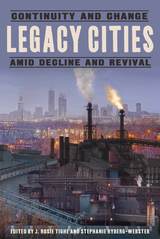
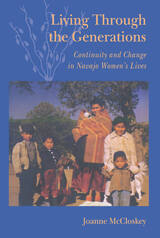
Drawing on ethnographic interviews with 77 women in Crownpoint, New Mexico, and surrounding chapters in the Eastern Navajo Agency, Joanne McCloskey examines the cultural traditions evident in Navajo women’s lives. Navajo women balance the demands of Western society with the desire to preserve Navajo culture for themselves and their families.
Middletown Families was first published in 1985. Minnesota Archive Editions uses digital technology to make long-unavailable books once again accessible, and are published unaltered from the original University of Minnesota Press editions.
Fifty years after publication of Robert and Helen Lloyd's classic studies, Middletown (1929) and Middletown in Transition (1937), the Middletown III Project picked up and continued their exploration of American values and institutions. By duplicating the original studies - in many cases by using the same questions - this team of social scientists attempted to gauge the changes that had taken place in Muncie, Indiana, since the 1920s. In Middletown Families, the first book to emerge from this project, Theodore Caplow and his colleagues reveal that many widely discussed changes in family life, such as the breakdown of traditional male/female roles, increased conflict between parents and children, and disintegration of extended family ties, are more perceived than actual. Their evidence suggests that the Middletown family seems to be stronger and more tolerant, with closer bonds and greater marital satisfaction than fifty years ago. Instead of breaking it apart, the pressures of modern society may have drawn the family closer together.

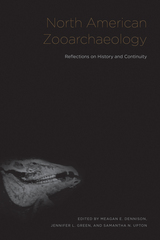
Walter E. Klippel came to the University of Tennessee in 1977 as an assistant professor of anthropology. In the forty years that followed, he supervised and mentored countless students in archaeology and biological anthropology, published more than fifty journal articles and book chapters, and assembled a zooarchaeological comparative collection of national significance. During his tenure, Klippel’s important contributions to the field of zooarchaeology would impact not only his students and colleagues but the development of zooarchaeological research as a whole. Even after his retirement in 2017, Klippel’s influence is readily apparent in the studies of his contemporaries. North American Zooarchaeology: Reflections on History and Continuity is their tribute to his work.
Developed by friends, students, and colleagues of Walter Klippel, North American Zooarchaeology presents a wide-ranging collection of essays through the lens of his remarkable career. Each chapter of the volume represents a prevailing theme notable in Klippel’s research, including geological and landscape contexts, taphonomy, and the incorporation of actualistic methodologies and new technologies into zooarchaeological analyses. The diversity of topics represented across the ten chapters showcase just how extensive Klippel’s research interests are and suggest how much contemporary zooarchaeology owes to his vision. The authors take up this broad palette to explore the various ways in which the framework of zooarchaeology can be used and applied in nontraditional settings.
With a foreword by Bonnie Styles and Bruce McMillan, longtime friends and colleagues of Walter Klippel, this volume reflects on the history and continuity of zooarchaeology in North America and honors one of its most notable contemporary contributors. With its multifaceted approach, this volume is sure to appeal to a broad array of practitioners in the field of zooarchaeology.

Yet, Lane notes, prior research has focused almost exclusively on the tattoos—the outcome of an intricate social process—and have ignored the significance of tattoo workers themselves. "Tattooists," as Lane dubs them, make decisions, but they work within a social world that constrains and shapes the outcome of their labor—the tattoo. The goal of this book is to help readers understand the world of tattoo work as an intricate and nuanced form of work. Lane ultimately asks new questions about the social processes occurring prior to the tattoo’s existence.
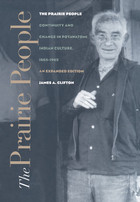
“Splendid. . . . The canvas is vast, the picture animated, the painter nonpareil. . . . Sorabji’s work will encourage more adventurers to follow him to this fascinating new-found land.”—Jonathan Barnes, Times Literary Supplement
“One of the most important works in the history of metaphysics to appear in English for a considerable time. No one concerned with the problems with which it deals either as a historian of ideas or as a philosopher can afford to neglect it.”—Donald MacKinnon, Scottish Journal of Theology
“Unusually readable for such scholarly content, the book provides in rich and cogent terms a lively and well-balanced discussion of matters of concern to a wide academic audience.”—Choice

READERS
Browse our collection.
PUBLISHERS
See BiblioVault's publisher services.
STUDENT SERVICES
Files for college accessibility offices.
RECENTLY PUBLISHED






UChicago Accessibility Resources
home | accessibility | search | about | contact us
BiblioVault ® 2001 - 2024
The University of Chicago Press