
 A SCHOLARLY BOOK REPOSITORY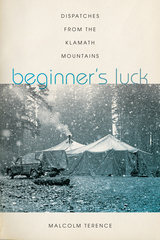
In the late 1960s, Malcolm Terence left his job as a reporter for the Los Angeles Times to look for adventure and may have found more than he bargained for. The era had triggered unprecedented social and political changes in America, tectonic shifts that challenged war and the social order that oppressed people along lines of class, gender, and race. One branch was a back-to-the-land movement, and Terence, who had just traveled for a year managing a rock band, strayed into Black Bear Ranch, a commune just starting in a remote corner of the Klamath Mountains near the California-Oregon border.
Black Bear Ranch still exists, but many of its early residents eventually returned to urban civilization. A few, Terence among them, stayed on in neighboring river towns. Some tried logging, others gold mining, and some tried growing marijuana, all with mixed success. The local mining and timber communities had a checkered opinion of their new hippie neighbors, as did the Native tribes, but it was the kind of place where people helped each other out, even if they didn’t always agree.
When wildfires grew large, Terence and other veterans of the commune joined the fire crews run by the US Forest Service. In between, the Black Bear expats built homesteads, planted gardens, delivered babies, and raised their children. They gradually overcame the skepticism of the locals and joined them in political battles against the use of herbicides in the forest and the Forest Service’s campaign to close all the mining claims. As in the best of organizing efforts, the organizers learned as much as they led.
Beginner’s Luck will appeal to anyone who experienced life on a commune in the 1960s–1970s or who wants to learn about this chapter in modern American history. Terence offers insight into environmental activism and the long history of conflict between resource exploitation and Native American rights without lecturing or pontificating. With wit, humor, and humility, his anecdotal essays chronicle a time and place where disparate people came together to form an unlikely community.

Building Nature’s Market shows how the meaning of natural foods was transformed as they changed from a culturally marginal, religiously inspired set of ideas and practices valorizing asceticism to a bohemian lifestyle to a mainstream consumer choice. Laura J. Miller argues that the key to understanding this transformation is to recognize the leadership of the natural foods industry. Rather than a simple tale of cooptation by market forces, Miller contends the participation of business interests encouraged the natural foods movement to be guided by a radical skepticism of established cultural authority. She challenges assumptions that private enterprise is always aligned with social elites, instead arguing that profit-minded entities can make common cause with and even lead citizens in advocating for broad-based social and cultural change.
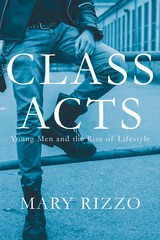
Mary Rizzo traces the development of the concept of lifestyle marketing, showing how marketers disconnected class identity from material reality, focusing instead on a person’s attitudes, opinions, and behaviors. The book includes discussions of the rebel of the 1950s, the hippie of the 1960s, the white suburban hip-hop fan of the 1980s, and the poverty chic of the 1990s. Class Acts illuminates how the concept of “lifestyle,” particularly as expressed through fashion, has disconnected social class from its material reality and diffused social critique into the opportunity to simply buy another identity. The book will appeal to scholars and other readers who are interested in American cultural history, youth culture, fashion, and style.
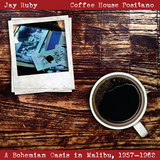
As an ethnographer analyzing his own culture, author Jay Ruby uses a unique ethnographic method known as “studying sideways.” He combines the exploration of self and others with the theoretical framework of anthropology to provide deep insight into the counterculture of late 1950s and early 1960s America. He shares his connection to Positano, where he lived and worked from 1957 to 1959 and again in 1963, and reflects on Positano in the context of US counterculture and the greater role of countercultures in society.
This intimate and significant work will be of interest to anthropologists as well as scholars and the general reader interested in California history, Beat culture, and countercultural movements.
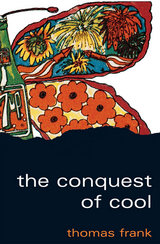
"[Thomas Frank is] perhaps the most provocative young cultural critic of the moment."—Gerald Marzorati, New York Times Book Review
"An indispensable survival guide for any modern consumer."—Publishers Weekly, starred review
"Frank makes an ironclad case not only that the advertising industry cunningly turned the countercultural rhetoric of revolution into a rallying cry to buy more stuff, but that the process itself actually predated any actual counterculture to exploit."—Geoff Pevere, Toronto Globe and Mail
"The Conquest of Cool helps us understand why, throughout the last third of the twentieth century, Americans have increasingly confused gentility with conformity, irony with protest, and an extended middle finger with a populist manifesto. . . . His voice is an exciting addition to the soporific public discourse of the late twentieth century."—T. J. Jackson Lears, In These Times
"An invaluable argument for anyone who has ever scoffed at hand-me-down counterculture from the '60s. A spirited and exhaustive analysis of the era's advertising."—Brad Wieners, Wired Magazine
"Tom Frank is . . . not only old-fashioned, he's anti-fashion, with a place in his heart for that ultimate social faux pas, leftist politics."—Roger Trilling, Details
Charting a new course in the criticism of postwar fiction, Cool Characters examines the changing status of irony in American cultural and political life from World War II to the present, showing how irony migrated from the countercultural margins of the 1950s to the cultural mainstream of the 1980s. Along the way, irony was absorbed into postmodern theory and ultimately became a target of recent writers who have sought to create a practice of “postirony” that might move beyond its limitations.
As a concept, irony has been theorized from countless angles, but Cool Characters argues that it is best understood as an ethos: an attitude or orientation toward the world, embodied in different character types, articulated via literary style. Lee Konstantinou traces five such types—the hipster, the punk, the believer, the coolhunter, and the occupier—in new interpretations of works by authors including Ralph Ellison, William S. Burroughs, Thomas Pynchon, Kathy Acker, Dave Eggers, William Gibson, Jennifer Egan, Jonathan Lethem, and Rachel Kushner.
For earlier generations of writers, irony was something vital to be embraced, but beginning most dramatically with David Foster Wallace, dissatisfaction with irony, especially with its alleged tendency to promote cynicism and political passivity, gained force. Postirony—the endpoint in an arc that begins with naive belief, passes through irony, and arrives at a new form of contingent conviction—illuminates the literary environment that has flourished in the United States since the 1990s.
In a bold reconsideration of the late sixties San Francisco counterculture movement, Counterculture Kaleidoscope takes a close look at the cultural and musical practices of that era. Addressing the conventional wisdom that the movement was grounded in rebellion and opposition, the book exposes two myths: first, that the counterculture was an organized social and political movement of progressives with a shared agenda who opposed the mainstream (dubbed "hippies"); and second, that the counterculture was an innocent entity hijacked by commercialism and transformed over time into a vehicle of so-called "hip consumerism."
Seeking an alternative to the now common narrative, Nadya Zimmerman examines primary source material including music, artwork, popular literature, personal narratives, and firsthand historical accounts. She reveals that the San Francisco counterculture wasn't interested in commitments to causes and made no association with divisive issues---that it embraced everything in general and nothing in particular.
"Astute and accessible, Counterculture Kaleidoscope provides thought-provoking insights into the historical, cultural and social context of the San Francisco counter-culture and its music scene, including discussions of Vietnam and student protest, the Haight-Ashbury Diggers, the Grateful Dead, Led Zeppelin, Altamont, and Charlie Manson. A must for students and scholars of socio-musical activity and for all of us to whom music matters."
---Sheila Whiteley, author of The Space Between the Notes: Rock and the Counter-Culture and Too Much Too Young: Popular Music, Age and Gender
"The hippie counterculture has never garnered the scholarly attention accorded the new left and the black freedom struggle. Overviews of the period ritualistically mention it as part and parcel of that apparently incandescent era---the Sixties---but rarely capture its distinctiveness. Counterculture Kaleidoscope is a timely and provocative intervention in Sixties scholarship that significantly deepens our understanding of this important but understudied phenomenon."
—Alice Echols, Associate Professor, University of Southern California, and author of Scars of Sweet Paradise: The Life and Times of Janis Joplin
Rebelling against bourgeois vacuity and taking their countercultural critique on the road, the Beat writers and artists have long symbolized a spirit of freedom and radical democracy. Manuel Martinez offers an eye-opening challenge to this characterization of the Beats, juxtaposing them against Chicano nationalists like Raul Salinas, Jose Montoya, Luis Valdez, and Oscar Acosta and Mexican migrant writers in the United States, like Tomas Rivera and Ernesto Galarza.
In an innovative rereading of American radical politics and culture of the 1950s and 1960s, Martinez uncovers reactionary, neoromantic, and sometimes racist strains in the Beats’ vision of freedom, and he brings to the fore the complex stances of Latinos on participant democracy and progressive culture. He analyzes the ways that Beats, Chicanos, and migrant writers conceived of and articulated social and political perspectives. He contends that both the Beats’ extreme individualism and the Chicano nationalists’ narrow vision of citizenship are betrayals of the democratic ideal, but that the migrant writers presented a distinctly radical and inclusive vision of democracy that was truly countercultural.
In this prequel to his celebrated book From Counterculture to Cyberculture, Turner rewrites the history of postwar America, showing how in the 1940s and ’50s American liberalism offered a far more radical social vision than we now remember. Turner tracks the influential mid-century entwining of Bauhaus aesthetics with American social science and psychology. From the Museum of Modern Art in New York to the New Bauhaus in Chicago and Black Mountain College in North Carolina, Turner shows how some of the most well-known artists and intellectuals of the forties developed new models of media, new theories of interpersonal and international collaboration, and new visions of an open, tolerant, and democratic self in direct contrast to the repression and conformity associated with the fascist and communist movements. He then shows how their work shaped some of the most significant media events of the Cold War, including Edward Steichen’s Family of Man exhibition, the multimedia performances of John Cage, and, ultimately, the psychedelic Be-Ins of the sixties. Turner demonstrates that by the end of the 1950s this vision of the democratic self and the media built to promote it would actually become part of the mainstream, even shaping American propaganda efforts in Europe.
Overturning common misconceptions of these transformational years, The Democratic Surround shows just how much the artistic and social radicalism of the sixties owed to the liberal ideals of Cold War America, a democratic vision that still underlies our hopes for digital media today.
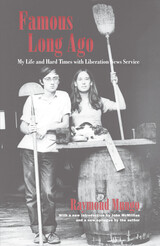
A college editor at the height of the Vietnam War, Mungo found himself smack in the middle of a mad swirl of activism and dissent, vigorously protesting every-thing from the draft to abortion laws to the university itself. Then he connected with Marshall Bloom to cofound LNS in Washington, D.C., as a news service catering to the burgeoning underground press. One thing led to another, until LNS, like so many other radical organizations, eventually disintegrated into violently warring factions. Mungo's memoir tracks its development and destruction with wicked humor and literary panache.
In an introduction to this new edition, John McMillian discusses the enduring appeal of Famous Long Ago and situates it within its broader historical context, while the author provides his own retrospective take in a new afterword.
In the early 1960s, computers haunted the American popular imagination. Bleak tools of the cold war, they embodied the rigid organization and mechanical conformity that made the military-industrial complex possible. But by the 1990s—and the dawn of the Internet—computers started to represent a very different kind of world: a collaborative and digital utopia modeled on the communal ideals of the hippies who so vehemently rebelled against the cold war establishment in the first place.
From Counterculture to Cyberculture is the first book to explore this extraordinary and ironic transformation. Fred Turner here traces the previously untold story of a highly influential group of San Francisco Bay–area entrepreneurs: Stewart Brand and the Whole Earth network. Between 1968 and 1998, via such familiar venues as the National Book Award–winning Whole Earth Catalog, the computer conferencing system known as WELL, and, ultimately, the launch of the wildly successful Wired magazine, Brand and his colleagues brokered a long-running collaboration between San Francisco flower power and the emerging technological hub of Silicon Valley. Thanks to their vision, counterculturalists and technologists alike joined together to reimagine computers as tools for personal liberation, the building of virtual and decidedly alternative communities, and the exploration of bold new social frontiers.
Shedding new light on how our networked culture came to be, this fascinating book reminds us that the distance between the Grateful Dead and Google, between Ken Kesey and the computer itself, is not as great as we might think.
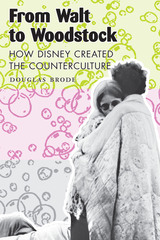
With his thumbprint on the most ubiquitous films of childhood, Walt Disney is widely considered to be the most conventional of all major American moviemakers. The adjective "Disneyfied" has become shorthand for a creative work that has abandoned any controversial or substantial content to find commercial success.
But does Disney deserve that reputation? Douglas Brode overturns the idea of Disney as a middlebrow filmmaker by detailing how Disney movies played a key role in transforming children of the Eisenhower era into the radical youth of the Age of Aquarius. Using close readings of Disney projects, Brode shows that Disney's films were frequently ahead of their time thematically. Long before the cultural tumult of the sixties, Disney films preached pacifism, introduced a generation to the notion of feminism, offered the screen's first drug-trip imagery, encouraged young people to become runaways, insisted on the need for integration, advanced the notion of a sexual revolution, created the concept of multiculturalism, called for a return to nature, nourished the cult of the righteous outlaw, justified violent radicalism in defense of individual rights, argued in favor of communal living, and encouraged antiauthoritarian attitudes. Brode argues that Disney, more than any other influence in popular culture, should be considered the primary creator of the sixties counterculture—a reality that couldn't be further from his "conventional" reputation.

Resituating the term in its neglected (sub)cultural context, the contributors offer a critical assessment of the "Generation X" phenomenon and its relation to the fashioning of differing identities within and against the mainstream. The essays explore a variety of topics, including punk subculture, alternative music, reality television, postmodernism, and the Internet. Together, the contributors share a refreshingly self-conscious approach to Generation X’s precarious, often paradoxical position as an alternative to the mainstream. This collection will be enjoyed by scholars, graduate and undergraduate students, and anyone interested in popular culture, including Gen-Xers themselves.
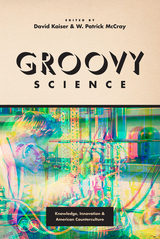
Such a view is far too simple, ignoring the diverse ways in which the era’s countercultures expressed enthusiasm for and involved themselves in science—of a certain type. Rejecting hulking, militarized technical projects like Cold War missiles and mainframes, Boomers and hippies sought a science that was both small-scale and big-picture, as exemplified by the annual workshops on quantum physics at the Esalen Institute in Big Sur, or Timothy Leary’s championing of space exploration as the ultimate “high.” Groovy Science explores the experimentation and eclecticism that marked countercultural science and technology during one of the most colorful periods of American history.
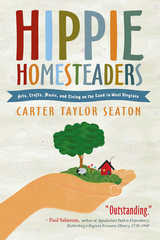
It’s the 1960s. The Vietnam War is raging and protests are erupting across the United States. In many quarters, young people are dropping out of society, leaving their urban homes behind in an attempt to find a safe place to live on their own terms, to grow their own food, and to avoid a war they passionately decry. During this time, West Virginia becomes a haven for thousands of these homesteaders—or back-to-the-landers, as they are termed by some. Others call them hippies.
When the going got rough, many left. But a significant number remain to this day. Some were artisans when they arrived, while others adopted a craft that provided them with the cash necessary to survive. Hippie Homesteaders tells the story of this movement from the viewpoint of forty artisans and musicians who came to the state, lived on the land, and created successful careers with their craft. There’s the couple that made baskets coveted by the Smithsonian Institution’s Renwick Gallery. There’s the draft-dodger that fled to Canada and then became a premier furniture maker. There’s the Boston-born VISTA worker who started a quilting cooperative. And, there’s the immigrant Chinese potter who lived on a commune.
Along with these stories, Hippie Homesteaders examines the serendipitous timing of this influx and the community and economic support these crafters received from residents and state agencies in West Virginia. Without these young transplants, it’s possible there would be no Tamarack: The Best of West Virginia, the first statewide collection of fine arts and handcrafts in the nation, and no Mountain Stage, the weekly live musical program broadcast worldwide on National Public Radio since 1983. Forget what you know about West Virginia.
Hippie Homesteaders isn’t about coal or hillbillies or moonshine or poverty. It is the story of why West Virginia was—and still is—a kind of heaven to so many.
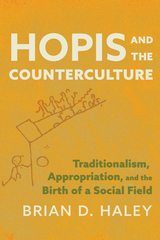
Exploring the new social field that developed to spread these ideas, Hopis and the Counterculture meticulously traces the trajectories of figures such as Ammon Hennacy, Craig Carpenter, Frank Waters, and the Firesign Theatre, among others. Drawing on insights into the interplay between primitivism, radicalism, stereotyping, and identity, Haley expands on concepts from scholars such as Roy Harvey Pearce’s notion of “isolated radicals” and Jonathan Friedman’s observations regarding the ascendancy of primitivism amid global crises. Haley scrutinizes the roles played by non-Hopi actors and the timing behind the widespread popularization of Hopi religious practices.
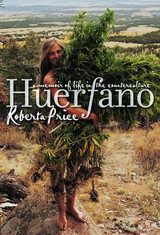
Huerfano is Price's captivating memoir of the seven years she spent in the Huerfano ("Orphan") Valley when it was a petrie dish of countercultural experiments. She and David joined with fellow baby boomers in learning to mix cement, strip logs, weave rugs, tan leather, grow marijuana, build houses, fix cars, give birth, and make cheese, beer, and furniture as well as poetry, art, music, and love. They built a house around a boulder high on a ridge overlooking the valley and made ends meet by growing their own food, selling homemade goods, and hiring themselves out as day laborers. Over time their collective ranks swelled to more than three hundred, only to diminish again as, for many participants, the dream of a life of unbridled possibility gradually yielded to the hard realities of a life of voluntary poverty.
Price tells her story with a clear, distinctive voice, documenting her experiences with photos as well as words. Placing her story in the larger context of the times, she describes her participation in the antiwar movement, the advent of the women's movement, and her encounters with such icons as Ken Kesey, Gary Snyder, Abbie Hoffman, Stewart Brand, Allen Ginsburg, and Baba Ram Dass.
At once comic, poignant, and above all honest, Huerfano recaptures the sense of affirmation and experimentation that fueled the counterculture without lapsing into nostalgic sentimentality on the one hand or cynicism on the other.

Ridgely places Terayama at the center of Japanese and global counterculture and finds in his work a larger story about the history of postwar Japanese art and culture. He sees Terayama as reflecting the most significant events of his day: young poets seizing control of haiku and tanka in the 1950s, radio drama experimenting with form and content after the cultural shift to television around 1960, young assistant directors given free rein in the New Wave as cinema combated television, underground theatre in the politicized late 1960s, and experimental short film through the 1970s after both the studio system and art house cinema had collapsed.
Featuring close readings of Terayama's art, Ridgely demonstrates how across his oeuvre there are patterns that sidestep existing power structures, never offering direct opposition but nevertheless making the opposition plain. And, he claims, there is always in Terayama's work a broad call for seeking out or creating pockets of fiction-where we are made aware that things are not what they seem-and to use otherness in those spaces to take a clearer view of reality.
Mattessich theorizes a new kind of time—subjective displacement—dramatized in the parody, satire, and farce deployed through Pynchon’s oeuvre. In particular, he is interested in showing how this sense of time relates to the counterculture of the 1960s and 1970s. Examining this movement as an instance of flight or escape and exposing the beliefs behind it, Mattessich argues that the counterculture’s rejection of the dominant culture ultimately became an act of self-cancellation, a rebellion in which the counterculture found itself defined by the very order it sought to escape. He points to parallels in Pynchon’s attempts to dramatize and enact a similar experience of time in the doubling-back, crisscrossing, and erasure of his writing. Mattessich lays out a theory of cultural production centered on the ethical necessity of grasping one’s own susceptibility to discursive forms of determination.
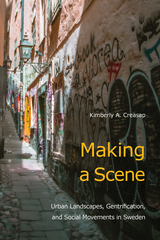
In the three largest cities in Sweden, social movement “scenes”—networks of social movement actors and the places they inhabit—challenge threats such as gentrification. The geography of the built environment influences their ability to lay claim to urban space and to local political processes. In Making a Scene, Kimberly Creasap emphasizes that it is the centrality, concentration, and visibility of these scenes that make them most effective. Whereas some scenes become embedded as part of everyday life—as in Malmö—in contrast, scenes in Göteborg and Stockholm often fail to become part of the fabric of urban neighborhoods.
Creasap investigates key spaces for scenes, from abandoned industrial areas and punk clubs to street festivals, bookstores, and social centers, to show how activists create sites and develop structures of resistance that are anti-capitalist, anti-fascist, anti-gentrification, queer, and feminist. She also charts the relationship between scenes and city spaces to show these autonomous social movements create their own cultural landscapes. Making a Scene encourages critical thinking about spatiality and place in the sociology of social movements and the role of social movements as important actors in urban development.
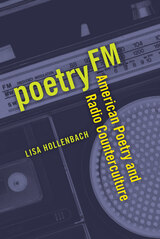
Lisa Hollenbach traces the history of Pacifica Radio—founded in 1946, the nation’s first listener-supported public radio network—through the 1970s: from the radical pacifists and poets who founded Pacifica after the war; to the San Francisco Renaissance, Beat, and New York poets who helped define the countercultural sound of Pacifica stations KPFA and WBAI in the 1950s and 1960s; to the feminist poets and activists who seized Pacifica’s frequencies in the 1970s. In the poems and recorded broadcasts of writers like Kenneth Rexroth, Jack Spicer, Allen Ginsberg, Amiri Baraka, Audre Lorde, Pat Parker, Bernadette Mayer, and Susan Howe, one finds a recurring ambivalence about the technics and poetics of reception. Through tropes of static noise, censorship, and inaudibility as well as voice, sound, and signal, these radiopoetic works suggest new ways of listening to the sounds and silences of Cold War American culture.
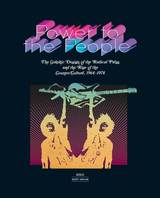

Gragg has conducted meticulous research on two continents to re-create the Barbados Quaker community. Drawing on wills, censuses, and levy books along with surviving letters, sermons, and journals, he tells how the Quakers sought to implement their beliefs in peace, simplicity, and equality in a place ruled by a planter class that had built its wealth on the backs of slaves. He reveals that Barbados Quakers were a critical part of a transatlantic network of Friends and explains how they established a “counterculture” on the island—one that challenged the practices of the planter class and the class’s dominance in island government, church, and economy.
In this compelling study, Gragg focuses primarily on the seventeenth century when the Quakers were most numerous and active on Barbados. He tells how Friends sought to convert slaves and improve their working and living conditions. He describes how Quakers refused to fund the Anglican Church, take oaths, participate in the militia, or pay taxes to maintain forts—and how they condemned Anglican clergymen, disrupted their services, and wrote papers critical of the established church. By the 1680s, Quakers were maintaining five meetinghouses and several cemeteries, paying for their own poor relief, and keeping their own records of births, deaths, and marriages. Gragg also tells of the severe challenges and penalties they faced for confronting and rejecting the dominant culture.
With their civil disobedience and stand on slavery, Quakers on Barbados played an important role in the early British Empire but have been largely neglected by scholars. Gragg’s work makes their contribution clear as it opens a new window on the seventeenth- and eighteenth-century Atlantic world.


In the 1960s, the cooperative networks of food stores, restaurants, bakeries, bookstores, and housing alternatives were part counterculture, part social experiment, part economic utopia, and part revolutionary political statement. The co-ops gave activists a place where they could both express themselves and accomplish at least some small-scale changes. By the mid-1970s, dozens of food co-ops and other consumer- and work-owned enterprises were operating throughout the Twin Cities, and an alternative economic network - with a People's Warehouse at its hub - was beginning to transform the economic landscape of the metropolitan Minneapolis-St. Paul area.
However, these co-op activists could not always agree among themselves on their goals. Craig Cox, a journalist who was active in the co-op movement, here provides the first book to look at food co-ops during the 1960s and 1970s. He presents a dramatic story of hope and conflict within the Minneapolis network, one of the largest co-op structures in the country. His "view from the front" of the "Co-op War" that ensued between those who wanted personal liberation through the movement and those who wanted a working-class revolution challenges us to re-thing possiblities for social and political change. Cox provides not a cynical portrait of sixties idealism, but a moving insight into an era when anything seemed possible.
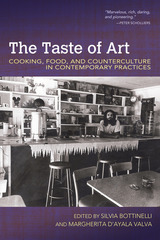
The Taste of Art offers a sample of scholarly essays that examine the role of food in Western contemporary art practices. The contributors are scholars from a range of disciplines, including art history, philosophy, film studies, and history. As a whole, the volume illustrates how artists engage with food as matter and process in order to explore alternative aesthetic strategies and indicate countercultural shifts in society.
The collection opens by exploring the theoretical intersections of art and food, food art’s historical root in Futurism, and the ways in which food carries gendered meaning in popular film. Subsequent sections analyze the ways in which artists challenge mainstream ideas through food in a variety of scenarios. Beginning from a focus on the body and subjectivity, the authors zoom out to look at the domestic sphere, and finally the public sphere.
Here are essays that study a range of artists including, among others, Filippo Tommaso Marinetti, Daniel Spoerri, Dieter Roth, Joseph Beuys, Al Ruppersberg, Alison Knowles, Martha Rosler, Robin Weltsch, Vicki Hodgetts, Paul McCarthy, Luciano Fabro, Carries Mae Weems, Peter Fischli and David Weiss, Janine Antoni, Elżbieta Jabłońska, Liza Lou, Tom Marioni, Rirkrit Tiravanija, Michael Rakowitz, and Natalie Jeremijenko.
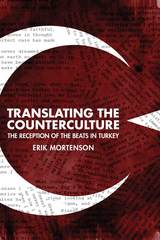
Mortenson examines how in Turkey the Beats have been framed by the label “underground literature”; explores the ways they are repurposed in the counterculture-inspired journal Underground Poetix; looks at the reception of Jack Kerouac’s On the Road and how that reaction provides a better understanding of the construction of “American-ness”; delves into the recent obscenity trial of William S. Burroughs’s novel The Soft Machine and the attention the book’s supporters brought to government repression and Turkish homophobia; and analyzes the various translations of Allen Ginsberg’s Howl to demonstrate the relevance Ginsberg still holds for social rebellion today.
Translating the Counterculture takes a revolutionary look at how contemporary readers in other parts of the world respond to the Beats. Challenging and unsettling an American-centric understanding of the Beats, Mortenson pushes the discipline toward a fuller consideration of their cultural legacy in a globalized twenty-first century.
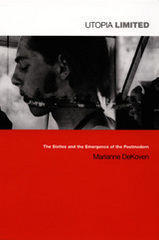
DeKoven rigorously analyzes a broad array of cultural and political texts important in the sixties—from popular favorites such as William S. Burroughs’s Naked Lunch to political manifestoes including The Port Huron Statement, the founding document of SDS (Students for a Democratic Society). She examines texts that overtly discuss the conflict in Vietnam, Black Power, and second-wave feminism—including Frances FitzGerald’s Fire in the Lake, James Baldwin’s The Fire Next Time, and Shulamith Firestone’s The Dialectic of Sex; experimental pieces such as The Living Theatre’s Paradise Now; influential philosophical works including Roland Barthes’s Mythologies and Herbert Marcuse’s One-Dimensional Man; and explorations of Las Vegas, the prime location of postmodernity. Providing extensive annotated bibliographies on both the sixties and postmodernism, Utopia Limited is an invaluable resource for understanding the impact of that tumultuous decade on the present.
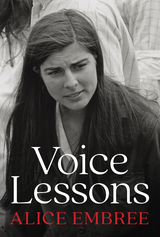
Voice Lessons explores the rich personal and political terrain of Alice Embree, a 1960s activist and convert to the women’s liberation movement of the 1970s, bringing a woman’s perspective to a transformational time in US history. This riveting memoir traces the author’s roots in segregated Austin and her participation in efforts to integrate the University of Texas. It follows her antiwar activism from a vigil in front of President Lyndon Johnson’s ranch in 1965 to a massive protest after the shootings at Kent State in 1970. Embree’s activism brought her and the Students for a Democratic Society into conflict with Frank Erwin, the powerful chairman of the UT Board of Regents, and inspired a campus free speech movement. She recounts her experiences living in New York during the tumultuous years of 1968 and 1969, including the Columbia University strike and the Woodstock music festival. She also tells about protesting at the Chicago Democratic Convention, her interactions with Yippies and poets, and her travels to Chile, Cuba, and Mexico. Embree highlights the radical roots of the women’s liberation movement in Austin and the audacious women’s community that challenged gender roles, fought for reproductive justice, and inspired a lifetime of activism.
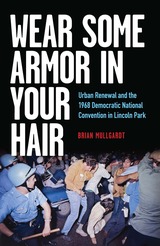
Police brutality, gentrification, and grassroots activism in 1960s Chicago
In August of 1968, approximately 7,000 people protested the Vietnam War against the backdrop of the Democratic National Convention in Chicago. This highly televised event began peacefully but quickly turned into what was later termed a “police riot.” Brian Mullgardt’s investigation of this event and the preceding tensions shines a light on the ministers, Yippies, and community members who showed up and stood together against the brutality of the police. Charting a complex social history, Wear Some Armor in Your Hair brings together Chicago history, the 1960s, and urbanization, focusing not on the national leaders, but on the grassroots activists of the time.
Beginning in 1955, two competing visions of urban renewal existed, and the groups that propounded each clashed publicly, but peacefully. One group, linked to city hall, envisioned a future Lincoln Park that paid lip service to diversity but actually included very little. The other group, the North Side Cooperative Ministry, offered a different vision of Lincoln Park that was much more diverse in terms of class and race. When the Yippies announced anti-war protests for the summer of ‘68, the North Side Cooperative Ministry played an instrumental role. Ultimately, the violence of that week altered community relations and the forces of gentrification won out.
Mullgardt’s focus on the activists and community members of Lincoln Park, a neighborhood at the nexus of national trends, broadens the scope of understanding around a pivotal and monumental chapter of our history. The story of Lincoln Park, Chicago, is in many ways the story of 1960s activism writ small, and in other ways challenges us to view national trends differently.
READERS
Browse our collection.
PUBLISHERS
See BiblioVault's publisher services.
STUDENT SERVICES
Files for college accessibility offices.
RECENTLY PUBLISHED




UChicago Accessibility Resources
home | accessibility | search | about | contact us
BiblioVault ® 2001 - 2024
The University of Chicago Press