
 A SCHOLARLY BOOK REPOSITORY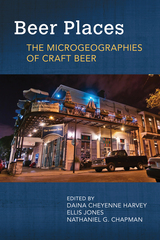
With insight from social scientists, beer bloggers, travel writers, and food entrepreneurs who recount their experiences of taprooms, breweries, and bottle shops from North Carolina to Zimbabwe, Beer Places reveals differences in the craft beer scene across multiple geographies. Situating craft beer as an emerging and important component of food studies, the essays in this volume attest to the singular power of craft beer to connect people and places.
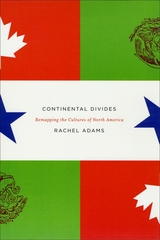
North America is more a political and an economic invention than a place people call home. Nonetheless, the region shared by the United States and its closest neighbors, North America, is an intriguing frame for comparative American studies. Continental Divides is the first book to study the patterns of contact, exchange, conflict, and disavowal among cultures that span the borders of Canada, the United States, and Mexico.
Rachel Adams considers a broad range of literary, filmic, and visual texts that exemplify cultural traffic across North American borders. She investigates how our understanding of key themes, genres, and periods within U.S. cultural study is deepened, and in some cases transformed, when Canada and Mexico enter the picture. How, for example, does the work of the iconic American writer Jack Kerouac read differently when his Franco-American origins and Mexican travels are taken into account? Or how would our conception of American modernism be altered if Mexico were positioned as a center of artistic and political activity? In this engaging analysis, Adams charts the lengthy and often unrecognized traditions of neighborly exchange, both hostile and amicable, that have left an imprint on North America’s varied cultures.
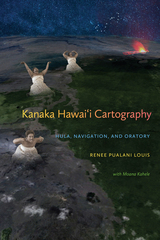
An important symbolic element in Hawai'ian cartography is the storied place name, which reflects Hawai'ian spatial knowledge of the environment. Many Hawai'ian place names performed in daily rituals were a conscious act of locating genealogical connections, recreating cultural landscapes, and regenerating cultural mores. They constitute a critically important body of Hawai'ian cultural knowledge. When Hawai'ian place names were incorporated into Western cartographic maps they were transformed epistemologically. They went from representing place as a repository of cultural knowledge to representing place as an object on the landscape. Hawai'ian spatial knowledge presentation is interactive, multi-sensual, and multi‐ dimensional.
Kanaka Hawai'i Cartography interweaves methodology with personal narrative and performance presentation in a playbill format. Three of the seven chapters are presented as “Acts” in a play. The remaining four chapters serve as intermissions or interludes together with a prologue and an epilogue for setting the stage and providing closure. To help make the topic more accessible, complex terms have been minimized, making academic theory easier for the educated reader to understand. The book will fill an important gap in Indigenous and Native Studies and will be welcomed by anyone interested in traditional Hawai’ian performance cartography.
In this book, cultural geographer Wilbur Zelinsky challenges that nearly universal view and reaches a paradoxical conclusion: that American land and society are becoming more uniform and more diverse at the same time. After recounting the many ways in which modern technologies, an advanced capitalist market system, and a potent central political establishment have standardized the built landscape of the country's vast territory and its burgeoning population over the past two hundred and fifty years, he also considers the vigor of countervailing forces. In a carefully balanced assessment, he documents steady increases in the role of the unpredictable, in the number and variety of arbitrarily located places and activities, and the persistence of basic cultural diversities. Contrary to popular perceptions, place-to-place differences in spoken language, religion, and political behavior have not diminished or disappeared. In fact, Zelinsky shows, novel cultural regions and specialized cities have been emerging even as a latter-day version of regionalism and examples of neo-localism are taking root in many parts of the United States.
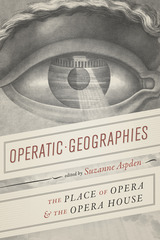
Operatic Geographies invites us to reconsider the opera house’s spatial production. Looking at opera through the lens of cultural geography, this anthology rethinks the opera house’s landscape, not as a static backdrop, but as an expression of territoriality. The essays in this anthology consider moments across the history of the genre, and across a range of geographical contexts—from the urban to the suburban to the rural, and from the “Old” world to the “New.” One of the book’s most novel approaches is to consider interactions between opera and its environments—that is, both in the domain of the traditional opera house and in less visible, more peripheral spaces, from girls’ schools in late seventeenth-century England, to the temporary arrangements of touring operatic troupes in nineteenth-century Calcutta, to rural, open-air theaters in early twentieth-century France. The essays throughout Operatic Geographies powerfully illustrate how opera’s spatial production informs the historical development of its social, cultural, and political functions.

Printing Landmarks tells the story of the late Tokugawa period’s most distinctive form of popular geography: meisho zue. Beginning with the publication of Miyako meisho zue in 1780, these monumental books deployed lovingly detailed illustrations and informative prose to showcase famous places (meisho) in ways that transcended the limited scope, quality, and reliability of earlier guidebooks and gazetteers. Putting into spellbinding print countless landmarks of cultural significance, the makers of meisho zue created an opportunity for readers to experience places located all over the Japanese archipelago.
In this groundbreaking multidisciplinary study, Robert Goree draws on diverse archival and scholarly sources to explore why meisho zue enjoyed widespread and enduring popularity. Examining their readership, compilation practices, illustration techniques, cartographic properties, ideological import, and production networks, Goree finds that the appeal of the books, far from accidental, resulted from specific choices editors and illustrators made about form, content, and process. Spanning the fields of book history, travel literature, map history, and visual culture, Printing Landmarks provides a new perspective on Tokugawa-period culture by showing how meisho zue depicted inspiring geographies in which social harmony, economic prosperity, and natural stability made for a peaceful polity.
READERS
Browse our collection.
PUBLISHERS
See BiblioVault's publisher services.
STUDENT SERVICES
Files for college accessibility offices.
RECENTLY PUBLISHED



UChicago Accessibility Resources
home | accessibility | search | about | contact us
BiblioVault ® 2001 - 2024
The University of Chicago Press