
 A SCHOLARLY BOOK REPOSITORY
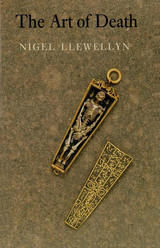
Illustrated and explained in this book are an array of little-known objects and images such as death's head spoons, jewels and swords, mourning-rings and fans, wax effigies, church monuments, Dance of Death prints, funeral invitations and ephemera, as well as works by well-known artists, including Holbein, Hogarth and Blake.

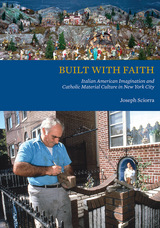
Sciorra spent thirty-five years researching these community art forms and interviewing Italian immigrant and U.S.-born Catholics. By documenting the folklife of this group, Sciorra reveals how Italian Americans in the city use expressive culture and religious practices to transform everyday urban space into unique, communal sites of ethnically infused religiosity. The folk aesthetics practiced by individuals within their communities are integral to understanding how art is conceptualized, implemented, and esteemed outside of museum and gallery walls. Yard shrines, sidewalk altars, Nativity presepi, Christmas house displays, a stone-studded grotto, and neighborhood processions—often dismissed as kitsch or prized as folk art—all provide examples of the vibrant and varied ways contemporary Italian Americans use material culture, architecture, and public ceremonial display to shape the city’s religious and cultural landscapes.
Written in an accessible style that will appeal to general readers and scholars alike, Sciorra’s unique study contributes to our understanding of how value and meaning are reproduced at the confluences of everyday life.
Joseph Sciorra is the director of Academic and Cultural Programs at the John D. Calandra Italian American Institute, Queens College. He is the editor of Italian Folk: Vernacular Culture in Italian-American Lives and co-editor of Embroidered Stories: Interpreting Women's Domestic Needlework from the Italian Diaspora.
Corrigan examines different kinds of emptiness essential to American Christianity, such as the emptiness of deep longing, the emptying of the body through fasting or weeping, the emptiness of the wilderness, and the emptiness of historical time itself. He argues, furthermore, that emptiness is closely connected to the ways Christian groups differentiate themselves: many groups foster a sense of belonging not through affirmation, but rather avowal of what they and their doctrines are not. Through emptiness, American Christians are able to assert their identities as members of a religious community.
Drawing much-needed attention to a crucial aspect of American Christianity, Emptiness expands our understanding of historical and contemporary Christian practices.

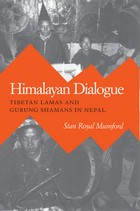
Here for the first time is a thorough anthropological study of Tibetan lamaism combining textual analysis with richly contextualized ethnographic data. The rites studied are of the Nyingma Tibetan Buddhist tradition. In contrast to the textual analyses that have viewed the culture as a finished entity, here we see an unbounded ritual process with unfinished interpretations.
Mumford’s focus is on the “dialogue” taking place between the lamaist and the shamanic regimes, as a historic development occurring between different cultural layers. The study powerfully demonstrates that interrelationships between subsystems within a given cultural matrix over time are critical to an understanding of religion as a cultural process.
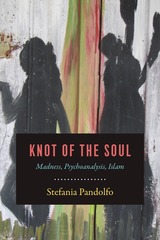
Knot of the Soul moves from the experience of psychosis in psychiatric hospitals, to the visionary torments of the soul in poor urban neighborhoods, to the melancholy and religious imaginary of undocumented migration, culminating in the liturgical stage of the Qur’anic cure. Demonstrating how contemporary Islamic cures for madness address some of the core preoccupations of the psychoanalytic approach, she reveals how a religious and ethical relation to the “ordeal” of madness might actually allow for spiritual transformation.
This sophisticated and evocative work illuminates new dimensions of psychoanalysis and the ethical imagination while also sensitively examining the collective psychic strife that so many communities endure today.



How have modern Jews appropriated traditional aspects of their culture and religion to sustain them in the modern world? Twenty-one distinguished scholars address this question by drawing on a range of disciplines: social and cultural history, ethnography, folklore, sociology, educational theory, and rabbinics. They examine Jewish communities from Russia to North Africa, from Israel to the United States. Among the subjects they explore are Jewish art, holiday practices, feminist ceremonies, adult education, and religious movements in Israel.
The Uses of Tradition demonstrates the persistence of tradition and the limits to continuity. It asks: How extensively can tradition be reinterpreted before it is subverted? At what point is creative reinvention an act of betrayal? How effectively can selective borrowing from tradition sustain a religious community?
How has Confucius, quintessentially and symbolically Chinese, been received throughout Japanese history? The Worship of Confucius in Japan provides the first overview of the richly documented and colorful Japanese version of the East Asian ritual to venerate Confucius, known in Japan as the sekiten. The original Chinese political liturgy embodied assumptions about sociopolitical order different from those of Japan. Over more than thirteen centuries, Japanese in power expressed a persistently ambivalent response to the ritual’s challenges and often tended to interpret the ceremony in cultural rather than political terms.
Like many rituals, the sekiten self-referentially reinterpreted earlier versions of itself. James McMullen adopts a diachronic and comparative perspective. Focusing on the relationship of the ritual to political authority in the premodern period, McMullen sheds fresh light on Sino-Japanese cultural relations and on the distinctive political, cultural, and social history of Confucianism in Japan. Successive sections of The Worship of Confucius in Japan trace the vicissitudes of the ceremony through two major cycles of adoption, modification, and decline, first in ancient and medieval Japan, then in the late feudal period culminating in its rejection at the Meiji Restoration. An epilogue sketches the history of the ceremony in the altered conditions of post-Restoration Japan and up to the present.
READERS
Browse our collection.
PUBLISHERS
See BiblioVault's publisher services.
STUDENT SERVICES
Files for college accessibility offices.
RECENTLY PUBLISHED




UChicago Accessibility Resources
home | accessibility | search | about | contact us
BiblioVault ® 2001 - 2024
The University of Chicago Press