
 A SCHOLARLY BOOK REPOSITORY
8 start with I start with I
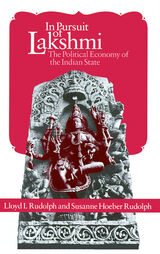
India occupies a paradoxical plane among nation states: it is both developed and underdeveloped, rich and poor, strong and weak. These contrasts locate India in the international order. The Rudolphs' theory of demand and command polities provides a general framework for explaining the special circumstances of the Indian experience.
Contrary to what one might expect in a country with great disparities of wealth, no national party, right or left, pursues the politics of class. Instead, the Rudolphs argue, private capital and organized labor in India face a "third actor"—the state. Because of the dominance of the state makes class politics marginal, the state is itself an element in the creation of the centrist-oriented social pluralism that has characterized Indian politics since independence.
In analyzing the relationship between India's politics and its economy, the Rudolphs maintain that India's economic performance has been only marginally affected by the type of regime in power—authoritarian or democratic. More important, they show that rising levels of social mobilization and personalistic rule have contributed to declining state capacity and autonomy. At the same time, social mobilization has led to a more equitable distribution of economic benefits and political power, which has enhanced the state's legitimacy among its citizens.
The scope and explanatory power of In Pursuit of Lakshmi will make it essential for all those interested in political economy, comparative politics, Asian studies and India.

Winner of the William M. LeoGrande Prize
For over a century, the United States has sought to improve the behavior of the peoples of Latin America. Perceiving their neighbors to the south as underdeveloped and unable to govern themselves, U.S. policy makers have promoted everything from representative democracy and economic development to oral hygiene. But is improvement a progressive impulse to help others, or realpolitik in pursuit of a superpower’s interests?
“In this subtle and searing critique of U.S. efforts to ‘uplift’ Latin America, Lars Schoultz challenges us to question the fundamental tenets of the development industry that became entrenched in the U.S. foreign policy bureaucracy over the last century.”
—Piero Gleijeses, author of Visions of Freedom
“In this masterful work, Lars Schoultz provides a companion and follow-up to his classic Beneath the United States…A necessary and rewarding read for scholars and students of U.S. foreign policy and inter-American relations.”
—Renata Keller, The Americas
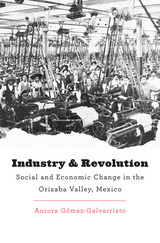
The Mexican Revolution has long been considered a revolution of peasants. But Aurora Gómez-Galvarriato’s investigation of the mill towns of the Orizaba Valley reveals that industrial workers played a neglected but essential role in shaping the Revolution. By tracing the introduction of mechanized industry into the valley, she connects the social and economic upheaval unleashed by new communication, transportation, and production technologies to the political unrest of the revolutionary decade. Industry and Revolution makes a convincing argument that the Mexican Revolution cannot be understood apart from the changes wrought by the Industrial Revolution, and thus provides a fresh perspective on both transformations.
By organizing collectively on a wide scale, the spinners and weavers of the Orizaba Valley, along with other factory workers throughout Mexico, substantially improved their living and working conditions and fought to secure social and civil rights and reforms. Their campaigns fed the imaginations of the masses. The Constitution of 1917, which embodied the core ideals of the Mexican Revolution, bore the stamp of the industrial workers’ influence. Their organizations grew powerful enough to recast the relationship between labor and capital, not only in the towns of the valley, but throughout the entire nation.
The story of the Orizaba Valley offers insight into the interconnections between the social, political, and economic history of modern Mexico. The forces unleashed by the Mexican and the Industrial revolutions remade the face of the nation and, as Gómez-Galvarriato shows, their consequences proved to be enduring.

In advanced economies like the United States, innovation has long been recognized as a central force for increasing economic prosperity and human welfare. Today, the US government promotes innovation through various mechanisms, including tax credits for private-sector research, grant support for basic and applied research, and institutions like the Small Business Innovation Research Program of the National Science Foundation. Drawing on the latest empirical and conceptual research, Innovation and Public Policy surveys the key components of innovation policy and the social returns to innovation investment. It examines mechanisms that can advance the pace of invention and innovative activity, including expanding the research workforce through schooling and immigration policy and funding basic research. It also considers scientific grant systems for funding basic research, including those at institutions like the National Institutes of Health and the National Science Foundation, and investigates the role of entrepreneurship policy and of other institutions that promote an environment conducive to scientific breakthroughs.

Where Latin American government leaders once looked at free trade agreements as solely about trade and trading policies, they are increasingly viewing them as the next beacon of hope in the long and arduous road of economic reform.
Integrating the Americas: FTAA and Beyond discusses how these governments have become embroiled in a larger set of issues affecting both institutions. This work, based on a conference sponsored by the Inter-American Development Bank and the David Rockefeller Center for Latin American Studies, examines how this free trade process is surging ahead, while at the same time taking on a broader set of issues including institutional reform, transparency, the environment, labor, and social cohesion. The payoffs to the strategy of liberalization, privatization, and openness have been meager and disappointing to date. Will the FTAA be able to reverse this and allow Latin America to reap the benefits of globalization?

Often considered one of the major forces behind economic growth and development, the entrepreneurial firm can accelerate the speed of innovation and dissemination of new technologies, thus increasing a country's competitive edge in the global market. As a result, cultivating a strong culture of entrepreneurial thinking has become a primary goal throughout the world.
Surprisingly, there has been little systematic research or comparative analysis to show how the growth of entrepreneurship differs among countries in various stages of development. International Differences in Entrepreneurship fills this void by explaining how a country's institutional differences, cultural considerations, and personal characteristics can affect the role that entrepreneurs play in its economy. Developing an understanding of the origins of entrepreneurs as well as the choices they make and the complexity of their activities across countries and industries are of central importance to this volume. In addition, contributors consider how environmental factors of individual economies, such as market regulation, government subsidies for banks, and support for entrepreneurial culture affect the industry and the impact that entrepreneurs have on growth in developing nations.
The International Monetary Fund (IMF) has played a critical role in the global economy since the postwar era. But, claims Claudia Kedar, behind the strictly economic aspects of the IMF’s intervention, there are influential interactions between IMF technocrats and local economists—even when countries are not borrowing money.
In The International Monetary Fund and Latin America, Kedar seeks to expose the motivations and constraints of the operations of both the IMF and borrowers. With access to never-before-seen archive materials, Kedar reveals both the routine and behind-the-scenes practices that have depicted International Monetary Fund–Latin American relations in general and the asymmetrical IMF-Argentina relations in particular.
Kedar also analyzes the “routine of dependency” that characterizes IMF-borrower relations with several Latin American countries such as Chile, Peru, and Brazil. The International Monetary Fund and Latin America shows how debtor countries have adopted IMF’s policies during past decades and why Latin American leaders today largely refrain from knocking at the IMF’s doors again.

READERS
Browse our collection.
PUBLISHERS
See BiblioVault's publisher services.
STUDENT SERVICES
Files for college accessibility offices.
RECENTLY PUBLISHED







UChicago Accessibility Resources
home | accessibility | search | about | contact us
BiblioVault ® 2001 - 2024
The University of Chicago Press