
 A SCHOLARLY BOOK REPOSITORY
Beyond Naturalness brings together leading scientists and policymakers to explore the concept of naturalness, its varied meanings, and the extent to which it provides adequate guidance regarding where, when, and how managers should intervene in ecosystem processes to protect park and wilderness values. The main conclusion is the idea that naturalness will continue to provide an important touchstone for protected area conservation, but that more specific goals and objectives are needed to guide stewardship.
The issues considered in Beyond Naturalness are central not just to conservation of parks, but to many areas of ecological thinking—including the fields of conservation biology and ecological restoration—and represent the cutting edge of discussions of both values and practice in the twenty-first century. This bookoffers excellent writing and focus, along with remarkable clarity of thought on some of the difficult questions being raised in light of new and changing stressors such as global environmental climate change.

Contributors explore the challenges, costs, and benefits of bridging scales and knowledge systems in assessment processes and in resource management. Case studies look at a variety of efforts to bridge scales, providing important lessons concerning what has worked, what has not, and the costs and benefits associated with those efforts. Drawing on the groundbreaking work of the Millennium Eco-system Assessment, Bridging Scales and Knowledge Systems will be indispensable for future efforts to conduct ecosystem assessments around the world.
This volume provides a central source of information about this newly emerging area of global change research. It presents ongoing investigations into the responses of plant communities and ecosystems to the experimental manipulation of precipitation in a variety of field settings—particularly in the western and central United States, where precipitation is already scarce or variable. By exploring methods that can be used to predict responses of ecosystems to changes in precipitation regimes, it demonstrates new approaches to global change research and highlights the importance of precipitation regimes in structuring ecosystems.
The contributors first document the importance of precipitation, soil characteristics, and soil moisture to plant life. They then focus on the roles of precipitation amount, seasonality, and frequency in shaping varied terrestrial ecosystems: desert, sagebrush steppe, oak savanna, tall- and mixed-grass prairie, and eastern deciduous forest. These case studies illustrate many complex, tightly woven, interactive relationships among precipitation, soils, and plants—relationships that will dictate the responses of ecosystems to changes in precipitation regimes.
The approaches utilized in these chapters include spatial comparisons of vegetation structure and function across different ecosytems; analyses of changes in plant architecture and physiology in response to temporal variation in precipitation; experiments to manipulate water availability; and modeling approaches that characterize the relationships between climate variables and vegetation types. All seek to assess vegetation responses to major shifts in climate that appear to be occurring at present and may become the norm in the future.
As the first volume to discuss and document current and cutting-edge concepts and approaches to research into changing precipitation regimes and terrestrial ecosystems, this book shows the importance of developing reliable predictions of the precipitation changes that may occur with global warming. These studies clearly demonstrate that patterns of environmental variation and the nature of vegetation responses are complex phenomena that are only beginning to be understood, and that these experimental approaches are critical for our understanding of future change.
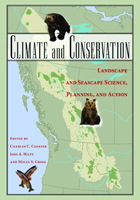
The book begins with an introductory section that frames the issues and takes a systematic look at planning for climate change adaptation. The nineteen chapters that follow examine particular case studies in every part of the world, including landscapes and seascapes from equatorial, temperate, montane, polar, and marine and freshwater regions. Projects profiled range from North American grasslands to boreal forests to coral reefs to Alpine freshwater environments.
Chapter authors have extensive experience in their respective regions and are actively engaged in working on climate-related issues. The result is a collection of geographical case studies that allows for effective cross-comparison while at the same time recognizing the uniqueness of each situation and locale.
Climate and Conservation offers readers tangible, place-based examples of projects designed to protect large landscapes as a means of conserving biodiversity in the face of the looming threat of global climate change. It informs readers of how a diverse set of conservation actors have been responding to climate change at a scale that matches the problem, and is an essential contribution for anyone involved with large-scale biodiversity conservation.
Over the past decade, a sea change has occurred in the field of forestry. A vastly increased understanding of how ecological systems function has transformed the science from one focused on simplifying systems, producing wood, and managing at the stand-level to one concerned with understanding and managing complexity, providing a wide range of ecological goods and services, and managing across broad landscapes.
Creating a Forestry for the 21st Century is an authoritative and multidisciplinary examination of the current state of forestry and its relation to the emergent field of ecosystem management. Drawing upon the expertise of top professionals in the field, it provides an up-to-date synthesis of principles of ecosystem management and their implications for forest policy. Leading scientists, including Malcolm Hunter, Jr., Bruce G. Marcot, James K. Agee, Thomas R. Crow, Robert J. Naiman, John C. Gordon, R.W. Behan, Steven L. Yaffee, and many others examine topics that are central to the future of forestry:
- new understandings of ecological processes and principles, from stand structure and function to disturbance processes and the movement of organisms across landscapes
- challenges to long-held assumptions: the rationale for clearcutting, the wisdom of short rotations, the exclusion of fire
- traditional tools in light of expanded goals for forest landscapes
- managing at larger spatial scales, including practical information and ideas for managing large landscapes over long time periods
- the economic, organizational, and political issues that are critical to implementing successful ecosystem management and developing institutions to transform knowledge into action
This book provides an extensive knowledge base on all aspects of the San Pedro, from flora and fauna to hydrology and human use to preservation. It describes the ecological patterns and processes of this aridland river and explores both the ongoing science-driven efforts by nonprofit groups and government agencies to sustain and restore its riparian ecosystems and the science that supports these management decisions.
An interdisciplinary team of fifty-seven contributors—biologists, ecologists, geomorphologists, historians, hydrologists, lawyers, political scientists—weave together threads from their diverse perspectives to reveal the processes that shape the past, present, and future of the San Pedro’s riparian and aquatic ecosystems. They review the biological communities of the San Pedro and the stream hydrology and geomorphology that affect its riparian biota. They then look at conservation and management challenges along three sections of the San Pedro, from its headwaters in Mexico to its confluence with the Gila River, describing legal and policy issues and their interface with science; activities related to mitigation, conservation, and restoration; and a prognosis of the potential for sustaining the basin’s riparian system.
These chapters demonstrate the complexity of the San Pedro’s ecological and hydrological conditions, showing that there are no easy answers to the problems—and that existing laws are inadequate to fully address them. Collectively, they offer students, professionals, and environmental advocates a better grasp of the San Pedro’s status as well as important lessons for restoring physical processes and biotic communities to rivers in arid and semiarid regions.
Today's natural resource managers must be able to navigate among the complicated interactions and conflicting interests of diverse stakeholders and decisionmakers. Technical and scientific knowledge, though necessary, are not sufficient. Science is merely one component in a multifaceted world of decision making. And while the demands of resource management have changed greatly, natural resource education and textbooks have not. Until now.
Ecosystem Management represents a different kind of textbook for a different kind of course. It offers a new and exciting approach that engages students in active problem solving by using detailed landscape scenarios that reflect the complex issues and conflicting interests that face today's resource managers and scientists. Focusing on the application of the sciences of ecology and conservation biology to real-world concerns, it emphasizes the intricate ecological, socioeconomic, and institutional matrix in which natural resource management functions, and illustrates how to be more effective in that challenging arena.
Each chapter is rich with exercises to help facilitate problem-based learning. The main text is supplemented by boxes and figures that provide examples, perspectives, definitions, summaries, and learning tools, along with a variety of essays written by practitioners with on-the-ground experience in applying the principles of ecosystem management.
Accompanying the textbook is an instructor's manual that provides a detailed overview of the book and specific guidance on designing a course around it.
Ecosystem Management grew out of a training course developed and presented by the authors for the U.S. Fish and Wildlife Service at its National Training Center in Shepherdstown, West Virginia. In 20 offerings to more than 600 natural resource professionals, the authors learned a great deal about what is needed to function successfully as a professional resource manager. The book offers important insights and a unique perspective dervied from that invaluable experience.
Ecosystems and Human Well-being is the first product of the Millennium Ecosystem Assessment (MA), a four-year international work program designed to meet the needs of decision-makers for scientific information on the links between ecosystem change and human well-being. The Millennium Ecosystem Assessment is modeled on the Intergovernmental Panel on Climate Change (IPCC) and will provide information requested by governments, through four international conventions, as well as meeting needs within the private sector and civil society. Ecosystems and Human Well-being offers an overview of the assessment, describing the conceptual framework that is being used, defining its scope and providing a baseline of understanding that all participants need to move forward.
The Millennium Ecosystem Assessment focuses on how humans have altered ecosystems, and how changes in ecosystems have affected human well-being. The assessment also evaluates how ecosystem changes may affect people in future decades and what responses can be adopted at local, national, or global scales to improve ecosystem management and thereby contribute to human well-being and poverty alleviation. The assessment was launched by United Nations Secretary-General Kofi Annan in June 2001, and the primary assessment reports will be released by Island Press in 2005.
The Millennium Ecosystem Assessment series is an invaluable new resource for professionals and policy-makers concerned with international development, environmental science, environmental policy, and related fields. It will help both in choosing among existing options and in identifying new approaches for achieving integrated management of land, water, and living resources while strengthening regional, national, and local capacities. The Millennium Ecosystem Assessment series will also improve policy and decision-making at all levels by increasing collaboration between natural and social scientists, and between scientists and policy-makers. Ecosystems and Human Well-being is an essential introduction to the program.
The manual is a stand-alone “how to” guide to conducting assessments of the impacts on humans of ecosystem changes. In addition, assessment practitioners who are looking for guidance on particular aspects of the assessment process will find individual chapters of this manual to be useful in advancing their understanding of best practices in ecosystem assessment. The manual builds on the experiences and lessons learned from the Millennium Ecosystem Assessment global and sub-global assessment initiatives, with chapters written by well-known participants in those initiatives. It also includes insights and experiences gained from a wider range of ecosystem service-focused assessment activities since the completion of the MA in 2005.
adaptive management approaches to ecosystem and resource management.
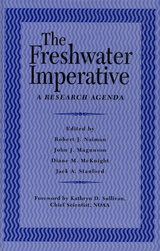
This volume summarizes the two-year effort of a working group of leading aquatic scientists sponsored by NSF, EPA, NASA, TVA, and NOAA to identify research opportunities and frontiers in freshwater sciences for this decade and beyond. The research agenda outlined focuses on issues of water availability, aquatic ecosystem integrity, and human health and safety. It is a consensus document that has been endorsed by all of the major professional organizations involved with freshwater issues.
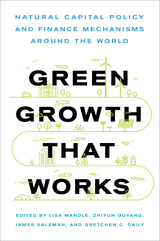
Green Growth That Works is the first practical guide to bring together pragmatic finance and policy tools that can make investment in natural capital both attractive and commonplace. The authors present six mechanisms that demonstrate a range of approaches used around the globe to conserve and restore earth’s myriad ecosystems, including:
- Government subsidies
- Regulatory-driven mitigation
- Voluntary conservation
- Water funds
- Market-based transactions
- Bilateral and multilateral payments
Pioneered by leading scholars from the Natural Capital Project, this valuable compendium of proven techniques can guide agencies and organizations eager to make green growth work anywhere in the world.
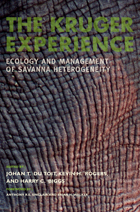
Kruger National Park in South Africa has one of the most extensive sets of records of any protected area in the world, and throughout its history has supported connections between science and management. In recognition of that long-standing tradition comes The Kruger Experience, the first book to synthesize/summarize a century of ecological research and management in two million hectares of African savanna.
The Kruger Experience places the scientific and management experience in Kruger within the framework of modern ecological theory and its practical applications. The book uses a cross-cutting theme of ecological heterogeneity -- the idea that ecological systems function across a full hierarchy of physical and biological components, processes, and scales, in a dynamic space-time mosaic. Contributors, who include many esteemed ecologists who have worked in Kruger in recent years, examine a range of topics covering broad taxonomic groupings and ecological processes. The book's four sections explore:
- the historical context of research and management in Kruger, the theme of heterogeneity, and the current philosophy in Kruger for linking science with management
- the template of natural components and processes, as influenced by management, that determine the present state of the Kruger ecosystem
- how species interact within the ecosystem to generate further heterogeneity across space and time
- humans as key components of savanna ecosystems
In addition to the editors, contributors include William J. Bond, Jane Lubchenco, David Mabunda, Michael G.L. ("Gus") Mills, Robert J. Naiman, Norman Owen-Smith, Steward T.A. Pickett, Stuart L. Pimm, and Rober J. Scholes.
The book is an invaluable new resource for scientists and managers involved with large, conserved ecosystems as well as for conservation practitioners and others with interests in adaptive management, the societal context of conservation, links between research and management in parks, and parks/academic partnerships.
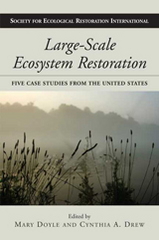
Representing a variety of geographic regions and project structures, the cases shed light on the central controversies that have marked each project, outlining
• the history of the project
• the environmental challenges that generated it
• the difficulties of approaching the project on an ecosystem-wide basis
• techniques for conflict resolution and consensus building
• the ongoing role of science in decision making
• the means of dealing with uncertainties
A concluding chapter offers a guide to assessing the progress of largescale restoration projects.
Large-Scale Ecosystem Restoration examines some of the most difficult and important issues involved in restoring and protecting natural systems. It is a landmark publication for scientists, policymakers, and anyone working to protect or restore landscapes or watersheds.
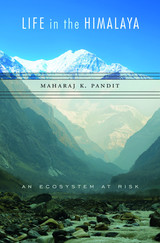
The collision of the Indian and Eurasian plates around fifty million years ago profoundly altered earth’s geography and regional climates. The rise of the Himalaya led to intensification of the monsoon, the birth of massive glaciers and turbulent rivers, and an efflorescence of ecosystems along the most extreme elevational gradient on Earth. When the Ice Age ended, humans became part of this mix, and today nearly one quarter of the world’s population inhabits its river basins, from Afghanistan to Myanmar. Life in the Himalaya examines the region’s geophysical and biological systems and explores the past and future of human sustainability in the mountain’s shadow.
Maharaj Pandit divides the Himalaya’s history into four phases. During the first, the mountain and its ecosystems formed. In the second, humans altered the landscape, beginning with nomadic pastoralism, continuing to commercial deforestation, and culminating in pockets of resistance to forest exploitation. The third phase saw a human population explosion, accompanied by road and dam building and other large-scale infrastructure that degraded ecosystems and caused species extinctions. Pandit outlines a future networking phase which holds the promise of sustainable living within the mountain’s carrying capacity.
Today, the Himalaya is threatened by recurrent natural disasters and is at risk of catastrophic loss of life. If humans are to have a sustainable future there, Pandit argues, they will need to better understand the region’s geological vulnerability, ecological fragility, and sociocultural sensitivity. Life in the Himalaya outlines the mountain’s past in order to map a way forward.
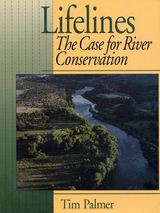
Palmer examines the alarming condition of rivers in today's world, reports on the success in restoring some of our most polluted streams and in stopping destructive dams, and builds the case for what must be done to avoid the collapse of riparian ecosystems and to reclaim qualities we cannot do without. He documents the needs for a new level of awareness and suggests ways to avert the plunder of our remaining river legacy.
Lifelines offers a fresh perspective on:
- the values of natural rivers
- current threats to streams and possibilities for reform
- the continuing challenge of hydropower development
- water quality, instream flows, and riparian habitat
- ecosystem management and watershed protection
- the need for vision, hope, and action
Both realism and justice demand that efforts to conserve biological diversity address human needs as well. The most promising hope of accomplishing such a goal lies in locally based conservation efforts -- an approach that seeks ways to make local communities the beneficiaries and custodians of conservation efforts.
Natural Connections focuses on rural societies and the conservation of biodiversity in rural areas. It represents the first systematic analysis of locally based efforts, and includes a comprehensive examination of cases from around the world where the community-based approach is used. The book provides:
- an overview of community-based conservation in the context of the debate over sustainable development, poverty, and environmental decline
- case studies from the developed and developing worlds -- Indonesia, Peru, Australia, Zimbabwe, Costa Rica, the United Kingdom -- that present detailed examples of the locally based approach to conservation
- a review of the principal issues arising from community-based programs
- an agenda for future action
Life itself as well as the entire human economy depends on goods and services provided by earth's natural systems. The processes of cleansing, recycling, and renewal, along with goods such as seafood, forage, and timber, are worth many trillions of dollars annually, and nothing could live without them. Yet growing human impacts on the environment are profoundly disrupting the functioning of natural systems and imperiling the delivery of these services.
Nature's Services brings together world-renowned scientists from a variety of disciplines to examine the character and value of ecosystem services, the damage that has been done to them, and the consequent implications for human society. Contributors including Paul R. Ehrlich, Donald Kennedy, Pamela A. Matson, Robert Costanza, Gary Paul Nabhan, Jane Lubchenco, Sandra Postel, and Norman Myers present a detailed synthesis of our current understanding of a suite of ecosystem services and a preliminary assessment of their economic value. Chapters consider:
- major services including climate regulation, soil fertility, pollination, and pest control
- philosophical and economic issues of valuation
- case studies of specific ecosystems and services
- implication of recent findings and steps that must be taken to address the most pressing concerns
Conceptual models based on alternative stable states and restoration thresholds can help inform restoration efforts. New Models for Ecosystem Dynamics and Restoration brings together leading experts from around the world to explore how conceptual models of ecosystem dynamics can be applied to the recovery of degraded systems and how recent advances in our understanding of ecosystem and landscape dynamics can be translated into conceptual and practical frameworks for restoration.
In the first part of the book, background chapters present and discuss the basic concepts and models and explore the implications of new scientific research on restoration practice. The second part considers the dynamics and restoration of different ecosystems, ranging from arid lands to grasslands, woodlands, and savannahs, to forests and wetlands, to production landscapes. A summary chapter by the editors discusses the implications of theory and practice of the ideas described in preceding chapters.
New Models for Ecosystem Dynamics and Restoration aims to widen the scope and increase the application of threshold models by critiquing their application in a wide range of ecosystem types. It will also help scientists and restorationists correctly diagnose ecosystem damage, identify restoration thresholds, and develop corrective methodologies that can overcome such thresholds.
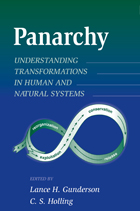
Creating institutions to meet the challenge of sustainability is arguably the most important task confronting society; it is also dauntingly complex. Ecological, economic, and social elements all play a role, but despite ongoing efforts, researchers have yet to succeed in integrating the various disciplines in a way that gives adequate representation to the insights of each.
Panarchy, a term devised to describe evolving hierarchical systems with multiple interrelated elements, offers an important new framework for understanding and resolving this dilemma. Panarchy is the structure in which systems, including those of nature (e.g., forests) and of humans (e.g., capitalism), as well as combined human-natural systems (e.g., institutions that govern natural resource use such as the Forest Service), are interlinked in continual adaptive cycles of growth, accumulation, restructuring, and renewal. These transformational cycles take place at scales ranging from a drop of water to the biosphere, over periods from days to geologic epochs. By understanding these cycles and their scales, researchers can identify the points at which a system is capable of accepting positive change, and can use those leverage points to foster resilience and sustainability within the system.
This volume brings together leading thinkers on the subject -- including Fikret Berkes, Buz Brock, Steve Carpenter, Carl Folke, Lance Gunderson, C.S. Holling, Don Ludwig, Karl-Goran Maler, Charles Perrings, Marten Scheffer, Brian Walker, and Frances Westley -- to develop and examine the concept of panarchy and to consider how it can be applied to human, natural, and human-natural systems. Throughout, contributors seek to identify adaptive approaches to management that recognize uncertainty and encourage innovation while fostering resilience.
The book is a fundamental new development in a widely acclaimed line of inquiry. It represents the first step in integrating disciplinary knowledge for the adaptive management of human-natural systems across widely divergent scales, and offers an important base of knowledge from which institutions for adaptive management can be developed. It will be an invaluable source of ideas and understanding for students, researchers, and professionals involved with ecology, conservation biology, ecological economics, environmental policy, or related fields.
Recent advances in remote-sensing technology and the processing of remote-sensing data through geographic information systems (GIS) present ecologists and resource managers with a tremendously valuable tool -- but only if they are able to understand its capabilities and capture its potential.
Remote Sensing and GIS in Ecosystem Management identifies and articulates current and emerging information needs of those involved with the management of forest ecosystems. It explores the potential of remote-sensing/GIS technologies to address those needs, examining:
- the need for landscape-scale analysis to support forest ecosystem research and management
- current challenges in the development of remote-sensing/GIS applications
- case studies of different forest regions in the United States
- the potential for further development or declassification of military and aerospace remote-sensing/GIS technologies
The conventional approach to river protection has focused on water quality and maintaining some "minimum" flow that was thought necessary to ensure the viability of a river. In recent years, however, scientific research has underscored the idea that the ecological health of a river system depends not on a minimum amount of water at any one time but on the naturally variable quantity and timing of flows throughout the year.
In Rivers for Life, leading water experts Sandra Postel and Brian Richter explain why restoring and preserving more natural river flows are key to sustaining freshwater biodiversity and healthy river systems, and describe innovative policies, scientific approaches, and management reforms for achieving those goals. Sandra Postel and Brian Richter: explain the value of healthy rivers to human and ecosystem health; describe the ecological processes that support river ecosystems and how they have been disrupted by dams, diversions, and other alterations; consider the scientific basis for determining how much water a river needs; examine new management paradigms focused on restoring flow patterns and sustaining ecological health; assess the policy options available for managing rivers and other freshwater systems; explore building blocks for better river governance.
Sandra Postel and Brian Richter offer case studies of river management from the United States (the San Pedro, Green, and Missouri), Australia (the Brisbane), and South Africa (the Sabie), along with numerous examples of new and innovative policy approaches that are being implemented in those and other countries.
Rivers for Life presents a global perspective on the challenges of managing water for people and nature, with a concise yet comprehensive overview of the relevant science, policy, and management issues. It presents exciting and inspirational information for anyone concerned with water policy, planning and management, river conservation, freshwater biodiversity, or related topics.
Written by two leading conservation biologists, Saving Nature's Legacy is a thorough and readable introduction to issues of land management and conservation biology. It presents a broad, land-based approach to biodiversity conservation in the United States, with the authors succinctly translating principles, techniques, and findings of the ecological sciences into an accessible and practical plan for action.
After laying the groundwork for biodiversity conservation -- what biodiversity is, why it is important, its status in North America -- Noss and Cooperrider consider the strengths and limitations of past and current approaches to land management. They then present the framework for a bold new strategy, with explicit guidelines on:
- inventorying biodiversity
- selecting areas for protection
- designing regional and continental reserve networks
- establishing monitoring programs
- setting priorities for getting the job done
Science and Ecosystem Management in the National Parks presents twelve case studies of long-term research conducted in and around national parks that address major natural resource issues. These cases demonstrate how the use of longer time scales strongly influence our understanding of ecosystems and how interpretations of short-term patterns in nature often change when viewed in the context of long-term data sets. Most importantly, they show conclusively that scientific research significantly reduces uncertainty and improves resource management decisions. Chosen by scientists and senior park managers, the cases offer a broad range of topics, including: air quality at Grand Canyon; interaction between moose and wolf populations on Isle Royale; control of exotic species in Hawaiian parks; simulation of natural fire in the parks of the Sierra Nevada; and the impact of urban expansion on Saguaro National Monument.
Because national parks are increasingly beset with conflicting views of their management, the need for knowledge of park ecosystems becomes even more critical--not only for the parks themselves, but for what they can tell us about survival in the rest of our world. This book demonstrates to policymakers and managers that decisions based on knowledge of ecosystems are more enduring and cost effective than decisions derived from uninformed consensus. It also provides scientists with models for designing research to meet threats to our most precious natural resources. "If we can learn to save the parks," observe Halvorson and Davis, "perhaps we can learn to save the world."

Building on the groundwork laid by the classic Serengeti: Dynamics of an Ecosystem, published in 1979 by the University of Chicago Press, this new book integrates studies of the ecosystem at every level—from the plants at the bottom of the visible food chain, to the many species of herbivores and predators, to the system as a whole. Drawing on new data from many long-term studies and from more recent research initiatives, and applying new theory and computer technology, the contributors examine the large-scale processes that have produced the Serengeti's extraordinary biological diversity, as well as the interactions among species and between plants and animals and their environment. They also introduce computer modeling as a tool for exploring these interactions, employing this new technology to test and anticipate the effects of social, political, and economic changes on the entire ecosystem and on particular species, and so to shape future conservation and management strategies.

Serengeti IV, the latest installment in a long-standing series on the region’s ecology and biodiversity, explores the role of our species as a source of both discord and balance in Serengeti ecosystem dynamics. Through chapters charting the complexities of infectious disease transmission across populations, agricultural expansion, and the many challenges of managing this ecosystem today, this book shows how the people and landscapes surrounding crucial protected areas like Serengeti National Park can and must contribute to Serengeti conservation. In order to succeed, conservation efforts must also focus on the welfare of indigenous peoples, allowing them both to sustain their agricultural practices and to benefit from the natural resources provided by protected areas—an undertaking that will require the strengthening of government and education systems and, as such, will present one of the greatest conservation challenges of the next century.
Sustaining Biodiversity and Ecosystem Services in Soils and Sediments brings together the world's leading ecologists, systematists, and evolutionary biologists to present scientific information that integrates soil and sediment disciplines across terrestrial, marine, and freshwater ecosystems. It offers a framework for a new discipline, one that will allow future scientists to consider the linkages of biodiversity below-surface, and how biota interact to provide the essential ecosystemservices needed for sustainable soils and sediments.
Contributors consider key-questions regarding soils and sediments and the relationship between soil- and sediment- dwelling organisms and overall ecosystem functioning. The book is an important new synthesis for scientists and researchers studying a range of topics, including global sustainability, conservation biology, taxonomy, erosion, extreme systems, food production, and related fields. In addition, it provides new insight and understanding for managers, policymakers, and others concerned with global environmental sustainability and global change issues.
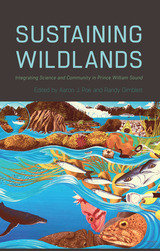
Nearly three decades later, changes in recreation use run counter to what was initially expected. Instead of avoiding Prince William Sound, tourists and visitors flock there. Economic revitalization efforts have resulted in increased wilderness access as new commercial enterprises offer nature tourism in remote bays and fjords. This increased visitation has caused concerns that the wilderness may again be threatened—not by oil but rather by the very humans seeking those wilderness experiences.
In Sustaining Wildlands, scientists and managers, along with local community residents, address what has come to be a central paradox in public lands management: the need to accommodate increasing human use while reducing the environmental impact of those activities. This volume draws on diverse efforts and perspectives to dissect this paradox, offering an alternative approach where human use is central to sustaining wildlands and recovering a damaged ecosystem like Prince William Sound.
Contributors:
Brad A. Andres, Chris Beck, Nancy Bird, Dale J. Blahna, Harold Blehm, Sara Boario, Bridget A. Brown, Courtney Brown, Greg Brown, Milo Burcham, Kristin Carpenter, Ted Cooney, Patience Andersen Faulkner, Maryann Smith Fidel, Jessica B. Fraver, Jennifer Gessert, Randy Gimblett, Michael I. Goldstein, Samantha Greenwood, Lynn Highland, Marybeth Holleman, Shay Howlin, Tanya Iden, Robert M. Itami, Lisa Jaeger, Laura A. Kennedy, Spencer Lace, Nancy Lethcoe, Kate McLaughlin, Rosa H. Meehan, Christopher Monz, Karen A. Murphy, Lisa Oakley, Aaron J. Poe, Chandra B. Poe, Karin Preston, Jeremy Robida, Clare M. Ryan, Gerry Sanger, Bill Sherwonit, Lowell H. Suring, Paul Twardock, Sarah Warnock, and Sadie Youngstrom
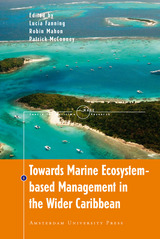
In order to ensure sustainable use of their shared marine resources, the nations of the West Caribbean Region must adopt an approach that encompasses both the human and natural dimensions of ecosystems. This volume directly contributes to that vision, bringing together the collective knowledge and experience of scholars and practitioners within the wider Caribbean to assemble a road map towards marine ecosystem based management for the region. The research presented here will be used not only as a training tool for graduate students, but also as comparative example and guide for stakeholders and policy makers in each of the world’s sixty-four large marine ecosystems.
The idea that humans can effectively "manage" nature -- that we can successfully manipulate and control our environment to meet our needs and satisfy our desires -- is almost universally accepted in today's society. While we may be aware that nearly all significant environmental problems are caused by human actions, we remain convinced that the key to solving these problems is "better management."
In Unmanaged Landscapes, editor Bill Willers brings together an insightful and thought-provoking selection of writings that challenge that assumption. Written between the mid-nineteenth century and the late 1990s, the pieces range from two paragraphs written in response to an exam question to tightly reasoned philosophical arguments. They offer the thoughts, stories, and analysis of scientists, journalists, philosophers, historians, educators, and others who have considered the effects and implications of "resource management," and have found themselves in favor of keeping some landscapes free from human interference.
The collection is divided into three sections: one that focuses on biology and ecology, one that examines the idea of wildness from the standpoint of human society and its economic concerns, and a third that considers philosophical and spiritual aspects of wildness. Featured are works from leading environmental thinkers including Rachel Carlson, George Wuerthner, Joanna Macy, Paul Shepard, David Orr, John Burroughs, David Ehrenfeld, Arne Naess, Bill McKibben, Donald Worster, Carolyn Merchant, Rick Bass, and many others.
As Willers explains in his introduction, "If wildness and wild creatures are to survive on Earth, so then must unmanaged landscapes, for they are the fountainheads of the wildness that Henry Thoreau taught is the preservation of the world. They are the blank spots on the map longed for by Aldo Leopold." Unmanaged Landscapes presents a compelling argument for protecting and restoring that wildness.
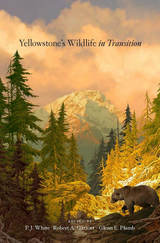
The world's first national park, Yellowstone is a symbol of nature's enduring majesty and the paradigm of protected areas across the globe. But Yellowstone is constantly changing. How we understand and respond to events that are putting species under stress, say the authors of Yellowstone's Wildlife in Transition, will determine the future of ecosystems that were millions of years in the making. With a foreword by the renowned naturalist E. O. Wilson, this is the most comprehensive survey of research on North America's flagship national park available today.
Marshaling the expertise of over thirty contributors, Yellowstone's Wildlife in Transition examines the diverse changes to the park's ecology in recent decades. Since its creation in the 1870s, the priorities governing Yellowstone have evolved, from intensive management designed to protect and propagate depleted large-bodied mammals to an approach focused on restoration and preservation of ecological processes. Recognizing the importance of natural occurrences such as fires and predation, this more ecologically informed oversight has achieved notable successes, including the recovery of threatened native species of wolves, bald eagles, and grizzly bears.
Nevertheless, these experts detect worrying signs of a system under strain. They identify three overriding stressors: invasive species, private-sector development of unprotected lands, and a warming climate. Their concluding recommendations will shape the twenty-first-century discussion over how to confront these challenges, not only in American parks but for conservation areas worldwide. Highly readable and fully illustrated, Yellowstone's Wildlife in Transition will be welcomed by ecologists and nature enthusiasts alike.
READERS
Browse our collection.
PUBLISHERS
See BiblioVault's publisher services.
STUDENT SERVICES
Files for college accessibility offices.
RECENTLY PUBLISHED




UChicago Accessibility Resources
home | accessibility | search | about | contact us
BiblioVault ® 2001 - 2024
The University of Chicago Press