
 A SCHOLARLY BOOK REPOSITORY

The Crisis of Meaning was first published in 1995. Minnesota Archive Editions uses digital technology to make long-unavailable books once again accessible, and are published unaltered from the original University of Minnesota Press editions.
Pick up any newspaper and it is clear that the United States is facing a democratic crisis. Recent culture wars and debates about political correctness and culture have illustrated how conventional definitions of citizenship and national identity have been thrown into question.
Investigating what he views as an inseparable link between culture and politics, David Trend analyzes how notions of patriotism, citizenship, community, and family are communicated within specific public and private institutions. He extends the meaning and purpose of pedagogy as a cultural practice outside the classroom, focusing on political activism in education, the mass media, and the art world.
The Crisis of Meaning supplies a crucial theoretical understanding of the ways in which the pedagogical and political intersect at a variety of cultural sites, as it points us toward a "democratic" process of national identity formation. It is indispensable reading for anyone interested in the connections between education and politics.
David Trend is executive director of the Center for Social Research and Education in San Francisco and also executive editor of the Socialist Review. He is the author of Cultural Pedagogy: Art/Education/Politics (1992).

"An outstanding work of educational theory and history."—John Coatsworth, University of Chicago
George S. Counts was amajor figure in American education for almost fifty years. Republication of this early (1932) work draws special attention to Counts’s role as a social and political activist. Three particular themes make the book noteworthy because of their importance in Counts’s plan for change as well as for their continuing contemporary importance: (1)Counts’s criticism of child-centered progressives; (2)the role Counts assigns to teachers in achieving educational and social reform; and (3) Counts’s idea for the reform of the American economy.
"A carefully argued and readable book. . . . Egan proposes a radical change of approach for the whole process of education. . . . There is much in this book to interest and excite those who discuss, research or deliver education."—Ann Fullick, New Scientist
"A compelling vision for today's uncertain educational system."—Library Journal
"Almost anyone involved at any level or in any part of the education system will find this a fascinating book to read."—Dr. Richard Fox, British Journal of Educational Psychology
"A fascinating and provocative study of cultural and linguistic history, and of how various kinds of understanding that can be distinguished in that history are recapitulated in the developing minds of children."—Jonty Driver, New York Times Book Review
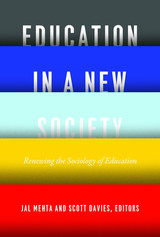
The sociology of education, the contributors show, largely works with themes, concepts, and theories that were generated decades ago, even as both the actual world of education and the discipline of sociology have changed considerably. The moment has come, they argue, to break free of the past and begin asking new questions and developing new programs of empirical study. Both rallying cry and road map, Education in a New Society will galvanize the field.
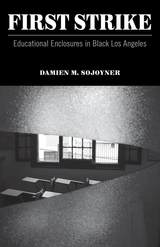
California is a state of immense contradictions. Home to colossal wealth and long portrayed as a bastion of opportunity, it also has one of the largest prison populations in the United States and consistently ranks on the bottom of education indexes. Taking a unique, multifaceted insider’s perspective, First Strike delves into the root causes of its ever-expansive prison system and disastrous educational policy.
Recentering analysis of Black masculinity beyond public rhetoric, First Strike critiques the trope of the “school-to-prison pipeline” and instead explores the realm of public school as a form of “enclosure” that has influenced the schooling (and denial of schooling) and imprisonment of Black people in California. Through a fascinating ethnography of a public school in Los Angeles County, and a “day in the life tour” of the effect of prisons on the education of Black youth, Damien M. Sojoyner looks at the contestation over education in the Black community from Reconstruction to the civil rights and Black liberation movements of the past three decades.
Policy makers, school districts, and local governments have long known that there is a relationship between high incarceration rates and school failure. First Strike is the first book that demonstrates why that connection exists and shows how school districts, cities and states have been complicit and can reverse a disturbing and needless trend. Rather than rely upon state-sponsored ideological or policy-driven models that do nothing more than to maintain structures of hierarchal domination, it allows us to resituate our framework of understanding and begin looking for solutions in spaces that are readily available and are immersed in radically democratic social visions of the future.
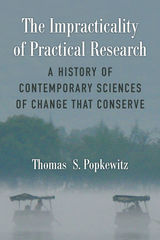
There is an alluring desire that research should lead us to find the practical knowledge that enables people to live a good life in a just and equitable society. This desire haunted the 19th century emergence of the social sciences as a discipline, then became more pronounced in the postwar mobilizations of research. Today that desire lives on in the international assessments of national schools and in the structure of professional education, both of which influence government modernization of schools and also provide for people’s well-being. American policy thus reflects research in which reforms are verified by “scientific, empirical evidences” about “what works” in experiments, and “will work” therefore in society.
The book explores the idea that practical and useful knowledge changes over time, and shows how this knowledge has been (re)visioned in contemporary research on educational reform, instructional improvement, and professionalization. The study of science draws on a range of social and cultural theories and historical studies to understand the politics of science, as well as scientific knowledge that is concerned with social and educational change. Research hopes to change social conditions to create a better life, and to shape people whose conduct embodies these valued characteristics—the good citizen, parent, or worker. Yet this hope continually articulates the dangers that threaten this future. Thomas Popkewitz explores how the research to correct social wrongs is paradoxically entangled with the inscription of differences that ultimately hamper the efforts to include.

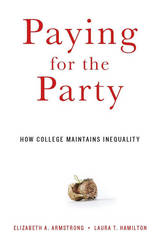
Two young women, dormitory mates, embark on their education at a big state university. Five years later, one is earning a good salary at a prestigious accounting firm. With no loans to repay, she lives in a fashionable apartment with her fiancé. The other woman, saddled with burdensome debt and a low GPA, is still struggling to finish her degree in tourism. In an era of skyrocketing tuition and mounting concern over whether college is "worth it," Paying for the Party is an indispensable contribution to the dialogue assessing the state of American higher education. A powerful exposé of unmet obligations and misplaced priorities, it explains in vivid detail why so many leave college with so little to show for it.
Drawing on findings from a five-year interview study, Elizabeth Armstrong and Laura Hamilton bring us to the campus of "MU," a flagship Midwestern public university, where we follow a group of women drawn into a culture of status seeking and sororities. Mapping different pathways available to MU students, the authors demonstrate that the most well-resourced and seductive route is a "party pathway" anchored in the Greek system and facilitated by the administration. This pathway exerts influence over the academic and social experiences of all students, and while it benefits the affluent and well-connected, Armstrong and Hamilton make clear how it seriously disadvantages the majority.
Eye-opening and provocative, Paying for the Party reveals how outcomes can differ so dramatically for those whom universities enroll.
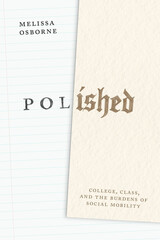
While college initiates a major transition in all students’ lives, low-income and first-generation students attending elite schools are often entering entirely new worlds. Amid the financial and academic challenges of adapting to college, their emotional lives, too, undergo a transformation. Surrounded by peers from different classes and cultural backgrounds, they are faced with an impossible choice: turn away from their former lives to blend in or stay true to themselves and remain on the outside.
An ethnography that draws on in-depth interviews with one hundred and fifty first-generation and low-income students across eighteen elite institutions, Polished uncovers the hidden consequences of the promise of social mobility in today’s educational landscape. Sociologist Melissa Osborne reveals how the very support designed to propel first-generation students forward can unexpectedly reshape their identities, often putting them at odds with their peers and families. Without direct institutional support, this emotional journey can lead to alienation, mental health challenges, poor academic outcomes, and difficult choices between upward mobility or maintaining authenticity and community. Whether you're an educator, advocate, or student, Polished provides a powerful perspective on the uncharted challenges of social mobility and personal identity during college.

Middle- and upper-middle-class students continue to outpace those from less privileged backgrounds. Most attempts to redress this inequality focus on the issue of access to financial resources, but as Producing Success makes clear, the problem goes beyond mere economics. In this eye-opening study, Peter Demerath examines a typical suburban American high school to explain how some students get ahead.
Demerath undertook four years of research at a Midwestern high school to examine the mercilessly competitive culture that drives students to advance. Producing Success reveals the many ways the community’s ideology of achievement plays out: students hone their work ethics and employ various strategies to succeed, from negotiating with teachers to cheating; parents relentlessly push their children while manipulating school policies to help them get ahead; and administrators aid high performers in myriad ways, even naming over forty students “valedictorians.” Yet, as Demerath shows, this unswerving commitment to individual advancement takes its toll, leading to student stress and fatigue, incivility and vandalism, and the alienation of the less successful. Insightful and candid, Producing Success is an often troubling account of the educationally and morally questionable results of the American culture of success.
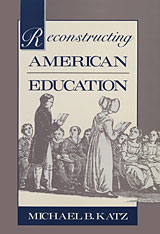
One of the leading historians of education in the United States here develops a powerful interpretation of the uses of history in educational reform and of the relations among democracy, education, and the capitalist state. Michael Katz discusses the reshaping of American education from three perspectives. First is the perspective of history: How did American education take shape? The second is that of reform: What can a historian say about recent criticisms and proposals for improvement? The third is that of historiography: What drives the politics of educational history? Katz shows how the reconstruction of America’s educational past can be used as a framework for thinking about current reform. Contemporary concepts such as public education, institutional structures such as the multiversity, and modern organizational forms such as bureaucracy all originated as solutions to problems of public policy. The petrifaction of these historical products—which are neither inevitable nor immutable—has become, Katz maintains, one of the mighty obstacles to change.
The book’s central questions are as much ethical and political as they are practical. How do we assess the relative importance of efficiency and responsiveness in educational institutions? Whom do we really want institutions to serve? Are we prepared to alter institutions and policies that contradict fundamental political principles? Why have some reform strategies consistently failed? On what models should institutions be based? Should schools and universities be further assimilated to the marketplace and the state? Katz’s iconoclastic treatment of these issues, vividly and clearly written, will be of interest to both specialists and general readers. Like his earlier classic, The Irony of Early School Reform (1968), this book will set a fresh agenda for debate in the field.
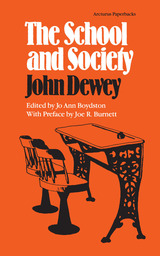
First published in 1899,The School and Society describes John Dewey’s experiences with his own famous Laboratory School, started in 1896.
Dewey’s experiments at the Laboratory School reflected his original social and educational philosophy based on American experience and concepts of democracy, not on European education models then in vogue. This forerunner of the major works shows Dewey’s pervasive concern with the need for a rich, dynamic, and viable society.
In his introduction to this volume, Joe R. Burnett states Dewey’s theme. Industrialization, urbanization, science, and technology have created a revolution the schools cannot ignore. Dewey carries this theme through eight chapters: The School and Social Progress; The School and the Life of the Child; Waste in Education; Three Years of the University Elementary School; The Psychology of Elementary Education; Froebel’s Educational Principles; The Psychology of Occupations; and the Development of Attention.
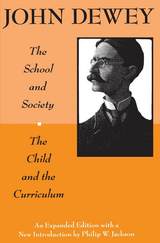
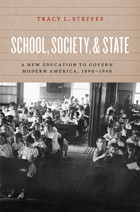
“Democracy has to be born anew every generation, and education is its midwife,” wrote John Dewey in his classic work The School and Society. In School, Society, and State, Tracy Steffes places that idea at the center of her exploration of the connections between public school reform in the early twentieth century and American political development from 1890 to 1940.
American public schooling, Steffes shows, was not merely another reform project of the Progressive Era, but a central one. She addresses why Americans invested in public education and explains how an array of reformers subtly transformed schooling into a tool of social governance to address the consequences of industrialization and urbanization. By extending the reach of schools, broadening their mandate, and expanding their authority over the well-being of children, the state assumed a defining role in the education—and in the lives—of American families.
In School, Society, and State, Steffes returns the state to the study of the history of education and brings the schools back into our discussion of state power during a pivotal moment in American political development.
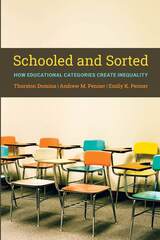
Some educational categories have broadly egalitarian consequences. Indeed, Domina, Penner, and Penner argue that when societies enroll young people in school, making them students, they mark them as individuals who are worthy of rights. But other educational categories reinforce powerful social categories—including race, gender, and class—and ultimately reproduce social and economic inequality in society. Elite colleges, tracked high schools, and elementary school gifted programs provide not only different educational experiences, but also create merit and inequality by sorting students into categories that are defined by the students who are excluded.
Schooled & Sorted highlights that many of the decisions that define educational categories occur in school-based committee meetings and other relatively local settings. The local nature of these decisions provides many opportunities to define educational categories differently, and for school communities to bring about change.
Schooled & Sorted is an illuminating investigation into the ways sorting within schools translates into inequality in the larger world. While some educational categorization may be unavoidable, the authors suggest ways to build a more equitable system—and thus a more equitable society.
Watch an interview of Alexandria Walton Radford discussing her book here: http://www.youtube.com/watch?v=F81c1D1BpY0
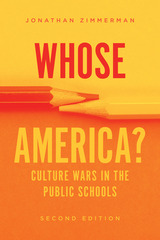
Critical Race Theory. The 1619 Project. Mask mandates. As the headlines remind us, American public education is still wracked by culture wars. But these conflicts have shifted sharply over the past two decades, marking larger changes in the ways that Americans imagine themselves. In his 2002 book, Whose America?, Zimmerman predicted that religious differences would continue to dominate the culture wars. Twenty years after that seminal work, Zimmerman has reconsidered: arguments over what American history is, what it means, and how it is taught have exploded with special force in recent years. In this substantially expanded new edition, Zimmerman meditates on the history of the culture wars in the classroom—and on what our inability to find common ground might mean for our future.

What do America’s children learn about American history, American values, and human decency? Who decides? In this absorbing book, Jonathan Zimmerman tells the dramatic story of conflict, compromise, and more conflict over the teaching of history and morality in twentieth-century America.
In history, whose stories are told, and how? As Zimmerman reveals, multiculturalism began long ago. Starting in the 1920s, various immigrant groups—the Irish, the Germans, the Italians, even the newly arrived Eastern European Jews—urged school systems and textbook publishers to include their stories in the teaching of American history. The civil rights movement of the 1960s and ’70s brought similar criticism of the white version of American history, and in the end, textbooks and curricula have offered a more inclusive account of American progress in freedom and justice.
But moral and religious education, Zimmerman argues, will remain on much thornier ground. In battles over school prayer or sex education, each side argues from such deeply held beliefs that they rarely understand one another’s reasoning, let alone find a middle ground for compromise. Here there have been no resolutions to calm the teaching of history. All the same, Zimmerman argues, the strong American tradition of pluralism has softened the edges of the most rigorous moral and religious absolutism.
In this wonderfully evocative picture of an urban American high school and its successes and setbacks over the past thirty-five years, Gerald Grant works out a unique perspective on what makes a good school: one that asserts moral and intellectual authority without becoming rigidly doctrinaire or losing the precious gains in equality of opportunity that have been won at great cost.
Grant describes what happened inside Hamilton High (a real school, although its identity is disguised), and how different worlds evolved as the school’s authority system was transformed. After the opening of Hamilton High in the buoyant and self-confident 1950s, the school plunged into a period of violence and radical deconstruction in the late sixties. Grant charts the rise of student power in the seventies, followed by new transformations of the school in the last decade occasioned in part by the mainstreaming of disabled students and the arrival of Asian immigrants. Things got very bad before they got better, but they did get better. The school went from white power to black power to genuine racial equality. Its average test scores declined and then improved. Although test-score means did not return to their former levels, the gap in achievement between the social classes decreased. Violence was replaced by a sense of relative safety and security.
Yet this book is not just a case study. In the second half the author presents a general analysis of American education. He contrasts the world of Hamilton High with other possible worlds, including those at three schools (one public and two private) that exhibit a strong positive ethos. He looks at the way the moral and intellectual worlds have been sundered in many contemporary public schools and asks whether they can be put back together again.
The book is grounded in a creative methodology that includes research by students at Hamilton High, whom Grant trained to analyze life in their school. Later he shared this research with teachers as a means of opening a dialogue about what changes they wanted to make. Grant’s analysis leads to recommendations for two essential reforms, and in an epilogue the teachers who read this hook also tell us what they make of it and offer their own conclusions. Their challenging final words will spur the thinking of educators, policymakers, scholars, parents, and all those who are concerned about our schools today.
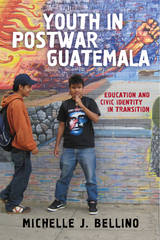
In the aftermath of armed conflict, how do new generations of young people learn about peace, justice, and democracy? Michelle J. Bellino describes how, following Guatemala’s civil war, adolescents at four schools in urban and rural communities learn about their country’s history of authoritarianism and develop civic identities within a fragile postwar democracy.
Through rich ethnographic accounts, Youth in Postwar Guatemala, traces youth experiences in schools, homes, and communities, to examine how knowledge and attitudes toward historical injustice traverse public and private spaces, as well as generations. Bellino documents the ways that young people critically examine injustice while shaping an evolving sense of themselves as civic actors. In a country still marked by the legacies of war and division, young people navigate between the perilous work of critiquing the flawed democracy they inherited, and safely waiting for the one they were promised...
READERS
Browse our collection.
PUBLISHERS
See BiblioVault's publisher services.
STUDENT SERVICES
Files for college accessibility offices.
RECENTLY PUBLISHED






UChicago Accessibility Resources
home | accessibility | search | about | contact us
BiblioVault ® 2001 - 2024
The University of Chicago Press