
 A SCHOLARLY BOOK REPOSITORY
11 start with W start with W

Looking at their photo of railroad tracks, a group of preteen students in South Central Los Angeles see either "a way out of the ghetto," or a "dirty, bad environment." Such are the impressions expressed in the poignant "We Live in the Shadow": Inner-City Kids Tell Their Stories through Photographs.
In Elaine Bell Kaplan's perceptive book, at-risk youth were given five-dollar cameras to tell stories about their world. Their photos and stories show us their response to negative inner-city teen images. We follow them into their schools, and we hear about their creative coping strategies. While these kids see South Central as dangerous, they also see themselves as confident enough to not let the inner city take them down. They refuse to be labeled as "ghetto thugs," as outsiders sometimes do. These outsiders include police, teachers, and other groups representing the institutional voices governing their daily lives.
The kids in "We Live in the Shadow": Inner-City Kids Tell Their Stories through Photographs have developed a multilayered view of society. This impressive book gives voice to their resilience.

In a deeply unequal world, our economic status shapes our pursuit of virtue whether we have enough resources to live comfortably or struggle to survive
Our understanding of inequality as a moral problem is incomplete. It is not enough to say that inequality is caused by moral failing. We must also see that influence runs in both directions. Inequality harms people’s moral development.
In Wealth, Virtue, and Moral Luck, Kate Ward addresses the issue of inequality from the perspective of Christian virtue ethics, arguing that moral luck—our individual life circumstances—affects our ability to pursue virtue. Economic status functions as moral luck and impedes the ability of both the wealthy and the poor to pursue virtues such as prudence, justice, and temperance, and extreme inequality exacerbates the impact of wealth and poverty on virtue.
With these realities in mind, Ward shows how Christians and Christian communities should respond to the challenges inequality poses to virtue. Through working to change the structures that perpetuate extreme inequality—and through spiritual practices, including contentment, conversion, encountering others, and reminding ourselves of our ultimate dependence on God—Ward believes that we can create a world where all people can pursue and achieve virtue.
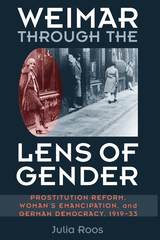
"This book will make a valuable contribution to the field of German history, as well as the histories of gender and sexuality. The argument that Weimar feminism did bring about tangible gains for women needs to be made, and Roos has done so convincingly."
---Julia Sneeringer, Queens College
Until 1927, Germany had a system of state-regulated prostitution, under which only those prostitutes who submitted to regular health checks and numerous other restrictions on their personal freedom were tolerated by the police. Male clients of prostitutes were not subject to any controls. The decriminalization of prostitution in 1927 resulted from important postwar gains in women's rights; yet this change---while welcomed by feminists, Social Democrats, and liberals—also mobilized powerful conservative resistance. In the early 1930s, the right-wing backlash against liberal gender reforms like the 1927 prostitution law played a fateful role in the downfall of the Weimar Republic and the rise of Nazism.
Weimar through the Lens of Gender combines the political history of early twentieth-century Germany with analytical perspectives derived from the fields of gender studies and the history of sexuality. The book's argument will be of interest to a broad readership: specialists in the fields of gender studies and the history of sexuality, as well as historians and general readers interested in Weimar and Nazi Germany.
Julia Roos is Assistant Professor of History at Indiana University, Bloomington.
Jacket art: "Hamburg, vermutlich St. Pauli, 1920er–30er Jahre," photographer unknown, s/w-Fotografie. (Courtesy of the Museum für Hamburgische Geschichte.)


From the climate crisis to the opioid crisis to the Coronavirus crisis, the language of crisis is everywhere around us and ubiquitous in contemporary American politics and policymaking. But for every problem that political actors describe as a crisis, there are myriad other equally serious ones that are not described in this way. Why has the term crisis been associated with some problems but not others? What has crisis come to mean, and what work does it do?
In When Bad Things Happen to Privileged People, Dara Z. Strolovitch brings a critical eye to the taken-for-granted political vernacular of crisis. Using systematic analyses to trace the evolution of the use of the term crisis by both political elites and outsiders, Strolovitch unpacks the idea of “crisis” in contemporary politics and demonstrates that crisis is itself an operation of politics. She shows that racial justice activists innovated the language of crisis in an effort to transform racism from something understood as natural and intractable and to cast it instead as a policy problem that could be remedied. Dominant political actors later seized on the language of crisis to compel the use of state power, but often in ways that compounded rather than alleviated inequality and injustice. In this eye-opening and important book, Strolovitch demonstrates that understanding crisis politics is key to understanding the politics of racial, gender, and class inequalities in the early twenty-first century.
Is infrequent voting the most we can expect from a free citizenry? Would democracy be more robust if our political discourse were more deliberative? John Medearis’s trenchant and trend-bucking work of political philosophy argues that democracies face significant challenges that go beyond civic lethargy and unreasonable debate. Democracy is inherently a fragile state of affairs, he reminds us. Revisiting fundamental questions about the system in theory and practice, Why Democracy Is Oppositional helps us see why preserving democracy has always been—and will always be—a struggle.
As citizens of democracies seek political control over their destinies, they confront forces that threaten to dominate their lives. These forces may take the form of runaway financial markets, powerful special interests, expanding militaries, or dysfunctional legislatures. But citizens of democracies help create the very institutions that overwhelm them. Hostile threats do not generally come from the outside but are the product of citizens’ own collective activities. Medearis contends that democratic action perpetually arises to reclaim egalitarian control over social forces and institutions that have become alienated from large numbers of citizens. Democracy is therefore necessarily oppositional. Concerted, contentious political activities of all kinds are fundamental to it, while consensus and easy compromise are rarities.
Recovering insights from political theorists such as Karl Marx and John Dewey, Why Democracy Is Oppositional addresses contemporary issues ranging from the global financial crisis and economic inequality to drone warfare and mass incarceration.
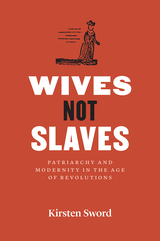
Kirsten Sword’s richly researched history reconstructs the stories of wives who fled their husbands between the mid-seventeenth and early nineteenth centuries, comparing their plight with that of other runaway dependents. Wives not Slaves explores the links between local justice, the emerging press, and transatlantic political debates about marriage, slavery and imperial power. Sword traces the relationship between the distress of ordinary households, domestic unrest, and political unrest, shedding new light on the social changes imagined by eighteenth-century revolutionaries, and on the politics that determined which patriarchal forms and customs the new American nation would—and would not—abolish.
A damning portrait of the dire realities of retirement in the United States—and how we can fix it.
While the French went on strike in 2023 to protest the increase in the national retirement age, workers in the United States have all but given up on the notion of dignified retirement for all. Instead, Americans—whose elders face the highest risk of poverty compared to workers in peer nations—are fed feel-good stories about Walmart clerks who can finally retire because a customer raised the necessary funds through a GoFundMe campaign.
Many argue that the solution to the financial straits of American retirement is simple: people need to just work longer. Yet this call to work longer is misleading in a multitude of ways, including its endangering of the health of workers and its discrimination against people who work in lower-wage occupations. In Work, Retire, Repeat, Teresa Ghilarducci tells the stories of elders locked into jobs—not because they love to work but because they must.
But this doesn’t need to be the reality. Work, Retire, Repeat shows how relatively low-cost changes to how we finance and manage retirement will allow people to truly choose how they spend their golden years.
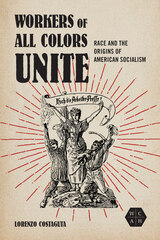
Costaguta charts the socialist movement’s journey through the conflict and down a path that ultimately abandoned scientific racism in favor of an internationalist class-focused and racial-conscious American socialism. As he shows, the shift relied on a strong immigrant influence personified by the cosmopolitan Marxist thinker and future IWW cofounder Daniel De Leon. The class-focused movement that emerged became American socialism’s most common approach to race in the twentieth century and beyond.
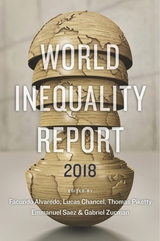
World Inequality Report 2018 is the most authoritative and up-to-date account of global trends in inequality. Researched, compiled, and written by a team of the world’s leading economists of inequality, it presents—with unrivaled clarity and depth—information and analysis that will be vital to policy makers and scholars everywhere.
Inequality has taken center stage in public debate as the wealthiest people in most parts of the world have seen their share of the economy soar relative to that of others, many of whom, especially in the West, have experienced stagnation. The resulting political and social pressures have posed harsh new challenges for governments and created a pressing demand for reliable data. The World Inequality Lab at the Paris School of Economics and the University of California, Berkeley, has answered this call by coordinating research into the latest trends in the accumulation and distribution of income and wealth on every continent. This inaugural report analyzes the Lab’s findings, which include data from major countries where information has traditionally been difficult to acquire, such as China, India, and Brazil. Among nations, inequality has been decreasing as traditionally poor countries’ economies have caught up with the West. The report shows, however, that inequality has been steadily deepening within almost every nation, though national trajectories vary, suggesting the importance of institutional and policy frameworks in shaping inequality.
World Inequality Report 2018 will be a key document for anyone concerned about one of the most imperative and contentious subjects in contemporary politics and economics.
READERS
Browse our collection.
PUBLISHERS
See BiblioVault's publisher services.
STUDENT SERVICES
Files for college accessibility offices.
RECENTLY PUBLISHED





UChicago Accessibility Resources
home | accessibility | search | about | contact us
BiblioVault ® 2001 - 2024
The University of Chicago Press