
 A SCHOLARLY BOOK REPOSITORY
Fongoli chimpanzees are unique for many reasons. Their female hunters are the only apes that regularly hunt with tools, seeking out tiny bushbabies with wooden spears. Unlike most other chimps, these apes fear neither water nor fire, using shallow pools to cool off in the Senegalese heat. Up to ninety percent of their home range burns annually—the result of human hunting or clearing for gold mining—and Fongoli chimpanzees have learned to predict the movement of such fires and to avoid them.
The study of Fongoli chimps is also unique. While most primate research occurs in isolated reserves, Fongoli chimpanzees live alongside humans, and as primatologist and anthropologist Jill Pruetz reports, this shared habitat creates both challenges and opportunities. The issues faced by Fongoli chimpanzees—particularly food scarcity and environmental degradation—are also issues faced by their human neighbors. This connection is one reason Pruetz, who has studied Fongoli apes for over two decades, created the nonprofit Neighbor Ape in 2008 to provide for the welfare of the humans who share their landscape with apes. It is also why Pruetz decided to write this book, the first to offer readers a view of these chimps’ lives and to explain the specific conservation efforts needed to help them. Incorporating stories from Pruetz’s time in the field, including a compelling rescue mission of a young chimp from poachers, Apes on the Edge opens a fascinating window into primate research, conservation, and the inner workings of a very special population of our closest nonhuman relatives.
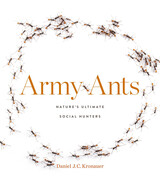
A richly illustrated, captivating study of army ants, nature’s preeminent social hunters.
A swarm raid is one of nature’s great spectacles. In tropical rainforests around the world, army ants march in groups by the thousands to overwhelm large solitary invertebrates, along with nests of termites, wasps, and other ants. They kill and dismember their prey and carry it back to their nest, where their hungry brood devours it. They are the ultimate social hunters, demonstrating the most fascinating collective behavior.
In Army Ants we see how these insects play a crucial role in promoting and sustaining the biodiversity of tropical ecosystems. The ants help keep prey communities in check while also providing nutrition for other animals. Many species depend on army ants for survival, including a multitude of social parasites, swarm-following birds, and flies. And while their hunting behavior, and the rules that govern it, are clearly impressive, army ants display collective behavior in other ways that are no less dazzling. They build living nests, called bivouacs, using their bodies to protect the queen and larvae. The ants can even construct bridges over open space or obstacles by linking to one another using their feet. These incredible feats happen without central coordination. They are the result of local interactions—self-organization that benefits the society at large.
Through observations, stories, and stunning images, Daniel Kronauer brings these fascinating creatures to life. Army ants may be small, but their collective intelligence and impact on their environment are anything but.
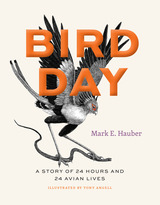
From morning to night and from the Antarctic to the equator, birds have busy days. In this short book, ornithologist Mark E. Hauber shows readers exactly how birds spend their time. Each chapter covers a single bird during a single hour, highlighting twenty-four different bird species from around the globe, from the tropics through the temperate zones to the polar regions. We encounter owls and nightjars hunting at night and kiwis and petrels finding their way in the dark. As the sun rises, we witness the beautiful songs of the “dawn chorus.” At eleven o’clock in the morning, we float alongside a common pochard, a duck resting with one eye open to avoid predators. At eight that evening, we spot a hawk swallowing bats whole, gorging on up to fifteen in rapid succession before retreating into the darkness.
For each chapter, award-winning artist Tony Angell has depicted these scenes with his signature pen and ink illustrations, which grow increasingly light and then dark as our bird day passes. Working closely together to narrate and illustrate these unique moments in time, Hauber and Angell have created an engaging read that is a perfect way to spend an hour or two—and a true gift for readers, amateur scientists, and birdwatchers.
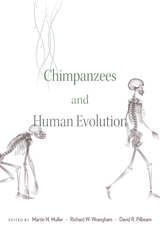
Knowledge of chimpanzees in the wild has expanded dramatically in recent years. This comprehensive volume, edited by Martin Muller, Richard Wrangham, and David Pilbeam, brings together scientists who are leading a revolution to discover and explain what is unique about humans, by studying their closest living relatives. Their observations and conclusions have the potential to transform our understanding of human evolution.
Chimpanzees offer scientists an unmatched view of what distinguishes humanity from its apelike ancestors. Based on evidence from the hominin fossil record and extensive morphological, developmental, and genetic data, Chimpanzees and Human Evolution makes the case that the last common ancestor of chimpanzees and humans was chimpanzee-like. It most likely lived in African rainforests around eight million years ago, eating fruit and walking on its knuckles. Readers will learn why chimpanzees are a better model for the last common ancestor than bonobos, gorillas, or orangutans. A thorough chapter-by-chapter analysis reveals which key traits we share with chimpanzees and which appear to be distinctive to Homo sapiens, and shows how understanding chimpanzees helps us account for the evolution of human uniqueness. Traits surveyed include social behaviors and structures, mating systems, diet, hunting practices, tool use, culture, cognition, and communication.
Edited by three of primatology’s most renowned experts, with contributions from 32 scholars drawing on decades of field research, Chimpanzees and Human Evolution provides readers with detailed up-to-date information on what we can infer about our chimpanzee-like ancestors and points the way forward for the next generation of discoveries.
Winner of the Association of American Publishers PROSE Award for Excellence in Biological and Life Sciences
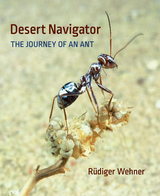
A world-renowned researcher of animal behavior reveals the extraordinary orienteering skills of desert ants, offering a thrilling account of the sophisticated ways insects function in their natural environments.
Cataglyphis desert ants are agile ultrarunners who can tolerate near-lethal temperatures when they forage in the hot midday sun. But it is their remarkable navigational abilities that make these ants so fascinating to study. Whether in the Sahara or its ecological equivalents in the Namib Desert and Australian Outback, the Cataglyphis navigators can set out foraging across vast expanses of desert terrain in search of prey, and then find the shortest way home. For almost half a century, Rüdiger Wehner and his collaborators have devised elegant experiments to unmask how they do it.
Through a lively and lucid narrative, Desert Navigator offers a firsthand look at the extraordinary navigational skills of these charismatic desert dwellers and the experiments that revealed how they strategize and solve complex problems. Wehner and his team discovered that these insect navigators use visual cues in the sky that humans are unable to see, the Earth’s magnetic field, wind direction, a step counter, and panoramic “snapshots” of landmarks, among other resources. The ants combine all of this information to steer an optimal course. At any given time during their long journey, they know exactly where to go. It is no wonder these nimble and versatile creatures have become models in the study of animal navigation.
Desert Navigator brings to light the marvelous capacity and complexity found in these remarkable insects and shows us how mini brains can solve mega tasks.
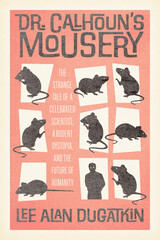
It was the strangest of experiments. What began as a utopian environment, where mice had sumptuous accommodations, all the food and water they could want, and were free from disease and predators, turned into a mouse hell. Science writer and animal behaviorist Lee Alan Dugatkin introduces readers to the peculiar work of rodent researcher John Bumpass Calhoun. In this enthralling tale, Dugatkin shows how an ecologist-turned-psychologist-turned-futurist became a science rock star embedded in the culture of the 1960s and 1970s. As interest grew in his rodent cities, Calhoun was courted by city planners and reflected in everything from Tom Wolfe’s hard-hitting novels to the children’s book Mrs. Frisby and the Rats of NIMH. He was invited to meetings with the Royal Society and the Pope, and taken seriously when he proposed a worldwide cybernetic brain—a decade before others made the Internet a reality.
Readers see how Calhoun’s experiments—rodent apartment complexes like “Mouse Universe 25”—led to his concept of “behavioral sinks” with real effects on public policy discussions. Overpopulation in Calhoun’s mouse complexes led to the loss of sex drive, the absence of maternal care, and a class of automatons including “the beautiful ones,” who spent their time grooming themselves while shunning socialization. Calhoun—and the others who followed his work—saw the collapse of this mouse population as a harbinger of the ill effects of an overpopulated human world.
Drawing on previously unpublished archival research and interviews with Calhoun’s family and former colleagues, Dugatkin offers a riveting account of an intriguing scientific figure. Considering Dr. Calhoun’s experiments, he explores the changing nature of scientific research and delves into what the study of animal behavior can teach us about ourselves.
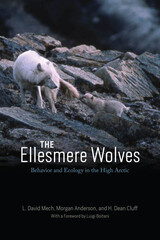
For parts of twenty-four summers, wolf biologist L. David Mech lived with a group of wolves on Ellesmere Island, some six hundred miles from the North Pole. Elsewhere, most wolves flee from even the scent of humans, but these animals, evolving relatively free from human persecution, are unafraid. Having already spent twenty-eight years studying other populations of wolves more remotely by aircraft, snow-tracking, live-trapping, and radio-tracking, Mech was primed to join their activities up close and record their interactions with each other. This book tells the remarkable story of what Mech—and the researchers who followed him—have learned while living among the wolves.
The Ellesmere wolves were so unconcerned with Mech’s presence that they allowed him to camp near their den and to sit on his all-terrain vehicle as he observed them, watching packs as large as seven adults and six pups go about their normal activities. In these extraordinarily close quarters, a pup untying his bootlace or an adult sniffing his gloved hand was just part of daily life. Mech accompanied the wolves on their travels and watched as they hunted muskoxen and arctic hares. By achieving the same kind of intimacy with his wild hosts’ every action that we might experience living with domesticated dogs, Mech gained new insights into common but rarely studied behaviors like pup feeding, food caching, howling, and scent-marking. After Mech’s time at Ellesmere ended, his coauthors and fellow wolf researchers Morgan Anderson and H. Dean Cluff spent parts of four summers studying the wolves via radio collars, further illuminating the creatures’ movements and ecology. This book synthesizes their findings, offering both a compelling scientific overview of the animals’ behavior—from hunting to living in packs to rearing pups—and a tale of adventure and survival in the Arctic.
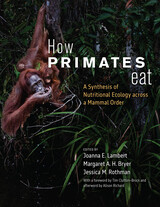
What do we mean when we say that a diet is nutritious? Why is it that some animals can get all the energy they need from eating leaves while others would perish on such a diet? Why don’t mountain gorillas eat fruit all day like chimpanzees do? Answers to these questions about food and feeding are among the many tasty morsels that emerge from this authoritative book. Informed by the latest scientific tools and millions of hours of field and laboratory work on species across the primate order and around the globe, this volume is an exhaustive synthesis of our understanding of what, why, and how primates eat what they eat. State-of-the-art information presented at physiological, behavioral, ecological, and evolutionary scales will serve as a road map for graduate students, researchers, and practitioners as they work toward a holistic understanding of life as a primate and the urgent conservation consequences of diet and food availability in a changing world.
If you could pose one question to a dolphin, what would it be? And what might a dolphin ask you? For forty years, researcher and author Denise L. Herzing has investigated these and related questions of marine mammal communication. With the assistance of a friendly community of Atlantic spotted dolphins in the Bahamas, Herzing studies two-way communication between different dolphin species and between humans and dolphins using a variety of cutting-edge experiments. But the dolphins are not the only ones talking, and in this wide-ranging and accessible book, Herzing explores the astonishing realities of interspecies communication, a skill that humans currently lack.
Is Anyone Listening? connects research on dolphin communication to findings from Jane Goodall on chimpanzees, Dian Fossey on mountain gorillas, Cynthia Moss on African elephants, and others driving today’s exploration of possible animal languages. Although humans have long attempted to crack animal communication codes, only now do we have the advanced machine-learning tools to help. As Herzing reveals, researchers are finding fascinating hints of language in nonhuman species, including linguistic structures, vowel equivalents, and complex repeated sequences. By looking at the many ways animals use and manipulate signals, we see that we’ve only just begun to appreciate the diversity of animal intelligence and the complicated and subtle aspects of animal communication.
Considering dolphins and other nonhuman animals as colleagues instead of research subjects, Herzing asks us to meet animals as both speakers and listeners, as mutually curious beings, and to listen to what they are saying.
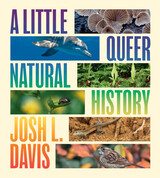
From a pair of male swans raising young to splitgill mushrooms with over 23,000 mating types, sex in the natural world is wonderfully diverse. Josh L. Davis considers how, for many different organisms—animals, plants, and fungi included—sexual reproduction and sex determination rely on a surprisingly complex interaction among genes, hormones, environment, and chance. As Davis introduces us to fascinating biological concepts like parthenogenesis (virgin birth), monoecious plants (individuals with separate male and female flowers), and sex-reversed genitals, we see turtle hatchlings whose sex is determined by egg temperature; butterflies that embody male and female biological tissue in the same organism; and a tomato that can reproduce three different ways at the same time. Davis also reveals animal and plant behaviors in nature that researchers have historically covered up or explained away, like queer sex among Adélie penguins or bottlenose dolphins, and presents animal behaviors that challenge us to rethink our assumptions and prejudices. Featuring fabulous sex-fluid fishes and ant, wasp, and bee queens who can choose both how they want to have sex and the sex of their offspring, A Little Queer Natural History offers a larger lesson: that the diversity we see in our own species needs no justification and represents just a fraction of what exists in the natural world.
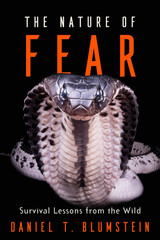
An Open Letters Review Best Book of the Year
A leading expert in animal behavior takes us into the wild to better understand and manage our fears.
Fear, honed by millions of years of natural selection, kept our ancestors alive. Whether by slithering away, curling up in a ball, or standing still in the presence of a predator, humans and other animals have evolved complex behaviors in order to survive the hazards the world presents. But, despite our evolutionary endurance, we still have much to learn about how to manage our response to danger.
For more than thirty years, Daniel Blumstein has been studying animals’ fear responses. His observations lead to a firm conclusion: fear preserves security, but at great cost. A foraging flock of birds expends valuable energy by quickly taking flight when a raptor appears. And though the birds might successfully escape, they leave their food source behind. Giant clams protect their valuable tissue by retracting their mantles and closing their shells when a shadow passes overhead, but then they are unable to photosynthesize, losing the capacity to grow. Among humans, fear is often an understandable and justifiable response to sources of threat, but it can exact a high toll on health and productivity.
Delving into the evolutionary origins and ecological contexts of fear across species, The Nature of Fear considers what we can learn from our fellow animals—from successes and failures. By observing how animals leverage alarm to their advantage, we can develop new strategies for facing risks without panic.
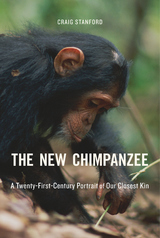
Recent discoveries about wild chimpanzees have dramatically reshaped our understanding of these great apes and their kinship with humans. We now know that chimpanzees not only have genomes similar to our own but also plot political coups, wage wars over territory, pass on cultural traditions to younger generations, and ruthlessly strategize for resources, including sexual partners. In The New Chimpanzee, Craig Stanford challenges us to let apes guide our inquiry into what it means to be human.
With wit and lucidity, Stanford explains what the past two decades of chimpanzee field research has taught us about the origins of human social behavior, the nature of aggression and communication, and the divergence of humans and apes from a common ancestor. Drawing on his extensive observations of chimpanzee behavior and social dynamics, Stanford adds to our knowledge of chimpanzees’ political intelligence, sexual power plays, violent ambition, cultural diversity, and adaptability.
The New Chimpanzee portrays a complex and even more humanlike ape than the one Jane Goodall popularized more than a half century ago. It also sounds an urgent call for the protection of our nearest relatives at a moment when their survival is at risk.
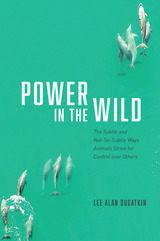
The quest for power in animals is so much richer, so much more nuanced than who wins what knock-down, drag-out fight. Indeed, power struggles among animals often look more like an opera than a boxing match. Tracing the path to power for over thirty different species on six continents, writer and behavioral ecologist Lee Alan Dugatkin takes us on a journey around the globe, shepherded by leading researchers who have discovered that in everything from hyenas to dolphins, bonobos to field mice, cichlid fish to cuttlefish, copperhead snakes to ravens, and meerkats to mongooses, power revolves around spying, deception, manipulation, forming and breaking up alliances, complex assessments of potential opponents, building social networks, and more. Power pervades every aspect of the social life of animals: what they eat, where they eat, where they live, whom they mate with, how many offspring they produce, whom they join forces with, and whom they work to depose. In some species, power can even change an animal’s sex. Nor are humans invulnerable to this magnificently intricate melodrama: Dugatkin’s tales of the researchers studying power in animals are full of unexpected pitfalls, twists and turns, serendipity, and the pure joy of scientific discovery.
As Principles of Animal Behavior makes clear, the tapestry of animal behavior is created from weaving all of these components into a beautiful whole. With Dugatkin’s exquisitely illustrated, comprehensive, and up-to-date fourth edition, we are able to admire that beauty anew.
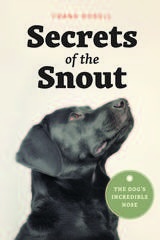
With 300 million receptors to our mere 5 million, a dog’s nose is estimated to be between 100,000 and 100 million times more sensitive than a human’s. No wonder, then, that our nasally inferior species has sought to unleash the prodigious power of canine shnozzes. Rosell here takes us for a walk with a pack of superhero sniffers including Tutta, a dog with a fine nose for fine wine; the pet-finder pooch AJ; search-and-rescue dog Barry; the hunting dog Balder; the police dogs Rasko and Trixxi; the warfare dog Lisa; the cancer detection dog Jack; Tucker, who scents floating killer whale feces; and even Elvis, who can smell when you’re ovulating. With each dog, Rosell turns his nose to the evolution of the unique olfactory systems involved, which odors dogs detect, and how they do it.
A celebration of how the canine sense for scents works—and works for us—Secrets of the Snout will have dog lovers, trainers, and researchers alike all howling with delight. Exploring this most pointed of canine wonders, Rosell reveals the often surprising ways in which dogs are bettering our world, one nose at a time.
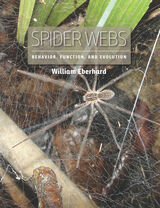
As Eberhard reveals, the extraordinary diversity of webs includes ingenious solutions to gain access to prey in esoteric habitats, from blazing hot and shifting sand dunes (to capture ants) to the surfaces of tropical lakes (to capture water striders). Some webs are nets that are cast onto prey, while others form baskets into which the spider flicks prey. Some aerial webs are tramways used by spiders searching for chemical cues from their prey below, while others feature landing sites for flying insects and spiders where the spider then stalks its prey. In some webs, long trip lines are delicately sustained just above the ground by tiny rigid silk poles.
Stemming from the author’s more than five decades observing spider webs, this book will be the definitive reference for years to come.
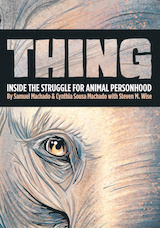
Led by lawyer Steven M. Wise and aided by some of the world’s most respected animal behavior and cognition scientists, the Nonhuman Rights Project has filed cases on behalf of nonhuman animals like Happy since 2013. Through this work, they have forced courts to consider the evidence of their clients’ cognitive abilities and their legal arguments for personhood, opening the door for similar cases worldwide. In Thing, comic artists Sam Machado and Cynthia Sousa Machado bring together Wise’s groundbreaking work and their powerful illustrations in the first graphic nonfiction book about the animal personhood movement. Beginning with Happy’s story and the central ideas behind animal rights, Thing then turns to the scientists that are revolutionizing our understanding of the minds of nonhuman animals such as great apes, elephants, dolphins, and whales. As we learn more about these creatures’ inner lives and autonomy, the need for the greater protections provided by legal rights becomes ever more urgent.
With cases like Happy’s growing in number and spanning from Argentina to India, nations around the world are beginning to recognize the rights of animals. Combining legal and social history, innovative science, and illustrated storytelling, Thing presents a visionary new way of relating to the nonhuman world.
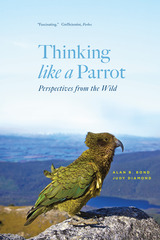
People form enduring emotional bonds with other animal species, such as dogs, cats, and horses. For the most part, these are domesticated animals, with one notable exception: many people form close and supportive relationships with parrots, even though these amusing and curious birds remain thoroughly wild creatures. What enables this unique group of animals to form social bonds with people, and what does this mean for their survival?
In Thinking like a Parrot, Alan B. Bond and Judy Diamond look beyond much of the standard work on captive parrots to the mischievous, inquisitive, and astonishingly vocal parrots of the wild. Focusing on the psychology and ecology of wild parrots, Bond and Diamond document their distinctive social behavior, sophisticated cognition, and extraordinary vocal abilities. Also included are short vignettes—field notes on the natural history and behavior of both rare and widely distributed species, from the neotropical crimson-fronted parakeet to New Zealand’s flightless, ground-dwelling kākāpō. This composite approach makes clear that the behavior of captive parrots is grounded in the birds’ wild ecology and evolution, revealing that parrots’ ability to bond with people is an evolutionary accident, a by-product of the intense sociality and flexible behavior that characterize their lives.
Despite their adaptability and intelligence, however, nearly all large parrot species are rare, threatened, or endangered. To successfully manage and restore these wild populations, Bond and Diamond argue, we must develop a fuller understanding of their biology and the complex set of ecological and behavioral traits that has led to their vulnerability. Spanning the global distribution of parrot species, Thinking like a Parrot is rich with surprising insights into parrot intelligence, flexibility, and—even in the face of threats—resilience.
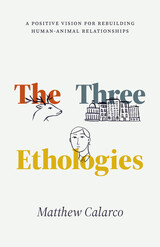
The Three Ethologies offers a fresh, affirmative vision for rebuilding human-animal relations. Venturing beyond the usual scholarly and activist emphasis on restricting harm, Matthew Calarco develops a new philosophy for understanding animal behavior—a practice known as ethology—through three distinct but interrelated lenses: mental ethology, which rebuilds individual subjectivity; social ethology, which rethinks our communal relations; and environmental ethology, which reconfigures our relationship to the land we co-inhabit with our animal kin. Drawing on developments in philosophy, (eco)feminist theory, critical geography, Indigenous studies, and the environmental humanities, Calarco casts an inspiring vision of how ethological living can help us to reimagine our ideas about goodness, truth, and beauty.
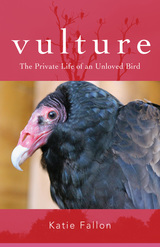
Few animals have a worse reputation than the vulture. But is it deserved? With Vulture, Katie Fallon offers an irresistible argument to the contrary, tracing a year in the life of a typical North American turkey vulture. Turkey vultures, also known as buzzards, are the most widely distributed and abundant scavenging birds of prey on the planet, found from central Canada to the southern tip of Argentina and nearly everywhere in between. Deftly drawing on the most up-to-date scientific papers and articles and weaving those in with interviews with world-renowned raptor and vulture experts and her own compelling natural history writing, Fallon examines all aspects of the bird’s natural history: breeding, incubating eggs, raising chicks, migrating, and roosting. The result is an intimate portrait of an underappreciated bird—one you’ll never look at in the same way again.
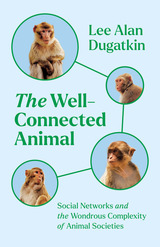
It’s all about who you know. Whether vampire bats sharing blood meals for survival, field crickets remembering champion fighters, macaque monkeys forming grooming pacts after a deadly hurricane, or great tit birds learning the best way to steal milk—it pays to be well connected.
In this tour of the animal kingdom, evolutionary biologist Lee Alan Dugatkin reveals a new field of study, uncovering social networks that existed long before the dawn of human social media. He accessibly describes the latest findings from animal behavior, evolution, computer science, psychology, anthropology, genetics, and neurobiology, and incorporates interviews and insights from researchers he finds swimming with manta rays, avoiding pigeon poop, and stopping monkeys from stealing iPads. With Dugatkin as our guide, we investigate social networks in giraffes, elephants, kangaroos, Tasmanian devils, whales, bats, and more. From animal networks in Australia and Asia to Africa, Europe, and the Americas, The Well-Connected Animal is an eye-opening exposé of wild friends, enemies, and everything in between.

A guide to cultivating a shared life of joy and respect with our dogs.
Who’s a Good Dog? is an invitation to nurture more thoughtful and balanced relationships with our canine companions. By deepening our curiosity about what our dogs are experiencing, and by working together with them in a spirit of collaboration, we can become more effective and compassionate caregivers.
With sympathy for the challenges met by both dogs and their humans, bioethicist Jessica Pierce explores common practices of caring for dogs, including how we provide exercise, what we feed, how and why we socialize and train, and how we employ tools such as collars and leashes. She helps us both to identify potential sources of fear and anxiety in our dogs’ lives and to expand practices that provide physical and emotional nourishment. Who’s a Good Dog? also encourages us to think more critically about what we expect of our dogs and how these expectations can set everyone up for success or failure. Pierce offers resources to help us cultivate attentiveness and kindness, inspiring us to practice the art of noticing, of astonishment, of looking with fresh eyes at these beings we think we know so well. And more than this, she makes her findings relatable by examining facets of her relationship with Bella, the dog in her life. As Bella shows throughout, all dogs are good dogs, and we, as humans and dog guardians, could be doing a little bit better to get along with them and give them what they need.
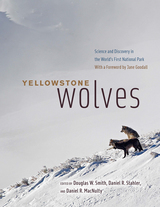
Here, for the first time in a single book, is the incredible story of the wolves’ return to Yellowstone National Park as told by the very people responsible for their reintroduction, study, and management. Anchored in what we have learned from Yellowstone, highlighting the unique blend of research techniques that have given us this knowledge, and addressing the major issues that wolves still face today, this book is as wide-ranging and awe-inspiring as the Yellowstone restoration effort itself. We learn about individual wolves, population dynamics, wolf-prey relationships, genetics, disease, management and policy, newly studied behaviors and interactions with other species, and the rippling ecosystem effects wolves have had on Yellowstone’s wild and rare landscape. Perhaps most importantly of all, the book also offers solutions to ongoing controversies and debates.
Featuring a foreword by Jane Goodall, beautiful images, a companion online documentary by celebrated filmmaker Bob Landis, and contributions from more than seventy wolf and wildlife conservation luminaries from Yellowstone and around the world, Yellowstone Wolves is a gripping, accessible celebration of the extraordinary Yellowstone Wolf Project—and of the park through which these majestic and important creatures once again roam.
READERS
Browse our collection.
PUBLISHERS
See BiblioVault's publisher services.
STUDENT SERVICES
Files for college accessibility offices.
RECENTLY PUBLISHED




UChicago Accessibility Resources
home | accessibility | search | about | contact us
BiblioVault ® 2001 - 2024
The University of Chicago Press