
 A SCHOLARLY BOOK REPOSITORY
34 start with F start with F

In their insightful analysis, the authors show that the very idea of the keiretsu was created and propagated by Marxist scholars in post-war Japan. Western scholars merely repatriated the legend to show the culturally contingent nature of modern economic analysis. Laying waste to the notion of keiretsu, the authors debunk several related “facts” as well: that Japanese firms maintain special arrangements with a “main bank,” that firms are systematically poorly managed, and that the Japanese government guided post-war growth. In demolishing these long-held assumptions, they offer one of the few reliable chronicles of the realities of Japanese business.
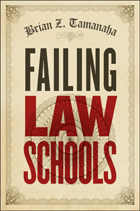
On the surface, law schools today are thriving. Enrollments are on the rise, and their resources are often the envy of every other university department. Law professors are among the highest paid and play key roles as public intellectuals, advisers, and government officials. Yet behind the flourishing facade, law schools are failing abjectly. Recent front-page stories have detailed widespread dubious practices, including false reporting of LSAT and GPA scores, misleading placement reports, and the fundamental failure to prepare graduates to enter the profession.
Addressing all these problems and more in a ringing critique is renowned legal scholar Brian Z. Tamanaha. Piece by piece, Tamanaha lays out the how and why of the crisis and the likely consequences if the current trend continues. The out-of-pocket cost of obtaining a law degree at many schools now approaches $200,000. The average law school graduate’s debt is around $100,000—the highest it has ever been—while the legal job market is the worst in decades, with the scarce jobs offering starting salaries well below what is needed to handle such a debt load. At the heart of the problem, Tamanaha argues, are the economic demands and competitive pressures on law schools—driven by competition over U.S. News and World Report ranking. When paired with a lack of regulatory oversight, the work environment of professors, the limited information available to prospective students, and loan-based tuition financing, the result is a system that is fundamentally unsustainable.
Growing concern with the crisis in legal education has led to high-profile coverage in the Wall Street Journal and the New York Times, and many observers expect it soon will be the focus of congressional scrutiny. Bringing to the table his years of experience from within the legal academy, Tamanaha has provided the perfect resource for assessing what’s wrong with law schools and figuring out how to fix them.
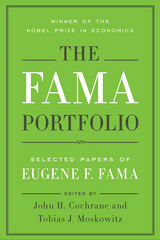
Published soon after the fiftieth anniversary of Fama’s appointment to the University of Chicago and his receipt of the Nobel Prize in Economics, The Fama Portfolio offers an authoritative compilation of Fama’s central papers. Many are classics, including his now-famous essay on efficient capital markets. Others, though less famous, are even better statements of the central ideas. Fama’s research considers key questions in finance, both as an academic field and an industry: How is information reflected in asset prices? What is the nature of risk that scares people away from larger returns? Does lots of buying and selling by active managers produce value for their clients? The Fama Portfolio provides for the first time a comprehensive collection of his work and includes introductions and commentary by the book’s editors, John H. Cochrane and Tobias Moskowitz, as well as by Fama’s colleagues, themselves top scholars and successful practitioners in finance. These essays emphasize how the ideas presented in Fama’s papers have influenced later thinking in financial economics, often for decades.
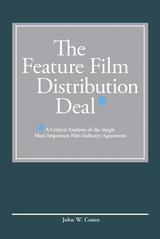
John W. Cones, whose real goal is to stimulate a long-term film industry reform movement, shows how the financial control of the film industry in the hands of the major studios and distributors actually translates into creative control of the industry.
Cones discusses the pros and cons of the debate relating to the industry’s so-called net profit problem and the way in which the distribution deal plays an integral part in that problem. He then breaks down five major film finance/distribution scenarios, explaining various distribution deals and suggesting ways of negotiating distribution.
Critically examining the specific terms of the distribution deal itself, Cones covers gross receipts exclusions, distributor fees, and distribution expenses. He also investigates the various forms of interest, issues of production costs, matters of creative control, and general contractual provisions.
For handy reference, Cones includes an extensive checklist for negotiating any feature film distribution deal. The list deals with distribution fees, distribution expenses, interest, production costs, creative control issues, general contractual provisions, distributor commitments, and the limits of negotiating. His nine appendixes present a "Motion Picture Industry Overview," "Profit Participation Audit Firms," "ADI (Top 50) Market Rankings," an "AFMA Member List, 1992–1993," a "Production-Financing/Distribution Agreement," a "Negative Pickup Distribution Agreement," a "Distribution Rights Acquisition Agreement," a "Distribution Agreement (Rent-a-Distributor Deal)," and a "Foreign Distribution Agreement."
Cones wrote this book for independent producers, executive and associate producers and their representatives, directors, actors, screenwriters, members of talent guilds, distributors, and entertainment, antitrust, and securities attorneys. Securities issuers and dealers, investment bankers, and money finders, investors, and financiers of every sort also will be interested. In addition, Cones suggests and hopes that the book will interest "Congress, their research staff, government regulators at the Internal Revenue Service, the Securities and Exchange Commission, the Federal Trade Commission, and law enforcement officials such as the Los Angeles District Attorney and the U.S. Justice Department."

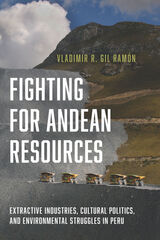
Mining investment in Peru has been presented as necessary for national progress; however, it also has brought socioenvironmental costs, left unfulfilled hopes for development, and has become a principal source of confrontation and conflict.
Fighting for Andean Resources focuses on the competing agendas for mining benefits and the battles over their impact on proximate communities in the recent expansion of the Peruvian mining frontier. The book complements renewed scrutiny of how globalization nurtures not solely antagonism but also negotiation and participation.
Having mastered an intimate knowledge of Peru, Vladimir R. Gil Ramón insightfully documents how social technologies of power are applied through social technical protocols of accountability invoked in defense of nature and vulnerable livelihoods. Although analyses point to improvements in human well-being, a political and technical debate has yet to occur in practice that would define what such improvements would be, the best way to achieve and measure them, and how to integrate dimensions such as sustainability and equity.
Many confrontations stem from frustrated expectations, environmental impacts, and the virtual absence of state apparatus in the locations where new projects emerged. This book presents a multifaceted perspective on the processes of representation, the strategies in conflicts and negotiations of development and nature management, and the underlying political actions in sites affected by mining.
This book will appeal to political scientists and economists interested in international financial markets, globalization, and the comparative study of domestic financial markets, as well as in German politics and the German economy.
Richard Deeg is Assistant Professor of Political Science, Temple University.
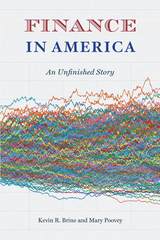
To understand finance, however, we have to learn its history, and this book fills that need. Kevin R. Brine, an industry veteran, and Mary Poovey, an acclaimed historian, show that finance as we know it today emerged gradually in the late nineteenth century and only coalesced after World War II, becoming ever more complicated—and ever more central to the American economy. The authors explain the models, regulations, and institutions at the heart of modern finance and uncover the complex and sometimes surprising origins of its critical features, such as corporate accounting standards, the Federal Reserve System, risk management practices, and American Keynesian and New Classic monetary economics. This book sees finance through its highs and lows, from pre-Depression to post-Recession, exploring the myriad ways in which the practices of finance and the realities of the economy influenced one another through the years.
A masterwork of collaboration, Finance in America lays bare the theories and practices that constitute finance, opening up the discussion of its role and risks to a broad range of scholars and citizens.
-What is the current financial status of the elderly, and how vulnerable are they to inflation?
-What is the impact of inflation on the private pension system, and what are the effects of alternative indexing schemes?
-What roles can the social security system play in the provision of retirement income?
-What is the effect of the tax code and the Employee Retirement Income Security Act of 1974 (ERISA) on corporate pension policy?
-How well funded are corporate pension plans, and is a firm's unfunded pension liability fully reflected in the market value of its common stock?
Many of the conclusions these experts reach contradict and challenge popular views, thus providing fertile ground for innovation in pension planning.

This ninth title in the series Studies in the Modernization of the Republic of Korea offers new insights into the role of finance in a rapidly developing country. Combining history and theory, it provides a rigorous test of previous theoretical propositions. The study illustrates the complexity of the Korean financial system and the danger of easy generalization from partial evidence.
The two major components of the financial system are brought into focus—one regulated and statistically recorded, the other unregulated, unrecorded. The burden of financial intermediation shifts from one to the other largely in response to government policy measures. By looking only at the regulated sector, previous studies have often misperceived the role of the financial system and the effects of government policies. The financial scandal in Seoul in May 1982 vividly demonstrated that the unregulated part of the system is still important and that overregulation of the “modern” part generates strong pressures for perpetuating the illegal, unregulated, “traditional” financial institutions.
Since the early 1980s, Korea’s financial development has been a tale of liberalization and opening. After the 1997 financial crisis, great strides were made in building a market-oriented financial system through sweeping reforms for deregulation and the opening of financial markets. However, the new system failed to steer the country away from a credit card boom and bust in 2003, a liquidity crisis in 2008, and a run on its savings banks in 2011, and has been severely tested again by the ongoing COVID-19 pandemic crisis. Financial liberalization, clearly, has been no panacea.
This study analyzes the deepening of and structural changes in Korea’s financial system since the early 1980s and presents the empirical results of the effects of financial development on economic growth, stability, and the distribution of income. It finds that, contrary to conventional wisdom, financial liberalization has contributed little to fostering the growth and stability of the Korean economy and has exacerbated income distribution problems. Are there any merits in financial liberalization? The authors answer this query through empirical examinations of the theories of finance and growth. They point to a clear need to further improve the efficiency, soundness, and stability of Korean financial institutions and markets.

Using both historical and contemporary episodes of breakdowns in financial trade, contributors to this volume draw insights from theory and empirical data, from the experience of closed and open economies worldwide, and from detailed case studies. They explore the susceptibility of American corporations to economic downturns; the origins of banking panics; and the behavior of financial markets during periods of crisis. Sever papers specifically address the current thrift crisis—including a detailed analysis of the over 500 FSLIC-insured thrifts in the southeast—and seriously challenge the value of recent measures aimed at preventing future collapse in that industry. Government economists and policy makers, scholars of industry and banking, and many in the business community will find these timely papers an invaluable reference.
A group of experts here examine rapidly globalizing financial markets with regard to capital flows and crises, domestic credit, international financial integration, and economic policy. Featuring detailed analyses and cross-national comparisons of countries such as Brazil, Argentina, Uruguay, and Korea, this book will shape economists’ and policymakers’ understanding of the effectiveness of restrictions on capital mobility in the world’s most fragile economies.
The essays brought together in this volume share a common objective: To bring a unifying methodological approach to the analysis of financial problems in developing, open economies. While the primary focus is on contemporary Latin America, the methods employed and the lessons learned are of wider applicability. The papers address the financial integration issue from three different perspectives. In some cases, a country study is the vehicle for an econometric investigation of a particular external linkage. In other cases, an individual country's experience suggests an economic model in which the stylized facts may be analyzed and developed. A third direction is unabashedly theoretical and formulates more general principles which are broadly applicable rather than country-specific.
Addressing these questions, the contributors focus chiefly on three themes: the actual use of debt and equity financing by corporations in recent years; the factors that drive the financial markets' pricing of debt and equity securities; and the relationship between corporations' real investment decisions and their financial decisions. While some of the papers are primarily expository, others break new ground. Extending his previous work, Robert Taggart finds a closer relationship between corporate and government debt than has been supposed. Zvi Bodie, Alex Kane, and Robert McDonald conclude in their study that the volatility of interest rates under the Volcker regime has led to a rise in real interest rates because of investors' demand for a greater risk premium. All of the papers present empirical findings in a useful analytical framework.
For its new findings and for its expert overview of issues central to an understanding of the U.S. economy, Financing Corporate Capital Formation should be of both historical and practical interest to students of economics and practitioners in the corporate and financial community.

Conventional wisdom holds that programs for the poor are vulnerable to instability and retrenchment. Medicaid, however, has grown into the nation’s largest intergovernmental grant program, accounting for nearly half of all federal funding to state and local governments. Medicaid’s generous open-ended federal matching grants have given governors a powerful incentive to mobilize on behalf of its maintenance and expansion, using methods ranging from lobbying and negotiation to creative financing mechanisms and waivers to maximize federal financial assistance. Perceiving federal retrenchment efforts as a threat to states’ finances, governors, through the powerful National Governors’ Association, have repeatedly worked together in bipartisan fashion to defend the program against cutbacks.
Financing Medicaid engagingly intertwines theory, historical narrative, and case studies, drawing on sources including archival materials from the National Governors’ Association and gubernatorial and presidential libraries, Centers for Medicare and Medicaid Services data, the Congressional Record, and interviews.

Although introductions to courses in finance exist for a variety of fields, Robert W. Kaps provides the first text to address the subject from an aviation viewpoint. Relying on his vast experience—twenty-plus years in the airline industry and more than thirty years in aviation—Kaps seeks not only to prepare students for careers in the aviation field but also to evoke in these students an excitement about the business. Specifically, he shows students how airlines, airports, and aviation are financed. Each chapter contains examples and illustrations and ends with suggested readings and references.
Following his discussion of financial management and accounting procedures, Kaps turns to financial management and sources of financial information. Here he discusses types of business organizations, corporate goals, business ethics, maximizing share price, and sources of financial information.
Kaps also covers debt markets, financial statements, air transport sector revenue generation, and air transport operating cost management, including cost administration and labor costs, fuel, and landing fees and rentals. He describes in depth air transport yield management systems and airport financing, including revenues, ownership, operations, revenue generation, funding, allocation of Air Improvement Program funds, bonds, and passenger facility charges.
Kaps concludes with a discussion of the preparation of a business plan, which includes advice about starting and running a business. He also provides two typical business plan outlines. While the elements of fiscal management in aviation follow generally accepted accounting principles, many nuances are germane only to the airline industry. Kaps provides a basic understanding of the principles that are applicable throughout the airline industry.

Fiscal Policy after the Financial Crisis focuses on the effects of fiscal stimuli and increased government spending, with contributions that consider the measurement of the multiplier effect and its size. In the face of uncertainty over the sustainability of recent economic policies, further contributions to this volume discuss the merits of alternate means of debt reduction through decreased government spending or increased taxes. A final section examines how the short-term political forces driving fiscal policy might be balanced with aspects of the long-term planning governing monetary policy.
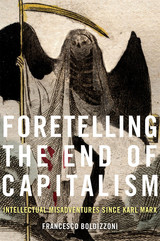
Intellectuals since the Industrial Revolution have been obsessed with whether, when, and why capitalism will collapse. This riveting account of two centuries of failed forecasts of doom reveals the key to capitalism’s durability.
Prophecies about the end of capitalism are as old as capitalism itself. None have come true. Yet, whether out of hope or fear, we keep looking for harbingers of doom. In Foretelling the End of Capitalism, Francesco Boldizzoni gets to the root of the human need to imagine a different and better world and offers a compelling solution to the puzzle of why capitalism has been able to survive so many shocks and setbacks.
Capitalism entered the twenty-first century triumphant, its communist rival consigned to the past. But the Great Recession and worsening inequality have undermined faith in its stability and revived questions about its long-term prospects. Is capitalism on its way out? If so, what might replace it? And if it does endure, how will it cope with future social and environmental crises and the inevitable costs of creative destruction? Boldizzoni shows that these and other questions have stood at the heart of much analysis and speculation from the early socialists and Karl Marx to the Occupy Movement. Capitalism has survived predictions of its demise not, as many think, because of its economic efficiency or any intrinsic virtues of markets but because it is ingrained in the hierarchical and individualistic structure of modern Western societies.
Foretelling the End of Capitalism takes us on a fascinating journey through two centuries of unfulfilled prophecies. An intellectual tour de force and a plea for political action, it will change our understanding of the economic system that determines the fabric of our lives.
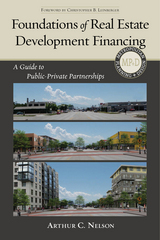
This is the first primer on financing urban redevelopment written for practicing planners and public administrators. In easy-to-understand language, it will inform readers of the natural cycle of urban development, explain how to overcome barriers to efficient redevelopment, what it takes for the private sector to justify its redevelopment investments, and the role of public and nonprofit sectors to leverage private sector redevelopment where the market does not generate sufficient rates of return.
This is a must read for practicing planners and planning students, economic development officials, public administrators, and others who need to understand how to leverage public and non-profit resources to leverage private funds for redevelopment.
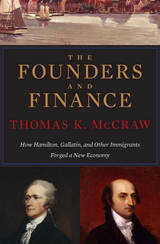
In 1776 the United States government started out on a shoestring and quickly went bankrupt fighting its War of Independence against Britain. At the war’s end, the national government owed tremendous sums to foreign creditors and its own citizens. But lacking the power to tax, it had no means to repay them. The Founders and Finance is the first book to tell the story of how foreign-born financial specialists—immigrants—solved the fiscal crisis and set the United States on a path to long-term economic success.
Pulitzer Prize–winning author Thomas K. McCraw analyzes the skills and worldliness of Alexander Hamilton (from the Danish Virgin Islands), Albert Gallatin (from the Republic of Geneva), and other immigrant founders who guided the nation to prosperity. Their expertise with liquid capital far exceeded that of native-born plantation owners Washington, Jefferson, and Madison, who well understood the management of land and slaves but had only a vague knowledge of financial instruments—currencies, stocks, and bonds. The very rootlessness of America’s immigrant leaders gave them a better understanding of money, credit, and banks, and the way each could be made to serve the public good.
The remarkable financial innovations designed by Hamilton, Gallatin, and other immigrants enabled the United States to control its debts, to pay for the Louisiana Purchase of 1803, and—barely—to fight the War of 1812, which preserved the nation’s hard-won independence from Britain.
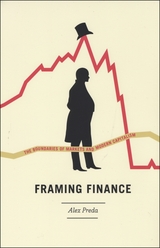
As Preda discovers through extensive research, the public was once much more skeptical. For investing to become accepted, a deep-seated prejudice against speculation had to be overcome, and Preda reveals that over the course of the eighteenth and nineteenth centuries groups associated with stock exchanges in New York, London, and Paris managed to redefine finance as a scientific pursuit grounded in observational technology. But Preda also notes that as the financial data in which they trafficked became ever more difficult to understand, charismatic speculators emerged whose manipulations of the market undermined the benefits of widespread investment. And so, Framing Finance ends with an eye on the future, proposing a system of public financial education to counter the irrational elements that still animate the appeal of finance.
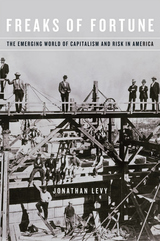
Until the early nineteenth century, “risk” was a specialized term: it was the commodity exchanged in a marine insurance contract. Freaks of Fortune tells the story of how the modern concept of risk emerged in the United States. Born on the high seas, risk migrated inland and became essential to the financial management of an inherently uncertain capitalist future.
Focusing on the hopes and anxieties of ordinary people, Jonathan Levy shows how risk developed through the extraordinary growth of new financial institutions—insurance corporations, savings banks, mortgage-backed securities markets, commodities futures markets, and securities markets—while posing inescapable moral questions. For at the heart of risk’s rise was a new vision of freedom. To be a free individual, whether an emancipated slave, a plains farmer, or a Wall Street financier, was to take, assume, and manage one’s own personal risk. Yet this often meant offloading that same risk onto a series of new financial institutions, which together have only recently acquired the name “financial services industry.” Levy traces the fate of a new vision of personal freedom, as it unfolded in the new economic reality created by the American financial system.
Amid the nineteenth-century’s waning faith in God’s providence, Americans increasingly confronted unanticipated challenges to their independence and security in the boom and bust chance-world of capitalism. Freaks of Fortune is one of the first books to excavate the historical origins of our own financialized times and risk-defined lives.
In recent years hundreds of high-profile ‘free speech’ incidents have rocked US college campuses. Milo Yiannopoulos, Ben Shapiro, Ann Coulter and other right-wing speakers have faced considerable protest, with many being disinvited from speaking. These incidents are widely circulated as examples of the academy’s intolerance towards conservative views.
But this response is not the spontaneous outrage of the liberal colleges. There is a darker element manufacturing the crisis, funded by political operatives, and designed to achieve specific political outcomes. If you follow the money, at the heart of the issue lies the infamous and ultra-libertarian Koch donor network.
Grooming extremist celebrities, funding media platforms that promote these controversies, developing legal organzations to sue universities and corrupting legislators, the influence of the Koch network runs deep. We need to abandon the ‘campus free speech’ narrative and instead follow the money if we ever want to root out this dangerous network from our universities.
In From Boom to Bubble, Rachel Weber debunks the idea that booms occur only when cities are growing and innovating. Instead, she argues, even in cities experiencing employment and population decline, developers rush to erect new office towers and apartment buildings when they have financial incentives to do so. Focusing on the main causes of overbuilding during the early 2000s, Weber documents the case of Chicago’s “Millennial Boom,” showing that the Loop’s expansion was a response to global and local pressures to produce new assets. An influx of cheap cash, made available through the use of complex financial instruments, helped transform what started as a boom grounded in modest occupant demand into a speculative bubble, where pricing and supply had only tenuous connections to the market. From Boom to Bubble is an innovative look at how property markets change and fail—and how that affects cities.
In the absence of innovation in the field of conservation finance, a daunting funding gap faces conservationists aiming to protect America's system of landscapes that provide sustainable resources, water, wildlife habitat, and recreational amenities. Experts estimate that the average annual funding gap will be between $1.9 billion and $7.7 billion over the next forty years. Can the conservation community come up with new methods for financing that will fill this enormous gap? Which human and financial resources will allow us to fund critical land conservation needs?
From Walden to Wall Street brings together the experience of more than a dozen pioneering conservation finance practitioners to address these crucial issues. Contributors present groundbreaking ideas including mainstreaming environmental markets; government ballot measures for land conservations; convertible tax-exempt financing; and private equity markets.
The creativity and insight of From Walden to Wall Street offers considerable hope that, even in this era of widespread financial constraints, the American conservation community's financial resources may potentially grow dramatically in both quantity and quality in the decades to come.
An Economist Best Book of the Year
A Financial Times Best Book of the Year
A Foreign Affairs Best Book of the Year
A ProMarket Best Political Economy Book of the Year
One of The Week’s Ten Best Business Books of the Year
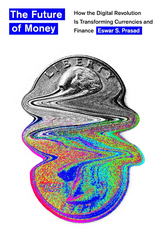
A cutting-edge look at how accelerating financial change, from the end of cash to the rise of cryptocurrencies, will transform economies for better and worse.
We think we’ve seen financial innovation. We bank from laptops and buy coffee with the wave of a phone. But these are minor miracles compared with the dizzying experiments now underway around the globe, as businesses and governments alike embrace the possibilities of new financial technologies. As Eswar Prasad explains, the world of finance is at the threshold of major disruption that will affect corporations, bankers, states, and indeed all of us. The transformation of money will fundamentally rewrite how ordinary people live.
Above all, Prasad foresees the end of physical cash. The driving force won’t be phones or credit cards but rather central banks, spurred by the emergence of cryptocurrencies to develop their own, more stable digital currencies. Meanwhile, cryptocurrencies themselves will evolve unpredictably as global corporations like Meta and Amazon join the game. The changes will be accompanied by snowballing innovations that are reshaping finance and have already begun to revolutionize how we invest, trade, insure, and manage risk.
Prasad shows how these and other changes will redefine the very concept of money, unbundling its traditional functions as a unit of account, medium of exchange, and store of value. The promise lies in greater efficiency and flexibility, increased sensitivity to the needs of diverse consumers, and improved market access for the unbanked. The risk is instability, lack of accountability, and erosion of privacy. A lucid, visionary work, The Future of Money shows how to maximize the best and guard against the worst of what is to come.
An Economist Book of the Year
A Financial Times Book of the Year
A Foreign Affairs Book of the Year
A ProMarket Book of the Year
One of The Week’s Ten Best Business Books of the Year
“A road map for money managers, market strategists, and others seeking to understand this new world.”—Barron’s
“Money shapes economies, economies shape nations, nations shape history. It follows that the future of money is profoundly important. Here is a definitive report on where we are and where we are going.”—Lawrence H. Summers, former Secretary of the Treasury
“Prasad manages to make the financial system intelligible and interesting without resorting to shortcuts and exaggeration…Previous overhauls mainly improved existing systems, he notes. The end of cash—likely within a decade or two—is revolutionary.”—The Economist
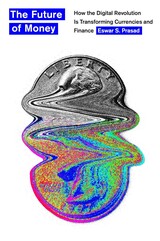
The world of finance is on the cusp of a major disruption that will affect corporations, bankers, states—indeed, all of us. As Eswar Prasad makes clear, the end of physical cash will fundamentally rewrite how we live. Bitcoin, Ethereum, and other cryptocurrencies are just the beginning: spurred by their emergence, central banks will increasingly develop their own, more stable digital currencies. Meanwhile, cryptocurrencies themselves will evolve dramatically as global corporations like Meta, Apple, and Amazon join the game.
Prasad shows how these innovations will redefine the very concept of money, unbundling its traditional functions. This transformation promises greater efficiency and flexibility, but also carries the risk of instability, lack of accountability, and erosion of privacy. A lucid, visionary work, The Future of Money shows how to maximize the best and guard against the worst of what is to come.
READERS
Browse our collection.
PUBLISHERS
See BiblioVault's publisher services.
STUDENT SERVICES
Files for college accessibility offices.
RECENTLY PUBLISHED





UChicago Accessibility Resources
home | accessibility | search | about | contact us
BiblioVault ® 2001 - 2024
The University of Chicago Press