
 A SCHOLARLY BOOK REPOSITORY
68 start with A start with A
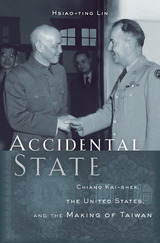
The existence of two Chinese states—one controlling mainland China, the other controlling the island of Taiwan—is often understood as a seemingly inevitable outcome of the Chinese civil war. Defeated by Mao Zedong, Chiang Kai-shek’s Nationalists fled to Taiwan to establish a rival state, thereby creating the “Two Chinas” dilemma that vexes international diplomacy to this day. Accidental State challenges this conventional narrative to offer a new perspective on the founding of modern Taiwan.
Hsiao-ting Lin marshals extensive research in recently declassified archives to show that the creation of a Taiwanese state in the early 1950s owed more to serendipity than careful geostrategic planning. It was the cumulative outcome of ad hoc half-measures and imperfect compromises, particularly when it came to the Nationalists’ often contentious relationship with the United States.
Taiwan’s political status was fraught from the start. The island had been formally ceded to Japan after the First Sino-Japanese War, and during World War II the Allies promised Chiang that Taiwan would revert to Chinese rule after Japan’s defeat. But as the Chinese civil war turned against the Nationalists, U.S. policymakers reassessed the wisdom of backing Chiang. The idea of placing Taiwan under United Nations trusteeship gained traction. Cold War realities, and the fear of Taiwan falling into Communist hands, led Washington to recalibrate U.S. policy. Yet American support of a Taiwan-based Republic of China remained ambivalent, and Taiwan had to eke out a place for itself in international affairs as a de facto, if not fully sovereign, state.
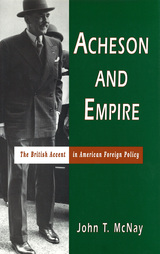
Acheson and Empire offers a compelling reassessment of Dean Acheson's policies toward the former colonial world during his period as secretary of state from 1949 to 1953. John T. McNay argues that Acheson inherited through his own personal history a way of understanding the world that encouraged imperial-style international relationships. This worldview represented a well-developed belief system rooted in his Ulster Protestant heritage that remained consistent throughout his life.
By exploring relationships of the United States with Britain and countries formerly or then controlled by Britain, such as India, Ireland, Iran, and Egypt, McNay shows the significance of Acheson's beliefs. McNay argues that Acheson's support of existing imperial relationships was so steadfast that it often led other nations to perceive that the United States was nothing more than a front for British interests. He believes this approach to foreign policy damaged American relations with emerging countries and misled the British regarding possibilities of an Anglo-American partnership.
Acheson and Empire contends that the widely accepted view of Acheson as a foreign policy realist is misleading and that historians should acknowledge that his affinity for the British Empire went beyond his clothing and mannerisms. McNay maintains that the widely accepted view of Acheson as one of a group of "wise men" who shaped the Cold War world by basing their decisions on cold calculation of American interests should be reconsidered.
Drawing from extensive research in archival sources, including the Truman Library, the National Archives, the Public Record Office in London, and Acheson's personal papers at Yale, Acheson and Empire offers a fresh look at Dean Acheson that runs counter to previous biographies and many histories of the Cold War.
Members of the Asian American community have always been trans-Pacific, but are now more than ever, since the 1965 change in U.S. immigration law. Entering the U.S. at the culmination of the Civil Rights movement, Asians becoming Asian Americans have joined a self-consciously multicultural society. Asian economies roared onto the world stage, creating new markets while circulating capital and labor at an unprecedented scale and intensity, thereby helping drive the forces of modern globalization. These essays by well-known scholars in the field of Asian American studies consider such topics as the impact of new migrations on Asian American subjectivity and politics, Asian American activism and U.S. foreign policy, and the role of Asian Americans in Pacific Rim economies.
Considering issues of diaspora, transmigrancy, assimilation, institutionalized racism, and community, Across the Pacific covers such cutting-edge subjects as the cultural expressions of dislocation among contemporary Asian American writers, as well as the impact of the new migrations on Asian American subjectivity and politics.
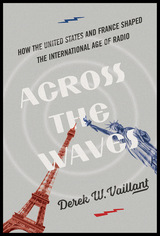
Drawing on a broad range of American and French archives, Derek Vaillant joins textual and aural materials with original data analytics and maps to illuminate U.S.-French broadcasting's political and cultural development. Vaillant focuses on the period from 1931 until France dismantled its state media system in 1974. His analysis examines mobile actors, circulating programs, and shifting institutions that shaped international radio's use in times of war and peace. He explores the extraordinary achievements, the miscommunications and failures, and the limits of cooperation between America and France as they shaped a new media environment. Throughout, Vaillant explains how radio's power as an instantaneous mass communications tool produced, legitimized, and circulated various notions of states, cultures, ideologies, and peoples as superior or inferior.
A first comparative history of its subject, Across the Waves provocatively examines how different strategic agendas, aesthetic aims and technical systems shaped U.S.-French broadcasting and the cultural politics linking the United States and France.

Can—or should—the United States try to promote reform in client states in the Third World? This question, which reverberates through American foreign policy, is at the heart of Adventures in Chaos. A faltering friendly state, in danger of falling to hostile forces, presents the U.S. with three options: withdraw, bolster the existing government, or try to reform it. Douglas Macdonald defines the circumstances that call these policy options into play, combining an analysis of domestic politics in the U. S., cognitive theories of decision making, and theories of power relations drawn from sociology, economics, and political science.
He examines the conditions that promote the reformist option and then explores strategies for improving the success of reformist intervention in the future. In order to identify problems in this policy—and to propose solutions—Macdonald focuses on three case studies of reformist intervention in Asia: China, 1946-1948; the Philippines, 1950-1953; and Vietnam, 1961-1963. Striking similarities in these cases suggest that such policy dilemmas are a function of the global role played by the U.S., especially during the Cold War. Though this role is changing, Macdonald foresees future applications for the lessons his study offers.
A challenge to the conventional wisdom on reformist intervention, Adventures in Chaos—through extensive archival research—displays a theoretical and historical depth often lacking in treatments of the subject.
At the Second World War’s end, it was clear that business as usual in colonized Africa would not resume. W. E. B. Du Bois’s The World and Africa, published in 1946, recognized the depth of the crisis that the war had brought to Europe, and hence to Europe’s domination over much of the globe. Du Bois believed that Africa’s past provided lessons for its future, for international statecraft, and for humanity’s mastery of social relations and commerce. Frederick Cooper revisits a history in which Africans were both empire-builders and the objects of colonization, and participants in the events that gave rise to global capitalism.
Of the many pathways out of empire that African leaders envisioned in the 1940s and 1950s, Cooper asks why they ultimately followed the one that led to the nation-state, a political form whose limitations and dangers were recognized by influential Africans at the time. Cooper takes account of the central fact of Africa’s situation—extreme inequality between Africa and the western world, and extreme inequality within African societies—and considers the implications of this past trajectory for the future. Reflecting on the vast body of research on Africa since Du Bois’s time, Cooper corrects outdated perceptions of a continent often relegated to the margins of world history and integrates its experience into the mainstream of global affairs.
Groundbreaking and critical, African Americans in U.S. Foreign Policy expands on the scope and themes of recent collections to offer the most up-to-date scholarship to students in a range of disciplines, including U.S. and African American history, Africana studies, political science, and American studies.
These essays examine the recent efforts of U.S. policymakers to recast the roles, interests, and purposes of the United States both at home and abroad in a political environment where policy making has become increasingly decentralized and democratized. The contributors suggest that foreign policy leadership has shifted from White House and executive branch dominance to an expanded group of actors that includes the president, Congress, the foreign policy bureaucracy, interest groups, the media, and the public. The volume includes case studies that focus on China, Russia, Bosnia, Somalia, democracy promotion, foreign aid, and NAFTA. Together, these chapters describe how policy making after 1991 compares to that of other periods and suggest how foreign policy will develop in the future.
This collection provides a broad, balanced evaluation of U.S. foreign policy making in the post–Cold War setting for scholars, teachers, and students of U.S. foreign policy, political science, history, and international studies.
Contributors. Ralph G. Carter, Richard Clark, A. Lane Crothers, I. M. Destler, Ole R. Holsti, Steven W. Hook, Christopher M. Jones, James M. McCormick, Jerel Rosati, Jeremy Rosner, John T. Rourke, Renee G. Scherlen, Peter J. Schraeder, James M. Scott, Jennifer Sterling-Folker, Rick Travis, Stephen Twing
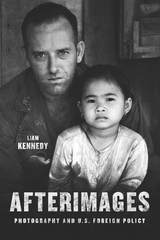
Liam Kennedy here maps the evolving relations between the American way of war and photographic coverage of it. Organized in its first section around key US military actions over the last fifty years, the book then moves on to examine how photographers engaged with these conflicts on wider ethical and political grounds, and finally on to the genre of photojournalism itself. Illustrated throughout with examples of the photographs being considered, Afterimages argues that photographs are important means for critical reflection on war, violence, and human rights. It goes on to analyze the high ethical, sociopolitical, and legalistic value we place on the still image’s ability to bear witness and stimulate action.
Does foreign aid promote human rights? As the world’s largest aid donor, the United States has provided foreign assistance to more than 200 countries. Deploying global numerical data on US foreign aid and comparative historical analysis of America’s post–Cold War foreign policies in Southeast Asia, Aid Imperium provides the most comprehensive explanation that links US strategic assistance to physical integrity rights outcomes in recipient countries, particularly in ways that previous quantitative studies have systematically ignored. The book innovatively highlights the active political agency of Global South states and actors as they negotiate and chart their political trajectories with the United States as the core state of the international system. Drawing from theoretical insights in the humanities and the social sciences as well as a wide range of empirical documents, Aid Imperium is the first multidisciplinary study to explain how US foreign policy affects state repression and physical integrity rights outcomes in Southeast Asia and the rest of the Global South.
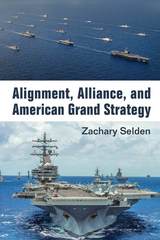
Amid calls for retrenchment or restraint, Selden makes the case that a policy focused on maintaining American military preeminence and the demonstrated willingness to use force may be what sustains the cooperation of second-tier states, which in turn help to maintain US hegemony at a manageable cost.

Black works from the startling premise that the United States is a continent pretending to be a country. He examines the cultural clashes—and the tense harmony—between the numerous regional cultures uneasily contained within the United States’ wide bounds. Suburban sprawl, the triumph of consumerism, the war over health care, immigration, and Christian evangelicalism all play a part in these pages, as Black unravels the tangled web of American life during the past forty-five years. He locates such tensions in the tug-of-war between the unitary and divisive pressures that have always defined the character of American government, and in the alternating rise and fall of individualism and conformity in American society as well. Black also has some telling new reflections on America’s role abroad, from Nixon’s Vietnam to George W. Bush's Iraq.
Drawing on travels from Virginia to California to Alaska, Black deftly reveals in Altered States the less-examined aspects of American culture as they are manifested in its diverse peoples and landscapes from coast to coast.
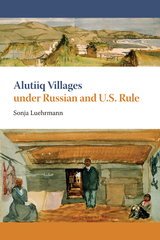

John W. Davis (1873-1955) was the most important national politician to call West Virginia home. Nominated for president by the Democratic Party in 1924, Davis lost to the incumbent Calvin Coolidge. This diary is an engaging day-by-day account of Davis's service as U.S. ambassador to England at a pivotal point in modern history. The recent World War and Russian Revolution, the new thirst for oil, the old strife in Ireland, and the final days of the Wilson presidency fill this diary with enduring significance. Davis also offers a look at the personalities which shaped the post-war world and describes the pageantry and social life of America's most coveted ambassadorial assignment.
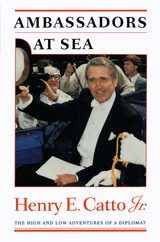
In 1969, Henry Catto was selling insurance in San Antonio, Texas. Just twenty years later, he presented his credentials as ambassador to the Court of St. James's to Her Majesty, Queen Elizabeth II, at Buckingham Palace. In this engaging memoir, he retraces his journey from Texas outsider to Washington insider, providing a fascinating look at the glamour, day-to-day work, and even occasional danger that come with being a high-level representative of the United States government.
Catto's posts brought him into contact with the world's most powerful leaders and left him with a wealth of stories, which he recounts amusingly in these pages. He was the official host for Queen Elizabeth's visit to America during the Bicentennial year—and one of José Napoleon Duarte's protectors after his failed 1972 coup attempt in El Salvador. Catto accompanied Richard Nixon on his historic trip to Russia, sparred with Bill Moyers and the producers of "60 Minutes" as Caspar Weinberger's spokesman at the Pentagon, and hosted George Bush's planning meeting with Margaret Thatcher at the beginning of the Persian Gulf War. In telling these and other stories, he offers behind-the-scenes glimpses into how political power really works in Washington, London, and other world capitals.
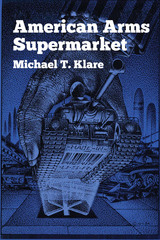
U.S. arms sales to Third World countries rapidly escalated from $250 million per year in the 1950s and 1960s to $10 billion and above in the 1970s and 1980s. But were these military sales, so critical in their impact on Third World nations and on America’s perception of its global role, achieving the ends and benefits attributed to them by U.S. policymakers? In American Arms Supermarket, Michael T. Klare responds to this troubling, still-timely question with a resounding no, showing how a steady growth in arms sales places global security and stability in jeopardy.
Tracing U.S. policies, practices, and experiences in military sales to the Third World from the 1950s to the 1980s, Klare explains how the formation of U.S. foreign policy did not keep pace with its escalating arms sales—how, instead, U.S. arms exports proved to be an unreliable instrument of policy, often producing results that diminished rather than enhanced fundamental American interests. Klare carefully considers the whole spectrum of contemporary American arms policy, focusing on the political economy of military sales, the evolution of U.S. arms export policy from John F. Kennedy to Ronald Reagan, and the institutional framework for arms export decision making. Actual case studies of U.S. arms sales to Latin America, Iran, and the Middle East provide useful data in assessing the effectiveness of arms transfer programs in meeting U.S. foreign policy objectives.
The author also rigorously examines trouble spots in arms policy: the transfer of arms-making technology to Third World arms producers, the relationship between arms transfers and human rights, and the enforcement of arms embargoes on South Africa, Chile, and other “pariah” regimes. Klare also compares the U.S. record on arms transfers to the experiences of other major arms suppliers: the Soviet Union and the “big four” European nations—France, Britain, the former West Germany, and Italy. Concluding with a reasoned, carefully drawn proposal for an alternative arms export policy, Klare vividly demonstrates the need for cautious, restrained, and sensitive policy.
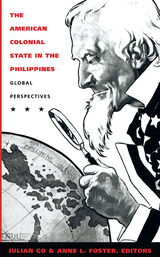
Written by social scientists and historians, these essays investigate various aspects of American colonial government through comparison with and contextualization within colonial regimes elsewhere in the world—from British Malaysia and Dutch Indonesia to Japanese Taiwan and America's other major overseas colony, Puerto Rico. Contributors explore the program of political education in the Philippines; constructions of nationalism, race, and religion; the regulation of opium; connections to politics on the U.S. mainland; and anticolonial resistance. Tracking the complex connections, circuits, and contests across, within, and between empires that shaped America's colonial regime, The American Colonial State in the Philippines sheds new light on the complexities of American imperialism and turn-of-the-century colonialism.
Contributors. Patricio N. Abinales, Donna J. Amoroso, Paul Barclay, Vince Boudreau, Anne L. Foster, Julian Go, Paul A. Kramer
This expanded edition retains the lectures and essays first published in 1951 as American Diplomacy, 1900-1950 and adds two lectures delivered in 1984 as well as a new preface by the author. In these additional pieces, Kennan explains how some of his ideas have changed over the years. He confronts the events and topics that have come to occupy American opinion in the last thirty years, including the development and significance of the Cold War, the escalation of the nuclear arms race, and the American involvement in Vietnam.
"A book about foreign policy by a man who really knows something about foreign policy."—James Reston,New York Times Book Review
"These celebrated lectures, delivered at the University of Chicago in 1950, were for many years the most widely read account of American diplomacy in the first half of the twentieth century. . . . The second edition of the work contains two lectures from 1984 that reconsider the themes of American Diplomacy"—Foreign Affairs, Significant Books of the Last 75 Years.
For more than sixty years, George F. Kennan’s American Diplomacy has been a standard work on American foreign policy. Drawing on his considerable diplomatic experience and expertise, Kennan offers an overview and critique of the foreign policy of an emerging great power whose claims to rightness often spill over into self-righteousness, whose ambitions conflict with power realities, whose judgmentalism precludes the interests of other states, and whose domestic politics frequently prevent prudent policies and result in overstretch. Keenly aware of the dangers of military intervention and the negative effects of domestic politics on foreign policy, Kennan identifies troubling inconsistencies in the areas between actions and ideals—even when the strategies in question turned out to be decided successes.
In this expanded sixtieth-anniversary edition, a substantial new introduction by John J. Mearsheimer, one of America’s leading political realists, provides new understandings of Kennan’s work and explores its continued resonance. As America grapples with its new role as one power among many—rather than as the “indispensable nation” that sees “further into the future”—Kennan’s perceptive analysis of the past is all the more relevant. Today, as then, the pressing issue of how to wield power with prudence and responsibility remains, and Kennan’s cautions about the cost of hubris are still timely. Refreshingly candid, American Diplomacy cuts to the heart of policy issues that continue to be hotly debated today.
“These celebrated lectures, delivered at the University of Chicago in 1950, were for many years the most widely read account of American diplomacy in the first half of the twentieth century.”—Foreign Affairs, Significant Books of the Last 75 Years
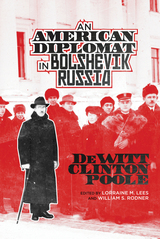
Historians Lorraine M. Lees and William S. Rodner introduce and annotate Poole's recollections, which give a fresh, firsthand perspective on monumental events in world history and reveal the important impact DeWitt Clinton Poole (1885–1952) had on U.S.–Soviet relations. He was active in implementing U.S. policy, negotiating with the Bolshevik authorities, and supervising American intelligence operations that gathered information about conditions throughout Russia, especially monitoring anti-Bolshevik elements and areas of German influence. Departing Moscow in late 1918 via Petrograd, he was assigned to the port of Archangel, then occupied by Allied and American forces, and left Russia in June 1919.
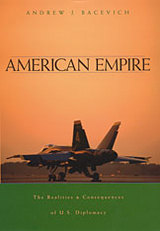
In a challenging, provocative book, Andrew Bacevich reconsiders the assumptions and purposes governing the exercise of American global power. Examining the presidencies of George H. W. Bush and Bill Clinton--as well as George W. Bush's first year in office--he demolishes the view that the United States has failed to devise a replacement for containment as a basis for foreign policy. He finds instead that successive post-Cold War administrations have adhered to a well-defined "strategy of openness." Motivated by the imperative of economic expansionism, that strategy aims to foster an open and integrated international order, thereby perpetuating the undisputed primacy of the world's sole remaining superpower. Moreover, openness is not a new strategy, but has been an abiding preoccupation of policymakers as far back as Woodrow Wilson.
Although based on expectations that eliminating barriers to the movement of trade, capital, and ideas nurtures not only affluence but also democracy, the aggressive pursuit of openness has met considerable resistance. To overcome that resistance, U.S. policymakers have with increasing frequency resorted to force, and military power has emerged as never before as the preferred instrument of American statecraft, resulting in the progressive militarization of U.S. foreign policy.
Neither indictment nor celebration, American Empire sees the drive for openness for what it is--a breathtakingly ambitious project aimed at erecting a global imperium. Large questions remain about that project's feasibility and about the human, financial, and moral costs that it will entail. By penetrating the illusions obscuring the reality of U.S. policy, this book marks an essential first step toward finding the answers.
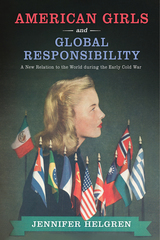
Jennifer Helgren argues that a new internationalist girl citizenship took root in the country in the years following World War II in youth organizations such as Camp Fire Girls, Girl Scouts, YWCA Y-Teens, schools, and even magazines like Seventeen. She shows the particular ways that girls’ identities and roles were configured, and reveals the links between internationalist youth culture, mainstream U.S. educational goals, and the U.S. government in creating and marketing that internationalist girl, thus shaping the girls’ sense of responsibilities as citizens.
Between December 1953 and June 1954, the elite think-tank the Council on Foreign Relations (CFR) joined prominent figures in International Relations, including Pennsylvania’s Robert Strausz-Hupé, Yale’s Arnold Wolfers, the Rockefeller Foundation’s William Thompson, government adviser Dorothy Fosdick, and nuclear strategist William Kaufmann. They spent seven meetings assessing approaches to world politics—from the “realist” theory of Hans Morgenthau to theories of imperialism of Karl Marx and V.I. Lenin—to discern basic elements of a theory of international relations.
The study group’s materials are an indispensable window to the development of IR theory, illuminating the seeds of the theory-practice nexus in Cold War U.S. foreign policy. Historians of International Relations recently revised the standard narrative of the field’s origins, showing that IR witnessed a sharp turn to theoretical consideration of international politics beginning around 1950, and remained preoccupied with theory. Taking place in 1953–54, the CFR study group represents a vital snapshot of this shift.
This book situates the CFR study group in its historical and historiographical contexts, and offers a biographical analysis of the participants. It includes seven preparatory papers on diverse theoretical approaches, penned by former Berkeley political scientist George A. Lipsky, followed by the digest of discussions from the study group meetings. American Power and International Theory at the Council on Foreign Relations, 1953–54 offers new insights into the early development of IR as well as the thinking of prominent elites in the early years of the Cold War.
Paul D. Miller offers a tough minded critique of recent trends in American grand strategy. He rejects retrenchment but also the excesses of liberal internationalism. He prescribes a conservative internationalist grand strategy to preserve the American security and leadership in the world while avoiding overstretch.
Originally written before the 2016 US presidential election, this first paperback edition contains a new preface that repositions the book’s argument for the Trump era. Miller explains why President Trump’s nationalist vision for American grand strategy damages US interests and world order. Miller blends academic rigor with his experiences as former member of the National Security Council and intelligence community to offer prescriptions for US grand strategy. He advocates for narrowing regional priorities and focusing on five strategic objectives: balancing against the nuclear autocracies, championing liberalism to maintain a favorable balance of power, thwarting the transnational jihadist movement, investing in governance in weak and failed states, and strengthening homeland security.
This book is a must read for scholars and students of international affairs and for anyone who is concerned about America’s role in the world.
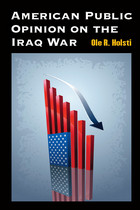
"A substantial contribution to understanding the role of public opinion and the news media during the Iraq War. Equally impressive, it effectively puts the domestic context of U.S. policy in historical perspective, making the book useful to historians as well as to political scientists."
---Ralph B. Levering, Davidson College
"American Public Opinion on the Iraq War sets out to chart against a detailed account of the war a nuanced assessment of how public opinion on the conflict evolved, the partisan differences that emerged, how the issue affected other areas of foreign policy opinion, and the limits of public opinion on policy. It succeeds at all of this, and it does so in a manner that is at once informative, inherently interesting, and exceptionally easy to read."
---Randolph M. Siverson, University of California, Davis
Ole R. Holsti explores the extent to which changes in public opinion reflected the vigorous public relations efforts of the Bush administration to gain support for the war and the partisanship marking debates over policies toward Iraq. Holsti investigates the ways in which the Iraq experience has led substantial numbers of Americans to reconsider their nation's proper international role, and he assesses the impact that public opinion has had on policymakers. Significantly, Holsti places his findings in a broader context to address the role of public opinion and of the media in democratic governance.
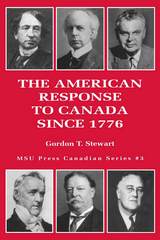
Canadians long have engaged in in-depth, wide-ranging discussions about their nation's relations with the United States. On the other hand, American citizens usually have been satisfied to accept a series of unexamined myths about their country's unchanging, benign partnership with the "neighbor to the north". Although such perceptions of uninterrupted, friendly relations with Canada may dominate American popular opinion, not to mention discussions in many American scholarly and political circles, they should not, according to Stewart, form the bases for long-term U.S. international economic, political, and cultural relations with Canada. Stewart describes and analyzes the evolution of U.S. policymaking and U.S. policy thinking toward Canada, from the tense and confrontational post-Revolutionary years to the signing of the Free Trade Agreement in 1988, to discover if there are any permanent characteristics of American policies and attitudes with respect to Canada. American policymakers were concerned for much of the period before World War II with Canada's role in the British empire, often regarded as threatening, or at least troubling, to developing U.S. hegemony in North America and even, in the late nineteenth century, to U.S. trade across the Pacific. A permanent goal of U.S. policymakers was to disengage Canada from that empire. They also thought that Canada's natural geographic and economic orientation was southward to the U.S., and policymakers were critical of Canadian efforts to construct an east- west economy. The Free Trade Agreement of 1988 which prepared the way for north-south lines of economic force, in this context, had been an objective of U.S. foreign policy since the founding of the republic in 1776. At the same time, however, these deep-seated U.S. goals were often undermined by domestic lobbies and political factors within the U.S., most evidently during the era of high tariffs from the 1860s to the 1930s when U.S. tariff policies actually encouraged a separate, imperially-backed economic and cultural direction in Canada. When the dramatic shift toward integration in trade, investment, defense and even popular culture began to take hold in the 1930s, 1940s and 1950s in the wake of the Depression and World War II, American policymakers viewed themselves as working in harmony with underlying, "natural" converging economic, political and cultural trends recognized and accepted by their Canadian counterparts.

Revolutions and aborted revolutions and bitter civil and "local" wars in the 1980s and since have raised new questions about national security, its definition, and its implementation. Nevertheless, a number of basic philosophical and political issues remain constant at a level deeper than tactical considerations. These are what eight accomplished philosophers, political scientists, Christian ethicists, and policymakers came together to discuss. They ask the fundamental and perduring questions of pacifism, war, intervention, and political negotiation. They focus on such problems as ascertaining the role of the churches in the quest for peace, defining "national interest" and "national purpose," and construing intervention in other that strictly unilateral terms.
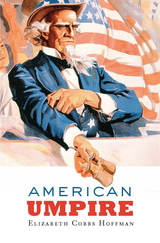
Commentators frequently call the United States an empire: occasionally a benign empire, sometimes an empire in denial, and often a destructive empire. Elizabeth Cobbs Hoffman asserts instead that, because of its unusual federal structure, America has performed the role of umpire since 1776, compelling adherence to rules that gradually earned collective approval.
This provocative reinterpretation traces America’s role in the world from the days of George Washington, Abraham Lincoln, and Franklin D. Roosevelt to the present. Cobbs Hoffman argues that the United States has been the pivot of a transformation that began outside its borders and before its founding, in which nation-states replaced the empires that had dominated history. The “Western” values that America is often accused of imposing were, in fact, the result of this global shift. American Umpire explores the rise of three values—access to opportunity, arbitration of disputes, and transparency in government and business—and finds that the United States is distinctive not in its embrace of these practices but in its willingness to persuade and even coerce others to comply. But America’s leadership is problematic as well as potent. The nation has both upheld and violated the rules. Taking sides in explosive disputes imposes significant financial and psychic costs. By definition, umpires cannot win.
American Umpire offers a powerful new framework for reassessing the country’s role over the past 250 years. Amid urgent questions about future choices, this book asks who, if not the United States, might enforce these new rules of world order?

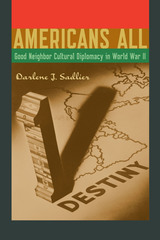
Cultural diplomacy—“winning hearts and minds” through positive portrayals of the American way of life—is a key element in U.S. foreign policy, although it often takes a backseat to displays of military might. Americans All provides an in-depth, fine-grained study of a particularly successful instance of cultural diplomacy—the Office of the Coordinator of Inter-American Affairs (CIAA), a government agency established by President Franklin D. Roosevelt in 1940 and headed by Nelson A. Rockefeller that worked to promote hemispheric solidarity and combat Axis infiltration and domination by bolstering inter-American cultural ties.
Darlene J. Sadlier explores how the CIAA used film, radio, the press, and various educational and high-art activities to convince people in the United States of the importance of good neighbor relations with Latin America, while also persuading Latin Americans that the United States recognized and appreciated the importance of our southern neighbors. She examines the CIAA’s working relationship with Hollywood’s Motion Picture Society of the Americas; its network and radio productions in North and South America; its sponsoring of Walt Disney, Orson Welles, John Ford, Gregg Toland, and many others who traveled between the United States and Latin America; and its close ties to the newly created Museum of Modern Art, which organized traveling art and photographic exhibits and produced hundreds of 16mm educational films for inter-American audiences; and its influence on the work of scores of artists, libraries, book publishers, and newspapers, as well as public schools, universities, and private organizations.
The Cold War dominated world affairs during the half century following World War II. It ended in victory for the United States, yet it was a costly triumph, claiming trillions of dollars in defense spending and the lives of nearly 100,000 U.S. soldiers. Apocalyptic anti-communism sharply limited the range of acceptable political debate, while American actions overseas led to the death of millions of innocent civilians and destabilized dozens of nations that posed no threat to the United States.
In a brilliant new interpretation, Campbell Craig and Fredrik Logevall reexamine the successes and failures of America’s Cold War. The United States dealt effectively with the threats of Soviet predominance in Europe and of nuclear war in the early years of the conflict. But in engineering this policy, American leaders successfully paved the way for domestic actors and institutions with a vested interest in the struggle’s continuation. Long after the U.S.S.R. had been effectively contained, Washington continued to wage a virulent Cold War that entailed a massive arms buildup, wars in Korea and Vietnam, the support of repressive regimes and counterinsurgencies, and a pronounced militarization of American political culture.
American foreign policy after 1945 was never simply a response to communist power or a crusade contrived solely by domestic interests. It was always an amalgamation of both. This provocative book lays bare the emergence of a political tradition in Washington that feeds on external dangers, real or imagined, a mindset that inflames U.S. foreign policy to this day.
“A creative, carefully researched, and incisive analysis of U.S. strategy during the long struggle against the Soviet Union.”
—Stephen M. Walt, Foreign Policy
“Craig and Logevall remind us that American foreign policy is decided as much by domestic pressures as external threats. America’s Cold War is history at its provocative best.”
—Mark Atwood Lawrence, author of The Vietnam War
The Cold War dominated world affairs during the half century following World War II. America prevailed, but only after fifty years of grim international struggle, costly wars in Korea and Vietnam, trillions of dollars in military spending, and decades of nuclear showdowns. Was all of that necessary?
In this new edition of their landmark history, Campbell Craig and Fredrik Logevall engage with recent scholarship on the late Cold War, including the Reagan and Bush administrations and the collapse of the Soviet regime, and expand their discussion of the nuclear revolution and origins of the Vietnam War. Yet they maintain their original argument: that America’s response to a very real Soviet threat gave rise to a military and political system in Washington that is addicted to insecurity and the endless pursuit of enemies to destroy. America’s Cold War speaks vividly to debates about forever wars and threat inflation at the center of American politics today.
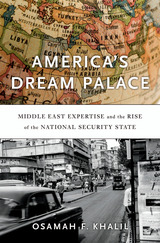
In T. E. Lawrence’s classic memoir Seven Pillars of Wisdom, Lawrence of Arabia claimed that he inspired a “dream palace” of Arab nationalism. What he really inspired, however, was an American idea of the area now called the Middle East that has shaped U.S. interventions over the course of a century, with sometimes tragic consequences. America’s Dream Palace brings into sharp focus the ways U.S. foreign policy has shaped the emergence of expertise concerning this crucial, often turbulent, and misunderstood part of the world.
America’s growing stature as a global power created a need for expert knowledge about different regions. When it came to the Middle East, the U.S. government was initially content to rely on Christian missionaries and Orientalist scholars. After World War II, however, as Washington’s national security establishment required professional expertise in Middle Eastern affairs, it began to cultivate a mutually beneficial relationship with academic institutions. Newly created programs at Harvard, Princeton, and other universities became integral to Washington’s policymaking in the region. The National Defense Education Act of 1958, which aligned America’s educational goals with Cold War security concerns, proved a boon for Middle Eastern studies.
But charges of anti-Americanism within the academy soon strained this cozy relationship. Federal funding for area studies declined, while independent think tanks with ties to the government flourished. By the time the Bush administration declared its Global War on Terror, Osamah Khalil writes, think tanks that actively pursued agendas aligned with neoconservative goals were the drivers of America’s foreign policy.
John J. McCloy was the "wise man" of the Cold War era who had the longest substantial American connection with Germany. A self-made man of great ambition, enormous vitality, and extraordinary tenacity, McCloy served in several government positions before being appointed High Commissioner of Germany in 1949.
America's Germany is the first study of McCloy's critical years in Germany. Drawing on deep archival research and interviews, Thomas Schwartz argues that McCloy played a decisive role in the American effort to restore democracy and integrate Germany into Western Europe. Convinced that reunification should wait until Germany was firmly linked to the West, McCloy implemented a policy of "dual containment," designed to keep both the Soviet Union and Germany from dominating Europe.
McCloy represented the best and the worst of the values and beliefs of a generation of American foreign policy leaders. He strove to learn from the mistakes made in the aftermath of the collapse of the Weimar Republic, when the West did not do enough to help German democracy survive. Yet his leniency toward convicted Nazi war criminals compromised the ideals for which America had fought in World War II.
America's Germany offers an essential history for those wishing to understand the recent changes in Germany and Europe. The book describes a unique period in the relationship between America and Germany, when the two nations forged an extraordinary range of connections--political, economic, military, and cultural--as the Federal Republic became part of the Western club and the new Europe.
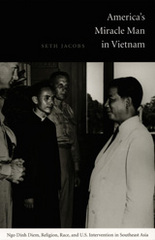
A diplomatic and cultural history, America’s Miracle Man in Vietnam draws on government archives, presidential libraries, private papers, novels, newspapers, magazines, movies, and television and radio broadcasts. Jacobs shows in detail how, in the 1950s, U.S. policymakers conceived of Cold War anticommunism as a crusade in which Americans needed to combine with fellow Judeo-Christians against an adversary dangerous as much for its atheism as for its military might. He describes how racist assumptions that Asians were culturally unready for democratic self-government predisposed Americans to excuse Diem’s dictatorship as necessary in “the Orient.” By focusing attention on the role of American religious and racial ideologies, Jacobs makes a crucial contribution to our understanding of the disastrous commitment of the United States to “sink or swim with Ngo Dinh Diem.”
Contemporary America, with its unparalleled armaments and ambition, seems to many commentators a new empire. Others angrily reject the designation. What stakes would being an empire have for our identity at home and our role abroad?
A preeminent American historian addresses these issues in light of the history of empires since antiquity. This elegantly written book examines the structure and impact of these mega-states and asks whether the United States shares their traits and behavior. Eschewing the standard focus on current U.S. foreign policy and the recent spate of pro- and anti-empire polemics, Charles S. Maier uses comparative history to test the relevance of a concept often invoked but not always understood. Marshaling a remarkable array of evidence—from Roman, Ottoman, Moghul, Spanish, Russian, Chinese, and British experience—Maier outlines the essentials of empire throughout history. He then explores the exercise of U.S. power in the nineteenth and twentieth centuries, carefully analyzing its economic and strategic sources and the nation’s relationship to predecessors and rivals.
To inquire about empire is to ask what the United States has become as a result of its wealth, inventiveness, and ambitions. It is to confront lofty national aspirations with the realities of the violence that often attends imperial politics and thus to question both the costs and the opportunities of the current U.S. global ascendancy. With learning, dispassion, and clarity, Among Empires offers bold comparisons and an original account of American power. It confirms that the issue of empire must be a concern of every citizen.
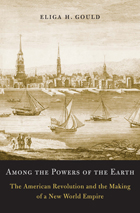
For most Americans, the Revolution’s main achievement is summed up by the phrase “life, liberty, and the pursuit of happiness.” Yet far from a straightforward attempt to be free of Old World laws and customs, the American founding was also a bid for inclusion in the community of nations as it existed in 1776. America aspired to diplomatic recognition under international law and the authority to become a colonizing power itself.
As Eliga Gould shows in this reappraisal of American history, the Revolution was an international transformation of the first importance. To conform to the public law of Europe’s imperial powers, Americans crafted a union nearly as centralized as the one they had overthrown, endured taxes heavier than any they had faced as British colonists, and remained entangled with European Atlantic empires long after the Revolution ended.
No factor weighed more heavily on Americans than the legally plural Atlantic where they hoped to build their empire. Gould follows the region’s transfiguration from a fluid periphery with its own rules and norms to a place where people of all descriptions were expected to abide by the laws of Western Europe—“civilized” laws that precluded neither slavery nor the dispossession of Native Americans.
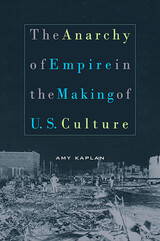
The United States has always imagined that its identity as a nation is insulated from violent interventions abroad, as if a line between domestic and foreign affairs could be neatly drawn. Yet this book argues that such a distinction, so obviously impracticable in our own global era, has been illusory at least since the war with Mexico in the mid-nineteenth century and the later wars against Spain, Cuba, and the Philippines. In this book, Amy Kaplan shows how U.S. imperialism--from "Manifest Destiny" to the "American Century"--has profoundly shaped key elements of American culture at home, and how the struggle for power over foreign peoples and places has disrupted the quest for domestic order.
The neatly ordered kitchen in Catherine Beecher's household manual may seem remote from the battlefields of Mexico in 1846, just as Mark Twain's Mississippi may seem distant from Honolulu in 1866, or W. E. B. Du Bois's reports of the East St. Louis Race Riot from the colonization of Africa in 1917. But, as this book reveals, such apparently disparate locations are cast into jarring proximity by imperial expansion. In literature, journalism, film, political speeches, and legal documents, Kaplan traces the undeniable connections between American efforts to quell anarchy abroad and the eruption of such anarchy at the heart of the empire.
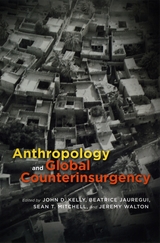
Global events of the early twenty-first century have placed new stress on the relationship among anthropology, governance, and war. Facing prolonged insurgency, segments of the U.S. military have taken a new interest in anthropology, prompting intense ethical and scholarly debate. Inspired by these issues, the essays in Anthropology and Global Counterinsurgency consider how anthropologists can, should, and do respond to military overtures, and they articulate anthropological perspectives on global war and power relations.
This book investigates the shifting boundaries between military and civil state violence; perceptions and effects of American power around the globe; the history of counterinsurgency doctrine and practice; and debate over culture, knowledge, and conscience in counterinsurgency. These wide-ranging essays shed new light on the fraught world of Pax Americana and on the ethical and political dilemmas faced by anthropologists and military personnel alike when attempting to understand and intervene in our world.

Miriam Cooke, Professor, Duke University
"An impassioned and deeply compelling look at the origins, evolution, manifestations and implications of anti-Arab racism today. ... A tour-de-force."
Lisa Suhair Majaj, co-editor, Etel Adnan: Critical Reflections on the Arab-American Writer and Artist and Intersections: Gender, Nation, and Community in Arab Women¹s Novels
"Salaita dives head-first into the heart of racism in America and uses his personal experiences to help readers understand the mechanics of racism as it applies to Arabs, Muslims and people who look Middle Eastern in the post-Sept. 11 world."
Ray Hanania, journalist and filmmaker, author of I¹m Glad I Look Like a Terrorist: Growing up Arab in America and Arabs of Chicagoland
"A highly recommended read, not only for students of Middle East history, but for the average American who wants to know how we have become so intimately and yet so bitterly entwined with the people of the Middle East. ... Salaita has thoughtfully articulated a very regretful era of unabashed racism in American history."
Ramzy Baroud, editor, Palestine Chronicle and author of Searching Jenin
Today is a difficult time to be both Arab and American. Since 9/11 there has been a lot of criticism of America¹s involvement in the middle east. Yet there has been little analysis of how America treats citizens of Arab or middle eastern origin within its own borders.
Steven Salaita explores the reality of Anti-Arab racism in America. He blends personal narrative, theory and polemics to show how this deep-rooted racism affects everything from legislation to cultural life, shining a light on the consequences of Anti-Arab racism both at home and abroad.
Uniquely, the book shows how ingrained racist attitudes can be found within the progressive movements on the political left, as well as the right. Salaita argues that, under the guise of patriotism, Anti-Arab racism fuels support for policies such as the Patriot Act.
Salaita breaks down the façade of Anti-Arab racism with an insightful analysis, arguing for the urgency of a commitment to openness and inclusion in today¹s political climate.
Steven Salaita is Assistant Professor of English at the University of Wisconsin -Whitewater. He writes frequently about Arab America and the Arab World.
This study analyzes New Theses (Shinron), by Aizawa Seishisai (1781—1863), and its contribution to Japanese political thought and policy during the early–modern era. New Theses is found to be indispensable to our understanding of Japan's transformation from a feudal to a modern state.
Focusing on Aizawa, Wakabayashi traces the development of xenophobia during the Tokugawa period and examines the basis of anti–Western sentiment. He shows how knowledge of Christianity inspired Aizawa to develop thepotent concept of kokutai (“what is essential to a nation”). His analysis explains why the Edobakufu's policies of national isolation (sakoku) and armed expulsion of Westerners (jõi) gained widespread support in the late Tokugawa. Wakabayashi also describes how information on Western affairs and world conditions decisively altered Tokugawa Confucian conceptions of civilization and barbarism, and how this in turn enabled the Japanese to redefine their nation's relationship to China and the West.
Rather than place Aizawa and his New Theses of 1825 at the beginning of a process leading up to the Meiji Restoration, Wakabayashi discusses New Theses in conjunction with the bakufu's Expulsion Edict issued in the same year. He concludes that the convergence of the two events in 1825 marks the emergence of modern nationalism in Japan, and therefore should perhaps be seen as more epoch–making than the 1868 Restoration itself.
The study also presents a complete translation of New Theses.
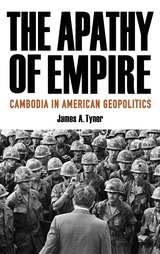
What America’s intervention in Cambodia during the Vietnam War reveals about Cold War–era U.S. national security strategy
The Apathy of Empire reveals just how significant Cambodia was to U.S. policy in Indochina during the Vietnam War, broadening the lens to include more than the often-cited incursion in 1970 or the illegal bombing after the Paris Peace Accords in 1973. This theoretically informed and thoroughly documented case study argues that U.S. military intervention in Cambodia revealed America’s efforts to construct a hegemonic spatial world order.
James Tyner documents the shift of America’s post-1945 focus from national defense to national security. He demonstrates that America’s expansionist policies abroad, often bolstered by military power, were not so much about occupying territory but instead constituted the construction of a new normal for the exercise of state power. During the Cold War, Vietnam became the geopolitical lodestar of this unfolding spatial order. And yet America’s grand strategy was one of contradiction: to build a sovereign state (South Vietnam) based on democratic liberalism, it was necessary to protect its boundaries—in effect, to isolate it—through both covert and overt operations in violation of Cambodia’s sovereignty. The latter was deemed necessary for the former.
Questioning reductionist geopolitical understandings of states as central or peripheral, Tyner explores this paradox to rethink the formulation of the Cambodian war as sideshow, revealing it instead as a crucial site for the formation of this new normal.
Retail e-book files for this title are screen-reader friendly.
Ariel Armony focuses, in this study, on the role played by Argentina in the anti–Communist crusade in Central America. This systematic examination of Argentina’s involvement in the Central American drama of the late 1970s and early 1980s fine–tunes our knowledge of a major episode of the Cold War era.
Basing his study on exhaustive research in the United States, Argentina, and Nicaragua, Armony adroitly demolishes several key assumptions that have shaped the work of scholars in U.S. foreign policy, Argentine military politics, and Central American affairs.
In 1967, leaders from Indonesia, Malaysia, the Philippines, Singapore, and Thailand struck a landmark agreement, forming ASEAN. They had realized that political and economic cooperation would bring greater stability and prosperity to the region. Fifty years and five additional countries later, the alliance has remained one of the world’s most successful collaborations. Kishore Mahbubani and Jeffery Sng explain how this partnership has benefited the ten member countries and why it should serve as a model for other regions of the world, challenging our assumptions about international cooperation. As the world turns to Asia and the United States and China jostle for dominance, the ASEAN region will have an undeniably powerful role in shaping our global systems. Mahbubani and Sng offer an important primer for understanding this immensely successful—and woefully underappreciated—regional organization.
War, defeat, and the collapse of empire in 1945 touched every aspect of postwar Japanese society, profoundly shaping how the Japanese would reconstruct national identity and reengage with the peoples of Asia. While “America” offered a vision of re-genesis after cataclysmic ruin, “Asia” exposed the traumata of perpetration and the torment of ethnic responsibility. Obscured in the shadows of a resurgent postwar Japan lurked a postimperial specter whose haunting presence both complicated and confounded the spiritual rehabilitation of the nation.
Asia and Postwar Japan examines Japanese deimperialization from 1945 until the early twenty-first century. It focuses on the thought and activism of progressive activists and intellectuals as they struggled to overcome rigid preconceptions about “Asia,” as they grappled with the implications of postimperial responsibility, and as they forged new regional solidarities and Asian imaginaries. Simon Avenell reveals the critical importance of Asia in postwar Japanese thought, activism, and politics—Asia as a symbolic geography, Asia as a space for grassroots engagement, and ultimately, Asia as an aporia of identity and the source of a new politics of hope.
Warren Cohen reviews the role of the United States in East Asia over the past century, making a convincing case for American influence in Asia as generally positive. He illustrates specific ways in which American culture has affected Asians, from forms of government to entertainment, and offers valuable insights into the nature of cultural exchange. Americanization was most successful when Asians freely adopted cultural elements, while efforts to impose values generally failed, notably in the Philippines. And in a fascinating and eye-opening assessment of the "Asianization" of America, Cohen observes that Asian influences in food, film, music, medicine, and religion are now woven deeply--and permanently--into the American fabric. Indeed, Asians are changing American identity itself: by mid-century, approximately one in ten Americans will boast Asian ancestry.
In this lively look at the cultural bonds that continue to shape the relationship between East Asians and Americans, Cohen invites us to ponder the past and envision the future as the "American century" gives way to one with a decidedly more Asian focus.
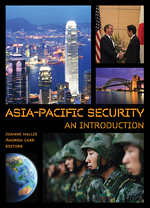
This new textbook gathers an international roster of top security studies scholars to provide an overview of Asia-Pacific’s international relations and pressing contemporary security issues. It is a suitable introduction for undergraduate and masters students' use in international relations and security studies courses. Merging a strong theoretical component with rich contemporary and historical empirical examples, Asia-Pacific Security examines the region's key players and challenges as well as a spectrum of proposed solutions for improving regional stability. Major topics include in-depth looks at the United States' relationship with China; Security concerns presented by small and microstates, the region's largest group of nations; threats posed by terrorism and insurgency; the region's accelerating arms race and the potential for an Asian war; the possible roles of multilateralism, security communities, and human security as part of solutions to regional problems.
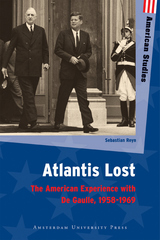
During the 1960s, Charles de Gaulle’s greatest quarrel was with the Americans. The American attitude towards this forceful European leader was, however, an equally defining part of the dispute. In this riveting study of transatlantic international relations, Sebastian Reyn traces American responses to de Gaulle’s foreign policy from 1958 to 1969, concluding that how Americans judged de Gaulle depended largely on whether their politics leaned to the left or the right.
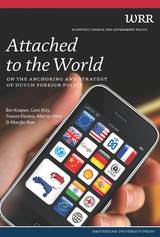
The definition and understanding of "terrorism" is in a state of unprecedented evolution. No longer are acts of terrorism rare and far-flung. Following the horrendous attacks on the World Trade Center and the Pentagon, U.S. citizens have had their eyes opened to a new world where this nightmare stalks the daily news and is never far from consciousness.
Attacking Terrorism brings together some of the world's finest experts, people who have made the study of this rising menace their life's work, to provide a comprehensive picture of the challenges and opportunities of the campaign against international terrorism. Part one, "The Nature of Terrorism," provides an overview and foundation for the current campaign, placing it within the political and historical context of previous threats and responses. Part two, "The Responses to Terrorism," looks at the range of policy instruments required in an effective strategy against terrorism.
The contributors to this volume bring finely honed analyses and nuanced perspectives to the terrorist realities of the twenty-first century—history, analyses, and perspectives that have been too often oversimplified or myopic. They bring a new depth of understanding and myriad new dimensions to the crisis of terrorism. And they reach into aspects of counterterrorism that broaden our grasp on such important tools as diplomacy, intelligence and counterintelligence, psycho-political means, international law, criminal law enforcement, military force, foreign aid, and homeland security, showing not only how these tools are currently being employed but how often they are being underutilized as well.
Attacking Terrorism demonstrates that there are no easy answers—and that the road toward victory will be long and arduous, frightening and dangerous—but as Audrey Kurth Cronin states in her introduction, "As the campaign against international terrorism unfolds, a crucial forward-looking process of strategic reassessment is under way in the United States, and this book is intended to be a part of it."
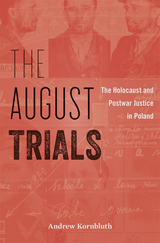
The first account of the August Trials, in which postwar Poland confronted the betrayal of Jewish citizens under Nazi rule but ended up fashioning an alibi for the past.
When six years of ferocious resistance to Nazi occupation came to an end in 1945, a devastated Poland could agree with its new Soviet rulers on little else beyond the need to punish German war criminals and their collaborators. Determined to root out the “many Cains among us,” as a Poznań newspaper editorial put it, Poland’s judicial reckoning spawned 32,000 trials and spanned more than a decade before being largely forgotten.
Andrew Kornbluth reconstructs the story of the August Trials, long dismissed as a Stalinist travesty, and discovers that they were in fact a scrupulous search for the truth. But as the process of retribution began to unearth evidence of enthusiastic local participation in the Holocaust, the hated government, traumatized populace, and fiercely independent judiciary all struggled to salvage a purely heroic vision of the past that could unify a nation recovering from massive upheaval. The trials became the crucible in which the Communist state and an unyielding society forged a foundational myth of modern Poland but left a lasting open wound in Polish-Jewish relations.
The August Trials draws striking parallels with incomplete postwar reckonings on both sides of the Iron Curtain, suggesting the extent to which ethnic cleansing and its abortive judicial accounting are part of a common European heritage. From Paris and The Hague to Warsaw and Kyiv, the law was made to serve many different purposes, even as it failed to secure the goal with which it is most closely associated: justice.
READERS
Browse our collection.
PUBLISHERS
See BiblioVault's publisher services.
STUDENT SERVICES
Files for college accessibility offices.
RECENTLY PUBLISHED



UChicago Accessibility Resources
home | accessibility | search | about | contact us
BiblioVault ® 2001 - 2024
The University of Chicago Press