
 A SCHOLARLY BOOK REPOSITORY
This book was written to provide a basic perspective of forensic accounting and fraud investigation. It includes topics such as the elements of fraud, the typical perpetrator of fraud (as well as predators), and the attributes of most fraudsters (such as the fraud triangle and diamond).There are also discussions of internal controls, and data analysis tools and techniques to help identify red flags that frequently exist long before a fraud is detected.
The authors also include a description of money laundering, including common schemes. The money laundering topic leads into the final topic of the book, which is whistleblowing. That topic includes best practices for effective anti-fraud hotlines. WorldCom is used as an example to demonstrate the outcome of a large fraud, and the impact on those involved, from the whistleblower to those who allegedly perpetrated the fraud.
Each of the book’s five chapters includes a fifteen-question quiz to facilitate knowledge proficiency.
While the book was initially designed to accompany a massive open online course (MOOC), it provides a reader with information to help understand the basics of fraud and forensic accounting, including anti-fraud tools and techniques.
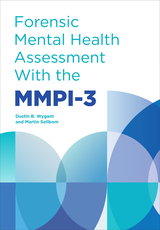
A comprehensive, evidence-based handbook for using the MMPI-3 in forensic evaluations
Since its release in 2020, the MMPI-3 has become a cornerstone of clinical and forensic assessment. Forensic Mental Health Assessment With the MMPI-3 is an essential, evidence-based resource that explores use of the MMPI-3 in a variety of forensic contexts. In addition to elucidating the test’s development and the interpretation of its scales, this comprehensive guide delves into critical forensic issues including admissibility (e.g., Daubert criteria), telehealth assessment, cross-cultural considerations, and response bias.
Dustin B. Wygant and Martin Sellbom draw on contemporary research to discuss the unique challenges of forensic evaluations. Through case analyses, this book illustrates how to interpret and integrate MMPI-3 profiles into clinical and diagnostic impressions, and it addresses common psycholegal questions in criminal (e.g., competency to stand trial, insanity), civil (e.g., disability), and family (e.g., child custody) contexts.
Providing practical insights into real-world MMPI-3 applications, Forensic Mental Health Assessment With the MMPI-3 is an indispensable resource for forensic practitioners and legal professionals.
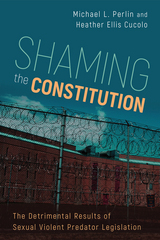
Convicted sexually violent predators are more vilified, more subject to media misrepresentation, and more likely to be denied basic human rights than any other population. Shaming the Constitution authors Michael Perlin and Heather Cucolo question the intentions of sex offender laws, offering new approaches to this most complex (and controversial) area of law and social policy.
The authors assert that sex offender laws and policies are unconstitutional and counter-productive. The legislation largely fails to add to public safety—even ruining lives for what are, in some cases, trivial infractions. Shaming the Constitution draws on law, behavioral sciences, and other disciplines to show that many of the “solutions” to penalizing sexually violent predators are “wrong,” as they create the most repressive and useless laws.
In addition to tracing the history of sex offender laws, the authors address the case of Jesse Timmendequas, whose crime begat “Megan’s Law;” the media’s role in creating a “moral panic;” recidivism statistics and treatments, as well as international human rights laws. Ultimately, they call attention to the flaws in the system so we can find solutions that contribute to public safety in ways that do not mock Constitutional principles.
READERS
Browse our collection.
PUBLISHERS
See BiblioVault's publisher services.
STUDENT SERVICES
Files for college accessibility offices.
RECENTLY PUBLISHED







UChicago Accessibility Resources
home | accessibility | search | about | contact us
BiblioVault ® 2001 - 2025
The University of Chicago Press