front cover of Bad Nature
Bad Nature
How Rat Control Shapes Human and Nonhuman Worlds
Andrew McCumber
University of Chicago Press, 2025
Offers insights into the social and cultural implications of humans’ relationships with rats and the natural world.
 
Apart from the occasional pet owner who has rats, most people regard rats as disease-carrying nocturnal pests, scurrying around dumpsters and dragging slices of pizza through New York City subways. Since rats are seemingly omnipresent in human life, why do we harbor such negative feelings about them, and why are they among the creatures most frequently targeted for systematic extermination?

In Bad Nature, sociologist Andrew McCumber draws out the cultural underpinnings of rat extermination across three countries and two continents. Drawing from ethnographic, interview, and textual data from the frigid prairie of Alberta, Canada; the heart of downtown Los Angeles, California; and the iconic Galápagos Islands of Ecuador, McCumber studies how humans have sought to suppress and exterminate rat populations in a variety of environmental, social, and political situations. He shows how, in these disparate locations, rat control is a social practice that draws and clarifies the spatial and symbolic boundaries between “good” and “bad” forms of nature. Rats are near the bottom of a symbolic hierarchy of species that places human life at the top, companion animals and majestic wildlife just below them, and the “invasive species” that call for systematic extermination at the very bottom. This hierarchy of living things that places rats at the bottom, McCumber argues, mirrors human systems of social inequalities and power dynamics.  

Both original and engaging, Bad Nature urges readers to consider, when charting a just and sustainable future, where will the rats be placed in the worlds we envision?
 
[more]

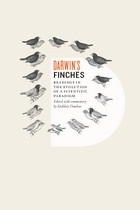
front cover of Darwin's Finches
Darwin's Finches
Readings in the Evolution of a Scientific Paradigm
Edited, with Commentary, by Kathleen Donohue
University of Chicago Press, 2011

Two species come to mind when one thinks of the Galapagos Islands—the giant tortoises and Darwin’s fabled finches. While not as immediately captivating as the tortoises, these little brown songbirds and their beaks have become one of the most familiar and charismatic research systems in biology, providing generations of natural historians and scientists a lens through which to view the evolutionary process and its role in morphological differentiation.

            
In Darwin’s Finches, Kathleen Donohue excerpts and collects the most illuminating and scientifically significant writings on the finches of the Galapagos to teach the fundamental principles of evolutionary theory and to provide a historical record of scientific debate. Beginning with fragments of Darwin’s Galapagos field notes and subsequent correspondence, and moving through the writings of such famed field biologists as David Lack and Peter and Rosemary Grant, the collection demonstrates how scientific processes have changed over time, how different branches of biology relate to one another, and how they all relate to evolution. As Donohue notes, practicing science today is like entering a conversation that has been in progress for a long, long time. Her book provides the history of that conversation and an invitation to join in. Students of both evolutionary biology and history of science will appreciate this compilation of historical and contemporary readings and will especially value Donohue’s enlightening commentary.


[more]

logo for University of Chicago Press
Evolutionary Dynamics of a Natural Population
The Large Cactus Finch of the Galapagos
B. Rosemary Grant and Peter R. Grant
University of Chicago Press, 1989


Send via email Share on Facebook Share on Twitter