
 A SCHOLARLY BOOK REPOSITORY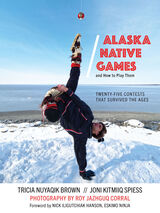
As Tricia Nuyaqik Brown shows, even though today’s competitions are a big media event in Alaska, the games themselves are really no different from those of long ago. Ancestral communities once pitted their strongest, their most agile, their fastest men and women against those from neighboring villages or tribal groups. Those games never died, but rather than gathering in a sod meeting place, competitions are now held in gyms and arenas. Each game today can be linked to some aspect of surviving in a harsh environment, of drawing sustenance from the land and sea. From the Seal Hop to the Bench Reach to the Four-Man Carry, these ancient games still require athletes to be in top physical condition and possess sharp mental focus. They hold dear the traditional Native values of honoring the elders, responsibility to tribe, sportsmanship, humor, patience, and hunter success. This book offers an engaging introduction to these games and their history, inviting people to jump in and try them for themselves!

The Archaeology of the Olympics presents a stirring reevaluation of the Olympic Games (and related festivals) as they actually were, not as the ancient Greeks wished—and we still wish—they might have been. Historians, archaeologists, and classicists examine the evidence to ask such questions as, How did the athletes train? What did they eat? Can we trace the roots of the games as far back as the Bronze Age of Crete and Mycenae? Or even to Anatolia, where similar athletic activities occurred? Were the ancient games really so free of political overtones as modern Olympic rhetoric urges us to believe?

For Lanclos, children's experiences stimulate discussions about culture and society. In her words, "Children's everyday lives are more than just preparation for their futures, but are life itself."
At Play in Belfast is a volume in the Rutgers Series in Childhood Studies, edited by Myra Bluebond-Langner.
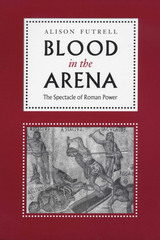
From the center of Imperial Rome to the farthest reaches of ancient Britain, Gaul, and Spain, amphitheaters marked the landscape of the Western Roman Empire. Built to bring Roman institutions and the spectacle of Roman power to conquered peoples, many still remain as witnesses to the extent and control of the empire.
In this book, Alison Futrell explores the arena as a key social and political institution for binding Rome and its provinces. She begins with the origins of the gladiatorial contest and shows how it came to play an important role in restructuring Roman authority in the later Republic. She then traces the spread of amphitheaters across the Western Empire as a means of transmitting and maintaining Roman culture and control in the provinces.
Futrell also examines the larger implications of the arena as a venue for the ritualized mass slaughter of human beings, showing how the gladiatorial contest took on both religious and political overtones. This wide-ranging study, which draws insights from archaeology and anthropology, as well as Classics, broadens our understanding of the gladiatorial contest and its place within the highly politicized cult practice of the Roman Empire.

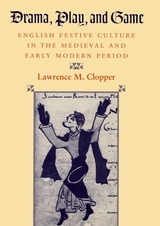
Drama, Play, and Game demonstrates that the theatrum repudiated by medieval clerics was not "theater" as we understand the term today. Clopper contends that critics have misrepresented Western stage history because they have assumed that theatrum designates a place where drama is performed. While theatrum was thought of as a site of spectacle during the Middle Ages, the term was more closely connected with immodest behavior and lurid forms of festive culture. Clerics were not opposed to liturgical representations in churches, but they strove ardently to suppress May games, ludi, festivals, and liturgical parodies. Medieval drama, then, stemmed from a more vernacular tradition than previously acknowledged-one developed by England's laity outside the boundaries of clerical rule.
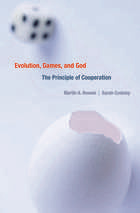
According to the reigning competition-driven model of evolution, selfish behaviors that maximize an organism’s reproductive potential offer a fitness advantage over self-sacrificing behaviors—rendering unselfish behavior for the sake of others a mystery that requires extra explanation. Evolution, Games, and God addresses this conundrum by exploring how cooperation, working alongside mutation and natural selection, plays a critical role in populations from microbes to human societies. Inheriting a tendency to cooperate, argue the contributors to this book, may be as beneficial as the self-preserving instincts usually thought to be decisive in evolutionary dynamics.
Assembling experts in mathematical biology, history of science, psychology, philosophy, and theology, Martin Nowak and Sarah Coakley take an interdisciplinary approach to the terms “cooperation” and “altruism.” Using game theory, the authors elucidate mechanisms by which cooperation—a form of working together in which one individual benefits at the cost of another—arises through natural selection. They then examine altruism—cooperation which includes the sometimes conscious choice to act sacrificially for the collective good—as a key concept in scientific attempts to explain the origins of morality. Discoveries in cooperation go beyond the spread of genes in a population to include the spread of cultural transformations such as languages, ethics, and religious systems of meaning.
The authors resist the presumption that theology and evolutionary theory are inevitably at odds. Rather, in rationally presenting a number of theological interpretations of the phenomena of cooperation and altruism, they find evolutionary explanation and theology to be strongly compatible.

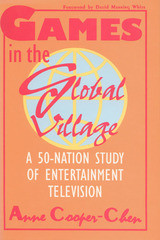
Game shows can run the gamut of many subject areas or focus on one, such as rock music (MTV’s Remote Control) or football (ESPN's NFL Trivia Game). They can spotlight dazzlingly high IQs (the BBC’s erudite Mastermind) or nude assistants and contestants (Germany’s Tutti Frutti). They can limp along in mid-morning time slots or smash the competition in prime time (France’s La Roue de la Fortune).
This is the first comprehensive comparison of TV entertainment content, and it gives new meaning to McLuhan’s concept of the “Global Village.”

In the first decade of the twenty-first century, video games are an integral part of global media culture, rivaling Hollywood in revenue and influence. No longer confined to a subculture of adolescent males, video games today are played by adults around the world. At the same time, video games have become major sites of corporate exploitation and military recruitment.
In Games of Empire, Nick Dyer-Witheford and Greig de Peuter offer a radical political critique of such video games and virtual environments as Second Life, World of Warcraft, and Grand Theft Auto, analyzing them as the exemplary media of Empire, the twenty-first-century hypercapitalist complex theorized by Michael Hardt and Antonio Negri. The authors trace the ascent of virtual gaming, assess its impact on creators and players alike, and delineate the relationships between games and reality, body and avatar, screen and street.
Games of Empire forcefully connects video games to real-world concerns about globalization, militarism, and exploitation, from the horrors of African mines and Indian e-waste sites that underlie the entire industry, the role of labor in commercial game development, and the synergy between military simulation software and the battlefields of Iraq and Afghanistan exemplified by Full Spectrum Warrior to the substantial virtual economies surrounding World of Warcraft, the urban neoliberalism made playable in Grand Theft Auto, and the emergence of an alternative game culture through activist games and open-source game development.
Rejecting both moral panic and glib enthusiasm, Games of Empire demonstrates how virtual games crystallize the cultural, political, and economic forces of global capital, while also providing a means of resisting them.
"Frank C. Zagare combines a deep command of historical scholarship and the sophisticated skills of an applied game theorist to develop and test a theory of why deterrence failed, catastrophically, in July 1914. . . . Zagare concludes with sage advice on how to avoid even more cataclysmic breakdowns in a nuclear world."
---Steven J. Brams, New York University
"Zagare's deft study of the origins of the First World War using his perfect deterrence theory uncovers new insights into that signal event and shows the value of formal theory applied to historical events. A must-read for those interested in security studies."
---James D. Morrow, University of Michigan
"Through an exemplary combination of formal theory, careful qualitative analysis, and lucid prose, The Games of July delivers important and interesting answers to key questions concerning the international political causes of World War I. Its well-formed narratives and its sustained engagement with leading works in IR and diplomatic history . . . make it a rewarding read for security scholars in general and a useful teaching tool for international security courses."
---Timothy W. Crawford, Boston College
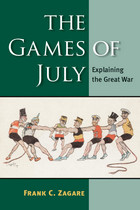
Taking advantage of recent advances in game theory and the latest historiography, Frank C. Zagare offers a new, provocative interpretation of the events that led to the outbreak of World War I. He analyzes key events from Bismarck's surprising decision in 1879 to enter into a strategic alliance with Austria-Hungary to the escalation that culminated in a full-scale global war. Zagare concludes that, while the war was most certainly unintended, it was in no sense accidental or inevitable.
The Games of July serves not only as an analytical narrative but also as a work of theoretical assessment. Standard realist and liberal explanations of the Great War are evaluated along with a collection of game-theoretic models known as perfect deterrence theory.
Frank C. Zagare is UB Distinguished Professor of Political Science at the State University of New York at Buffalo.
Cover illustration: Satirical Italian postcard from World War I. Used with permission from The University of North Carolina at Chapel Hill Libraries.
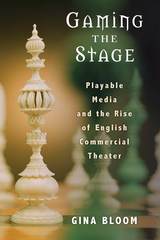
Gaming the Stage also introduces a new archive for game studies: scenes of onstage gaming, which appear at climactic moments in dramatic literature. Bloom reveals plays to be systems of information for theater spectators: games of withholding, divulging, speculating, and wagering on knowledge. Her book breaks new ground through examinations of plays such as The Tempest, Arden of Faversham, A Woman Killed with Kindness, and A Game at Chess; the histories of familiar games such as cards, backgammon, and chess; less familiar ones, like Game of the Goose; and even a mixed-reality theater videogame.

Spolin's improvisational techniques changed the nature and practice of modern theater. Her work has inspired actors, directors, teachers, and writers in theater, television, and film. Her techniques have also influenced the fields of education, mental health, social work, and psychology.
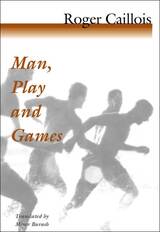
In this classic study, Caillois defines play as a free and voluntary activity that occurs in a pure space, isolated and protected from the rest of life. Play is uncertain, since the outcome may not be foreseen, and it is governed by rules that provide a level playing field for all participants. In its most basic form, play consists of finding a response to the opponent's action--or to the play situation--that is free within the limits set by the rules.
Caillois qualifies types of games-- according to whether competition, chance, simulation, or vertigo (being physically out of control) is dominant--and ways of playing, ranging from the unrestricted improvisation characteristic of children's play to the disciplined pursuit of solutions to gratuitously difficult puzzles. Caillois also examines the means by which games become part of daily life and ultimately contribute to various cultures their most characteristic customs and institutions.
Presented here in Meyer Barash's superb English translation, Man, Play and Games is a companion volume to Caillois's Man and the Sacred.

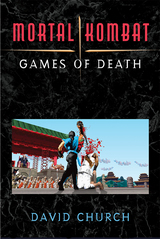
This book traces Mortal Kombat’s history as an American product inspired by both Japanese video games and Chinese martial-arts cinema, its successes and struggles in adapting to new market trends, and the ongoing influence of its secret-strewn narrative world. After outlining the specific elements of gameplay that differentiated Mortal Kombat from its competitors in the coin-op market, David Church examines the various martial-arts films that inspired its Orientalist imagery, helping explain its stereotypical uses of race and gender. He also posits the games as a cultural landmark from a moment when public policy attempted to intervene in both the remediation of cinematic aesthetics within interactive digital games and in the transition of public gaming spaces into the domestic sphere. Finally, the book explores how the franchise attempted to conquer other forms of media in the 1990s, lost ground to a new generation of 3D games in the 2000s, and has successfully rebooted itself in the 2010s to reclaim its legacy.

Japanese musician and composer Nobuo Uematsu has built his career and reputation on his soundtracks to the enduring Final Fantasy video game series, which are notable for their remarkable cinematic feel. Today Uematsu is one of Japan’s most beloved living composers, credited with inspiring a new generation of classical music fans. This volume, the first book-length study of the music of Uematsu, takes a variety of different analytical approaches to his body of work. It offers readers interested in ludomusicology—the study of and research into video game music—a variety of ways with which to understand Uematsu’s compositional process and the role that video game music has in the overall gaming experience.
The preeminent lyric poet of ancient Greece.
Of the Greek lyric poets, Pindar (ca. 518–438 BC) was “by far the greatest for the magnificence of his inspiration” in Quintilian’s view; Horace judged him “sure to win Apollo’s laurels.” The esteem of the ancients may help explain why a good portion of his work was carefully preserved. Most of the Greek lyric poets come down to us only in bits and pieces, but nearly a quarter of Pindar’s poems survive complete. William H. Race now brings us, in two volumes, a new edition and translation of the four books of victory odes, along with surviving fragments of Pindar’s other poems.
Like Simonides and Bacchylides, Pindar wrote elaborate odes in honor of prize-winning athletes for public performance by singers, dancers, and musicians. His forty-five victory odes celebrate triumphs in athletic contests at the four great Panhellenic festivals: the Olympic, Pythian (at Delphi), Nemean, and Isthmian games. In these complex poems, Pindar commemorates the achievement of athletes and powerful rulers against the backdrop of divine favor, human failure, heroic legend, and the moral ideals of aristocratic Greek society. Readers have long savored them for their rich poetic language and imagery, moral maxims, and vivid portrayals of sacred myths.
Race provides brief introductions to each ode and full explanatory footnotes, offering the reader invaluable guidance to these often difficult poems. His Loeb Pindar also contains a helpfully annotated edition and translation of significant fragments, including hymns, paeans, dithyrambs, maiden songs, and dirges.
In 2007 at the Dutch Royal Academy of Sciences in Amsterdam, a colloquium on new perspectives on games and interaction brought together researchers on games in logic, computer science, linguistics, and economics in order to clarify their uses of game theory and identify promising new directions for the field. This volume is a collection of papers presented at the colloquium, and it testifies to the growing importance of game theory as a tool that can capture concepts of strategy, interaction, argumentation, communication, and cooperation amid the disciplines.
This book allows readers to understand the relationships and memories they often form around games, and music is central to this process. The quest into the past begins with this book, a map that leads to the intersection between nostalgia and videogame music. Informed by research on musicology, memory, and practices of gaming culture, this edited volume discusses different forms of nostalgia, considers how videogames display their relation to those forms, and explores the ways theoretically self-conscious positions can be found in games. An important scholarly addition to the burgeoning field of ludomusicology, this book will appeal to researchers, educators, practitioners, undergraduate and graduate students, and videogame fans and players alike.
The preeminent lyric poet of ancient Greece.
Of the Greek lyric poets, Pindar (ca. 518–438 BC) was “by far the greatest for the magnificence of his inspiration” in Quintilian’s view; Horace judged him “sure to win Apollo’s laurels.” The esteem of the ancients may help explain why a good portion of his work was carefully preserved. Most of the Greek lyric poets come down to us only in bits and pieces, but nearly a quarter of Pindar’s poems survive complete. William H. Race now brings us, in two volumes, a new edition and translation of the four books of victory odes, along with surviving fragments of Pindar’s other poems.
Like Simonides and Bacchylides, Pindar wrote elaborate odes in honor of prize-winning athletes for public performance by singers, dancers, and musicians. His forty-five victory odes celebrate triumphs in athletic contests at the four great Panhellenic festivals: the Olympic, Pythian (at Delphi), Nemean, and Isthmian games. In these complex poems, Pindar commemorates the achievement of athletes and powerful rulers against the backdrop of divine favor, human failure, heroic legend, and the moral ideals of aristocratic Greek society. Readers have long savored them for their rich poetic language and imagery, moral maxims, and vivid portrayals of sacred myths.
Race provides brief introductions to each ode and full explanatory footnotes, offering the reader invaluable guidance to these often difficult poems. His Loeb Pindar also contains a helpfully annotated edition and translation of significant fragments, including hymns, paeans, dithyrambs, maiden songs, and dirges.
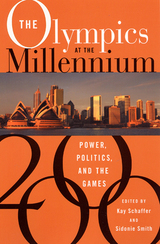
The Olympics thrill the world with spectacle and drama. They also carry a cultural and social significance that goes beyond the stadium, athletes, and fans. The Games are arenas in which individual and team athletic achievement intersect with the politics of national identity in a global context.
The Olympics at the Millennium offers groundbreaking essays that explore the cultural politics of the Games. The contributors investigate such topics as the emergence of women athletes as cultural commodities, the orchestrated spectacles of the opening and closing ceremonies, and the alternative sport culture offered via the Gay Games. Unforgettable events and decisions are discussed: Native American athlete Jim Thorpe winning—and losing—his two gold medals in 1912. Why America was one of the few countries to actually send Jewish athletes to the “Nazi Olympics.” The disqualification of champion Ewa Klobukowska from competing as a woman, due to chromosomal testing in 1967.
With the 2000 Sydney Games imminent, several essays address concerns with which every host country must contend, such as the threat of terrorism. Highlighting the difficult issues of racism and nationalism, another article explores the efforts of this country’s aboriginal people to define a role for themselves in the 2000 Games, as they struggle with ongoing discrimination. And with the world watching, Sydney faces profound pressure to implement a successful Olympics, as a matter of national pride.

Philadelphia sports—anchored by the Eagles, Flyers, Phillies, and 76ers—have a long, and sometimes tortured, history. Philly fans have booed more than their share and have earned a reputation as some of the most hostile in the country. They’ve been known, so the tales go, to jeer Santa Claus and cheer at the injury of an opposing player.
Strangely though, much of America’s perception of Philadelphia sports has been shaped by a fictional figure: Rocky. The series of Hollywood films named after their title character has told and retold the Cinderella story of an underdog boxer rising up against long odds. One could plausibly make the argument that Rocky is Philadelphia’s most famous athlete.
Beyond the major sports franchises and Rocky, lesser-known athletic competition in Philadelphia offers much to the interested observer. The city’s boxing culture, influence on Negro Leagues baseball, role in establishing interscholastic sport, and leadership in the rise of cricket all deserve and receive close investigation in this new collection. Philly Sports combines primary research and personal experiences—playing in the Palestra, scouting out the tombstones of the city’s best athletes, enjoying the fervor of a Philadelphia night with a local team in pursuit of a championship title. The essence of Philadelphia sport, and to a certain extent the city itself, is distilled here.
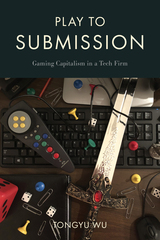
Play to Submission shows how Behemoth’s games undermined and manipulated workers. They lost their work-life balance and the constant competition made labor organizing difficult. Nonetheless, many workers embraced management’s games as a chance to show off their “gamer” identities and create a workplace culture with privileged insiders and exiled outsiders, with female and migrant workers usually in the latter group. Moreover, Wu indicates this may be the future of work for high- and low-skilled and, creative workers in an environment where capitalists have heightened demands for technology and creativity.
Drawing from 13 months of ethnographic work, Wu presents a persistent reality in which the company reaps the reward of surplus productivity, leaving employees themselves in a highly competitive and sometimes precarious work position.
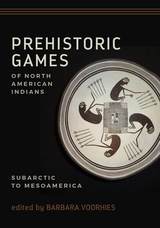
Prehistoric Games of North American Indians is a collection of studies on the ancient games of indigenous peoples of North America. The authors, all archaeologists, muster evidence from artifacts, archaeological features, ethnography, ethnohistory, and to a lesser extent linguistics and folklore. Chapters sometimes center on a particular game (chunkey rolling disc game or patolli dice game, for example) or sometimes on a specific prehistoric society and its games (Aztec acrobatic games, games of the ancient Fremont people), and in one instance on the relationship between slavery and gaming in ancient indigenous North American societies.
In addition to the intrinsic value of pursuing the time depth of these games, some of which remain popular and culturally important today among Native Americans or within the broader society, the book is important for demonstrating a wide variety of research methods and for problematizing a heretofore overlooked research topic. Issues that emerge include the apparently ubiquitous but difficult to detect presence of gambling, the entanglement of indigenous games and the social logic of the societies in which they are embedded, the characteristics of women’s versus men’s games or those of in-group and out-group gaming, and the close correspondence between gaming and religion. The book’s coverage is broad and balanced in terms of geography, level of socio-cultural organization and gender.
Video games have developed into a rich, growing field at many top universities, but they have rarely been considered from a queer perspective. Immersion in new worlds, video games seem to offer the perfect opportunity to explore the alterity that queer culture longs for, but often sexism and discrimination in gamer culture steal the spotlight. Queer Game Studies provides a welcome corrective, revealing the capacious albeit underappreciated communities that are making, playing, and studying queer games.
These in-depth, diverse, and accessible essays use queerness to challenge the ideas that have dominated gaming discussions. Demonstrating the centrality of LGBTQ issues to the gamer world, they establish an alternative lens for examining this increasingly important culture. Queer Game Studies covers important subjects such as the representation of queer bodies, the casual misogyny prevalent in video games, the need for greater diversity in gamer culture, and reading popular games like Bayonetta, Mass Effect, and Metal Gear Solid from a queer perspective.
Perfect for both everyday readers and instructors looking to add diversity to their courses, Queer Game Studies is the ideal introduction to the vast and vibrant realm of queer gaming.
Contributors: Leigh Alexander; Gregory L. Bagnall, U of Rhode Island; Hanna Brady; Mattie Brice; Derek Burrill, U of California, Riverside; Edmond Y. Chang, U of Oregon; Naomi M. Clark; Katherine Cross, CUNY; Kim d’Amazing, Royal Melbourne Institute of Technology; Aubrey Gabel, U of California, Berkeley; Christopher Goetz, U of Iowa; Jack Halberstam, U of Southern California; Todd Harper, U of Baltimore; Larissa Hjorth, Royal Melbourne Institute of Technology; Chelsea Howe; Jesper Juul, Royal Danish Academy of Fine Arts; merritt kopas; Colleen Macklin, Parsons School of Design; Amanda Phillips, Georgetown U; Gabriela T. Richard, Pennsylvania State U; Toni Rocca; Sarah Schoemann, Georgia Institute of Technology; Kathryn Bond Stockton, U of Utah; Zoya Street, U of Lancaster; Peter Wonica; Robert Yang, Parsons School of Design; Jordan Youngblood, Eastern Connecticut State U.
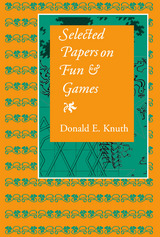
Donald E. Knuth’s influence in computer science ranges from the invention of methods for translating and defining programming languages to the creation of the TeX and METAFONT systems for desktop publishing. His award-winning textbooks have become classics that are often given credit for shaping the field, and his scientific papers are widely referenced and stand as milestones of development over a wide variety of topics. The present volume is the eighth in a series of his collected papers.
“If it were necessary, for some curious legal reason, to draw a clear line between human and nonhuman—for example, if a group of Australopithecines were to appear and one had to decide if they were to be protected by Fair Employment Laws or by the ASPCA—I would welcome them as humans if I knew that they were seriously concerned about how to bury their dead.” In this witty and wise way, Lawrence Slobodkin takes us on a spirited quest for the multiple meanings of simplicity in all facets of life.
Slobodkin begins at the beginning, with a consideration of how simplicity came into play in the development of religious doctrines. He nimbly moves on to the arts—where he ranges freely from dining to painting—and then focuses more sharply on the role of simplicity in science. Here we witness the historical beginnings of modern science as a search for the fewest number of terms, the smallest number of assumptions, or the lowest exponents, while still meeting criteria for descriptive accuracy. The result may be an elegant hypothetical system that generates the apparent world from less apparent assumptions, as with the Newtonian revolution; or it may mean deducing non-obvious processes from everyday facts, as with the Darwinian revolution.
Slobodkin proposes that the best intellectual work is done as if it were a game on a simplified playing field. He supplies serious arguments for considering the role of simplification and playfulness in all of our activities. The immediate effect of his unfailingly captivating essay is to throw open a new window on the world and to refresh our perspectives on matters of the heart and mind.
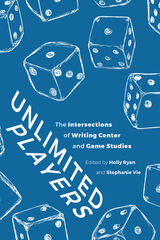
The collection opens with theoretically driven chapters that approach writing center work through the lens of games and play. These chapters cover a range of topics, including considerations of identity, empathy, and power; productive language play during tutoring sessions; and writing center heuristics. The last section of the book includes games, written in the form of tabletop game directions, that directors can use for staff development or tutors can play with writers to help them develop their skills and practices.
No other text offers a theoretical and practical approach to theorizing and using games in the writing center. Unlimited Players provides a new perspective on the long-standing challenges facing writing center scholars and offers insight into the complex questions raised in issues of multimodality, emerging technologies, tutor education, identity construction, and many more. It will be significant to writing center directors and administrators and those who teach tutor training courses.

Corn Island is historically home to Afro-Caribbean Creole people, but increasing numbers of Miskitu people began moving there from the mainland during the Contra War, and many Spanish-speaking mestizos from western Nicaragua have also settled there. Miskitu kids on Corn Island often gain some competence speaking Miskitu, Spanish, and Kriol English. As the children of migrants and the first generation of their families to grow up with television, they develop creative forms of expression that combine languages and genres, shaping intercultural senses of belonging.
Voices of Play is the first ethnography to focus on the interaction between music and language in children’s discourse. Minks skillfully weaves together Latin American, North American, and European theories of culture and communication, creating a transdisciplinary dialogue that moves across intellectual geographies. Her analysis shows how music and language involve a wide range of communicative resources that create new forms of belonging and enable dialogue across differences. Miskitu children’s voices reveal the intertwining of speech and song, the emergence of “self” and “other,” and the centrality of aesthetics to social struggle.
READERS
Browse our collection.
PUBLISHERS
See BiblioVault's publisher services.
STUDENT SERVICES
Files for college accessibility offices.
RECENTLY PUBLISHED






UChicago Accessibility Resources
home | accessibility | search | about | contact us
BiblioVault ® 2001 - 2024
The University of Chicago Press