front cover of The Archaeology of the Kingdom of Judah
The Archaeology of the Kingdom of Judah
Yosef Garfinkel
SBL Press, 2025
Yosef Garfinkel thoroughly engages the archaeological data, historical record, and biblical traditions at the center of the heated debate surrounding the development of the kingdom of Judah and its most well-known kings, including David, Solomon, and Hezekiah. Garfinkel traces five stages in the kingdom’s development from its beginnings in the early tenth century BCE through its destruction in the sixth century BCE. The book offers a new interpretation of the development of Judah’s capital, Jerusalem, important not only for its role in the Hebrew Bible but also for its significance to the religions of Judaism, Christianity, and Islam. Garfinkel supplements each chapter with illustrations and images of sites, objects, and maps that clarify the archaeological picture and contribute to a better understanding of the biblical text. Charts not only present timelines but also differentiate between the contrasting historical reconstructions of Judah and Israel presented by other archaeologists and historians. The Archaeology of the Kingdom of Judah is an essential resource for students and scholars of history, archaeology, and the Hebrew Bible.
[more]

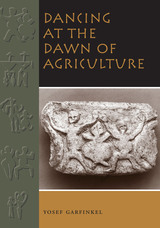
front cover of Dancing at the Dawn of Agriculture
Dancing at the Dawn of Agriculture
By Yosef Garfinkel
University of Texas Press, 2003

As the nomadic hunters and gatherers of the ancient Near East turned to agriculture for their livelihood and settled into villages, religious ceremonies involving dancing became their primary means for bonding individuals into communities and households into villages. So important was dance that scenes of dancing are among the oldest and most persistent themes in Near Eastern prehistoric art, and these depictions of dance accompanied the spread of agriculture into surrounding regions of Europe and Africa.

In this pathfinding book, Yosef Garfinkel analyzes depictions of dancing found on archaeological objects from the Near East, southeastern Europe, and Egypt to offer the first comprehensive look at the role of dance in these Neolithic (7000-4000 BC) societies. In the first part of the book, Garfinkel examines the structure of dance, its functional roles in the community (with comparisons to dance in modern pre-state societies), and its cognitive, or symbolic, aspects. This analysis leads him to assert that scenes of dancing depict real community rituals linked to the agricultural cycle and that dance was essential for maintaining these calendrical rituals and passing them on to succeeding generations. In the concluding section of the book, Garfinkel presents and discusses the extensive archaeological data—some 400 depictions of dance—on which his study is based.


[more]


Send via email Share on Facebook Share on Twitter