
 A SCHOLARLY BOOK REPOSITORY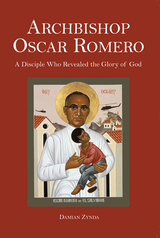
During his lifetime, Archbishop Oscar Romero chose to live the Christian Gospel in a radical way, defending, supporting, and serving the poor, and confronting the oppressive and murderous violence of the Salvadoran dictatorship. As a result, in March 1980, while celebrating Mass in a small chapel in El Salvador, he was assassinated.
With Archbishop Oscar Romero, Damian Zynda offers a compelling examination of the bishop’s eventful life. Zynda delves into the psychological and spiritual depths of Romero’s faith, tracing its progression from age thirteen up to the episcopacy and his prophetic stand against the government.

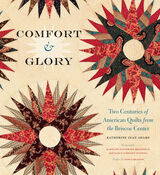
Quilts bear witness to the American experience. With a history that spans the early republic to the present day, this form of textile art can illuminate many areas of American life, such as immigration and settlement, the development of our nation’s textile industry, and the growth of mass media and marketing. In short, each quilt tells a story that is integral to America’s history.
Comfort and Glory introduces an outstanding collection of American quilts and quilt history documentation, the Winedale Quilt Collection at the Briscoe Center for American History at the University of Texas at Austin. This volume showcases 115 quilts—nearly one-quarter of the Winedale Collection—through stunning color photographs (including details) and essays about each quilt’s history and construction. The selections span more than two hundred years of American quiltmaking and represent a broad range of traditional styles and functions. Utility quilts, some worn or faded, join show quilts, needlework masterpieces, and “best” quilts saved for special occasions. Texas quilts, including those made in or brought to Texas during the nineteenth century, constitute a significant number of the selections. Color photographs of related documents and material culture objects from the Briscoe Center’s collections—quilting templates, a painted bride’s box, sheet music, a homespun dress, a brass sewing bird, and political ephemera, among them—enrich the stories of many of the quilts.

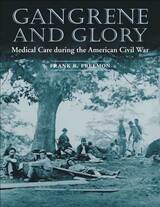
A medical doctor and a credentialed historian, Frank R. Freemon combines poignant, sometimes horrifying anecdotes of amputation, infection, and death with a clearheaded discussion of the state of medical knowledge, the effect of the military bureaucracy on medical supplies, and the members of the medical community who risked their lives, their health, and even their careers to provide appropriate care to the wounded. Freemon examines the impact on major campaigns--Manassas, Gettysburg, Vicksburg, Shiloh, Atlanta--of ignorance, understaffing, inexperience, overcrowded hospitals, insufficient access to ambulances, and inadequate supplies of essentials such as quinine.
Presenting the medical side of the war from a variety of perspectives--the Union, the Confederacy, doctors, nurses, soldiers, and their families--Gangrene and Glory achieves a peculiar immediacy by restricting its scope to the knowledge and perceptions available to its nineteenth-century subjects. Now available for the first time in paperback, this important volume takes a hard, close look at a neglected and crucial aspect of this bloody conflict.
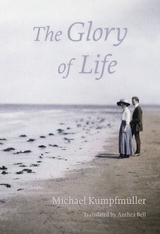
In July 1923, Kafka is convalescing by the Baltic Sea when he meets Diamant and they fall in love. He is forty years old and dying of tuberculosis; she is twenty-five and seems to him the essence of life. After a tentative first meeting, the indecisive Kafka moves with Diamant to Berlin, a city in the throes of political upheaval, rising anti-Semitism, and the turmoil of Weimar-era hyperinflation. As his tuberculosis advances, they are forced to leave the city for the Kierling Sanatorium near Vienna, a move that threatens the paradise they have created.
The first of Kumpfmüller’s novels to appear in English after his acclaimed The Adventures of a Bed Salesman, The Glory of Life is a meticulously researched and poignant portrait of one of the most enduring authors in world literature. Beautifully crafted, this book is an evocative rumination on the power of love and friendship.
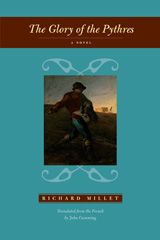
Visionary and ambitious, Richard Millet's stunning novel explores whether Pythre and his family, whether any person, can overcome one’s fate and circumstance, to transcend a persistent darkness that pulls one into silence. The translation is no less ambitious than the novel itself. It captures this forgotten world in Millet's musical prose; it contrasts the strange patois of the villagers against "proper" French. Filled with finely observed characters and a breathtaking power of description, The Glory of the Pythres is a unique, powerful work of art.
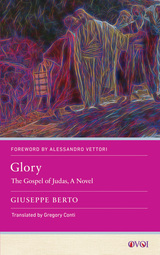
In Glory, Italian modernist Giuseppe Berto’s final novel, Judas finally tells his side of the story. From his perspective, Jesus is the betrayer, a would-be political activist and social reformer who fails to live up to his promises. And by fulfilling his predestined role in the drama of Christ’s death and resurrection, Judas himself is partly responsible for humanity’s salvation, enabling them to be redeemed by Christ’s sacrifice. As the novel probes into the psychological motivations behind his rejection of Jesus’ authority, Judas emerges as a compelling conflicted character, a man who seeks to have agency even when he knows his actions are being scripted by a higher power. Through Judas’s searing tortured monologues, this late masterpiece from one of Italy’s greatest writers investigates deep questions about the nature of faith, rebellion, fate, and free will.
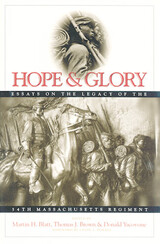
This volume brings together the best scholarship on the history of the 54th, the formation of collective memory and identity, and the ways Americans have responded to the story of the regiment and the Saint-Gaudens monument. Contributors use the historical record and popular remembrance of the 54 th as a lens for examining race and community in the United States. The essays range in time from the mid-nineteenth century to the present and encompass history, literature, art, music, and popular culture.
In addition to the editors and Colin Powell, who writes about the memory and example of the 54th in his own career, contributors include Stephen Belyea, David W. Blight, Thomas Cripps, Kathryn Greenthal, James Oliver Horton, Edwin S. Redkey, Marilyn Richardson, Kirk Savage, James Smethurst, Cathy Stanton, Helen Vendler, Denise Von Glahn, and Joan Waugh.
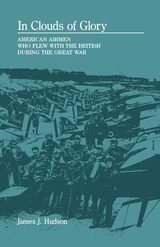

2021 and 2022 were two of the most turbulent and disruptive years experienced by Britain in peacetime. Land of Shame and Glory: Britain 2021–22 addresses a series of unprecedented challenges that laid bare the fragility of Britain and the Union during this time. Beginning with the chaotic Fall of Kabul, which exposed Britain's military dependence on the United States, through the prolonged, unsatisfying removal of a prime minister—and the economically catastrophic, short-lived tenure of his successor—that further exposed the vulnerabilities of an unwritten constitution; to the country sweltering in record-breaking temperatures amid dire warnings of climate catastrophe; and finally, to the death of a much-loved monarch, who was a point of consistency during decades of tremendous social and technological change. Peter Hennessy considers the continuities and upheavals of the last seventy years, asking whether there can be said to have been a second Elizabethan Age and lamenting that the post-war period came to its close amid such upheaval and loss.
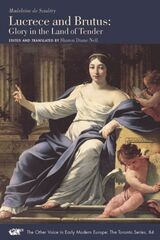
Comprising texts by Madeleine de Scudéry, including many from her novel Clélie, this volume focuses on the story of Lucretia, the Roman matron whose rape and suicide led to the downfall of the Roman monarchy. Through her work, Scudéry seeks to contrast the enormous cultural contributions of women with their physical vulnerability and to propose an alternative to sexual violation, as envisioned on the Map of the Land of Tender that charts an imaginary land in the novel and outlines a path toward love. In Scudéry’s version of this tale, Lucrece and her beloved, Brutus, follow the path of tender friendship. Scudéry contradicts history’s characterization of Lucrece as craving glory in the form of fame. Indeed, contrary to ancient sources, Lucrece’s glory will be her decision to sacrifice herself secretly for her tender friend.
Our Land Is Made of Courage and Glory: Nationalist Performance of Nicaragua and Guatemala adds to a growing and timely body of work on nationalist drama. Examining important twentieth-century plays that few people have written about in English, E. J. Westlake analyzes the phenomenon of nation as performance by focusing on the definition of a people, national metaphors, and the uses of national history.
Westlake discerns the common characteristics that constitute nationalist plays, a genre that seeks to legitimate the nature of a nation by defining its boundaries, race, language, citizens, and history. Particularly relevant in an era influenced by imperialism, migration, and globalization, the volume probes the concepts of nation and nationalism in the context of postcolonial literary and performance theory.
Our Land Is Made of Courage and Glory covers the political and theatrical history of Nicaragua and Guatemala. Westlake examines how the blending of races factors into nationalism with a look at the play El tren amarillo by Manuel Galich and uses Nobel laureate Miguel Ángel Asturias’s Soluna to show how nationalists appropriate Mayan culture to create a sense of the Guatemalan people and culture. She discusses the mapping of history as a linear progression in Alan Bolt’s Banana republic and as a cycle of patricide in Por los caminos van los campesinos by Pablo Cuadra. Westlake also suggests that Rolando Steiner’s La noche de Wiwilí, a play taken from an eyewitness account, acts as a site of official national memory, and she examines as well the canonizing of the folk ballet El Güegüence to further explore the notion of sites of memory versus lived memory.
Raising essential questions about the future of nationalism and nationalist performance, Our Land Is Made of Courage and Glory will be of interest to scholars and students in drama, Latin American theatre studies, political science, and history.

McRoberts finds, for example, that most of the churches in Four Corners are attended and run by people who do not live in the neighborhood but who worship there because of the low overhead. These churches, McRoberts argues, are communities in and of themselves, with little or no attachment to the surrounding area. This disconnect makes the churches less inclined to cooperate with neighborhood revitalization campaigns and less likely to respond to the immediate needs of neighborhood residents. Thus, the faith invested in inner-city churches as beacons of local renewal might be misplaced, and the decision to count on them to administer welfare definitely should be revisited.
As the federal government increasingly moves toward delivering social services through faith-based organizations, Streets of Glory must be read for its trenchant revisionist view of how churches actually work in depressed urban areas.
Trailing Clouds of Glory is the first examination of the roles played in the Mexican War by the large number of men who served with Taylor and who would be prominent in the next war, both as volunteer and regular army officers, and it provides fresh information, even on such subjects as Robert E. Lee and Ulysses S. Grant. Particularly interesting for the student of the Civil War are largely unknown aspects of the Mexican War service of Daniel Harvey Hill, Braxton Bragg, and Thomas W. Sherman.

Hailing from the small river town of Moundsville, West Virginia, Davis Grubb (1919–1980) became a key figure in the canon of Appalachian literature. The author of ten novels and dozens of short stories and radio plays, Grubb’s writings, as Tom Douglass observes, “catalogued his life”—and a turbulent life it was, marked by the traumatic loss of both the family home and his father during the Great Depression, the overbearing affections of his mother, the fear of failure, painful struggles with alcohol and drug abuse, profligate spending, and a conflicted sexuality.
Grubb originally aspired to be a visual artist but, thwarted by color blindness, turned to writing instead, honing his skills in the advertising industry. Today he is best remembered for his first novel, The Night of the Hunter (1953), a gripping story of a Depression-era serial killer and his pursuit of two young children along the Ohio River. This book spent twenty-eight weeks on The New York Times best-seller list and became the basis for a classic film directed by Charles Laughton, starring Robert Mitchum, Shelley Winters, and Lillian Gish. While his subsequent work never achieved that same level of popularity, the fierce thematic oppositions he set forth in his debut novel—between love and hate, good and evil, the corrupt and the pure, the rich and the poor—would inform his entire oeuvre. Although Grubb’s career took him to the great cities of New York, Philadelphia, and Los Angeles, his work was always rooted in key emblems of his Appalachian childhood—the river, the state penitentiary, and the largest Indian mound east of the Mississippi, all in his native Moundsville.
In his works, Douglass asserts, Grubb was “an avenging angel, righting the wrongs of the past in his own life, in his own country, and putting trust in his own vision of divine love.” Off the page, he was riven by personal demons, “more than once in danger of losing his life to self-annihilation and to the self-accusation that he was a fallen angel.” This biography, the first ever written of Grubb, captures his life and work in all their intriguing complexity.
THOMAS E. DOUGLASS, an associate professor of English at East Carolina University, is the author of A Room Forever: The Life, Work, and Letters of Breece D’J Pancake. He is also the fiction editor for the University of Tennessee Press’s Appalachian Echoes series.
Hailing from the small river town of Moundsville, West Virginia, Davis Grubb (1919–1980) became a key figure in the canon of Appalachian literature. The author of ten novels and dozens of short stories and radio plays, Grubb’s writings, as Tom Douglass observes, “catalogued his life”—and a turbulent life it was, marked by the traumatic loss of both the family home and his father during the Great Depression, the overbearing affections of his mother, the fear of failure, painful struggles with alcohol and drug abuse, profligate spending, and a conflicted sexuality.
Grubb originally aspired to be a visual artist but, thwarted by color blindness, turned to writing instead, honing his skills in the advertising industry. Today he is best remembered for his first novel, The Night of the Hunter (1953), a gripping story of a Depression-era serial killer and his pursuit of two young children along the Ohio River. This book spent twenty-eight weeks on The New York Times best-seller list and became the basis for a classic film directed by Charles Laughton, starring Robert Mitchum, Shelley Winters, and Lillian Gish. While his subsequent work never achieved that same level of popularity, the fierce thematic oppositions he set forth in his debut novel—between love and hate, good and evil, the corrupt and the pure, the rich and the poor—would inform his entire oeuvre. Although Grubb’s career took him to the great cities of New York, Philadelphia, and Los Angeles, his work was always rooted in key emblems of his Appalachian childhood—the river, the state penitentiary, and the largest Indian mound east of the Mississippi, all in his native Moundsville.
In his works, Douglass asserts, Grubb was “an avenging angel, righting the wrongs of the past in his own life, in his own country, and putting trust in his own vision of divine love.” Off the page, he was riven by personal demons, “more than once in danger of losing his life to self-annihilation and to the self-accusation that he was a fallen angel.” This biography, the first ever written of Grubb, captures his life and work in all their intriguing complexity.
READERS
Browse our collection.
PUBLISHERS
See BiblioVault's publisher services.
STUDENT SERVICES
Files for college accessibility offices.
RECENTLY PUBLISHED



UChicago Accessibility Resources
home | accessibility | search | about | contact us
BiblioVault ® 2001 - 2024
The University of Chicago Press