
 A SCHOLARLY BOOK REPOSITORY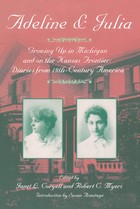
The keeping of journals and diaries became an almost everyday pastime for many Americans in the nineteenth century. Adeline and Julia Graham, two young women from Berrien Springs, Michigan, were both drawn to this activity, writing about the daily events in their lives, as well as their 'grand adventures.' These are fascinating, deeply personal accounts that provide an insight into the thoughts and motivation of two sisters who lived more than a century ago. Adeline began keeping a diary when she was sixteen, from mid-1880 through mid-1884; through it we see a young woman coming of age in this small community in western Michigan. Paired with Adeline's account is her sister Julia's diary, which begins in 1885 when she sets out with three other young women to homestead in Greeley County, Kansas, just east of the Colorado border. It is a vivid and colorful narrative of a young woman's journey into America's western landscape.
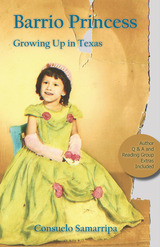
"Made in Mexico, born in America," Barrio Princess shares heartwarming family stories, cultural tradition stories, learning English by total immersion, socialization as a minority, education, stories of her mother as a single parent, and women’s stories from a minority point of view.

We grow up--so simple, it just seems to happen--and yet there are endless variations in the way we do it. What part does culture play in the process? How much do politics and economics have to do with it? As the nation has matured, have the ways people grow up changed too? This book traces the many paths to adulthood that Americans have pursued over time. Spanning more than two centuries of intense transformation in the lives of individuals and the life of a nation, Conflicting Paths is an innovative history of growing up in America.
Harvey J. Graff, a distinguished social historian, mines more than five hundred personal narratives for what they can tell us about the passage from childhood to maturity. Drawing on diaries, memoirs, autobiographies, and letters, he builds a penetrating, complex, firsthand account of how childhood, adolescence, and youth have been experienced and understood--as functions of familial and social relations, as products of biology and physiology, and as cultural and political constructs. These first-person testimonies cross the lines of time and space, gender and class, ethnicity, age, and race. In these individual stories and the larger story they constitute, Graff exposes the way social change--including institutional developments and shifting attitudes, expectations, and policy--and personal experience intertwine in the process of growing up. Together, these narratives form a challenging, subtle guide to historical experiences and to the epochal remaking of growing up.
The most socially inclusive and historically extensive of any such research, Graff's work constitutes an important chapter in the story of the family, the formation of modern society, and the complex interweaving of young people, tradition, and change.
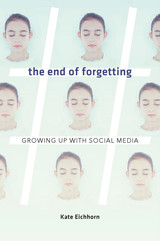
Thanks to Facebook and Instagram, our childhoods have been captured and preserved online, never to go away. But what happens when we can’t leave our most embarrassing moments behind?
Until recently, the awkward moments of growing up could be forgotten. But today we may be on the verge of losing the ability to leave our pasts behind. In The End of Forgetting, Kate Eichhorn explores what happens when images of our younger selves persist, often remaining just a click away.
For today’s teenagers, many of whom spend hours each day posting on social media platforms, efforts to move beyond moments they regret face new and seemingly insurmountable obstacles. Unlike a high school yearbook or a shoebox full of old photos, the information that accumulates on social media is here to stay. What was once fleeting is now documented and tagged, always ready to surface and interrupt our future lives. Moreover, new innovations such as automated facial recognition also mean that the reappearance of our past is increasingly out of our control.
Historically, growing up has been about moving on—achieving a safe distance from painful events that typically mark childhood and adolescence. But what happens when one remains tethered to the past? From the earliest days of the internet, critics have been concerned that it would endanger the innocence of childhood. The greater danger, Eichhorn warns, may ultimately be what happens when young adults find they are unable to distance themselves from their pasts. Rather than a childhood cut short by a premature loss of innocence, the real crisis of the digital age may be the specter of a childhood that can never be forgotten.
Just what do we know about the current generation of young Americans? So little it seems that we have dubbed them Generation X. Coming of age in the 1980s and '90s, they hail from families in flux, from an intimate landscape changing faster and more profoundly than ever before. This book is the first to give us a clear, close-up picture of these young Americans and to show how they have been affected and formed by the tremendous domestic changes of the last three decades.
How have members of this generation fared at school and at work, as they have moved into the world and formed families of their own? Do their struggles or successes reflect the turbulence of their time? These are the questions A Generation at Risk answers in comprehensive detail. Based on a unique fifteen-year study begun in 1980, the book considers parents' socioeconomic resources, their gender roles and relations, and the quality and stability of their marriages. It then examines children's relations with their parents, their intimate and broader social affiliations, and their psychological well-being. The authors provide rare insight into how both familial and historical contexts affect young people as they make the transition to adulthood.
Perhaps surprising is the authors' finding that, in this era of shifting gender roles, children who grow up in traditional father-breadwinner, mother-homemaker families and those in more egalitarian, role-sharing families apparently turn out the same. Also striking are the beneficial influence of parental education on children and the troubling long-term impact of marital conflict and divorce--an outcome that prompts the authors to suggest policy measures that encourage marital quality and stability.
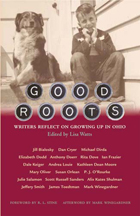
Winner of the Ohioana Library’s 2008 Ohio Legacy Citation
2014-2015 Choose to Read Ohio selection
“A good place to be from.” That’s how some people might characterize the Buckeye State. The writings in Good Roots: Writers Reflect on Growing Up in Ohio, are testimony to the truth of that statement. By prominent writers such as P. J. O’Rourke, Susan Orlean, and Alix Kates Shulman, these contributions are alternately nostalgic, irreverent, and sincere, and offer us a personal sense of place. Their childhoods are as varied as their work. Some were raised in urban Cleveland, Akron, and Cincinnati, others in the small Ohio towns that typify the Midwest, and still others in the countryside. Yet what they have to tell us about their roots resonates with a shared heritage, a sense of what is universal and enduring about growing up in the heartland.
Their collective résumé reads like a literary Who’s Who, including four Pulitzer Prizes, several National Book Awards, and many prestigious fellowships. Good Roots is also plain good reading from some of our country’s most accomplished contemporary writers.
Contributors include: Jill Bialosky, Dan Cryer, Michael Dirda, Elizabeth Dodd, Anthony Doerr, Rita Dove, Ian Frazier, Dale Keiger, Andrea Louie, Kathleen Dean Moore, Mary Oliver, Susan Orlean, P. J. O’Rourke, Julie Salamon, Scott Russell Sanders, Alix Kates Shulman, Jeffery Smith, James Toedtman, and Mark Winegardner.
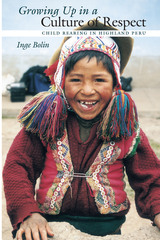
Far from the mainstream of society, the pastoral community of Chillihuani in the high Peruvian Andes rears children who are well-adjusted, creative, and curious. They exhibit superior social and cognitive skills and maintain an attitude of respect for all life as they progress smoothly from childhood to adulthood without a troubled adolescence. What makes such child-rearing success even more remarkable is that "childhood" is not recognized as a distinct phase of life. Instead, children assume adult rights and responsibilities at an early age in order to help the community survive in a rugged natural environment and utter material poverty.
This beautifully written ethnography provides the first full account of child-rearing practices in the high Peruvian Andes. Inge Bolin traces children's lives from birth to adulthood and finds truly amazing strategies of child rearing, as well as impressive ways of living that allow teenagers to enjoy the adolescent stage of their lives while contributing significantly to the welfare of their families and the community. Throughout her discussion, Bolin demonstrates that traditional practices of respect, whose roots reach back to pre-Columbian times, are what enable the children of the high Andes to mature into dignified, resilient, and caring adults.
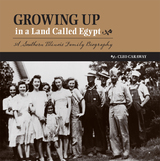
In Growing Up in a Land Called Egypt: A Southern Illinois Family Biography,author Cleo Caraway fondly recalls how she and her siblings came of age on the family farm in the 1930s and 1940s. Like many others, the Caraways were affected by the economic hardships of the Great Depression, but Cleo’s parents strived to shelter her and her six siblings from the dire circumstances affecting the nation and their home and allowed them to bask in their idealistic existence. Her love for her family clearly shines from every page as she writes of a simpler time, before World War II divided the family.
Caraway revels in the life her family lived on a southern Illinois hilltop in Murphysboro township, marveling at the mix of commonplace and adventure she experienced in her childhood. She remembers her first day of school, walking three miles to the wondrous one-room building with her siblings; reminisces about strolling through the countryside with her mother, investigating the various plants and flowers, fruits and nuts; and recollects her fascination with the Indian relics she found buried near her home, a hobby she shared with her father. She also writes of seeing Gone with the Wind on the big screen at the Hippodrome in Murphysboro, of learning to sew dresses for her dolls, and of idyllic life on the farm—milking cows, hatching chicks, feeding pigs. Along with her personal memories Caraway includes interviews with neighbors and many fascinating photographs with detailed captions that make the images come alive.
A delightful follow-up to her father’s popular Foothold on a Hillside: Memories of a Southern Illinoisan,Caraway’s book is a pleasant change from the typical accounts of southern Illinois before, during, and after the Great Depression. Instead of hardscrabble grit, Growing Up in a Land Called Egypt offers a refreshingly different view of the period and is certain to be embraced by southern Illinois natives as well as anyone interested in the experiences of a rural family that thrived despite the difficult times. The author’s lighthearted prose, self-deprecating humor, and genuine affection for her family make reading this book a rich and memorable experience.
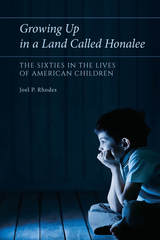
Because the preadolescent years are, according to the child development researchers, the most formative, Joel P. Rhodes focuses on the cohort born between 1956 and 1970 who have never been quantitatively defined as a generation, but whose preadolescent world was nonetheless quite distinct from that of the “baby boomers.” Rhodes examines how this group understood the historical forces of the 1960s as children, and how they made meaning of these forces based on their developmental age. He is concerned not only with the immediate imprint of the 1960s on their young lives, but with how their perspective on the era influenced them as adults.
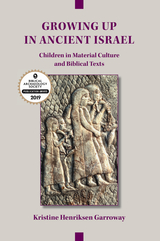
The first expansive reference examining the texts and material culture related to children in ancient Israel
Growing Up in Ancient Israel uses a child-centered methodology to investigate the world of children in ancient Israel. Where sources from ancient Israel are lacking, the book turns to cross-cultural materials from the ancient Near East as well as archaeological, anthropological, and ethnographic sources. Acknowledging that childhood is both biologically determined and culturally constructed, the book explores conception, birth, infancy, dangers in childhood, the growing child, dress, play, and death. To bridge the gap between the ancient world and today’s world, Kristine Henriksen Garroway introduces examples from contemporary society to illustrate how the Hebrew Bible compares with a Western understanding of children and childhood.
Features:
- More than fifty-five illustrations illuminating the world of the ancient Israelite child
- An extensive investigation of parental reactions to the high rate of infant mortality and the deaths of infants and children
- An examination of what the gendering and enculturation process involved for an Israelite child
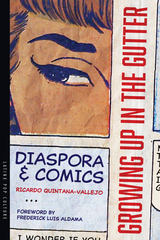
While the most traditional iteration of the bildungsroman—the coming-of-age story—follows middle-class male heroes who forge their identities in a process of complex introspection, contemporary graphic coming-of-age narratives represent formative processes that fit into, resist, or even disregard narratives of socialization under capitalism, of citizenship, and of nationhood.
Quintana-Vallejo delves into several important themes: how the coming-of-age genre can be used to study adulthood, how displacement and international or global heritage are fundamental experiences, how multidiasporic approaches foreground lived experiences, and how queerness opens narratives of development to the study of adulthood as fundamentally diverse and nonconforming to social norms. Quintana-Vallejo shows how openness enables belonging among chosen families and, perhaps most importantly, freedom to disidentify. And, finally, how contemporary authors writing for the instruction of BIPOC children (and children otherwise affected by diaspora and displacement) use the didactic power of the coming-of-age genre, combined with the hybrid language of graphic narratives, to teach difficult topics in accessible ways.
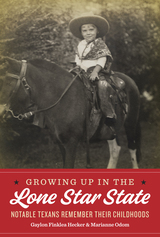
Gaylon Finklea Hecker and Marianne Odom began the interviews for this book in 1981 and devoted a professional lifetime to collecting the memories of accomplished Texans to determine what, if anything, about growing up in the Lone Star State prepared them for success.
The resulting forty-seven oral history interviews begin with tales from the early 1900s, when Texas was an agrarian state, and continue through the growth of major cities and the country’s race to the moon. Interviewees recalled life in former slave colonies; on gigantic ranches, tiny farms, and sharecropper fields; and in one-horse towns and big-city neighborhoods, with relatable stories as diverse as the state’s geography.
The oldest interviewees witnessed women earning the right to vote and weathered the Great Depression. Many remembered two world wars, while others recalled the Texas City explosion of 1947 and the tornado that devastated Waco in 1953. They witnessed the advent of television and the nightly news, which helped many come to terms with the assassination of a president that took place too close to home.
Their absorbing reflections are stories of good and bad, hope and despair, poverty and wealth, depression and inspiration, which would have been different if lived anywhere but Texas.
Nonwhite and white, rich and poor, born to an unwed mother or weathering divorce, over half of all children in the current generation will live in a single-parent family--and these children simply will not fare as well as their peers who live with both parents. This is the clear and urgent message of this powerful book. Based on four national surveys and drawing on more than a decade of research, Growing Up with a Single Parent sharply demonstrates the connection between family structure and a child's prospects for success.
What are the chances that the child of a single parent will graduate from high school, go on to college, find and keep a job? Will she become a teenage mother? Will he be out of school and out of work? These are the questions the authors pursue across the spectrum of race, gender, and class. Children whose parents live apart, the authors find, are twice as likely to drop out of high school as those in two-parent families, one and a half times as likely to be idle in young adulthood, twice as likely to become single parents themselves. This study shows how divorce--particularly an attendant drop in income, parental involvement, and access to community resources--diminishes children's chances for well-being.
The authors provide answers to other practical questions that many single parents may ask: Does the gender of the child or the custodial parent affect these outcomes? Does having a stepparent, a grandmother, or a nonmarital partner in the household help or hurt? Do children who stay in the same community after divorce fare better? Their data reveal that some of the advantages often associated with being white are really a function of family structure, and that some of the advantages associated with having educated parents evaporate when those parents separate.
In a concluding chapter, McLanahan and Sandefur offer clear recommendations for rethinking our current policies. Single parents are here to stay, and their worsening situation is tearing at the fabric of our society. It is imperative, the authors show, that we shift more of the costs of raising children from mothers to fathers and from parents to society at large. Likewise, we must develop universal assistance programs that benefit low-income two-parent families as well as single mothers. Startling in its findings and trenchant in its analysis, Growing Up with a Single Parent will serve to inform both the personal decisions and governmental policies that affect our children's--and our nation's--future.
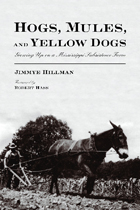
"It's in the nature of things that whole worlds disappear," writes the poet Robert Hass in the foreword to Jimmye Hillman's insightful memoir. "Their vanishings, more often than not, go unrecorded or pass into myth, just as they slip from the memory of the living."
To ensure that the world of Jimmye Hillman's childhood in Greene County, Mississippi during the Great Depression doesn't slip away, he has gathered together accounts of his family and the other people of Old Washington village. There are humorous stories of hog hunting and heart-wrenching tales of poverty set against a rural backdrop shaded by the local social, religious, and political climate of the time. Jimmye and his family were subsistence farmers out of bare-bones necessity, decades before discussions about sustainability made such practices laudable.
More than just childhood memories and a family saga, though, this book serves as a snapshot of the natural, historical, and linguistic details of the time and place. It is a remarkable record of Southern life. Observations loaded with detail uncover broader themes of work, family loyalty, and the politics of changing times.
Hillman, now eighty-eight, went on to a distinguished career as an economist specializing in agriculture. He realizes the importance of his story as an example of the cultural history of the Deep South but allows readers to discover the significance on their own by witnessing the lives of a colorful cast of characters. Hogs, Mules, and Yellow Dogs is unique, a blend of humor and reflection, wisdom and sympathy—but it's also a hard-nosed look at the realities of living on a dirt farm in a vanished world.

If he had not fouled out, maybe Washington State University’s center, James McKean, might have held Lew Alcindor (now Kareem Abdul-Jabbar) to only forty points. It was 1967, a transition year for college athletics in a dramatic time for those coming ofage. In this memoir set in the 1950s and 1960s, McKean revisits his years growing up in a family dedicated to sports and the outdoors, his playing basketball at Washington State University (for coaches Marv Harshman and Jud Heathcote), and his fashioning a life during and after basketball.
Driven by the energy and spirit of athletics, the language in Home Stand lights up McKean’s wonderfully eclectic work—the aunt who won a bronze medal in the 1936 Olympics in Berlin, his last run as a misguided drag racer, his playing basketball for a washing machine factory in Bologna, Italy, or against the prisoners in Walla Walla State Penitentiary—all seen in the context of turbulent times. Needless to say, Lew Alcindor scored his points and UCLA won, which they did every game that season. What James McKean took home was five fouls and a good story.
Home Stand delivers a lyrical, thoughtful reflection of what it is to be an athlete—inside as well as outside the game—and how one man’s love of basketball evolved into a love of poetry, "good turns of speech," writing, and teaching.

Imagine that there was a time in America when a child sat next to a radio and simply listened. But didn’t just listen, was enthralled and knew that this time was his alone, that he was part of the vortex of drama unfolding inside the radio’s innards. . . . I never saw a punch thrown, or a glass shatter, or a blood-smeared shirt as I listened to the radio. Nor did I know Barbara Stanwyck’s hairstyle as she overacted in Sorry, Wrong Number on the Lux Radio Theatre. And I had no idea how corpulent Happy Felton was as he dropped ten silver dollars that jangled into a Sheffield’s Milk bottle on Guess Who. (Yes, ten bucks was what you won on that show.) Instead, I imagined it all.
I Hid It under the Sheets captures a bygone era—the late 1930s, 1940s, and early 1950s—through the reminiscences of award-winning New York Times reporter Gerald Eskenazi. This first-person recollection shows radio’s broad impact on his generation and explains how and why it became such a major factor in shaping America and Americans.
"A temperate and sympathetic treatment of an African-American family's religious evolution." —Publishers Weekly
"A compelling story. It provides an honest, inside view of one of America's most controversial religious movements and perceptively points to social tensions of race, gender and religious identity." —Kirkus Reviews
"Extremely valuable. Recent literature is interested almost exclusively in male leaders. Tate's book provides a new perspective. I have used the book in a number of teaching contexts to very good results." —Judith Weisenfeld, Vassar College
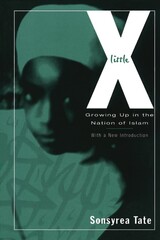
In Little X, Sonsyrea Tate reveals, through the acute vision and engaging voice of a curious child, the practices and policies of the mysterious organization most know only through media portrayals of its controversial leaders Elijah Muhammad, Malcolm X, and Louis Farrakhan. First published in 1997, Little X chronicles the multigenerational experience of Tate's family, who broke from the traditional black church in the 1950s to join the radical Nation of Islam, then struggled to remain intact through disillusionment, shifting loyalties, and forays into Orthodox Islam.
Little X is also an absorbing story of a little girl whose strict Muslim education filled her with pride, confidence, and a longing for freedom, of a teenager in an ankle-length dress and headwrap struggling to fit in with non-Muslim peers, and of a young woman whose growing disillusionment with the Nation finally led to her break with the Muslim religion. Little X offers a rare glimpse into the everyday experience of the Nation of Islam, and into a little-understood part of America's history and heritage.
Sonsyrea Tate-Montgomery has been a staff writer for the Virginian Pilot, Chicago Tribune, and the Washington Post. The recipient of four coveted Echoes of Excellence awards from the National Association of Black Journalists, Tate has also worked as assistant to Congresswoman Eleanor Holmes Norton. She currently works as a political reporter for The Gazette, a Post-Newsweek publication.
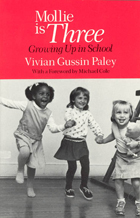
"With a delightful, almost magical touch, Paley shares her observations and insights about three-year-olds. The use of a tape recorder in the classroom gives her a second chance to hear students' thoughts from the doll corner to the playground, and to reflect on the ways in which young children make sense of the experience of school. . . . Paley lets the children speak for themselves, and through their words we reenter the world of the child in all its fantasy and inventiveness."—Harvard Educational Review
"Paley's vivid and accurate descriptions depict both spontaneous and recurring incidents and outline increasingly complex interactions among the children. Included in the narrative are questions or ideas to challenge the reader to gain more insight and understanding into the motives and conceptualizations of Mollie and other children."—Karen L. Peterson, Young Children

Attractive colorful multimedia images merge with easy-to-read text to make this young elephant’s story appeal to all pre-school children.
This board book is the product of the faculty and staff of the University of Michigan Brachial Plexus and Peripheral Nerve Program, inspired by the plight of orphan elephants in Africa and The David Sheldrick Wildlife Trust that helps orphaned calves reintegrate back into the wild as well as our patients who actively participate despite Brachial Plexus Palsy. Our clinical program strives to provide the best interdisciplinary care for patients through collaboration, research, and innovation – as we hope to improve the function and quality of life for all persons with brachial plexus and peripheral nerve dysfunction.

“In the fifties, sleek Mixmasters were replacing rusty eggbeaters, and new pressure-cookers blew their tops in kitchens all over town. There were kids everywhere, and new ‘ranch-style’ houses filled vacant lots. . . . Turquoise Studebakers and dusty-rose Chevy BelAirs with flamboyant fins and lots of chrome replaced dark pre-war cars. Cameras took color snapshots instead of black-and-white. We wore red canvas tennis shoes and lemon yellow shorts, and bright blue popsicles melted down our chins.” —from the Introduction
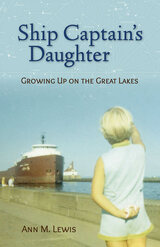
Ann Lewis's childhood was marked by an unusual rhythm. Each year the thawing and freezing of the Great Lakes signaled the beginning and end of the shipping season, months of waiting that were punctuated by brief trips to various ports to meet her father, the captain.
With lively storytelling and vivid details, Lewis captures the unusual life of shipping families whose days and weeks revolved around the shipping industry on the Great Lakes. She paints an intriguing and affectionate portrait of her father, a talented pianist whose summer job aboard an ore freighter led him to a life on the water. Working his way up from deckhand to ship captain, Willis Michler became the master of thirteen ships over a span of twenty-eight years. From the age of twelve, Ann accompanied the captain to the ports of Milwaukee, Chicago, Toledo, and Cleveland on the lower Great Lakes. She describes sailing through stormy weather and starry nights, visiting the engine room, dining at the captain's table, and wheeling the block-long ship with her father in the pilot house. Through her mother's stories and remarks, Lewis also reveals insights into the trials and rewards of being a ship captain's wife. The book is enhanced by the author's vintage snapshots, depicting this bygone lifestyle.
You are nine years old. Your best friend's father is arrested, half your classmates disappear from school, and someone burns down the house across the road. You think your neighbors were planning to kill your family. You are eight years old and imprisoned in your home by your father's old friends. You are ten years old and must climb a mountain at night to escape the soldiers trying to shoot you.
What happens to children who grow up with war? How do they live with the daily reality of danger, hunger, and loss--and how does it shape the adults they become?
In Then They Started Shooting, child psychiatrist Lynne Jones draws the reader into the compelling stories of Serbian and Muslim children who came of age during the Bosnian wars of the 1990s. These children endured hardship, loss, family disruption, and constant uncertainty, and yet in a blow to psychiatric orthodoxy, few showed lasting signs of trauma. Thoughts of their personal futures filled their minds, not memories of war.
And yet, Jones suggests in a chilling conclusion, the war affected them deeply. Officially citizens of the same country, the two communities live separate, wary lives. The Muslims hope for reconciliation but cannot believe in it while so many cannot go home and war criminals are still at large. The Serbs resent the outside world, NATO, and fear the return of their Muslim neighbors. Cynical about politics, all of them mistrust their elected leaders. War may end, but the persistence of corruption and injustice keep wounds from healing.
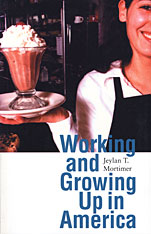
Should teenagers have jobs while they’re in high school? Doesn’t working distract them from schoolwork, cause long-term problem behaviors, and precipitate a “precocious” transition to adulthood?
This report from a remarkable longitudinal study of 1,000 students, followed from the beginning of high school through their mid-twenties, answers, resoundingly, no. Examining a broad range of teenagers, Jeylan Mortimer concludes that high school students who work even as much as half-time are in fact better off in many ways than students who don’t have jobs at all. Having part-time jobs can increase confidence and time management skills, promote vocational exploration, and enhance subsequent academic success. The wider social circle of adults they meet through their jobs can also buffer strains at home, and some of what young people learn on the job—not least, responsibility and confidence—gives them an advantage in later work life.
READERS
Browse our collection.
PUBLISHERS
See BiblioVault's publisher services.
STUDENT SERVICES
Files for college accessibility offices.
RECENTLY PUBLISHED



UChicago Accessibility Resources
home | accessibility | search | about | contact us
BiblioVault ® 2001 - 2024
The University of Chicago Press