
 A SCHOLARLY BOOK REPOSITORY
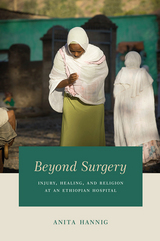
Through her in-depth ethnography of two repair and rehabilitation centers operating in Ethiopia, Hannig takes the reader deep into a world inside hospital walls, where women recount stories of loss and belonging, shame and delight. As she chronicles the lived experiences of fistula patients in clinical treatment, Hannig explores the danger of labeling “culture” the culprit, showing how this common argument ignores the larger problem of insufficient medical access in rural Africa. Beyond Surgery portrays the complex social outcomes of surgery in an effort to deepen our understanding of medical missions in Africa, expose cultural biases, and clear the path toward more effective ways of delivering care to those who need it most.
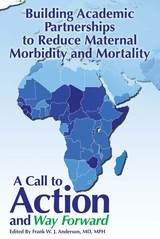
This book presents the collective wisdom of a group of Obstetrician/Gynecologists (OB/GYNs) from around the world brought together at the 2012 meeting of the International Federation of Gynecology and Obstetrics (FIGO) to contribute their ideas and expertise in an effort to reduce maternal and neonatal morbidity and mortality and obstetric fistula in sub Saharan Africa (SSA). The discussions focused on how to increase human capacity in the field of obstetrics and gynecology. The meeting was hosted by the University of Michigan Department of Obstetrics and Gynecology Global Initiatives program and was supported through a grant from the Flora Family Foundation.
Within the pages of this document, the current status of women’s health and OB/GYN training programs in 10 sub-Saharan African countries are described, with a Call to Action and Way Forward to training new OBGYNs in country. These are the words of obstetricians in the field, some who work as lone faculty in fledgling OB/GYN departments. These committed people are charged with the task of not only teaching the next generation, but may be the only OBGYN per 500,000 population or more. Their tireless pursuits are recognized, and their yearning for collegial support is palpable.
Every country should have a cadre of highly trained OB/GYNs to teach the next generation, contribute to policy development and advocate for progressive legislation, conduct the research needed to solve local clinical problems, and contribute to the field of women’s health in general. But most of all, it must be recognized that women across the globe have the right to access a full scope and high quality obstetrical and gynecological care when and where they need it. These pages bring to light successes achieved and shared, and lessons learned that have already spurred new programs and given hope to those eager for a new way forward.

Childbirth is a quintessential family event that simultaneously holds great promise and runs the risk of danger. By the late nineteenth century, the birthing room had become a place where the goals of the new scientific professional could be demonstrated, but where traditional female knowledge was in conflict with the new ways. Here the choice of attendants and their practices defined gender, ethnicity, class, and the role of the professional.
Using the methodology of social science theory, particularly quantitative statistical analysis and historical demography, Charlotte Borst examines the effect of gender, culture, and class on the transition to physician-attended childbirth. Earlier studies have focused on physician opposition to midwifery, devoting little attention to the training for and actual practice of midwifery. As a result, until now we knew little about the actual conditions of the midwife's education and practice.
Catching Babies is the first study to examine the move to physician-attended birth within the context of a particular community. It focuses on four representative counties in Wisconsin to study both midwives and physicians within the context of their community. Borst finds that midwives were not pushed out of practice by elitist or misogynist obstetricians. Instead, their traditional, artisanal skills ceased to be valued by a society that had come to embrace the model of disinterested, professional science. The community that had previously hired midwives turned to physicians who shared ethnic and cultural values with the very midwives they replaced.

This volume follows the first, entitled Building Academic Partnerships to Reduce Maternal Morbidity and Mortality: ACall to Action and Way Forward (http://amzn.to/22pZ0Wd), which identified the critical components for capacity building in expert women’s health care. Each chapter of this current edition is organized to address these critical components from multiple perspectives including African obstetrician/gynecologists, Ministries of Health and Education, American/European obstetrician/gynecologists and professional organizations.
Within the pages of this book, readers will encounter the tremendous passion African OBGYNs have for expanding their expertise to deal with the tragedies that befall women on a daily basis. The entire specialty of OBGYN is poised to mobilize the educational resources, experience and expertise to support African OBGYNs in their re-invention of Obstetrics and Gynecology in the African context, for the African continent. A complete reading of this book will leave the reader with a deep understanding of the issues and solutions.
The deficit of expert obstetric and gynecologic care in Sub-Saharan Africa leads to the silent suffering of millions of women and families due to unnecessary mortality and debilitating morbidity to women and girls of all ages. Pregnancy and its consequences have significant effects on women and they deserve safe labor and delivery with the expectation of bearing a live-born infant.
In 2016, we are rightly focused on maternal, perinatal and early neonatal mortality. This urgent crisis must continue to be aggressively addressed, but a long-term view would demand that targeted interventions must not occur in a vacuum. The same specialists who provide critical and lifesaving obstetric care are the same ones who can diagnose fetal problems, diagnose and treat ectopic pregnancy both medically and surgically, and treat the myriad medical and surgical issues that face women throughout their lifetime. In essence, they provide the complex, evidence-based interventions that women in most parts of the world enjoy. Current attempts to replace this expert and comprehensive clinical capacity with health workers trained to perform specific tasks has gained favor, and fills an urgent need. But when done without also creating the cadre and institutions for supervision, long-term prospects for impact are poor.
The rich text presented herein will not only tell the story, but will also provide the concrete steps needed to replicate the successful Ghana experience – sustainably - in other African countries. The 1000+ OBGYN Project (www.1000obgyns.org) has brought together a vast array of educational resources and a network of university programs, expert clinical organizations and professional societies to implement this collective wisdom. The group is poised for action to end preventable maternal and neonatal mortality by 2030. We welcome your interest and participation.
In 1859 a Hungarian obstetrician named Ignaz Semmelweis, reflecting on his years as resident in the Vienna maternity clinic, wrote a graphic account of his attempt to diagnose and eliminate the then epidemic scourge of childbed fever. The resulting Etiology triggered an immediate and international squall of protest from Semmelweis’s colleagues; today it is recognized as a pioneering classic of medical history. Now, for the first time in many years, Codell Carter makes that classic available to the English-speaking reader in this vivid translation of the 1861 original, augmented by footnotes and an explanatory introduction. For students and scholars of medical history and philosophy, obstetrics and women’s studies, the accessibility of this moving and revolutionary work, important both as an historical document and as a groundbreaking precursor of modern medical theory, is long overdue.
Semmelweis’s exposure to the childbed fever was concurrent with his appointment to the Vienna maternity hospital in 1846. Like many similar hospitals and clinics in the major cities of nineteenth-century Europe and America, where death rates from the illness sometimes climbed as high as 40 percent of admitted patients, the Viennese wards were ravaged by the fever. Intensely troubled by the tragic and baffling loss of so many young mothers, Semmelweis sought answers. The Etiology was testimony to his success. Based on overwhelming personal evidence, it constituted a classic description of a disease, its causes, and its prevention. It also allowed a necessary response to the obstetrician’s already vocal, rabid, and perhaps predictable critics. For Semmelweis’s central thesis was a startling one - the fever, he correctly surmised, was caused not by epidemic or endemic influences but by unsterilized and thus often contaminated hands of the attending physicians themselves.
Carter’s translation of this radical work, judiciously abridged and extensively footnoted, captures all the drama and impassioned conviction of the original. Complementing this translation is a lucid introduction that places Semmelweis’s Etiology in historical perspective and clarifies its contemporary value. That value, Carter argues, is considerable. Important as a model of clinical analysis and as a chronicle of early nineteenth-century obstetrical practices, the Etiology is also a revolutionary polemic in its innovative doctrine of antisepsis and in its unique etiological explanation of disease. As such its recognition and reclamation allows a crucial understanding, one that clarifies the roots and theory of modern medicine and ultimately redeems and important, resolute, pathfinder.
In Contraception and Abortion from the Ancient World to the Renaissance, John M. Riddle showed, through extraordinary scholarly sleuthing, that women from ancient Egyptian times to the fifteenth century had relied on an extensive pharmacopoeia of herbal abortifacients and contraceptives to regulate fertility. In Eve’s Herbs, Riddle explores a new question: If women once had access to effective means of birth control, why was this knowledge lost to them in modern times?
Beginning with the testimony of a young woman brought before the Inquisition in France in 1320, Riddle asks what women knew about regulating fertility with herbs and shows how the new intellectual, religious, and legal climate of the early modern period tended to cast suspicion on women who employed “secret knowledge” to terminate or prevent pregnancy. Knowledge of the menstrual-regulating qualities of rue, pennyroyal, and other herbs was widespread through succeeding centuries among herbalists, apothecaries, doctors, and laywomen themselves, even as theologians and legal scholars began advancing the idea that the fetus was fully human from the moment of conception.
Drawing on previously unavailable material, Riddle reaches a startling conclusion: while it did not persist in a form that was available to most women, ancient knowledge about herbs was not lost in modern times but survived in coded form. Persecuted as “witchcraft” in centuries past and prosecuted as a crime in our own time, the control of fertility by “Eve’s herbs” has been practiced by Western women since ancient times.
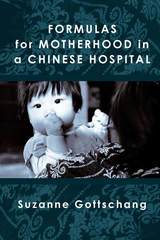
Formulas for Motherhood follows a group of women over eighteen months as they visited a Beijing Baby- Friendly Hospital over the course of their pregnancies and throughout their postpartum recoveries. The book shows how the space of the hospital operates as a microcosm of the larger social, political, and economic forces that urban Chinese women navigate in the process of becoming a mother. Relations between biomedical practices, heightened expectations of femininity and sexuality demanded by a consumer culture, alongside international and national agendas to promote maternal and child health, reveal new agents of maternal governance emerging at the very moment China’s economy heats up. This ethnography provides insight into how women’s creative pragmatism in a rapidly changing society leads to their views and decisions about motherhood.
How did menopause change from being a natural (and often welcome) end to a woman's childbearing years to a deficiency disease in need of medical and pharmacological intervention? As she traces the medicalization of menopause over the last 100 years, historian Judith Houck challenges some widely held assumptions. Physicians hardly foisted hormones on reluctant female patients; rather, physicians themselves were often reluctant to claim menopause as a medical problem and resisted the widespread use of hormone therapy for what was, after all, a normal transition in a woman's lifespan. Houck argues that the medical and popular understandings of menopause at any given time depended on both pharmacological options and cultural ideas and anxieties of the moment. As women delayed marriage and motherhood and entered the workforce in greater numbers, the medical understanding, cultural meaning, and experience of menopause changed. By examining the history of menopause over the course of the twentieth century, Houck shows how the experience and representation of menopause has been profoundly influenced by biomedical developments and by changing roles for women and the changing definition of womanhood.

The innovative approach, founded on the values of sustainable capacity building through academic partnership and centered on improving access to dignified women’s reproductive health care through effective pre-service training, has the potential for expansion to other countries with high rates of maternal mortality and morbidity. In this case study, we spell out the best practices, which we hope will inspire academic medical centers in the Global South, global health departments/centers internationally, and the reproductive health community at large.
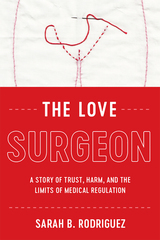
It would be easy to dismiss Dr. Burt as a monstrous aberration, a modern-day Dr. Frankenstein. Yet as medical historian Sarah Rodriguez reveals, that’s not the whole story. The Love Surgeon asks tough questions about Burt’s heinous acts and what they reveal about the failures of the medical establishment: How was he able to perform an untested surgical procedure? Why wasn’t he obliged to get informed consent from his patients? And why did it take his peers so long to take action?
The Love Surgeon is both a medical horror story and a cautionary tale about the limits of professional self-regulation.
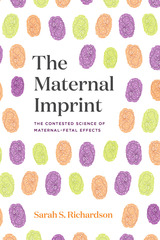
The idea that a woman may leave a biological trace on her gestating offspring has long been a commonplace folk intuition and a matter of scientific intrigue, but the form of that idea has changed dramatically over time. Beginning with the advent of modern genetics at the turn of the twentieth century, biomedical scientists dismissed any notion that a mother—except in cases of extreme deprivation or injury—could alter her offspring’s traits. Consensus asserted that a child’s fate was set by a combination of its genes and post-birth upbringing.
Over the last fifty years, however, this consensus was dismantled, and today, research on the intrauterine environment and its effects on the fetus is emerging as a robust program of study in medicine, public health, psychology, evolutionary biology, and genomics. Collectively, these sciences argue that a woman’s experiences, behaviors, and physiology can have life-altering effects on offspring development.
Tracing a genealogy of ideas about heredity and maternal-fetal effects, this book offers a critical analysis of conceptual and ethical issues—in particular, the staggering implications for maternal well-being and reproductive autonomy—provoked by the striking rise of epigenetics and fetal origins science in postgenomic biology today.
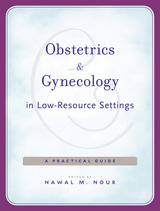
Responding to the growing need for tried-and-trusted solutions to the reproductive health care issues confronting millions of women worldwide, Obstetrics and Gynecology in Low-Resource Settings provides practical guidelines for ensuring the delivery of quality OB/GYN care to women in resource-poor countries. Including contributions from leading clinicians and researchers in the field, this welcome overview fills an important gap in existing medical literature on women’s health care and will be an invaluable resource for doctors, clinicians, and medical students at all stages of their careers who work in the global health arena.
The reproductive health risks that all women face are greatly exacerbated when health care facilities are inadequate, equipment and medications are in short supply, and well-trained medical staff are few and far away. Often in these settings, the sole doctor or medical professional on hand has expertise in some areas of women’s reproductive care but needs a refresher course in others.
This informative guide features hands-on, step-by-step instruction for the most pertinent OB/GYN conditions—both acute and chronic—that health care workers in the field confront. The authors examine a wide range of topics, including: strategies to reduce maternal mortality and stillbirths; infectious and sexually transmitted diseases, including malaria and HIV; cervical cancer; contraception; prenatal, delivery, and newborn care; and complications arising from gender-based violence and female genital cutting. Published in a convenient format with a durable binding, this reference will be an essential companion to health care providers throughout the world.

Drenth describes the workings of the vagina in simple language, enriching his description throughout the book with the imagery, mythology, lore, and history that has surrounded the vagina since the Middle Ages. The Origin of the World moves from basic physiognomic facts to the realms of anthropology, art history, science fiction, and feminist literature-all in the service of mapping the dark continent. Drenth's journey takes him from Renaissance woodcuts to vibrators, clitoridectomies to "virginity checks," fears of the vagina (the vagina dentata) to its celebration. Part medical exposition covering the function of female genitalia from orgasm to pregnancy and part cultural history discussing contemporary and historical views of such aspects of the feminine as pubic hair, Freud's theories of coitus, and slang terms for the vagina, The Origin of the World is encyclopedic in its breadth, fascinating in its content, and familiar in its subject.
This lightly written exploration can be seen as both an owner's manual and a guide for the perplexed. Women and men alike will benefit from its entertaining erudition and from its fundamental mission of demystifying sex and sexuality in the service of greater understanding and, from that understanding, greater pleasure.
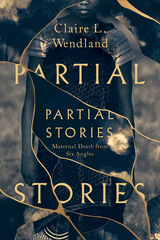
By the early twenty-first century, about one woman in twelve could expect to die of a pregnancy or childbirth complication in Malawi. Specific deaths became object lessons. Explanatory stories circulated through hospitals and villages, proliferating among a range of practitioners: nurse-midwives, traditional birth attendants, doctors, epidemiologists, herbalists. Was biology to blame? Economic underdevelopment? Immoral behavior? Tradition? Were the dead themselves at fault?
In Partial Stories, Claire L. Wendland considers these explanations for maternal death, showing how they reflect competing visions of the past and shared concerns about social change. Drawing on extended fieldwork, Wendland reveals how efforts to legitimate a single story as the authoritative version can render care more dangerous than it might otherwise be. Historical, biological, technological, ethical, statistical, and political perspectives on death usually circulate in different expert communities and different bodies of literature. Here, Wendland considers them together, illuminating dilemmas of maternity care in contexts of acute change, chronic scarcity, and endemic inequity within Malawi and beyond.
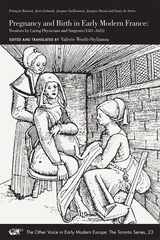
—Gianna Pomata
Professor of the History of Medicine, Johns Hopkins University

From J. Marion Sims’s surgical experiments on unanesthetized slave women in the mid-nineteenth century, to the use of cadavers and prostitutes to teach medical students gynecological techniques, Kapsalis focuses on the ways in which women and their bodies have been treated by the medical establishment. Removing gynecology from its private cover within clinic walls and medical textbook pages, she decodes the gynecological exam, seizing on its performative dimension. She considers traditional medical practices and the dynamics of "proper" patient performance; non-traditional practices such as cervical self-exam; and incarnations of the pelvic examination outside the bounds of medicine, including its appearance in David Cronenberg’s film Dead Ringers and Annie Sprinkle’s performance piece "Public Cervix Announcement."
Confounding the boundaries that separate medicine, art, and pornography, revealing the potent cultural attitudes and anxieties about women, female bodies, and female sexuality that permeate the practice of gynecology, Public Privates concludes by locating a venue from which challenging, alternative performances may be staged.
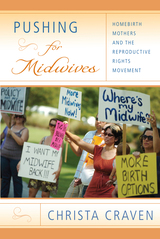
With the increasing demand for midwives, activists are lobbying to loosen restrictions that deny legal access to homebirth options. In Pushing for Midwives, Christa Craven presents a nuanced history of women’s reproductive rights activism in the U.S. She also provides an examination of contemporary organizing strategies for reproductive rights in an era increasingly driven by “consumer rights.”
An historical and ethnographic case study of grassroots organizing, Pushing for Midwives is an in-depth look at the strategies, successes, and challenges facing midwifery activists in Virginia. Craven examines how decades-old race and class prejudices against midwives continue to impact opposition to—as well as divisions within—women’s contemporary legislative efforts for midwives. By placing the midwifery struggle within a broader reproductive rights context, Pushing for Midwives encourages activists to reconsider how certain political strategies have the potential to divide women. This reflection is crucial in the wake of neoliberal political-economic shifts that have prioritized the rights of consumers over those of citizens—particularly if activists hope to maintain their commitment to expanding reproductive rights for all women.
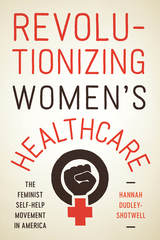
Revolutionizing Women’s Healthcare is the story of a feminist experiment: the self-help movement. This movement arose out of women’s frustration, anger, and fear for their health. Tired of visiting doctors who saw them as silly little girls, suffering shame when they asked for birth control, seeking abortions in back alleys, and holding little control over their own reproductive lives, women took action. Feminists created “self-help groups” where they examined each other’s bodies and read medical literature. They founded and ran clinics, wrote books, made movies, undertook nationwide tours, and raided and picketed offending medical institutions. Some performed their own abortions. Others swore off pharmaceuticals during menopause. Lesbian women found “at home” ways to get pregnant. Black women used self-help to talk about how systemic racism affected their health. Hannah Dudley-Shotwell engagingly chronicles these stories and more to showcase the creative ways women came together to do for themselves what the mainstream healthcare system refused to do.
The framework is intended to provide guidance on how the programmatic and operational strategies for family planning and comprehensive abortion care could be extended in countries or institutions that seek to replicate the UM-CIRHT model in their settings. It may be adapted to the local context of individual countries and institutions.
This framework document is produced by UM-CIRHT with funding from an anonymous donor.
READERS
Browse our collection.
PUBLISHERS
See BiblioVault's publisher services.
STUDENT SERVICES
Files for college accessibility offices.
RECENTLY PUBLISHED




UChicago Accessibility Resources
home | accessibility | search | about | contact us
BiblioVault ® 2001 - 2024
The University of Chicago Press