
 A SCHOLARLY BOOK REPOSITORY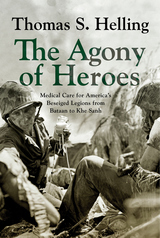
Bataan, Anzio, Bastogne, Chosin, Khe Sanh: names that define the American spirit. They are synonymous with courage, resilience, and determination against great odds. At each of these battles American soldiers and Marines weathered desperation and fear to survive, advance, and triumph. Along with these heroes of the battlefield were no less determined and courageous providers of medical care. From the heat and disease-ridden jungles of Bataan, the precarious beachhead of Anzio, the encircled town of Bastogne, the frozen fields of Chosin, and the forsaken plateau of Khe Sanh, doctors and nurses worked under intense conditions with whatever means at hand, to staunch bleeding, repair damage, and resurrect the dying. In so doing they gave a glimmer of hope for the warriors facing possible death or capitulation. Often completely cut off from vital supplies and modern technology, and under the threat of enemy fire, these medical professionals—men and women—never lost sight of their passionate commitment to the sick and wounded. As noncombatants, this took extraordinary resolve to ignore the mortal threats of explosions and gunfire to focus on the mission of relieving pain, dragging from the brink of death damaged soldiers completely dependent on their resourcefulness. Some of these brave men and women would suffer the same fate as their fighting comrades, cut down by enemy fire in the prime of life, many times in the very task of rendering the bottomless compassion that was their hallmark and sometimes their only tonic.
In The Agony of Heroes: Medical Care for America’s Besieged Legions from Bataan to Khe Sanh, distinguished surgeon Thomas S. Helling relates the inspirational and compelling stories of the doctors, nurses, corpsmen, aides, and others who braved the most frightening conditions in order to save lives. Their experiences testify to the indomitable human grit that, when asked, transforms ordinary behavior into extraordinary achievements.
Winner, John G. Cawelti Award for the Best Textbook/Primer, Popular Culture Association/American Culture Association, 2019
MPCA/ACA Book Award, Midwest Popular Culture Association / Midwest American Culture Association, 2020
Taking a multifaceted approach to attitudes toward race through popular culture and the American superhero, All New, All Different? explores a topic that until now has only received more discrete examination. Considering Marvel, DC, and lesser-known texts and heroes, this illuminating work charts eighty years of evolution in the portrayal of race in comics as well as in film and on television.
Beginning with World War II, the authors trace the vexed depictions in early superhero stories, considering both Asian villains and nonwhite sidekicks. While the emergence of Black Panther, Black Lightning, Luke Cage, Storm, and other heroes in the 1960s and 1970s reflected a cultural revolution, the book reveals how nonwhite superheroes nonetheless remained grounded in outdated assumptions. Multiculturalism encouraged further diversity, with 1980s superteams, the minority-run company Milestone’s new characters in the 1990s, and the arrival of Ms. Marvel, a Pakistani-American heroine, and a new Latinx Spider-Man in the 2000s. Concluding with a discussion of contemporary efforts to make both a profit and a positive impact on society, All New, All Different? enriches our understanding of the complex issues of racial representation in American popular culture.
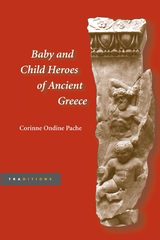
Examining literary, pictorial, and numismatic representations, Pache opens up a vast territory once occupied by children such as Charila, Opheltes, Melikertes, and the children of Herakles and Medea. She elegantly argues that the stories, songs, and sanctuaries honoring these heroes express parental fears and guilt about children's death. Pache further demonstrates that while the myths and rituals articulate basic human anxieties, their emphasis is ultimately on the beauty that transcends the gruesomeness of the narrative, turning their dread into poetry. By showing the continuity of child heroes in Greek religion, she is able to throw new light on iconographies that have previously defied explanation.
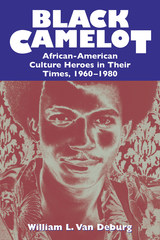
In Black Camelot, William Van Deburg examines the dynamic rise of these new black champions, the social and historical contexts in which they flourished, and their powerful impact on the African-American community.
"Van Deburg manages the enviable feat of writing with flair within a standardized academic framework, covering politics, social issues and entertainment with equal aplomb."—Jonathan Pearl, Jazz Times
"[A] fascinating, thorough account of how African-American icons of the 1960s and '70s have changed the course of American history. . . . An in-depth, even-tempered analysis. . . . Van Deburg's witty, lively and always grounded style entertains while it instructs."—Publishers Weekly
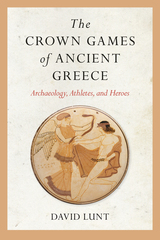
The Crown Games were the apex of competition in ancient Greece. Along with prestigious athletic contests in honor of Zeus at Olympia, they comprised the Pythian Games for Apollo at Delphi, the Isthmian Games for Poseidon, and the Nemean Games, sacred to Zeus. For over nine hundred years, the Greeks celebrated these athletic and religious festivals, a rare point of cultural unity amid the fierce regional independence of the numerous Greek city-states and kingdoms.
The Crown Games of Ancient Greece examines these festivals in the context of the ancient Greek world, a vast and sprawling cultural region that stretched from modern Spain to the Black Sea and North Africa. Illuminating the unique history and features of the celebrations, David Lunt delves into the development of the contest sites as sanctuaries and the Panhellenic competitions that gave them their distinctive character. While literary sources have long been the mainstay for understanding the evolution of the Crown Games and ancient Greek athletics, archaeological excavations have significantly augmented contemporary understandings of the events. Drawing on this research, Lunt brings deeper context to these gatherings, which were not only athletics competitions but also occasions for musical contests, dramatic performances, religious ceremonies, and diplomatic summits—as well as raucous partying. Taken as a circuit, the Crown Games offer a more nuanced view of ancient Greek culture than do the well-known Olympian Games on their own. With this comprehensive examination of the Crown Games, Lunt provides a new perspective on how the ancient Greeks competed and collaborated both as individuals and as city-states.
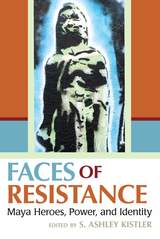
In the sixteenth century, Q’eqchi’ Maya leader Aj Poop B’atz’ changed the course of Q’eqchi’ history by welcoming Spanish invaders to his community in peace to protect his people from almost certain violence. Today, he is revered as a powerful symbol of Q’eqchi’ identity. Aj Poop B’atz’ is only one of many indigenous heroes who has been recognized by Maya in Mexico and Guatemala throughout centuries of subjugation, oppression, and state-sponsored violence.
Faces of Resistance: Maya Heroes, Power, and Identity explores the importance of heroes through the analyses of heroic figures, some controversial and alternative, from the Maya area. Contributors examine stories of hero figures as a primary way through which Maya preserve public memory, fortify their identities, and legitimize their place in their country’s historical and political landscape. Leading anthropologists, linguists, historians, and others incorporate ethnographic, ethnohistoric, and archival material into their chapters, resulting in a uniquely interdisciplinary book for scholars as well as students.
The essays offer the first critical survey of the broad significance of these figures and their stories and the ways that they have been appropriated by national governments to impose repressive political agendas. Related themes include the role of heroic figures in the Maya resurgence movement in Guatemala, contemporary Maya concepts of “hero,” and why some assert that all contemporary Maya are heroes.
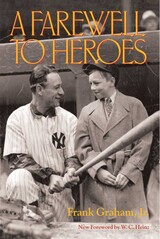
Frank Graham, Sr., was a self-taught writer known for his uncanny ability to capture the high drama of a game-winning play or the color of a fight mob’ s conversation in spare, straightforward prose. As a reporter, he covered the rough-and-tumble Giants of John McGraw’ s day and continued through boxing’ s greatest era, spanning the reigns of Jack Dempsey and Joe Louis.
As the younger Frank tells more of the story, we watch Lou Gehrig take Babe Ruth’ s place as the Yankees’ star and then trace his glorious career to its tragic conclusion. We see firsthand the legendary Branch Rickey and Jackie Robinson and boxing’ s brief but golden age on television in the 1950s.
Aided by sixteen photographs and preserving the most masterful of his father’ s writing while adding to it the best of his own, Frank Graham, Jr., has given the sports fan A Farewell to Heroes, perhaps the ultimate sports reminiscence of a time when the romance of sport gave life a golden hue, when heroes still roamed the earth.
“ In what he calls this ‘ kind of dual autobiography,’ he is his father’ s son, having learned to look and listen as his father did and still go his own way,” says W. C. Heinz, longtime sportswriter for The New York Sun, in his new foreword to this paperback edition.
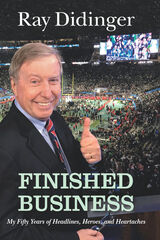
Ray Didinger opens his lively memoir Finished Business with the Philadelphia Eagles’ upset win in Super Bowl LII. When the Eagles finally hoist the Lombardi Trophy, Didinger does his best to straddle the emotions of a working reporter and a long-suffering Philly fan. His ability to do that is why he has built up such a loyal following.
Didinger began following the Eagles as a kid, hanging out in his grandfather’s bar in Southwest Philadelphia. He spent his summers at the team's training camp in Hershey. It was there he met his idol, flanker Tommy McDonald. He would later write a play, Tommy and Me, about their friendship and his efforts to see McDonald enshrined in the Pro Football Hall of Fame.
Didinger has been covering the Eagles as a newspaper columnist or TV analyst since 1970. Over the years, he wrote sports for the Philadelphia Bulletin and the Philadelphia Daily News. He later produced Emmy Award–winning documentaries for NFL Films before transitioning to sports talk radio and TV analysis.
In five decades, across multiple media platforms, he has interviewed everyone from Hank Aaron, Wayne Gretzky, Muhammad Ali, Julius Erving, Jack Nicklaus, to Mike Schmidt, as well as writing film scripts for Hollywood stars such as Bruce Willis and Alec Baldwin. He went to the White House with the U.S. Olympic team and even explored the bizarre world of professional wrestling.
His stories, told in his familiar, breezy style, capture his enthusiasm for sports and his affection for the fans who still mourn the pennant that eluded the Phillies in 1964. Didinger has become synonymous with Philadelphia sports, and his memoir is as passionate as an autumn Sunday at Lincoln Financial Field.

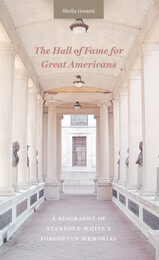
It also examines in depth what is arguably the least studied project of Stanford White, one of the most distinguished architects of the Gilded Age. Originally designed for New York University’s new campus in the Bronx, the Hall of Fame once housed ninety-eight bronze busts of men and women deemed “great Americans” within its elegant colonnade, including the likes of George Washington, Nathaniel Hawthorne, Booker T. Washington, Susan B. Anthony, and Robert E. Lee.
The Hall was conceived when the Great Man theory dominated American thought. However, as times changed, challenges to ideas concerning greatness and heroism grew, and heroes once celebrated were scrutinized for their flaws. The monument is now a shell of its former glory and largely forgotten, and the NYU campus that once housed the colonnade was eventually sold to Bronx Community College.
In 2017, following the violent demonstrations in Charlottesville, Virginia, by white supremacists attempting to prevent the removal of a monument to General Lee, Andrew Cuomo, then governor of New York, thrust the Hall of Fame back into the limelight by ordering the busts of Lee and Stonewall Jackson to be removed. This action joined a national trend to remove monuments deemed offensive. Gerami argues that the rise and fall of this institution mirrors the nation’s changing conception of what comprises a hero. This biography of a public art memorial answers questions about the importance of art history and the cultural evolution of what it means to be great in America.
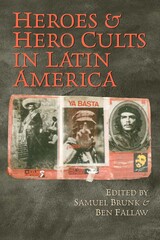
Latin American history traditionally has been defined by larger-than-life heroes such as Símon Bolívar, Emiliano Zapata, and Evita Perón. Recent scholarship, however, tends to emphasize social and cultural factors rather than great leaders. In this new collection, Samuel Brunk and Ben Fallaw bring heroes back to the center of the debate, arguing that heroes not only shape history, they also "tell us a great deal about the places from which they come."
The original essays in this collection examine ten modern Latin American heroes whose charisma derived from the quality of their relationships with admirers, rather than their innate personal qualities. The rise of mass media, for instance, helped pave the way for populists such as radio actress-turned-hero Evita Perón. On the other hand, heroes who become president often watch their images crumble, as policies replace personality in the eyes of citizens. In the end, the editors argue, there is no formula for Latin American heroes, who both forge, and are forged by, unique national events. The conclusion points toward Mexico, where the peasant revolutions that elevated Miguel Hidalgo and, later, Emiliano Zapata are so revered that today's would-be heroes, such as the EZLN's Subcomandante Marcos, must link themselves to peasant mythology even when their personal roots are far from native ground. The enduring (or, in some cases, fading) influence of those discussed in this volume validates the central placement of heroes in Latin American history.

The present study of American, Australian, and Canadian detective fiction concerns literature which speaks in the ways of heroes and humanities about the human condition. All authors studied here, to one degree or another, demonstrate their concern with human society, some more strongly than others, but all with their eyes on the human situation and human existence. At times these studies lean toward the tragic in their outlook and development. In all instances they center on the humanistic.
Drawing on portrayals of journalists in television, film, radio, novels, comics, plays, and other media, Matthew C. Ehrlich and Joe Saltzman survey how popular media has depicted the profession across time. Their creative use of media artifacts provides thought-provoking forays into such fundamental issues as how pop culture mythologizes and demythologizes key events in journalism history and how it confronts issues of race, gender, and sexual orientation on the job.
From Network to The Wire, from Lois Lane to Mikael Blomkvist, Heroes and Scoundrels reveals how portrayals of journalism's relationship to history, professionalism, power, image, and war influence our thinking and the very practice of democracy.

Painting a vivid picture of Bowie’s life in the Schöneberg area of the city, Rüther describes the artist’s friendships and collaborations with his roommate, Iggy Pop, as well as Brian Eno and Tony Visconti. Rüther illustrates Bowie’s return to painting, days cycling to the Die Brücke museum, and his exploration of the city’s nightlife, both the wild side and the gay scene. In West Berlin, Bowie also met singer and actress Romy Haag; came to know Hansa Studios, where he would record Low and Heroes; and even landed the part of a Prussian aristocrat in Just a Gigolo, starring alongside Marlene Dietrich. Eventually Rüther uses Bowie and his explorations of the cultural and historical undercurrents of West Berlin to examine the city itself: divided, caught in the Cold War, and how it began to redefine itself as a cultural metropolis, turning to the arts to start a new history.
Tying in with an exhibition at the Museum of Contemporary Art, Chicago, in September, 2014, Heroes tells the fascinating story of how the music of the future arose from the spirit of the past. It is an unforgettable look at one of the world’s most renowned musicians in one of its most inspiring cities.
King studies how, in the cop action genre, working-class police officers weigh in on such topics as racial justice, homosexuality, misogyny, unemployment, worker resistance, affirmative action, drug use, poverty, divorce, and the use of violence to deal with social problems. Facing their enemies with wisecracks and firepower, these men prove themselves at once complicitous in a system of violence and corruption and worthy to "blow away," with neither hesitation nor remorse, their -- society's -- menacing threats. The central male figures in these stories are heroes in their fight against criminals, but, as individuals, they fell undervalued by women, unappreciated by their bosses, and out of place in a society where fat cats and liberals have all the power. Such "hard times," King's study reveals, position them to simultaneously long for, disdain, and heroically -- if violently -- stake their frustrated claim to white male privilege.
Discussing such topics as white male guilt and the rage of the oppressed and examining such films as Lethal Weapon, Die Hard, and Silence of the Lambs, King's book notes the socially-charged roles given to American culture's fictional police heroes. The last artisan in a culture that has become increasingly corporate and bureaucratized, the movie cop is the last 'real man' in a world that has emasculated men and the last non-conforming patriot in a world that pays more attention to rules than what is morally right.
A book that shows how modern mythology makes sense of rampant corruption (and provides entertainment in its punishment), Heroes in Hard Times will educate and provoke those interested in American popular culture, film, and gender studies.
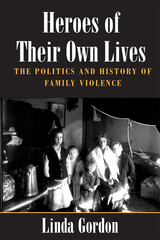
Powerful and moving, Heroes of Their Own Lives offers an honest understanding of a persistent problem and a realistic view of the difficulties in stopping it.

Most of us are content to see ourselves as ordinary people—unique in ways, talented in others, but still among the ranks of ordinary mortals. Andrew Flescher probes our contented state by asking important questions: How should "ordinary" people respond when others need our help, whether the situation is a crisis, or something less? Do we have a responsibility, an obligation, to go that extra mile, to act above and beyond the call of duty? Or should we leave the braver responses to those who are somehow different than we are: better somehow, "heroes," or "saints?"
Traditional approaches to ethics have suggested there is a sharp distinction between ordinary people and those called heroes and saints; between duties and acts of supererogation (going beyond the expected). Flescher seeks to undo these standard dichotomies by looking at the lives and actions of certain historical figures—Holocaust rescuers, Martin Luther King, Jr., Dorothy Day, among others—who appear to be extraordinary but were, in fact, ordinary people. Heroes, Saints, and Ordinary Morality shifts the way we regard ourselves in relationship to those we admire from afar—it asks us not only to admire, but to emulate as well—further, it challenges us to actively seek the acquisition of virtue as seen in the lives of heroes and saints, to learn from them, a dynamic aspect of ethical behavior that goes beyond the mere avoidance of wrongdoing.
Andrew Flescher sets a stage where we need to think and act, calling us to lead lives of self-examination—even if that should sometimes provoke discomfort. He asks that we strive to emulate those we admire and therefore allow ourselves to grow morally, and spiritually. It is then that the individual develops a deeper altruistic sense of self—a state that allows us to respond as the heroes of our own lives, and therefore in the lives of others, when times and circumstance demand that of us.

How to cultivate Greek heroes and athletes.
In the writings of Philostratus (ca. AD 170-ca. 250), the renaissance of Greek literature in the second century AD reached its height. His Life of Apollonius of Tyana, Lives of the Sophists, and Imagines reconceive in different ways Greek religion, philosophy, and art in and for the world of the Roman Empire. In this volume, Heroicus and Gymnasticus, two works of equal creativity and sophistication, together with two brief Discourses (Dialexeis), complete the Loeb edition of his writings.
Heroicus is a conversation in a vineyard amid ruins of the Protesilaus shrine (opposite Troy on the Hellespont), between a wise and devout vinedresser and an initially skeptical Phoenician sailor, about the beauty, continuing powers, and worship of the Homeric heroes. With information from his local hero, the vinedresser reveals unknown stories of the Trojan campaign especially featuring Protesilaus and Palamedes, and describes complex, miraculous, and violent rituals in the cults of Achilles.
Gymnasticus is the sole surviving ancient treatise on sports. It reshapes conventional ideas about the athletic body and expertise of the athletic trainer and also explores the history of the Olympic Games and other major Greek athletic festivals, portraying them as distinctive venues for the display of knowledge.
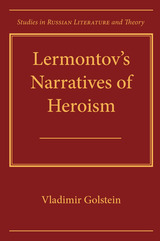
Lermontov's explorations of the virtues and limitations of heroic, self-reliant conduct have subsequently become obscured or misread. This new book focuses upon the peculiar, disturbing, and arguably most central feature of Russian culture: its suspicion of and hostility toward individual achievement and self-assertion. The analysis and interpretation of Lermontov's texts enables Golstein to address broader cultural issues by exploring the reasons behind the persistent misreading of Lermontov's major works and by investigating the cultural attitudes that shaped Russia's reaction to the challenges of modernity.
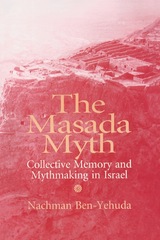
Ben-Yehuda describes how, after nearly 1800 years, the long, complex, and unsubstantiated narrative of Josephus Flavius was edited and augmented in the twentieth century to form a simple and powerful myth of heroism. He looks at the ways this new mythical narrative of Masada was created, promoted, and maintained by pre-state Jewish underground organizations, the Israeli army, archaeological teams, mass media, youth movements, textbooks, the tourist industry, and the arts. He discusses the various organizations and movements that created “the Masada experience” (usually a ritual trek through the Judean desert followed by a climb to the fortress and a dramatic reading of the Masada story), and how it changed over decades from a Zionist pilgrimage to a tourist destination.
Placing the story in a larger historical, sociological, and psychological context, Ben-Yehuda draws upon theories of collective memory and mythmaking to analyze Masada’s crucial role in the nation-building process of modern Israel and the formation of a new Jewish identity. An expert on deviance and social control, Ben-Yehuda looks in particular at how and why a military failure and an enigmatic, troubling case of mass suicide (in conflict with Judaism’s teachings) were reconstructed and fabricated as a heroic tale.
During their thirteen years in Wisconsin, the Milwaukee Braves never endured a losing season, won two National League pennants, and in 1957 brought Milwaukee its only World Series championship. With a lineup featuring future Hall of Famers Henry Aaron, Warren Spahn, Eddie Matthews, Red Schoendienst, and Phil Niekro, the team immediately brought Milwaukee "Big League" credentials, won the hearts of fans, and shattered attendance records. The Braves' success in Milwaukee prompted baseball to redefine itself as a big business—resulting in franchises relocating west, multi-league expansion, and teams leveraging cities for civically funded stadiums. But the Braves' instant success and accolades made their rapid fall from grace after winning the 1957 world championship all the more stunning, as declining attendance led the team to Atlanta in one of the ugliest divorces between a city and baseball franchise in sports history.
Featuring more than 100 captivating photos, many published here for the first time, Milwaukee Braves preserves the Braves' legacy for the team's many fans and introduces new generations to a fascinating chapter in sports history.
The roster of Muslim superheroes in the comic book medium has grown over the years, as has the complexity of their depictions. Muslim Superheroes tracks the initial absence, reluctant inclusion, tokenistic employment, and then nuanced scripting of Islamic protagonists in the American superhero comic book market and beyond.
This scholarly anthology investigates the ways in which Muslim superhero characters fulfill, counter, or complicate Western stereotypes and navigate popular audience expectations globally, under the looming threat of Islamophobia. The contributors consider assumptions buried in the very notion of a character who is both a superhero and a Muslim with an interdisciplinary and international focus characteristic of both Islamic studies and comics studies scholarship. Muslim Superheroes investigates both intranational American racial formation and international American geopolitics, juxtaposed with social developments outside U.S. borders.
Providing unprecedented depth to the study of Muslim superheroes, this collection analyzes, through a series of close readings and comparative studies, how Muslim and non-Muslim comics creators and critics have produced, reproduced, and represented different conceptions of Islam and Muslimness embodied in the genre characters.
From the creation of the universe, through mythological heroes and gods, to folklore, ancient philosophy, revolutionary manifestos, discarded scientific theories, and gothic monsters, the sweep and scale of the superhero’s origin story is truly epic. We will travel from Jane Austen’s Bath to Edgar Rice Burroughs’s Mars to Owen Wister’s Wyoming, with some surprising stops along the way. We’ll meet mad scientists, Napoleonic dictators, costumed murderers, diabolical madmen, blackmailers, pirates, Wild West outlaws, eugenicists, the KKK, Victorian do-gooders, detectives, aliens, vampires, and pulp vigilantes (to name just a few). Chris Gavaler is your tour guide through this fascinating, sometimes dark, often funny, but always surprising prehistory of the most popular figure in pop culture today. In a way, superheroes have always been with us: they are a fossil record of our greatest aspirations and our worst fears and failings.
Beginning in the early 1930s, these films told compelling stories about ethnic urban lower-class desires to "make it" in an America dominated by Anglo-Saxon Protestant ideals and devastated by the Great Depression. By the late 1940s, however, their focus shifted to the problems of a culture maladjusting to a new peacetime sociopolitical order governed by corporate capitalism. The gangster no longer challenged the establishment; the issue was not "making it," but simply "making do."
Combining film analysis with archival material from the Production Code Administration (Hollywood's self-censoring authority), Munby shows how the industry circumvented censure, and how its altered gangsters (influenced by European filmmakers) fueled the infamous inquisitions of Hollywood in the postwar '40s and '50s by the House Committee on Un-American Activities. Ultimately, this provocative study suggests that we rethink our ideas about crime and violence in depictions of Americans fighting against the status quo.
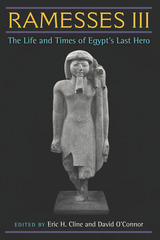
This collection offers the best new scholarship on Ramesses III, with contributions from Christopher J. Eyre; Ogden Goelet, Jr.; Peter W. Haider; Carolyn R. Higginbotham; Kenneth A. Kitchen; Bojana Mojsov; Steven R. Snape; Emily Teeter; and James M. Weinstein, as well as from David O'Connor and Eric H. Cline. It will be of interest to those with an informed amateur's interest in Egyptology as well as to scholars of Egyptian and biblical archaeology.
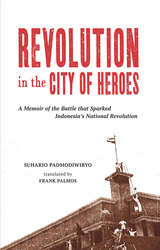
alias ‘Hario Kecik,” Revolution in the City of Heroes is an evocative first-hand
account of the popular uprising in Surabaya. It vividly portrays the chaotic swirl
of events and the heady emotion of young people ready to sacrifice their lives
for independence.
Newly liberated from nearly four brutal years under Japanese control, the
people of Indonesia faced great uncertainty in October 1945. As the British
Army attempted to take control of the city of Surabaya, maintain order and
deal with surrendered Japanese personnel, their actions were interpreted by
the young residents of Surabaya as a plan to restore Dutch colonial rule. In
response, the youth of the city seized Japanese arms and repelled the force sent
to occupy the city. They then held off British reinforcements for two weeks,
battling tanks and heavy artillery with little more than light weapons and sheer
audacity. Though eventually defeated, Surabaya’s defenders had set the stage
for Indonesia’s national revolution.
Greek myths have long been admired as beautiful, thrilling stories but dismissed as serious objects of belief. For centuries scholars have held that Greek epics, tragedies, and the other compelling works handed down to us obscure the “real” myths that supposedly inspired them. Instead of joining in this pursuit of hidden meanings, Sarah Iles Johnston argues that the very nature of myths as stories—as gripping tales starring vivid characters—enabled them to do their most important work: to create and sustain belief in the gods and heroes who formed the basis of Greek religion.
By drawing on work in narratology, sociology, and folklore studies, and by comparing Greek myths not only to the myths of other cultures but also to fairy tales, ghost stories, fantasy works, modern novels, and television series, The Story of Myth reveals the subtle yet powerful ways in which these ancient Greek tales forged enduring bonds between their characters and their audiences, created coherent story-worlds, and made it possible to believe in extraordinary gods. Johnston captures what makes Greek myths distinctively Greek, but simultaneously brings these myths into a broader conversation about how the stories told by all cultures affect our shared view of the cosmos and the creatures who inhabit it.
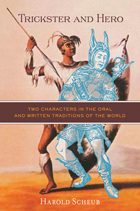
Scheub delves into the importance of trickster mythologies and the shifting relationships between tricksters and heroes. He examines protagonists that figure centrally in a wide range of oral narrative traditions, showing that the true hero is always to some extent a trickster as well. The trickster and hero, Scheub contends, are at the core of storytelling, and all the possibilities of life are there: we are taken apart and rebuilt, dismembered and reborn, defeated and renewed.
READERS
Browse our collection.
PUBLISHERS
See BiblioVault's publisher services.
STUDENT SERVICES
Files for college accessibility offices.
RECENTLY PUBLISHED



UChicago Accessibility Resources
home | accessibility | search | about | contact us
BiblioVault ® 2001 - 2024
The University of Chicago Press