
 A SCHOLARLY BOOK REPOSITORY
7 start with G start with G
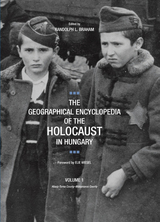
Winner of the 2013 National Jewish Book Award
The illustrated three-volume Geographical Encyclopedia of the Holocaust in Hungary is a definitive, authoritative, and magisterial resource, thorough and exhaustive. It documents and chronicles the wartime fate of the Jewish communities in that country where virulent antisemitism is anything but dead, even today. With scores of detailed maps and hundreds of photographs, this reference work is organized alphabetically by county, each prefaced with a map and a contextual history describing its Jewish population up to and into 1944.
Entries track the demographic, cultural, and religious changes in even the smallest communities where Jews lived before their marginalization, dispossession, ghettoization, and, finally, deportation to labor and death camps. The encyclopedia endows scholars and lay researchers with both panoramic and microscopic views of the virtually last-minute destruction of most of the Jews of Hungary, until then the last sizable surviving Jewish community in occupied Europe.


Fascination with the evil of the Nazi regime has not diminished in the decades since Hitler assumed power in Germany, but the story of internal resistance to Nazism has not been as fully realized as have the innumerable tales of horror. In this compact book Peter Hoffmann examines the growing recognition by some Germans in the 1930s of the malign nature of the Nazi regime, the ways in which these people became involved in the resistance, and the views of those who staked their lives in the struggle against tyranny and murder.
The earliest postwar accounts of the resistance by survivors and witnesses were followed by a variety of investigations and evaluations. Peter Hoffrnann here presents a complete reconstruction of this baffling and intriguing story. After several decades of study of the German resistance to Nazism, he has unlocked the secrets of its inner history. Hoffmann recounts the methods of Hitler's rise to power in the tumultuous days of January and February 1933, the consolidation of his power as a result of the Röhm Massacre in 1934, and his growing criminality as evidenced by the rape of Czechoslovakia and the pogrom of 1938. The author describes the several attempts in 1938 and during the war years to dislodge Hitler from within; the desperation of the luckless opponents over the carnage of war and the mass murders that threatened to engulf them; and finally, the attempt to assassinate Hitler on July 20, 1944. Throughout, he probes the motives of the resisters. Some, for example, found it difficult to justify assassination, even for the purpose of bringing an end to mass killing. Hoffmann examines and discounts the accusation that the principal motive of those who resisted was to preserve their class privileges. The resisters, he concludes, acted not so much in the hope of personal gain as from a moral obligation to challenge the evils they saw before them.
This innovative perspective has implications for understanding not only the rise of fascism and Nazism in Germany but also the rise and fall of the New Left in the United States and Europe, which was occurring at the time of Mosse’s writing. A new critical introduction by Sarah Wobick-Segev, research associate at the University of Hamburg, places Mosse’s work in its historical and intellectual contexts and draws lessons for students and scholars today.
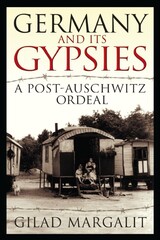
Historian Gilad Margalit eloquently fills a tragic gap in the historical record with this sweeping examination of the plight of Gypsies in Germany before, during, and since the era of the Third Reich.
Germany and Its Gypsies reveals the painful record of the official treatment of the German Gypsies, a people whose future, in the shadow of Auschwitz, remains uncertain. Margalit follows the story from the heightened racism of the nineteenth century to the National Socialist genocidal policies that resulted in the murder of most German Gypsies, from the shifting attitudes in the two Germanys in 1945 through reunification and up to the present day.
Drawing upon a rich variety of sources, Margalit considers the pivotal historic events, legal arguments, debates, and changing attitudes toward the status of the German Gypsies and shines a vitally important light upon the issue of ethnic groups and their victimization in society. The result is a powerful and unforgettable testament.
The stories examine the relationship between inmates and their families, their friends, their Christian former neighbors, the German soldiers, and, ultimately, the world of hopelessness and desperation that surrounded them. In using his creative powers to transform the suffering and death of his people into stories that preserve their memory, Spiegel succeeds in affirming the humanity and dignity the Germans were so intent on destroying.
Originally published as Malchut geto (Malkhes geto) in Yiddish.
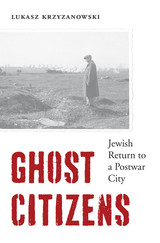
The poignant story of Holocaust survivors who returned to their hometown in Poland and tried to pick up the pieces of a shattered world.
In the immediate aftermath of World War II, the lives of Polish Jews were marked by violence and emigration. But some of those who had survived the Nazi genocide returned to their hometowns and tried to start their lives anew. Lukasz Krzyzanowski recounts the story of this largely forgotten group of Holocaust survivors. Focusing on Radom, an industrial city about sixty miles south of Warsaw, he tells the story of what happened throughout provincial Poland as returnees faced new struggles along with massive political, social, and legal change.
Non-Jewish locals mostly viewed the survivors with contempt and hostility. Many Jews left immediately, escaping anti-Semitic violence inflicted by new communist authorities and ordinary Poles. Those who stayed created a small, isolated community. Amid the devastation of Poland, recurring violence, and bureaucratic hurdles, they tried to start over. They attempted to rebuild local Jewish life, recover their homes and workplaces, and reclaim property appropriated by non-Jewish Poles or the state. At times they turned on their own. Krzyzanowski recounts stories of Jewish gangs bent on depriving returnees of their prewar possessions and of survivors shunned for their wartime conduct.
The experiences of returning Jews provide important insights into the dynamics of post-genocide recovery. Drawing on a rare collection of documents—including the postwar Radom Jewish Committee records, which were discovered by the secret police in 1974—Ghost Citizens is the moving story of Holocaust survivors and their struggle to restore their lives in a place that was no longer home.
READERS
Browse our collection.
PUBLISHERS
See BiblioVault's publisher services.
STUDENT SERVICES
Files for college accessibility offices.
RECENTLY PUBLISHED




UChicago Accessibility Resources
home | accessibility | search | about | contact us
BiblioVault ® 2001 - 2024
The University of Chicago Press