
 A SCHOLARLY BOOK REPOSITORY
In the wake of the recent far-reaching changes in the use and accessibility of technology in our society, the average person is far more engaged with digital culture than ever before. They are not merely subject to technological advances but actively use, create, and mold them in everyday routines—connecting with loved ones and strangers through the Internet and smart phones, navigating digital worlds for work and recreation, extracting information from vast networks, and even creating and customizing interfaces to best suit their needs. In this timely work, Mirko Tobias Schäfer delves deep into the realities of user participation, the forms it takes, and the popular discourse around new media. Drawing on extensive research into hacking culture, fan communities, and Web 2.0 applications, Schäfer offers a critical approach to the hype around user participation and exposes the blurred boundaries between industry-driven culture and the domain of the user.
Why do we find ourselves living in an Information Society? How did the collection, processing, and communication of information come to play an increasingly important role in advanced industrial countries relative to the roles of matter and energy? And why is this change recent—or is it?
James Beniger traces the origin of the Information Society to major economic and business crises of the past century. In the United States, applications of steam power in the early 1800s brought a dramatic rise in the speed, volume, and complexity of industrial processes, making them difficult to control. Scores of problems arose: fatal train wrecks, misplacement of freight cars for months at a time, loss of shipments, inability to maintain high rates of inventory turnover. Inevitably the Industrial Revolution, with its ballooning use of energy to drive material processes, required a corresponding growth in the exploitation of information: the Control Revolution.
Between the 1840s and the 1920s came most of the important information-processing and communication technologies still in use today: telegraphy, modern bureaucracy, rotary power printing, the postage stamp, paper money, typewriter, telephone, punch-card processing, motion pictures, radio, and television. Beniger shows that more recent developments in microprocessors, computers, and telecommunications are only a smooth continuation of this Control Revolution. Along the way he touches on many fascinating topics: why breakfast was invented, how trademarks came to be worth more than the companies that own them, why some employees wear uniforms, and whether time zones will always be necessary.
The book is impressive not only for the breadth of its scholarship but also for the subtlety and force of its argument. It will be welcomed by sociologists, economists, historians of science and technology, and all curious in general.
In a world largely divided between giddy celebrants and dire detractors of digital culture, Milad Doueihi is one of the very few who speak with broadly informed and measured authority about what the rise of the digital means. Writing as a philologist and intellectual historian, Doueihi argues that digital culture is or will be akin to religion in the scope of its influence and power, and that because of its omnipresence it requires special analysis. Digital Cultures is the culmination of his deep and far-reaching attempts to meet this need.
Doueihi shows clearly how applying the notions of print culture to digital textuality distorts the logic and promise of the new literacy. He then moves on to examine a number of inherent contradictions or tensions in digital culture: between digital technology’s capacity to create a public sphere and its use as an instrument of control and censorship; between the possible collective and anonymous construction of knowledge in the Wikisphere and the dissemination of errors. Throughout, he strives to give a balanced account of digitization’s potential for both disruption and innovation.
Writing accessibly about the underlying technology, Doueihi explores the multidimensional question of what it means to participate in online culture—from literacy and citizenship to texts, archiving, and storage. By bringing together topics explored separately elsewhere—such as copyright, digital subjectivity, and social networks—Digital Cultures offers a rare, comprehensive view of the emerging digital space.
The Digital Difference examines how the transition from the industrial-era media of one-way publishing and broadcasting to the two-way digital era of online search and social media has affected the dynamics of public life.
In the digital age, fundamental beliefs about privacy and identity are subject to change, as is the formal legal basis of freedom of expression. Will it be possible to maintain a vibrant and open marketplace of ideas? In W. Russell Neuman’s analysis, the marketplace metaphor does not signal that money buys influence, but rather just the opposite—that the digital commons must be open to all ideas so that the most powerful ideas win public attention on their merits rather than on the taken-for-granted authority of their authorship.
“Well-documented, methodical, provocative, and clear, The Digital Difference deserves a prominent place in communication proseminars and graduate courses in research methods because of its reorientation of media effects research and its application to media policy making.”
—John P. Ferré, Journalism and Mass Communication Quarterly

In the nineties, neoliberalism simultaneously provided the context for the Internet’s rapid uptake in the United States and discouraged public conversations about racial politics. At the same time many scholars lauded the widespread use of text-driven interfaces as a solution to the problem of racial intolerance. Today’s online world is witnessing text-driven interfaces such as e-mail and instant messaging giving way to far more visually intensive and commercially driven media forms that not only reveal but showcase people’s racial, ethnic, and gender identity.
Lisa Nakamura, a leading scholar in the examination of race in digital media, uses case studies of popular yet rarely examined uses of the Internet such as pregnancy Web sites, instant messaging, and online petitions and quizzes to look at the emergence of race-, ethnic-, and gender-identified visual cultures.
While popular media such as Hollywood cinema continue to depict nonwhite nonmales as passive audiences or consumers of digital media rather than as producers, Nakamura argues the contrary—with examples ranging from Jennifer Lopez music videos; films including the Matrix trilogy, Gattaca, and Minority Report; and online joke sites—that users of color and women use the Internet to vigorously articulate their own types of virtual community, avatar bodies, and racial politics.
Lisa Nakamura is associate professor of speech communication and Asian American studies at the University of Illinois, Urbana-Champaign. She is the author of Cybertypes: Race, Ethnicity, and Identity on the Internet and coeditor, with Beth Kolko and Gilbert Rodman, of Race in Cyberspace.
In the Information Age, information is power. Who produces all that information, how does it move around, who uses it, to what ends, and under what constraints? Who gets that power? And what happens to the people who have no access to it?
Disconnected begins with a striking vignette of two men: One is the thriving manager of a company selling personal computers and computer services. The other is just one among thousands of starving laborers. He has no way to find the information that might help him find a job, he cannot afford newspapers, rarely sees television, cannot understand the dialect of local radio broadcasts, will probably never touch a computer. These two men happen to live in Windhoek, Namibia, but this is not a story about Africa––it is a story that could be repeated almost anywhere in the world, even next door.
With vivid anecdotes and data, William Wresch contrasts the opportunities of the information-rich with the limited prospects of the information-poor. Surveying the range of information––personal, public, organizational, commercial––that has become the currency of exchange in today’s world, he shows how each represents a form of power. He analyzes the barriers that keep people information-poor: geography, tyranny, illiteracy, psychological blinders, “noise,” crime. Technology alone, he demonstrates, is not the answer. Even the technology-rich do not always get access to important information––or recognize its value.
Wresch spells out the grim consequences of information inequity for individuals and society. Yet he ends with reasons for optimism and stories of people who are working to pull down the impediments to the flow of information.
In looking at the remarkable proliferation of democracies since 1974, this volume offers important insight into the challenges and opportunities that democracy faces in the twenty-first century. Distinguished contributors detail difficulties that democracies face from within and how they deal with them. Among the contemporary threats to democracy emanating from internal sources are tensions arising over technology and its uses; ethnic, religious, and racial distinctions; and disparate access to resources, education, and employment. A democratically elected government can behave more or less democratically, even when controlling access to information, using legal authority to aid or intimidate, and applying resources to shape the conditions for the next election. With elections recently disputed in the United States, Mexico, Lebanon, and the Ukraine, debates about the future of democracy are inescapably debates about what kind of democracy is desired.
Contributors are W. Lance Bennett, Bruce Bimber, Jon Fraenkel, Brian J. Gaines, Bernard Grofman, Wayne V. McIntosh, Peter F. Nardulli, Mark Q. Sawyer, Stephen Simon, Paul M. Sniderman, and Jack Snyder.
With all the verve and erudition that have established his earlier books as classics, Richard A. Lanham here traces our epochal move from an economy of things and objects to an economy of attention. According to Lanham, the central commodity in our new age of information is not stuff but style, for style is what competes for our attention amidst the din and deluge of new media. In such a world, intellectual property will become more central to the economy than real property, while the arts and letters will grow to be more crucial than engineering, the physical sciences, and indeed economics as conventionally practiced. For Lanham, the arts and letters are the disciplines that study how human attention is allocated and how cultural capital is created and traded. In an economy of attention, style and substance change places. The new attention economy, therefore, will anoint a new set of moguls in the business world—not the CEOs or fund managers of yesteryear, but new masters of attention with a grounding in the humanities and liberal arts.
Lanham’s The Electronic Word was one of the earliest and most influential books on new electronic culture. The Economics of Attention builds on the best insights of that seminal book to map the new frontier that information technologies have created.
Some contributors highlight how expedited flows of information allow business professionals to develop new knowledge practices. They analyze dynamics ranging from the decision-making processes of the Federal Reserve Board to the legal maneuvering necessary to buttress a nascent Japanese market in over-the-counter derivatives. Others focus on the social consequences of globalization and new modes of communication, evaluating the introduction of new information technologies into African communities and the collaborative practices of open-source computer programmers. Together the essays suggest that social relations, rather than becoming less relevant in the high-tech age, have become more important than ever. This finding dovetails with the thinking of many corporations, which increasingly employ anthropologists to study and explain the “local” cultural practices of their own workers and consumers. Frontiers of Capital signals the wide-ranging role of anthropology in explaining the social and cultural contours of the New Economy.
Contributors. Jean Comaroff, John L. Comaroff, Greg Downey, Melissa S. Fisher, Douglas R. Holmes, George E. Marcus, Siobhán O’Mahony, Aihwa Ong, Annelise Riles, Saskia Sassen, Paul A. Silverstein, AbdouMaliq Simone, Neil Smith, Caitlin Zaloom
In How We Became Our Data, Colin Koopman excavates early moments of our rapidly accelerating data-tracking technologies and their consequences for how we think of and express our selfhood today. Koopman explores the emergence of mass-scale record keeping systems like birth certificates and social security numbers, as well as new data techniques for categorizing personality traits, measuring intelligence, and even racializing subjects. This all culminates in what Koopman calls the “informational person” and the “informational power” we are now subject to. The recent explosion of digital technologies that are turning us into a series of algorithmic data points is shown to have a deeper and more turbulent past than we commonly think. Blending philosophy, history, political theory, and media theory in conversation with thinkers like Michel Foucault, Jürgen Habermas, and Friedrich Kittler, Koopman presents an illuminating perspective on how we have come to think of our personhood—and how we can resist its erosion.

Richard Barbrook argues that at the height of the Cold War the Americans invented the only working model of communism in human history, the Internet. Yet, for all of its libertarian potential, the goal of this high-tech project was geopolitical dominance. The ownership of time was control over the destiny of humanity. The potentially subversive theory of cybernetics was transformed into the military-friendly project of "artificial intelligence." Capitalist growth became the fastest route to the "information society." The rest of the world was expected to follow America's path into the networked future.
Today, we're still being told that the Net is creating the information society---and that America today is everywhere else tomorrow. Barbrook shows how this idea serves a specific geopolitical purpose. Thankfully, at the beginning of the twenty-first century, the DIY ethic of the Net shows that people can resist these authoritarian prophecies by shaping information technologies in their own interest. Ultimately, if we don't want the future to be what it used to be, we must invent our own improved and truly revolutionary future.
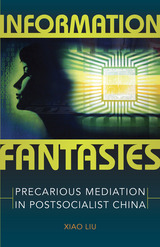
Winner of the Science Fiction Research Association Book Award
A groundbreaking, alternate history of information technology and information discourses
Although the scale of the information economy and the impact of digital media on social life in China today could pale that of any other country, the story of their emergence in the post-Mao sociopolitical environment remains untold. Information Fantasies offers a revisionist account of the emergence of the “information society,” arguing that it was not determined by the technology of digitization alone but developed out of a set of techno-cultural imaginations and practices that arrived alongside postsocialism.
Anticipating discussions on information surveillance, data collection, and precarious labor conditions today, Xiao Liu goes far beyond the current scholarship on internet and digital culture in China, questioning the limits of current new-media theory and history, while also salvaging postsocialism from the persistent Cold War structure of knowledge production.
Ranging over forgotten science fiction, unjustly neglected films, corporeal practices such as qigong, scientific journals, advertising, and cybernetic theories, Information Fantasies constructs an alternate genealogy of digital and information imaginaries—one that will change how we look at the development of the postsocialist world and the emergence of digital technologies.
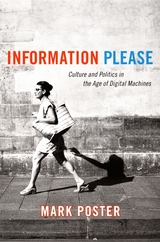
Poster’s critique develops through a series of lively studies. Analyzing the appearance of Sesame Street’s Bert next to Osama Bin Laden in a New York Times news photo, he examines the political repercussions of this Internet “hoax” as well as the unlimited opportunities that Internet technology presents for the appropriation and alteration of information. He considers the implications of open-source licensing agreements, online personas, the sudden rise of and interest in identity theft, peer-to-peer file sharing, and more. Focusing explicitly on theory, he reflects on the limitations of critical concepts developed before the emergence of new media, particularly globally networked digital communications, and he argues that, contrary to the assertions of Michael Hardt and Antonio Negri, new media do not necessarily reproduce neoimperialisms. Urging a rethinking of assumptions ingrained during the dominance of broadcast media, Poster charts new directions for work on politics and digital culture.
The first of Pluto Press’s new Digital Barricades series, focusing on ground-breaking critical explorations of resistance within the digital world, Information Politics explores the exploitations both facilitated by, and contested through, increases in information flows; the embedding of information technologies in daily life; and the intersection of network and control protocols. Anyone hoping to get to grips with the rapidly changing terrain of digital culture and conflict should start here.
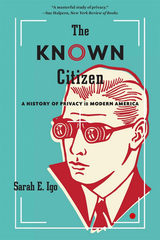
A Washington Post Book of the Year
Winner of the Merle Curti Award
Winner of the Jacques Barzun Prize
Winner of the Ralph Waldo Emerson Award
“A masterful study of privacy.”
—Sue Halpern, New York Review of Books
“Masterful (and timely)…[A] marathon trek from Victorian propriety to social media exhibitionism…Utterly original.”
—Washington Post
Every day, we make decisions about what to share and when, how much to expose and to whom. Securing the boundary between one’s private affairs and public identity has become an urgent task of modern life. How did privacy come to loom so large in public consciousness? Sarah Igo tracks the quest for privacy from the invention of the telegraph onward, revealing enduring debates over how Americans would—and should—be known. The Known Citizen is a penetrating historical investigation with powerful lessons for our own times, when corporations, government agencies, and data miners are tracking our every move.
“A mighty effort to tell the story of modern America as a story of anxieties about privacy…Shows us that although we may feel that the threat to privacy today is unprecedented, every generation has felt that way since the introduction of the postcard.”
—Louis Menand, New Yorker
“Engaging and wide-ranging…Igo’s analysis of state surveillance from the New Deal through Watergate is remarkably thorough and insightful.”
—The Nation
Media backends--the electronics, labor, and operations behind our screens--significantly influence our understanding of the sociotechnical relations, economies, and operations of media. Lisa Parks, Julia Velkova, and Sander De Ridder assemble essays that delve into the evolving politics of the media infrastructural landscape. Throughout, the contributors draw on feminist, queer, and intersectional criticism to engage with infrastructural and industrial issues. This focus reflects a concern about the systemic inequalities that emerge when tech companies and designers fail to address workplace discrimination and algorithmic violence and exclusions. Moving from smart phones to smart dust, the essayists examine topics like artificial intelligence, human-machine communication, and links between digital infrastructures and public service media alongside investigations into the algorithmic backends at Netflix and Spotify, Google’s hyperscale data centers, and video-on-demand services in India.
A fascinating foray into an expanding landscape of media studies, Media Backends illuminates the behind-the-screen processes influencing our digital lives.
Contributors: Mark Andrejevic, Philippe Bouquillion, Jonathan Cohn, Faithe J. Day, Sander De Ridder, Fatima Gaw, Christine Ithurbide, Anne Kaun, Amanda Lagerkvist, Alexis Logsdon, Stine Lomborg, Tim Markham, Vicki Mayer, Rahul Mukherjee, Kaarina Nikunen, Lisa Parks, Vibodh Parthasarathi, Philipp Seuferling, Ranjit Singh, Jacek Smolicki, Fredrik Stiernstedt, Matilda Tudor, Julia Velkova, and Zala Volcic
In The Modern Invention of Information: Discourse, History, and Power, Ronald E. Day provides a historically informed critical analysis of the concept and politics of information. Analyzing texts in Europe and the United States, his critical reading method goes beyond traditional historiographical readings of communication and information by engaging specific historical texts in terms of their attempts to construct and reshape history.
After laying the groundwork and justifying his method of close reading for this study, Day examines the texts of two pre–World War II documentalists, Paul Otlet and Suzanne Briet. Through the work of Otlet and Briet, Day shows how documentation and information were associated with concepts of cultural progress. Day also discusses the social expansion of the conduit metaphor in the works of Warren Weaver and Norbert Wiener. He then shows how the work of contemporary French multimedia theorist Pierre Lévy refracts the earlier philosophical writings of Gilles Deleuze and Félix Guattari through the prism of the capitalist understanding of the “virtual society.”
Turning back to the pre–World War II period, Day examines two critics of the information society: Martin Heidegger and Walter Benjamin. He explains Heidegger’s philosophical critique of the information culture’s model of language and truth as well as Benjamin’s aesthetic and historical critique of mass information and communication. Day concludes by contemplating the relation of critical theory and information, particularly in regard to the information culture’s transformation of history, historiography, and historicity into positive categories of assumed and represented knowledge.
The essays and interviews in Numbers and Nerves explore the quandary of our cognitive responses to quantitative information, while also offering compelling strategies for overcoming insensitivity to the meaning of such information. With contributions by journalists, literary critics, psychologists, naturalists, activists, and others, this book represents a unique convergence of psychological research, discourse analysis, and visual and narrative communication.
At a time of unprecedented access to information, our society is frequently stymied in its efforts to react to the world’s massive problems. Many of these problems are systemic, deeply rooted in seemingly intransigent cultural patterns and lifestyles. In order to sense the significance of these issues and begin to confront them, we must first understand the psychological tendencies that enable and restrict our processing of numerical information.
Numbers and Nerves explores a wide range of psychological phenomena and communication strategies—fast and slow thinking, psychic numbing, pseudoinefficacy, the prominence effect, the asymmetry of trust, contextualized anecdotes, multifaceted mosaics of prose, and experimental digital compositions, among others—and places these in real-world contexts. In the past two decades, cognitive science has increasingly come to understand that we, as a species, think best when we allow numbers and nerves, abstract information and experiential discourse, to work together. This book provides a roadmap to guide that collaboration. It will be invaluable to scholars, educators, professional communicators, and anyone who struggles to grasp the meaning behind the numbers.

A necessary, rich new examination of how the wired world affects our humanity
Our tech-fueled economy is often touted as a boon for the development of our fullest human potential. But as our interactions are increasingly turned into mountains of data sifted by algorithms, what impact does this infinite accumulation and circulation of information really have on us? What are the hidden mechanisms that drive our continuous engagement with the digital?
In The Other Side of the Digital, Andrea Righi argues that the Other of the digital acts as a new secular God, exerting its power through endless accountability that forces us to sacrifice ourselves for the digital. Righi deconstructs the contradictions inherent in our digital world, examining how ideas of knowledge, desire, writing, temporality, and the woman are being reconfigured by our sacrificial economy. His analyses include how both our self-image and our perception of reality are skewed by technologies like fitness bands, matchmaking apps, and search engines, among others.
The Other Side of the Digital provides a necessary, in-depth cultural analysis of how the political theology of the new media functions under neoliberalism. Drawing on the work of well-known thinkers like Jacques Derrida, Jacques Lacan, and Ludwig Wittgenstein, as well as Carla Lonzi, Luisa Muraro, and Luciano Parinetto, Righi creates novel appraisals of popular digital tools that we now use routinely to process life experiences. Asking why we must sign up for this sort of regime, The Other Side of the Digital is an important wake-up call to a world deeply entangled with the digital.
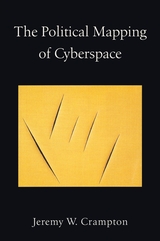
Using concepts and methods derived from the work of Michel Foucault, Crampton outlines a new mapping of cyberspace to help define the role of space in virtual worlds and to provide constructive ways in which humans can exist in another spatial dimension. He delineates the critical role maps play in constructing the medium as an object of knowledge and demonstrates that by processes of mapping we come to understand cyberspace. Maps, he argues, shape political thinking about cyberspace, and he deploys in-depth case studies of crime mapping, security maintenance, and geo-surveillance to show how we map ourselves onto cyberspace, inexorably, and indelibly.
Offering a powerful reinterpretation of technology and contemporary life, this innovative book will be an essential touchstone for the study of cartography and cyberspace in the twenty-first century.

The new truth is the one that circulates: digital truth emerges from lists, databases, archives, and conditions of storage. Multiple truths may be activated through search, link, and retrieve queries. Alexandra Juhasz, Ganaele Langlois, and Nishant Shah respond by taking up story, poetry, and other human logics of care, intelligence, and dignity to explore sociotechnological and politico-aesthetic emergences in a world where information overload has become a new ontology of not-knowing. Their feminist digital methods allow considerations of internet things through alternative networked internet time: slowing down to see, honor, and engage with our past; invoking indeterminacy as a human capacity that lets multiple truths commingle on a page or in a body; and saving the truths of ourselves and our others differently from the corporate internet’s perpetual viral movement.
Writing across their own shared truisms, actors, and touchstones, the authors propose creative tactics, theoretical overtures, and experimental escape routes built to a human scale as ways to regain our capacities to know and tell truths about ourselves.
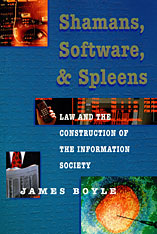
Who owns your genetic information? Might it be the doctors who, in the course of removing your spleen, decode a few cells and turn them into a patented product? In 1990 the Supreme Court of California said yes, marking another milestone on the information superhighway. This extraordinary case is one of the many that James Boyle takes up in Shamans, Software, and Spleens, a timely look at the infinitely tricky problems posed by the information society. Discussing topics ranging from blackmail and insider trading to artificial intelligence (with good-humored stops in microeconomics, intellectual property, and cultural studies along the way), Boyle has produced a work that can fairly be called the first social theory of the information age.
Now more than ever, information is power, and questions about who owns it, who controls it, and who gets to use it carry powerful implications. These are the questions Boyle explores in matters as diverse as autodialers and direct advertising, electronic bulletin boards and consumer databases, ethno-botany and indigenous pharmaceuticals, the right of publicity (why Johnny Carson owns the phrase "Here's Johnny!"), and the right to privacy (does J. D. Salinger "own" the letters he's sent?). Boyle finds that our ideas about intellectual property rights rest on the notion of the Romantic author--a notion that Boyle maintains is not only outmoded but actually counterproductive, restricting debate, slowing innovation, and widening the gap between rich and poor nations. What emerges from this lively discussion is a compelling argument for relaxing the initial protection of authors' works and expanding the concept of the fair use of information. For those with an interest in the legal, ethical, and economic ramifications of the dissemination of information--in short, for every member of the information society, willing or unwilling--this book makes a case that cannot be ignored.
An in-depth exploration of digital culture and its dissemination, Sharing offers a counterpoint to the dominant view that file sharing is piracy. Instead, Philippe Aigrain looks at the benefits of file sharing, which allows unknown writers and artists to be appreciated more easily. Concentrating not only on the cultural enrichment caused by widely shared digital media, Sharing also discusses new financing models that would allow works to be shared freely by individuals without aim at profit. Aigrain carefully balances the needs to support and reward creative activity with a suitable respect for the cultural common good and proposes a new interpretation of the digital landscape.
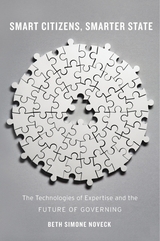
Government “of the people, by the people, for the people” expresses an ideal that resonates in all democracies. Yet poll after poll reveals deep distrust of institutions that seem to have left “the people” out of the governing equation. Government bureaucracies that are supposed to solve critical problems on their own are a troublesome outgrowth of the professionalization of public life in the industrial age. They are especially ill-suited to confronting today’s complex challenges.
Offering a far-reaching program for innovation, Smart Citizens, Smarter State suggests that public decisionmaking could be more effective and legitimate if government were smarter—if our institutions knew how to use technology to leverage citizens’ expertise. Just as individuals use only part of their brainpower to solve most problems, governing institutions make far too little use of the skills and experience of those inside and outside of government with scientific credentials, practical skills, and ground-level street smarts. New tools—what Beth Simone Noveck calls technologies of expertise—are making it possible to match the supply of citizen expertise to the demand for it in government.
Drawing on a wide range of academic disciplines and practical examples from her work as an adviser to governments on institutional innovation, Noveck explores how to create more open and collaborative institutions. In so doing, she puts forward a profound new vision for participatory democracy rooted not in the paltry act of occasional voting or the serendipity of crowdsourcing but in people’s knowledge and know-how.
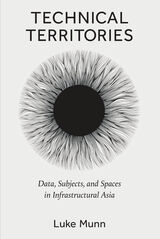
Territory is shifting. No longer defined by the dotted line of the border or the national footprint of soil, today’s territories are enacted through data infrastructures. From subsea cables to server halls, these infrastructures underpin new forms of governance, shaping subjects and their everyday lives. Technical Territories moves from masked protestors in Hong Kong to asylum-seekers in Christmas Island and sand miners in Singapore, exploring how these territories are both political and visceral, altering the experience of their inhabitants.
Infrastructures have now become geopolitical, strategic investments that advance national visions, extend influence, and trigger trade wars. Yet at the same time, these technologies also challenge sovereignty as a bounded container, enacting a more distributed and decoupled form of governance. Such “technical territories” construct new zones where subjects are assembled, rights are undermined, labor is coordinated, and capital is extracted. The stable line of the border is replaced by more fluid configurations of power. Luke Munn stages an interdisciplinary intervention over six chapters, drawing upon a wide range of literature from technical documents and activist accounts, and bringing insights from media studies, migration studies, political theory, and cultural and social studies to bear on these new sociotechnical conditions.

Introducing the collection, James Bennett explains how television as digital media is a non-site-specific, hybrid cultural and technological form that spreads across platforms such as mobile phones, games consoles, iPods, and online video services, including YouTube, Hulu and the BBC’s iPlayer. Television as digital media threatens to upset assumptions about television as a mass medium that has helped define the social collective experience, the organization of everyday life, and forms of sociality. As often as we are promised the convenience of the television experience “anytime, anywhere,” we are invited to participate in communities, share television moments, and watch events live. The essays in this collection demonstrate the historical, production, aesthetic, and audience changes and continuities that underpin the emerging meaning of television as digital media.
Contributors. James Bennett, William Boddy, Jean Burgess, John Caldwell, Daniel Chamberlain, Max Dawson, Jason Jacobs, Karen Lury, Roberta Pearson, Jeanette Steemers, Niki Strange, Julian Thomas, Graeme Turner

With the two-phased World Summit on the Information Society (WSIS), the United Nations attempted to stimulate the development of such tools.
Simultaneously, the WSIS is a large-scale experiment in multistakeholderism. The objective was to create a more balanced decision-making process that would allow the voices of civil society and business actors to be heard in international politics.
This book aims to evaluate the potentialities of both the Information Society, and the WSIS in supporting and constructing more democratic, just and developed societies. It is the second book arising from the intellectual work of European Consortium for Communications Research members.
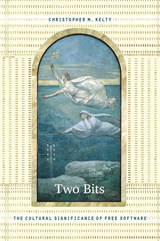
Drawing on ethnographic research that took him from an Internet healthcare start-up company in Boston to media labs in Berlin to young entrepreneurs in Bangalore, Kelty describes the technologies and the moral vision that bind together hackers, geeks, lawyers, and other Free Software advocates. In each case, he shows how their practices and way of life include not only the sharing of software source code but also ways of conceptualizing openness, writing copyright licenses, coordinating collaboration, and proselytizing. By exploring in detail how these practices came together as the Free Software movement from the 1970s to the 1990s, Kelty also considers how it is possible to understand the new movements emerging from Free Software: projects such as Creative Commons, a nonprofit organization that creates copyright licenses, and Connexions, a project to create an online scholarly textbook commons.
Across America, newspapers that have defined their cities for over a century are rapidly failing, their circulations plummeting even as opinion-soaked web outlets like the Huffington Post thrive. Meanwhile, nightly news programs shock viewers with stories of horrific crime and celebrity scandal, while the smug sarcasm and shouting of pundits like Glenn Beck and Keith Olbermann dominate cable television. Is it any wonder that young people are turning away from the news entirely, trusting comedians like Jon Stewart as their primary source of information on current events?
In the face of all the problems plaguing serious news, What Is Happening to News explores the crucial question of how journalism lost its way—and who is responsible for the ragged retreat from its great traditions. Veteran editor and newspaperman Jack Fuller locates the surprising sources of change where no one has thought to look before: in the collision between a revolutionary new information age and a human brain that is still wired for the threats faced by our prehistoric ancestors. Drawing on the dramatic recent discoveries of neuroscience, Fuller explains why the information overload of contemporary life makes us dramatically more receptive to sensational news, while rendering the staid, objective voice of standard journalism ineffective. Throw in a growing distrust of experts and authority, ably capitalized on by blogs and other interactive media, and the result is a toxic mix that threatens to prove fatal to journalism as we know it.
For every reader troubled by what has become of news—and worried about what the future may hold—What Is Happening to News not only offers unprecedented insight into the causes of change but also clear guidance, strongly rooted in the precepts of ethical journalism, on how journalists can adapt to this new environment while still providing the information necessary to a functioning democracy.
READERS
Browse our collection.
PUBLISHERS
See BiblioVault's publisher services.
STUDENT SERVICES
Files for college accessibility offices.
RECENTLY PUBLISHED







UChicago Accessibility Resources
home | accessibility | search | about | contact us
BiblioVault ® 2001 - 2024
The University of Chicago Press