
 A SCHOLARLY BOOK REPOSITORY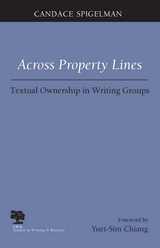
Candace Spigelman investigates the dynamics of ownership in small group writing workshops, basing her findings on case studies involving two groups: a five-member creative writing group meeting monthly at a local Philadelphia coffee bar and a four-member college-level writing group meeting in their composition classroom. She explores the relationship between particular notions of intellectual property within each group as well as the effectiveness of writing groups that embrace these notions. Addressing the negotiations between the public and private domains of writing within these groups, she discovers that for both the committed writers and the novices, “values associated with textual ownership play a crucial role in writing group performance.”
Spigelman discusses textual ownership, intellectual property, and writing group processes and then reviews theories relating to authorship and knowledge making. After introducing the participants in each group, discussing their texts, and describing their workshop sessions, she examines the writers’ avowed and implied beliefs about exchanging ideas and protecting individual property rights.
Spigelman stresses the necessary tension between individual and social aspects of writing practices: She argues for the need to foster more collaborative activity among student writers by replicating the processes of writers working in nonacademic settings but also contends that all writers must be allowed to imagine their individual agency and authority as they compose.
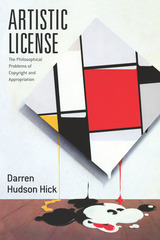
Engaging with long-standing debates about the nature of originality, authorship, and artists’ rights, Hick examines the philosophical challenges presented by the role of intellectual property in the artworld and vice versa. Using real-life examples of artists who have incorporated copyrighted works into their art, he explores issues of artistic creation and the nature of infringement as they are informed by analytical aesthetics and legal and critical theory. Ultimately, Artistic License provides a critical and systematic analysis of the key philosophical issues that underlie copyright policy, rethinking the relationship between artist, artwork, and the law.
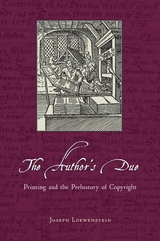
As Loewenstein shows, copyright is a form of monopoly that developed alongside a range of related protections such as commercial trusts, manufacturing patents, and censorship, and cannot be understood apart from them. The regulation of the press pitted competing interests and rival monopolistic structures against one another—guildmembers and nonprofessionals, printers and booksellers, authors and publishers. These struggles, in turn, crucially shaped the literary and intellectual practices of early modern authors, as well as early capitalist economic organization.
With its probing look at the origins of modern copyright, The Author's Due will prove to be a watershed for historians, literary critics, and legal scholars alike.
TyAnna K. Herrington explains current intellectual property law and examines the effect of the Internet and ideological power on its interpretation. Promoting a balanced development of our national culture, she advocates educators’ informed participation in ensuring egalitarian public access to information. She discusses the control of information and the creation of knowledge in terms of the way control functions under current property law.

Biotechnology crop production area increased from 1.7 million hectares to 148 million hectares worldwide between 1996 to 2010. While genetically modified food is a contentious issue, the debates are usually limited to health and environmental concerns, ignoring the broader questions of social control that arise when food production methods become corporate-owned intellectual property. Drawing on legal documents and dozens of interviews with farmers and other stakeholders, Corporate Crops covers four case studies based around litigation between biotechnology corporations and farmers. Pechlaner investigates the extent to which the proprietary aspects of biotechnologies—from patents on seeds to a plethora of new rules and contractual obligations associated with the technologies—are reorganizing crop production.
The lawsuits include patent infringement litigation launched by Monsanto against a Saskatchewan canola farmer who, in turn, claimed his crops had been involuntarily contaminated by the company’s GM technology; a class action application by two Saskatchewan organic canola farmers launched against Monsanto and Aventis (later Bayer) for the loss of their organic market due to contamination with GMOs; and two cases in Mississippi in which Monsanto sued farmers for saving seeds containing its patented GM technology. Pechlaner argues that well-funded corporate lawyers have a decided advantage over independent farmers in the courts and in creating new forms of power and control in agricultural production. Corporate Crops demonstrates the effects of this intersection between the courts and the fields where profits, not just a food supply, are reaped.
Although such artifacts are ubiquitous in contemporary culture, little attention has been paid to the impact of intellectual property law in everyday life or to how ownership of specific intellectual properties is determined and exercised. Drawing on a wide range of cases, disputes, and local struggles, Coombe examines these issues and dismantles the legal assumption that the meaning and value of a text or image is produced exclusively by an individual author or that authorship has a single point of origin. In the process, she examines controversies that include the service of turbanned Sikhs in the Royal Canadian Mounted Police and the use of the term Olympic in reference to the proposed gay Olympic Games. Other chapters discuss the appropriation of such celebrity images as the Marx brothers, Judy Garland, Dolly Parton, James Dean, and Luke Skywalker; the conflict over team names such as the Washington Redskins; and the opposition of indigenous peoples to stereotypical Native American insignia proffered by the entertainment industry. Ultimately, she makes a case for redefining the political in commodified cultural environments.
Significant for its insights into the political significance of current intellectual property law, this book also provides new perspectives on debates in cultural anthropology, cultural studies, and political theory. It will therefore interest both a wide scholarly and a general audience.
The protection and accumulation of intellectual property rights—like property rights in general—is one of the most important contemporary American values. In his cogent book, The Cultural Production of Intellectual Property Rights, Sean Johnson Andrews shows that the meaning, power, and value of intellectual properties are the consequence of an extended process of cultural production.
Johnson Andrews argues that it is deeper ideological and historical roots which demand that, in the contemporary global, digital economy, all property rights be held sacrosanct and all value must flow back to the legal owner.
Johnson Andrews explains that if we want to rebalance the protection of copyrights and trademarks, we should focus on undermining the reified culture of property that underpins capitalism as a whole. He outlines a framework for analyzing culture; situates intellectual property rights in the history of capitalist property relations; synthesizes key theories of media, politics, and law; and ultimately provides scholars and activists a path to imagining a different future where we prioritize our collective production of value in the commons.
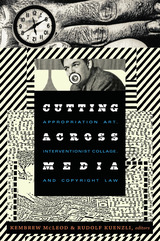
Contributors. Craig Baldwin, David Banash, Marcus Boon, Jeff Chang, Joshua Clover, Lorraine Morales Cox, Lloyd Dunn, Philo T. Farnsworth, Pierre Joris, Douglas Kahn, Rudolf Kuenzli, Rob Latham, Jonathan Lethem, Carrie McLaren, Kembrew McLeod, Negativland, Davis Schneiderman, David Tetzlaff, Gábor Vályi, Warner Special Products, Eva Hemmungs Wirtén
Jessica Litman questions whether copyright laws crafted by lawyers and their lobbyists really make sense for the vast majority of us. Should every interaction between ordinary consumers and copyright-protected works be restricted by law? Is it practical to enforce such laws, or expect consumers to obey them? What are the effects of such laws on the exchange of information in a free society? Litman’s critique exposes the 1998 copyright law as an incoherent patchwork. She argues for reforms that reflect the way people actually behave in their daily digital interactions.
The Maize Books edition includes both an afterword written in 2006 exploring the rise of peer-to-peer file sharing and a new Postscript reflecting on the consequences of the Digital Millennium Copyright Act as it nears its twentieth birthday.
This book takes a fresh look at the most dynamic area of American law today, comprising the fields of copyright, patent, trademark, trade secrecy, publicity rights, and misappropriation. Topics range from copyright in private letters to defensive patenting of business methods, from moral rights in the visual arts to the banking of trademarks, from the impact of the court of patent appeals to the management of Mickey Mouse. The history and political science of intellectual property law, the challenge of digitization, the many statutes and judge-made doctrines, and the interplay with antitrust principles are all examined. The treatment is both positive (oriented toward understanding the law as it is) and normative (oriented to the reform of the law).
Previous analyses have tended to overlook the paradox that expanding intellectual property rights can effectively reduce the amount of new intellectual property by raising the creators' input costs. Those analyses have also failed to integrate the fields of intellectual property law. They have failed as well to integrate intellectual property law with the law of physical property, overlooking the many economic and legal-doctrinal parallels.
This book demonstrates the fundamental economic rationality of intellectual property law, but is sympathetic to critics who believe that in recent decades Congress and the courts have gone too far in the creation and protection of intellectual property rights.
A double is haunting the world--the double of abstraction, the virtual reality of information, programming or poetry, math or music, curves or colorings upon which the fortunes of states and armies, companies and communities now depend. The bold aim of this book is to make manifest the origins, purpose, and interests of the emerging class responsible for making this new world--for producing the new concepts, new perceptions, and new sensations out of the stuff of raw data.
A Hacker Manifesto deftly defines the fraught territory between the ever more strident demands by drug and media companies for protection of their patents and copyrights and the pervasive popular culture of file sharing and pirating. This vexed ground, the realm of so-called "intellectual property," gives rise to a whole new kind of class conflict, one that pits the creators of information--the hacker class of researchers and authors, artists and biologists, chemists and musicians, philosophers and programmers--against a possessing class who would monopolize what the hacker produces.
Drawing in equal measure on Guy Debord and Gilles Deleuze, A Hacker Manifesto offers a systematic restatement of Marxist thought for the age of cyberspace and globalization. In the widespread revolt against commodified information, McKenzie Wark sees a utopian promise, beyond the property form, and a new progressive class, the hacker class, who voice a shared interest in a new information commons.
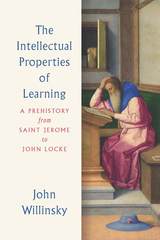
Willinsky begins with Saint Jerome in the fifth century, then traces the evolution of reading, writing, and editing practices in monasteries, schools, universities, and among independent scholars through the medieval period and into the Renaissance. He delves into the influx of Islamic learning and the rediscovery of classical texts, the dissolution of the monasteries, and the founding of the Bodleian Library before finally arriving at John Locke, whose influential lobbying helped bring about the first copyright law, the Statute of Anne of 1710. Willinsky’s bravura tour through this history shows that learning gave rise to our idea of intellectual property while remaining distinct from, if not wholly uncompromised by, the commercial economy that this concept inspired, making it clear that today’s push for marketable intellectual property threatens the very nature of the quest for learning on which it rests.

What issues arise when students’ uses of intellectual materials are legally challenged, and how does the academic context affect them? What happens when users of intellectual property, either within or outside the academic structure, violate students’ rights to their intellectual products? In Intellectual Property on Campus, TyAnna K. Herrington addresses these concerns and more, clearing up the confusion often surrounding intellectual property law and its application in an academic setting. Filled with practical information and simple yet thorough explanations, this enlightening volume provides educators and students with a solid basis for understanding the broader impacts of legal and ethical dilemmas involving intellectual materials.
Herrington provides insight for students into how complex concepts such as patent, trademark, copyright, fair use, and plagiarism affect their work. She outlines the potential effects of the choices students make, as well as the benefits and limitations of legal protection for intellectual property, including the thorny issues of authorship and authority under the 1976 Copyright Act. Herrington also explores the topic of student collaboration—now very common on college campuses—and how it affects intellectual property issues and legal relationships, as well as the impact of new technologies, such as blogs, on student work in educational environments.
Intellectual Property on Campus also provides useful information for administrators and educators. In particular, Herrington investigates the possible ramifications of their pedagogical and policy choices, and examines in depth the responsibility of instructors to treat students’ intellectual property legally, ethically, and conscientiously. Cautioning educators about the limitations on their control over intellectual materials in an academic setting, Herrington encourages teachers to minimize their influence over student works, instead giving pupils more freedom to control their own creations.
The volume also investigates the rights, responsibilities, and limitations for users of intellectual property, as opposed to creators, especially as related to student or instructor use of copyrighted materials. Discussed in detail are such issues as fair use and the TEACH Act, as well as the often-intertwined areas of plagiarism, authorship, and copyright. In addition, Herrington addresses recent cultural developments regarding the use and creation of intellectual property by students and instructors.
Written in a jargon-free style that is easy to understand, Intellectual Property on Campus gives students, instructors, and administrators the information they need to navigate the intricate landscape of law and integrity in the realm of academic creation.

Why should a property interest exist in an intangible item? In recent years, arguments over intellectual property have often divided proponents—who emphasize the importance of providing incentives for producers of creative works— from skeptics who emphasize the need for free and open access to knowledge.
In a wide-ranging and ambitious analysis, Robert P. Merges establishes a sophisticated rationale for the most vital form of modern property: IP rights. His insightful new book answers the many critics who contend that these rights are inefficient, unfair, and theoretically incoherent. But Merges’ vigorous defense of IP is also a call for appropriate legal constraints and boundaries: IP rights are real, but they come with real limits.
Drawing on Kant, Locke, and Rawls as well as contemporary scholars, Merges crafts an original theory to explain why IP rights make sense as a reward for effort and as a way to encourage individuals to strive. He also provides a novel explanation of why awarding IP rights to creative people is fair for everyone else in society, by contributing to a just distribution of resources. Merges argues convincingly that IP rights are based on a solid ethical foundation, and—when subject to fair limits—these rights are an indispensable part of a well-functioning society.
While innovative ideas and creative works increasingly drive economic success, the historic approach to encouraging innovation and creativity by granting property rights has come under attack by a growing number of legal theorists and technologists. In Laws of Creation, Ronald Cass and Keith Hylton take on these critics with a vigorous defense of intellectual property law. The authors look closely at the IP doctrines that have been developed over many years in patent, copyright, trademark, and trade secret law. In each area, legislatures and courts have weighed the benefits that come from preserving incentives to innovate against the costs of granting innovators a degree of control over specific markets. Over time, the authors show, a set of rules has emerged that supports wealth-creating innovation while generally avoiding overly expansive, growth-retarding licensing regimes.
These rules are now under pressure from detractors who claim that changing technology undermines the case for intellectual property rights. But Cass and Hylton explain how technological advances only strengthen that case. In their view, the easier it becomes to copy innovations, the harder to detect copies and to stop copying, the greater the disincentive to invest time and money in inventions and creative works. The authors argue convincingly that intellectual property laws help create a society that is wealthier and inspires more innovation than those of alternative legal systems. Ignoring the social value of intellectual property rights and making what others create and nurture “free” would be a costly mistake indeed.
Rules regulating access to knowledge are no longer the exclusive province of lawyers and policymakers and instead command the attention of anthropologists, economists, literary theorists, political scientists, artists, historians, and cultural critics. This burgeoning interdisciplinary interest in “intellectual property” has also expanded beyond the conventional categories of patent, copyright, and trademark to encompass a diverse array of topics ranging from traditional knowledge to international trade. Though recognition of the central role played by “knowledge economies” has increased, there is a special urgency associated with present-day inquiries into where rights to information come from, how they are justified, and the ways in which they are deployed.
Making and Unmaking Intellectual Property, edited by Mario Biagioli, Peter Jaszi, and Martha Woodmansee, presents a range of diverse—and even conflicting—contemporary perspectives on intellectual property rights and the contested sources of authority associated with them. Examining fundamental concepts and challenging conventional narratives—including those centered around authorship, invention, and the public domain—this book provides a rich introduction to an important intersection of law, culture, and material production.
Making Marie Curie explores what went into the creation of this icon of science. It is not a traditional biography, or one that attempts to uncover the “real” Marie Curie. Rather, Eva Hemmungs Wirtén, by tracing a career that spans two centuries and a world war, provides an innovative and historically grounded account of how modern science emerges in tandem with celebrity culture under the influence of intellectual property in a dawning age of information. She explores the emergence of the Curie persona, the information culture of the period that shaped its development, and the strategies Curie used to manage and exploit her intellectual property. How did one create and maintain for oneself the persona of scientist at the beginning of the twentieth century? What special conditions bore upon scientific women, and on married women in particular? How was French identity claimed, established, and subverted? How, and with what consequences, was a scientific reputation secured?
In its exploration of these questions and many more, Making Marie Curie provides a composite picture not only of the making of Marie Curie, but the making of modern science itself.
Drawing on a wealth of previously unused archival material, Medical Monopoly combines legal, medical, and business history to offer a sweeping new interpretation of the origins of the complex and often troubling relationship between the pharmaceutical industry and medical practice today. Joseph M. Gabriel provides the first detailed history of patent and trademark law as it relates to the nineteenth-century pharmaceutical industry as well as a unique interpretation of medical ethics, therapeutic reform, and the efforts to regulate the market in pharmaceuticals before World War I. His book will be of interest not only to historians of medicine and science and intellectual property scholars but also to anyone following contemporary debates about the pharmaceutical industry, the patenting of scientific discoveries, and the role of advertising in the marketplace.
Hardly a week passes without some high-profile court case that features intellectual property at its center. But how did the belief that one could own an idea come about? And how did that belief change the way humankind lives and works?
William Rosen, author of Justinian's Flea, seeks to answer these questions and more with The Most Powerful Idea in the World. A lively and passionate study of the engineering and scientific breakthroughs that led to the steam engine, this book argues that the very notion of intellectual property drove not only the invention of the steam engine but also the entire Industrial Revolution: history’s first sustained era of economic improvement. To do so, Rosen conjures up an eccentric cast of characters, including the legal philosophers who enabled most the inventive society in millennia, and the scientists and inventors—Thomas Newcomen, Robert Boyle, and James Watt—who helped to create and perfect the steam engine over the centuries. With wit and wide-ranging curiosity, Rosen explores the power of creativity, capital, and collaboration in the brilliant engineering of the steam engine and how this power source, which fueled factories, ships, and railroads, changed human history.
Deeply informative and never dull, Rosen's account of one of the most important inventions made by humans is a rollicking ride through history, with careful scholarship and fast-paced prose in equal measure.
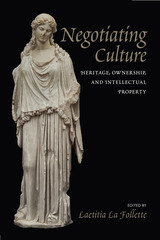
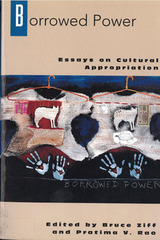
This provocative collection of essays—a series of case studies in cultural ownership by scholars from a range of fields—explores issues of cultural heritage and intellectual property in a variety of contexts, from contests over tangible artifacts as well as more abstract forms of culture such as language and oral traditions to current studies of DNA and genes that combine nature and culture, and even new, nonproprietary models for the sharing of digital technologies. Each chapter sets the debate in its historical and disciplinary context and suggests how the approaches to these issues are changing or should change.
One of the most innovative aspects of the volume is the way each author recognizes the social dimensions of group ownership and demonstrates the need for negotiation and new models. The collection as a whole thus challenges the reader to reevaluate traditional ways of thinking about cultural ownership and to examine the broader social contexts within which negotiation over the ownership of culture is taking place.
In addition to Laetitia La Follette, contributors include David Bollier, Stephen Clingman, Susan DiGiacomo, Oriol Pi-Sunyer, Margaret Speas, Banu Subramaniam, Joe Watkins, and H. Martin Wobst.

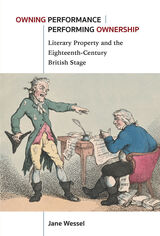
Owning Performance follows the careers of some of the 18th century’s most influential playwrights, actors, and theater managers as they vied for control over the period’s most popular shows. Without protection for dramatic literary property, these figures developed creative extra-legal strategies for controlling the performance of drama—quite literally performing their ownership. Their various strategies resulted in a culture of ephemerality, with many of the period’s most popular works existing only in performance and manuscript copies. Author Jane Wessel explores how playwrights and actors developed strategies for owning their works and how, in turn, theater managers appropriated these strategies, putting constant pressure on artists to innovate. Owning Performance reveals the wide-reaching effects of property law on theatrical culture, tracing a turn away from print that affected the circulation, preservation, and legacy of 18th century drama.
"Richard Schur offers a provocative view of contemporary African American cultural politics and the relationship between African American cultural production and intellectual property law."
---Mark Anthony Neal, Duke University
"Whites used to own blacks. Now, they accomplish much the same thing by insisting that they 'own' ownership. Blacks shouldn't let them. A culture that makes all artists play by its rules will end up controlling new ideas and stifling change. Richard Schur's fine book explains why."
---Richard Delgado, Seattle University
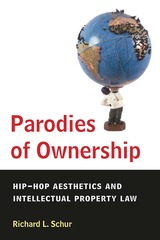
What is the relationship between hip-hop and African American culture in the post--Civil Rights era? Does hip-hop share a criticism of American culture or stand as an isolated and unique phenomenon? How have African American texts responded to the increasing role intellectual property law plays in regulating images, sounds, words, and logos? Parodies of Ownership examines how contemporary African American writers, artists, and musicians have developed an artistic form that Schur terms "hip-hop aesthetics." This book offers an in-depth examination of a wide range of contemporary African American painters and writers, including Anna Deavere Smith, Toni Morrison, Adrian Piper, Colson Whitehead, Michael Ray Charles, Alice Randall, and Fred Wilson. Their absence from conversations about African American culture has caused a misunderstanding about the nature of contemporary cultural issues and resulted in neglect of their innovative responses to the post--Civil Rights era. By considering their work as a cross-disciplinary and specifically African American cultural movement, Schur shows how a new paradigm for artistic creation has developed.
Parodies of Ownership offers a broad analysis of post--Civil Rights era culture and provides the necessary context for understanding contemporary debates within American studies, African American studies, intellectual property law, African American literature, art history, and hip-hop studies. Weaving together law, literature, art, and music, Schur deftly clarifies the conceptual issues that unify contemporary African American culture, empowering this generation of artists, writers, and musicians to criticize how racism continues to affect our country.
Richard L. Schur is Director, Interdisciplinary Studies Center, and Associate Professor of Interdisciplinary Studies at Drury University. Visit the author's website: http://www2.drury.edu/rschur/index.htm.
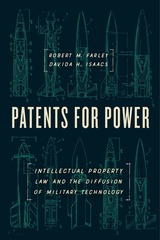
The book probes two major issues: the effect of IP law on innovation itself and the effect of IP law on the international diffusion, or sharing, of technology. Discussing a range of inventions, from the AK-47 rifle to the B-29 Superfortress bomber to the MQ-1 Predator drone, the authors show how IP systems (or their lack) have impacted domestic and international relations across a number of countries, including the United States, Russia, China, and South Korea. The study finds, among other results, that while the open nature of the IP system may encourage industrial espionage like cyberwarfare, increased state uptake of IP law is helping to establish international standards for IP protection. This clear-eyed approach to law and national security is thus essential for anyone interested in history, political science, and legal studies.
Who controls how one’s identity is used by others? This legal question, centuries old, demands greater scrutiny in the Internet age. Jennifer Rothman uses the right of publicity—a little-known law, often wielded by celebrities—to answer that question, not just for the famous but for everyone. In challenging the conventional story of the right of publicity’s emergence, development, and justifications, Rothman shows how it transformed people into intellectual property, leading to a bizarre world in which you can lose ownership of your own identity. This shift and the right’s subsequent expansion undermine individual liberty and privacy, restrict free speech, and suppress artistic works.
The Right of Publicity traces the right’s origins back to the emergence of the right of privacy in the late 1800s. The central impetus for the adoption of privacy laws was to protect people from “wrongful publicity.” This privacy-based protection was not limited to anonymous private citizens but applied to famous actors, athletes, and politicians. Beginning in the 1950s, the right transformed into a fully transferable intellectual property right, generating a host of legal disputes, from control of dead celebrities like Prince, to the use of student athletes’ images by the NCAA, to lawsuits by users of Facebook and victims of revenge porn.
The right of publicity has lost its way. Rothman proposes returning the right to its origins and in the process reclaiming privacy for a public world.
Who owns your genetic information? Might it be the doctors who, in the course of removing your spleen, decode a few cells and turn them into a patented product? In 1990 the Supreme Court of California said yes, marking another milestone on the information superhighway. This extraordinary case is one of the many that James Boyle takes up in Shamans, Software, and Spleens, a timely look at the infinitely tricky problems posed by the information society. Discussing topics ranging from blackmail and insider trading to artificial intelligence (with good-humored stops in microeconomics, intellectual property, and cultural studies along the way), Boyle has produced a work that can fairly be called the first social theory of the information age.
Now more than ever, information is power, and questions about who owns it, who controls it, and who gets to use it carry powerful implications. These are the questions Boyle explores in matters as diverse as autodialers and direct advertising, electronic bulletin boards and consumer databases, ethno-botany and indigenous pharmaceuticals, the right of publicity (why Johnny Carson owns the phrase "Here's Johnny!"), and the right to privacy (does J. D. Salinger "own" the letters he's sent?). Boyle finds that our ideas about intellectual property rights rest on the notion of the Romantic author--a notion that Boyle maintains is not only outmoded but actually counterproductive, restricting debate, slowing innovation, and widening the gap between rich and poor nations. What emerges from this lively discussion is a compelling argument for relaxing the initial protection of authors' works and expanding the concept of the fair use of information. For those with an interest in the legal, ethical, and economic ramifications of the dissemination of information--in short, for every member of the information society, willing or unwilling--this book makes a case that cannot be ignored.
An in-depth exploration of digital culture and its dissemination, Sharing offers a counterpoint to the dominant view that file sharing is piracy. Instead, Philippe Aigrain looks at the benefits of file sharing, which allows unknown writers and artists to be appreciated more easily. Concentrating not only on the cultural enrichment caused by widely shared digital media, Sharing also discusses new financing models that would allow works to be shared freely by individuals without aim at profit. Aigrain carefully balances the needs to support and reward creative activity with a suitable respect for the cultural common good and proposes a new interpretation of the digital landscape.
Copyright law, as conventionally understood, serves the public interest by regulating the production and dissemination of works of authorship, though it recognizes that the requirements of the public interest are in tension. Incentives for creation must be provided, but protections granted authors must not prevent the fruits of creativity and knowledge from spreading. Copyright law, therefore, should balance the needs of creators and users—or so the theory goes.
Challenging this widely accepted view, What’s Wrong with Copying? disentangles copyright theory from its focus on the economic value of an authored work as a commodity or piece of property. In his analysis of copyright doctrine, Abraham Drassinower frames an author’s work as a communicative act and asserts that copyright infringement is best understood as an unauthorized appropriation of another person’s speech. According to this interpretation, copyright doctrine does not guarantee an author’s absolute rights over a work but only such rights as are consistent with both the nature of the work as speech and with the structure of the dialogue in which it participates. The rights protecting works of authorship are confined to communicative uses of the work and to uses consistent with the communicative rights of others—for example, unauthorized reproduction of a work is lawful when responding to the work requires its reproduction.
What’s Wrong with Copying? offers a new way to interpret and criticize existing copyright law and to think about the relation between copyright and digital technology as well as broader juridical, social, and cultural concerns.
Who owns academic work? This question is provoking political and legal battles, fought on uncertain terrain, for ever-higher stakes. The posting of faculty lecture notes on commercial Web sites is being hotly debated in multiple forums, even as faculty and university administrators square off in a battle for professorial copyright. In courtrooms throughout the country, universities find themselves embroiled in intricate and expensive patent litigation. Meanwhile, junior researchers are appearing in those same courtrooms, using intellectual property rules to challenge traditional academic hierarchies. All but forgotten in these ownership disputes is a more fundamental question: should academic work be owned at all? Once characterized as a kind of gift, academic work--and academic freedom--are now being reframed as private intellectual property.
Drawing on legal, historical, and qualitative research, Corynne McSherry explores the propertization of academic work and shows how that process is shaking the foundations of the university, the professoriate, and intellectual property law. The modern university's reason for being is inextricably tied to that of the intellectual property system. The rush of universities and scholars to defend their knowledge as property dangerously undercuts a working covenant that has sustained academic life--and intellectual property law--for a century and a half. As the value structure of the research university is replaced by the inequalities of the free market, academics risk losing a language for talking about knowledge as anything other than property. McSherry has written a book that ought to deeply trouble everyone who cares about the academy.
While claims of authenticity or quality may prompt some consumers to seek cultural products at their source, the communities of origin are generally unable to exclude copyists through legal action. Like other works of unincorporated group authorship, cultural products lack protection under our system of intellectual property law. But is this legal vacuum an injustice, the lifeblood of American culture, a historical oversight, a result of administrative incapacity, or all of the above?
Who Owns Culture? offers the first comprehensive analysis of cultural authorship and appropriation within American law. From indigenous art to Linux, Susan Scafidi takes the reader on a tour of the no-man's-land between law and culture, pausing to ask: What prompts us to offer legal protection to works of literature, but not folklore? What does it mean for a creation to belong to a community, especially a diffuse or fractured one? And is our national culture the product of Yankee ingenuity or cultural kleptomania?
Providing new insights to communal authorship, cultural appropriation, intellectual property law, and the formation of American culture, this innovative and accessible guide greatly enriches future legal understanding of cultural production.
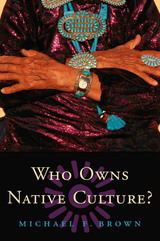
The practical and artistic creations of native peoples permeate everyday life in settler nations, from the design elements on our clothing to the plot-lines of books we read to our children. Rarely, however, do native communities benefit materially from this use of their heritage, a situation that drives growing resistance to what some denounce as "cultural theft."
Who Owns Native Culture? documents the efforts of indigenous peoples to redefine heritage as a proprietary resource. Michael Brown takes readers into settings where native peoples defend what they consider their cultural property: a courtroom in Darwin, Australia, where an Aboriginal artist and a clan leader bring suit against a textile firm that infringes sacred art; archives and museums in the United States, where Indian tribes seek control over early photographs and sound recordings collected in their communities; and the Mexican state of Chiapas, site of a bioprospecting venture whose legitimacy is questioned by native-rights activists.
By focusing on the complexity of actual cases, Brown casts light on indigenous claims in diverse fields--religion, art, sacred places, and botanical knowledge. He finds both genuine injustice and, among advocates for native peoples, a troubling tendency to mimic the privatizing logic of major corporations.
The author proposes alternative strategies for defending the heritage of vulnerable native communities without blocking the open communication essential to the life of pluralist democracies. Who Owns Native Culture? is a lively, accessible introduction to questions of cultural ownership, group privacy, intellectual property, and the recovery of indigenous identities.
READERS
Browse our collection.
PUBLISHERS
See BiblioVault's publisher services.
STUDENT SERVICES
Files for college accessibility offices.
RECENTLY PUBLISHED


UChicago Accessibility Resources
home | accessibility | search | about | contact us
BiblioVault ® 2001 - 2024
The University of Chicago Press