
 A SCHOLARLY BOOK REPOSITORY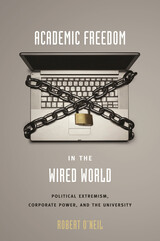
In this passionately argued overview, a longtime activist-scholar takes readers through the changing landscape of academic freedom. From the aftermath of September 11th to the new frontier of blogging, Robert O'Neil examines the tension between institutional and individual interests. Many cases boil down to a hotly contested question: who has the right to decide what is taught in the classroom?
O'Neil shows how courts increasingly restrict professorial judgment, and how the feeble protection of what is posted on the Internet and written in email makes academics more vulnerable than ever. Even more provocatively, O'Neil argues, the newest threats to academic freedom come not from government, but from the private sector. Corporations increasingly sponsor and control university-based research, while self-appointed watchdogs systematically harass individual teachers on websites and blogs. Most troubling, these threats to academic freedom are nearly immune from legal recourse.
Insisting that new concepts of academic freedom, and new strategies for maintaining it are needed, O'Neil urges academics to work together--and across rigid and simplistic divisions between "left" and "right."
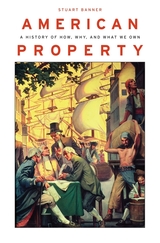
In America, we are eager to claim ownership: our homes, our ideas, our organs, even our own celebrity. But beneath our nation’s proprietary longing looms a troublesome question: what does it mean to own something? More simply: what is property?
The question is at the heart of many contemporary controversies, including disputes over who owns everything from genetic material to indigenous culture to music and film on the Internet. To decide if and when genes or culture or digits are a kind of property that can be possessed, we must grapple with the nature of property itself. How does it originate? What purposes does it serve? Is it a natural right or one created by law?
Accessible and mercifully free of legal jargon, American Property reveals the perpetual challenge of answering these questions, as new forms of property have emerged in response to technological and cultural change, and as ideas about the appropriate scope of government regulation have shifted. This first comprehensive history of property in the United States is a masterly guided tour through a contested human institution that touches all aspects of our lives and desires.
Stuart Banner shows that property exists to serve a broad set of purposes, constantly in flux, that render the idea of property itself inconstant. Despite our ideals of ownership, property has always been a means toward other ends. What property signifies and what property is, we come to see, has consistently changed to match the world we want to acquire.
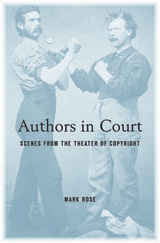
Through a series of vivid case studies, Authors in Court charts the 300-year-long dance between authorship and copyright that has shaped each institution’s response to changing social norms of identity, privacy, and celebrity.
“A literary historian by training, Rose is completely at home in the world of law, as well as the history of photography and art. This is the work of an interdisciplinary scholar at the height of his powers. The arguments are sophisticated and the elegant text is a work of real craftsmanship. It is superb.”
—Lionel Bently, University of Cambridge
“Authors in Court is well-written, erudite, informative, and engaging throughout. As the chapters go along, we see the way that personalities inflect the supposedly impartial law; we see the role of gender in authorial self-fashioning; we see some of the fault lines which produce litigation; and we get a nice history of the evolution of the fair use doctrine. This is a book that should at least be on reserve for any IP–related course. Going forward, no one writing about any of the cases Rose discusses can afford to ignore his contribution.”
—Lewis Hyde, Kenyon College
Fighting disease, combating hunger, preserving the balance of life on Earth: the future of biotechnological innovation may well be the future of our planet itself. And yet the vexed state of intellectual property law—a proliferation of ever more complex rights governing research and development—is complicating this future. At a similar point in the development of information technology, “open source” software revolutionized the field, simultaneously encouraging innovation and transforming markets. The question that Janet Hope explores in Biobazaar is: can the open source approach do for biotechnology what it has done for information technology? Her book is the first sustained and systematic inquiry into the application of open source principles to the life sciences.
The appeal of the open source approach—famously likened to a “bazaar,” in contrast to the more traditional “cathedral” style of technology development—lies in its safeguarding of community access to proprietary tools without discouraging valuable commercial participation. Traversing disciplinary boundaries, Hope presents a careful analysis of intellectual property-related challenges confronting the biotechnology industry and then paints a detailed picture of “open source biotechnology” as a possible solution. With insights drawn from interviews with Nobel Prize–winning scientists and leaders of the free and open source software movement—as well as company executives, international policymakers, licensing experts, and industry analysts—her book suggests that open source biotechnology is both desirable and broadly feasible—and, in many ways, merely awaiting its moment.
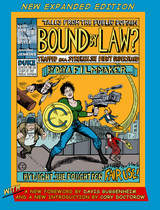
Readers can download a pdf of the book here.
The Chicago Handbook of University Technology Transfer and Academic Entrepreneurship is the first definitive source to synthesize state-of-the-art research in this arena. Edited by three of the foremost experts in the field, the handbook presents evidence from entrepreneurs, administrators, regulators, and professors in numerous disciplines. Together they address the key managerial and policy implications through chapters on how to sustain successful research ventures, ways to stimulate academic entrepreneurship, maintain effective open innovation strategies, and improve the performance of university technology transfer offices.
A broad and ambitious work, the handbook offers comprehensive coverage for universities of all types, allowing them to confidently handle technology commercialization and further cultivate innovation.
Included in Choice's Top 75 Titles and Resources for Community College Libraries
Faculty, students, and colleagues come to you with copyright questions, both simple and complex. And they all want reliable answers—as fast as you can get them. With this guide, designed for ready access, you’ll be prepared to deliver. Lawyer, copyright librarian, and iSchool instructor Benson presents succinct explanations ideal for both on-the-fly reference and staff training. Copyright specialists will appreciate excerpts from the law itself alongside tools and resources for digging deeper. Practical discussions of key legal concepts, illustrated using 52 scenarios, will lead you to fast, accurate answers on a range of topics, such as
- barriers to using the TEACH Act provisions in content for online teaching;
- showing a full-length movie in a university class;
- public domain and the 1998 Sonny Bono Copyright Term Extension Act;
- your legal options when receiving a DMCA take-down notice;
- court interpretations of fair use in three key recent cases;
- Creative Commons licenses, complete with a quick reference chart;
- library rights to license photographs in a digital collection;
- using letters under copyright in a special collections display case;
- a grad student’s right to use in a thesis writing published in their professor’s journal article;
- applying the implied license option to post historical student dissertations in institutional repositories;
- the Marrakesh Treaty provision supporting transfer of accessible works internationally; and
- limiting factors for interlibrary loan.
These essays, illustrating cultural studies in action, are aggressively interdisciplinary and wide-ranging in topic and approach. Questions of collective and collaborative authorship in both contemporary and early modern contexts are addressed. Other topics include moral theory and authorship; copyright and the balance between competing interests of authors and the public; problems of international copyright; musical sampling and its impact on "fair use" doctrine; cinematic authorship; quotation and libel; alternative views of authorship as exemplified by nineteenth-century women's clubs and by the Renaissance commonplace book; authorship in relation to broadcast media and to the teaching of writing; and the material dimension of authorship as demonstrated by Milton's publishing contract.
Contributors. Rosemary J. Coombe, Margreta de Grazia, Marvin D'Lugo, John Feather, N. N. Feltes, Ann Ruggles Gere, Peter Jaszi, Gerhard Joseph, Peter Lindenbaum, Andrea A. Lunsford and Lisa Ede, Jeffrey A. Masten, Thomas Pfau, Monroe E. Price and Malla Pollack, Mark Rose, Marlon B. Ross, David Sanjek, Thomas Streeter, Jim Swan, Max W. Thomas, Martha Woodmansee, Alfred C. Yen
TyAnna K. Herrington explains current intellectual property law and examines the effect of the Internet and ideological power on its interpretation. Promoting a balanced development of our national culture, she advocates educators’ informed participation in ensuring egalitarian public access to information. She discusses the control of information and the creation of knowledge in terms of the way control functions under current property law.
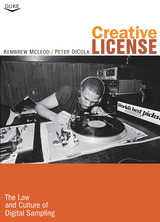
Interviewees include David Byrne, Cee Lo Green, George Clinton, De La Soul, DJ Premier, DJ Qbert, Eclectic Method, El-P, Girl Talk, Matmos, Mix Master Mike, Negativland, Public Enemy, RZA, Clyde Stubblefield, T.S. Monk.
For all the turmoil that roiled financial markets during the Great Recession and its aftermath, Wall Street forecasts once again turned bullish and corporate profitability soared to unprecedented heights. How does capitalism consistently generate profits despite its vulnerability to destabilizing events that can plunge the global economy into chaos? The Great Levelerelucidates the crucial but underappreciated role of the law in regulating capitalism’s rhythms of accumulation and growth.
Brett Christophers argues that capitalism requires a delicate balance between competition and monopoly. When monopolistic forces become dominant, antitrust law steps in to discourage the growth of giant corporations and restore competitiveness. When competitive forces become dominant, intellectual property law steps in to protect corporate assets and encourage investment. These two sets of laws—antitrust and intellectual property—have a pincer effect on corporate profitability, ensuring that markets become neither monopolistic, which would lead to rent-seeking and stagnation, nor overly competitive, which would drive down profits.
Christophers pursues these ideas through a close study of the historical development of American and British capitalist economies from the late nineteenth century to the present, tracing the relationship between monopoly and competition in each country and the evolution of legal mechanisms for keeping these forces in check. More than an illuminating study of the economic role of law, The Great Leveler is a bold and fresh dissection of the anatomy of modern capitalism.
This book is devoted to a deceptively simple but original argument: that copying is an essential part of being human, that the ability to copy is worthy of celebration, and that, without recognizing how integral copying is to being human, we cannot understand ourselves or the world we live in.
In spite of the laws, stigmas, and anxieties attached to it, the word “copying” permeates contemporary culture, shaping discourse on issues from hip hop to digitization to gender reassignment, and is particularly crucial in legal debates concerning intellectual property and copyright. Yet as a philosophical concept, copying remains poorly understood. Working comparatively across cultures and times, Marcus Boon undertakes an examination of what this word means—historically, culturally, philosophically—and why it fills us with fear and fascination. He argues that the dominant legal-political structures that define copying today obscure much broader processes of imitation that have constituted human communities for ages and continue to shape various subcultures today. Drawing on contemporary art, music and film, the history of aesthetics, critical theory, and Buddhist philosophy and practice, In Praise of Copying seeks to show how and why copying works, what the sources of its power are, and the political stakes of renegotiating the way we value copying in the age of globalization.
Videotape not only radically changed how audiences accessed the content they wanted and loved but also altered how they watched it. Hilderbrand develops an aesthetic theory of analog video, an “aesthetics of access” most boldly embodied by bootleg videos. He contends that the medium specificity of videotape becomes most apparent through repeated duplication, wear, and technical failure; video’s visible and audible degeneration signals its uses for legal transgressions and illicit pleasures. Bringing formal and cultural analysis into dialogue with industrial history and case law, Hilderbrand examines four decades of often overlooked histories of video recording, including the first network news archive, the underground circulation of Superstar: The Karen Carpenter Story, a feminist tape-sharing network, and the phenomenally popular website YouTube. This book reveals the creative uses of videotape that have made essential content more accessible and expanded our understanding of copyright law. It is a politically provocative, unabashedly nostalgic ode to analog.

What issues arise when students’ uses of intellectual materials are legally challenged, and how does the academic context affect them? What happens when users of intellectual property, either within or outside the academic structure, violate students’ rights to their intellectual products? In Intellectual Property on Campus, TyAnna K. Herrington addresses these concerns and more, clearing up the confusion often surrounding intellectual property law and its application in an academic setting. Filled with practical information and simple yet thorough explanations, this enlightening volume provides educators and students with a solid basis for understanding the broader impacts of legal and ethical dilemmas involving intellectual materials.
Herrington provides insight for students into how complex concepts such as patent, trademark, copyright, fair use, and plagiarism affect their work. She outlines the potential effects of the choices students make, as well as the benefits and limitations of legal protection for intellectual property, including the thorny issues of authorship and authority under the 1976 Copyright Act. Herrington also explores the topic of student collaboration—now very common on college campuses—and how it affects intellectual property issues and legal relationships, as well as the impact of new technologies, such as blogs, on student work in educational environments.
Intellectual Property on Campus also provides useful information for administrators and educators. In particular, Herrington investigates the possible ramifications of their pedagogical and policy choices, and examines in depth the responsibility of instructors to treat students’ intellectual property legally, ethically, and conscientiously. Cautioning educators about the limitations on their control over intellectual materials in an academic setting, Herrington encourages teachers to minimize their influence over student works, instead giving pupils more freedom to control their own creations.
The volume also investigates the rights, responsibilities, and limitations for users of intellectual property, as opposed to creators, especially as related to student or instructor use of copyrighted materials. Discussed in detail are such issues as fair use and the TEACH Act, as well as the often-intertwined areas of plagiarism, authorship, and copyright. In addition, Herrington addresses recent cultural developments regarding the use and creation of intellectual property by students and instructors.
Written in a jargon-free style that is easy to understand, Intellectual Property on Campus gives students, instructors, and administrators the information they need to navigate the intricate landscape of law and integrity in the realm of academic creation.
Largely a victory for OECD countries, the present state of intellectual property rights has important implications for developing countries. The incorporation of intellectual property rights into the WTO system will eventually change the relationship of trade, competition, and intellectual property. It will equally have to assist in providing equitable sharing of benefits in the use of plant genetic resources. All of these issues are essential for the revision of exclusions from patenting in TRIPs. This volume offers insights into how this difficult task could and should be approached in a balanced manner and will be essential reading for economists and trade and intellectual property lawyers interested in the subject. Moreover, the volume will be relevant to agricultural economists as it addresses complex problems in the interstices of trade, intellectual property, plant genetic resources, and sustainable development.
Thomas Cottier is Professor of European and International Economic Law, University of Bern, and Managing Director, World Trade Institute, University of Bern.
Petros C. Mavroidis is Professor of Law, University of Neuchâtel. He formerly worked in the Legal Affairs Division of the World Trade Organization.
Marion Panizzon is Research Fellow, University of Bern.
Simon Lacey is Research Fellow, University of Bern.
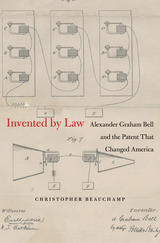
Alexander Graham Bell’s invention of the telephone in 1876 stands as one of the great touchstones of American technological achievement. Bringing a new perspective to this history, Invented by Law examines the legal battles that raged over Bell’s telephone patent, likely the most consequential patent right ever granted. To a surprising extent, Christopher Beauchamp shows, the telephone was as much a creation of American law as of scientific innovation.
Beauchamp reconstructs the world of nineteenth-century patent law, replete with inventors, capitalists, and charlatans, where rival claimants and political maneuvering loomed large in the contests that erupted over new technologies. He challenges the popular myth of Bell as the telephone’s sole inventor, exposing that story’s origins in the arguments advanced by Bell’s lawyers. More than anyone else, it was the courts that anointed Bell father of the telephone, granting him a patent monopoly that decisively shaped the American telecommunications industry for a century to come. Beauchamp investigates the sources of Bell’s legal primacy in the United States, and looks across the Atlantic, to Britain, to consider how another legal system handled the same technology in very different ways.
Exploring complex questions of ownership and legal power raised by the invention of important new technologies, Invented by Law recovers a forgotten history with wide relevance for today’s patent crisis.
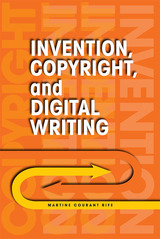
This is the first empirical, mixed-methods study of copyright issues that speaks to writing specialists and legal scholars about the complicated intersections of rhetoric, technology, copyright law, and writing for the Internet. Martine Courant Rife opens up new conversations about how invention and copyright work together in the composing process for digital writers and how this relationship is central to contemporary issues in composition pedagogy and curriculum.
In this era of digital writing and publishing, composition and legal scholars have identified various problems with writers’ processes and the law’s construction of textual ownership, such as issues of appropriation, infringement, and fair use within academic and online contexts. Invention, Copyright, and Digital Writing unpacks digital writers’ complex perceptions of copyright, revealing how it influences what they choose to write and how it complicates their work. Rife uses quantitative and qualitative approaches and focuses on writing as a tool and a technology-mediated activity, arguing the copyright problem is about not law but invention and the attendant issues of authorship.
Looking at copyright and writing through a rhetorical lens, Rife leverages the tools and history of rhetoric to offer insights into how some of our most ancient concepts inform our understanding of the problems copyright law creates for writers. In this innovative study that will be of interest to professional and technical writers, scholars and students of writing and rhetoric, and legal professionals, Rife offers possibilities for future research, teaching, curriculum design, and public advocacy in regard to composition and changing copyright laws.

Steirer’s expansive view of intellectual property law encompasses not only statutes and judicial opinions, but also the everyday practices and productions of authors, editors, fans, and other legal laypersons. The result is a history of the law as improvisatory and accident-prone, taking place as often outside the courtroom as inside, and shaped as much by laypersons as lawyers. Through the examination of influential legal disputes involving early properties such as Dashiell Hammett’s Sam Spade, H. P. Lovecraft’s Cthulhu Mythos, and Robert E. Howard’s Conan the Barbarian, Steirer provides a ground’s eye view of how copyright law has operated and evolved in practice.
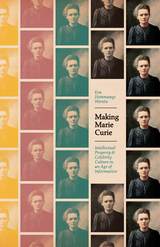
Making Marie Curie explores what went into the creation of this icon of science. It is not a traditional biography, or one that attempts to uncover the “real” Marie Curie. Rather, Eva Hemmungs Wirtén, by tracing a career that spans two centuries and a world war, provides an innovative and historically grounded account of how modern science emerges in tandem with celebrity culture under the influence of intellectual property in a dawning age of information. She explores the emergence of the Curie persona, the information culture of the period that shaped its development, and the strategies Curie used to manage and exploit her intellectual property. How did one create and maintain for oneself the persona of scientist at the beginning of the twentieth century? What special conditions bore upon scientific women, and on married women in particular? How was French identity claimed, established, and subverted? How, and with what consequences, was a scientific reputation secured?
In its exploration of these questions and many more, Making Marie Curie provides a composite picture not only of the making of Marie Curie, but the making of modern science itself.
Contributors are Nimrod Baranovitch, Adriana Helbig, Javier F. Leon, Ana María Ochoa, Silvia Ramos, Helen Rees, Felicia Sandler, Amy Ku'uleialoha Stillman, Ricardo D. Trimillos, Andrew N. Weintraub, and Bell Yung.
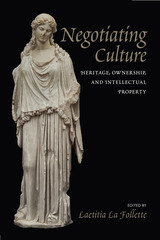
This provocative collection of essays—a series of case studies in cultural ownership by scholars from a range of fields—explores issues of cultural heritage and intellectual property in a variety of contexts, from contests over tangible artifacts as well as more abstract forms of culture such as language and oral traditions to current studies of DNA and genes that combine nature and culture, and even new, nonproprietary models for the sharing of digital technologies. Each chapter sets the debate in its historical and disciplinary context and suggests how the approaches to these issues are changing or should change.
One of the most innovative aspects of the volume is the way each author recognizes the social dimensions of group ownership and demonstrates the need for negotiation and new models. The collection as a whole thus challenges the reader to reevaluate traditional ways of thinking about cultural ownership and to examine the broader social contexts within which negotiation over the ownership of culture is taking place.
In addition to Laetitia La Follette, contributors include David Bollier, Stephen Clingman, Susan DiGiacomo, Oriol Pi-Sunyer, Margaret Speas, Banu Subramaniam, Joe Watkins, and H. Martin Wobst.
Patent law is crucial to encourage technological innovation. But as the patent system currently stands, diverse industries from pharmaceuticals to software to semiconductors are all governed by the same rules even though they innovate very differently. The result is a crisis in the patent system, where patents calibrated to the needs of prescription drugs wreak havoc on information technologies and vice versa. According to Dan L. Burk and Mark A. Lemley in The Patent Crisis and How the Courts Can Solve It, courts should use the tools the patent system already gives them to treat patents in different industries differently. Industry tailoring is the only way to provide an appropriate level of incentive for each industry.
Burk and Lemley illustrate the barriers to innovation created by the catch-all standards in the current system. Legal tools already present in the patent statute, they contend, offer a solution—courts can tailor patent law, through interpretations and applications, to suit the needs of various types of businesses. The Patent Crisis and How the Courts Can Solve It will be essential reading for those seeking to understand the nexus of economics, business, and law in the twenty-first century.
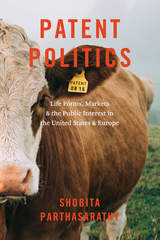
To demonstrate this, Parthasarathy takes readers through a particularly fierce and prolonged set of controversies over patents on life forms linked to important advances in biology and agriculture and potentially life-saving medicines. Comparing battles over patents on animals, human embryonic stem cells, human genes, and plants in the United States and Europe, she shows how political culture, ideology, and history shape patent system politics. Clashes over whose voices and which values matter in the patent system, as well as what counts as knowledge and whose expertise is important, look quite different in these two places. And through these debates, the United States and Europe are developing very different approaches to patent and innovation governance. Not just the first comprehensive look at the controversies swirling around biotechnology patents, Patent Politics is also the first in-depth analysis of the political underpinnings and implications of modern patent systems, and provides a timely analysis of how we can reform these systems around the world to maximize the public interest.
Organized as a series of “takes” that range from short sidebars to extended discussions, Permissions, A Survival Guide explores intellectual property law as it pertains to visual imagery. How can you determine whether an artwork is copyrighted? How do you procure a high-quality reproduction of an image? What does “fair use” really mean? Is it ever legitimate to use the work of an artist without permission? Bielstein discusses the many uncertainties that plague writers who work with images in this highly visual age, and she does so based on her years navigating precisely these issues. As an editor who has hired a photographer to shoot an incredibly obscure work in the Italian mountains (a plan that backfired hilariously), who has tried to reason with artists' estates in languages she doesn't speak, and who has spent her time in the archival trenches, she offers a snappy and humane guide to this difficult terrain.
Filled with anecdotes, asides, and real courage, Permissions, A Survival Guide is a unique handbook that anyone working in the visual arts will find invaluable, if not indispensable.
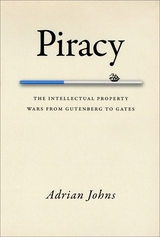
Since the rise of Napster and other file-sharing services in its wake, most of us have assumed that intellectual piracy is a product of the digital age and that it threatens creative expression as never before. The Motion Picture Association of America, for instance, claimed that in 2005 the film industry lost $2.3 billion in revenue to piracy online. But here Adrian Johns shows that piracy has a much longer and more vital history than we have realized—one that has been largely forgotten and is little understood.
Piracy explores the intellectual property wars from the advent of print culture in the fifteenth century to the reign of the Internet in the twenty-first. Brimming with broader implications for today’s debates over open access, fair use, free culture, and the like, Johns’s book ultimately argues that piracy has always stood at the center of our attempts to reconcile creativity and commerce—and that piracy has been an engine of social, technological, and intellectual innovations as often as it has been their adversary. From Cervantes to Sonny Bono, from Maria Callas to Microsoft, from Grub Street to Google, no chapter in the story of piracy evades Johns’s graceful analysis in what will be the definitive history of the subject for years to come.
Originally published in 2011, Reclaiming Fair Use challenged the widely held notion that copyright law is obsolete in an age of digital technologies. Beginning with a survey of the contemporary landscape of copyright law, Aufderheide and Jaszi drew on their years of experience advising documentary filmmakers, English teachers, performing arts scholars, and other creative professionals to lay out in detail how the principles of fair-use can be employed to avoid copyright violation. Taking stock of the vibrant remix culture that has only burgeoned since the book’s original publication, this new edition addresses the expanded reach of fair use—tracking the Twitter hashtag #WTFU (where’s the fair use?), the maturing of the transformativeness measure in legal disputes, the ongoing fight against automatic detection software, and the progress and delays of digitization initiatives around the country.
Full of no-nonsense advice and practical examples, Reclaiming Fair Use remains essential reading for anyone interested in law, creativity, and the ever-broadening realm of new media.
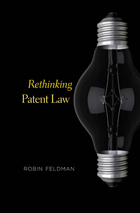
Scientific and technological innovations are forcing patent law into the spotlight and revealing its many glaring inadequacies. Take, for example, the patent case that almost shut down the BlackBerry, or the growing phenomenon of patent trolling, in which patents are acquired for the sole purpose of entrapping companies whose products relate to them. And patents on genes have everyone up in arms—and our courts confused.
Robin Feldman explains why patents are causing so much trouble. The problem lies in our assumption that patents set clear boundaries for rights to an invention. In reality, they do no such thing. The very nature of inventions makes them impossible to describe unambiguously for all time. When something is so new that we do not understand yet how it works, what it is capable of doing, or how it could be applied—as is often the case in biotechnology—description is necessarily slippery.
Instead of hoping for clear boundaries, and moaning when we don’t get them, Rethinking Patent Law urges lawmakers to focus on what the law can do well: craft rules that anticipate the bargaining that will occur as rights unfold. By steering clear of laws that distort the bargaining process, lawmakers can help courts answer difficult questions, such as whether genes, software, and business methods constitute patentable subject matter, whether patents in the life sciences should control inventions that have yet to be discovered, and how to resolve the battles between pharmaceutical companies and generics.
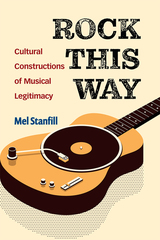
Any and all songs are capable of being remixed. But not all remixes are treated equally. Rock This Way examines transformative musical works—cover songs, remixes, mash-ups, parodies, and soundalike songs—to discover what contemporary American culture sees as legitimate when it comes to making music that builds upon other songs. Through examples of how popular discussion talked about such songs between 2009 and 2018, Mel Stanfill uses a combination of discourse analysis and digital humanities methods to interrogate our broader understanding of transformative works and where they converge at the legal, economic, and cultural ownership levels.
Rock This Way provides a new way of thinking about what it means to re-create and borrow music, how the racial identity of both the reusing artist and the reused artist matters, and the ways in which the law polices artists and their works. Ultimately, Stanfill demonstrates that the extent to which a work is seen as having new expression or meaning is contingent upon notions of creativity, legitimacy, and law, all of which are shaped by white supremacy.
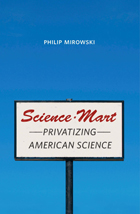
This trenchant study analyzes the rise and decline in the quality and format of science in America since World War II.
During the Cold War, the U.S. government amply funded basic research in science and medicine. Starting in the 1980s, however, this support began to decline and for-profit corporations became the largest funders of research. Philip Mirowski argues that a powerful neoliberal ideology promoted a radically different view of knowledge and discovery: the fruits of scientific investigation are not a public good that should be freely available to all, but are commodities that could be monetized.
Consequently, patent and intellectual property laws were greatly strengthened, universities demanded patents on the discoveries of their faculty, information sharing among researchers was impeded, and the line between universities and corporations began to blur. At the same time, corporations shed their in-house research laboratories, contracting with independent firms both in the States and abroad to supply new products. Among such firms were AT&T and IBM, whose outstanding research laboratories during much of the twentieth century produced Nobel Prize–winning work in chemistry and physics, ranging from the transistor to superconductivity.
Science-Mart offers a provocative, learned, and timely critique, of interest to anyone concerned that American science—once the envy of the world—must be more than just another way to make money.
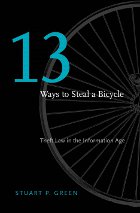
Theft claims more victims and causes greater economic injury than any other criminal offense. Yet theft law is enigmatic, and fundamental questions about what should count as stealing remain unresolved—especially misappropriations of intellectual property, information, ideas, identities, and virtual property.
In Thirteen Ways to Steal a Bicycle, Stuart Green assesses our current legal framework at a time when our economy increasingly commodifies intangibles and when the means of committing theft and fraud grow ever more sophisticated. Was it theft for the editor of a technology blog to buy a prototype iPhone he allegedly knew had been lost by an Apple engineer in a Silicon Valley bar? Was it theft for doctors to use a patient’s tissue without permission in order to harvest a valuable cell line? For an Internet activist to publish tens of thousands of State Department documents on his Web site?
In this full-scale critique, Green reveals that the last major reforms in Anglophone theft law, which took place almost fifty years ago, flattened moral distinctions, so that the same punishments are now assigned to vastly different offenses. Unreflective of community attitudes toward theft, which favor gradations in blameworthiness according to what is stolen and under what circumstances, and uninfluenced by advancements in criminal law theory, theft law cries out for another reformation—and soon.
Who owns academic work? This question is provoking political and legal battles, fought on uncertain terrain, for ever-higher stakes. The posting of faculty lecture notes on commercial Web sites is being hotly debated in multiple forums, even as faculty and university administrators square off in a battle for professorial copyright. In courtrooms throughout the country, universities find themselves embroiled in intricate and expensive patent litigation. Meanwhile, junior researchers are appearing in those same courtrooms, using intellectual property rules to challenge traditional academic hierarchies. All but forgotten in these ownership disputes is a more fundamental question: should academic work be owned at all? Once characterized as a kind of gift, academic work--and academic freedom--are now being reframed as private intellectual property.
Drawing on legal, historical, and qualitative research, Corynne McSherry explores the propertization of academic work and shows how that process is shaking the foundations of the university, the professoriate, and intellectual property law. The modern university's reason for being is inextricably tied to that of the intellectual property system. The rush of universities and scholars to defend their knowledge as property dangerously undercuts a working covenant that has sustained academic life--and intellectual property law--for a century and a half. As the value structure of the research university is replaced by the inequalities of the free market, academics risk losing a language for talking about knowledge as anything other than property. McSherry has written a book that ought to deeply trouble everyone who cares about the academy.
READERS
Browse our collection.
PUBLISHERS
See BiblioVault's publisher services.
STUDENT SERVICES
Files for college accessibility offices.
RECENTLY PUBLISHED



UChicago Accessibility Resources
home | accessibility | search | about | contact us
BiblioVault ® 2001 - 2024
The University of Chicago Press