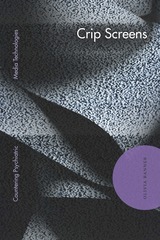
front cover of Crip Screens
Crip Screens
Countering Psychiatric Media Technologies
Olivia Banner
Duke University Press, 2025
In Crip Screens, Olivia Banner provides a wide-ranging and ongoing history of Black, feminist-of-color, and crip resistance to psychiatry’s incorporation of hegemonic media technologies into treatment and research. Banner shows how institutions use documentary films, data visualization, network graphs, therapy chatbots, virtual patient training programs, and pharmaceutical advertising to pathologize certain people as “deviant” and “mentally ill.” Those people so categorized have used media technologies toward alternative visions of care. Examining insurgent media and technology efforts in the 1960s and 1970s, Banner shows how women and communities of color worked to wrest away from psychiatry its hold over representing mental distress and pathological categorization. These efforts and innovations, she argues, were distinct from what is now accepted as the antipsychiatry movement. In so doing, Banner recovers a lost history of disability politics—what she calls crip screens—that refused psychiatry’s use of cultural productions toward its carceral and subjugating designs.
[more]

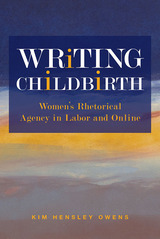
front cover of Writing Childbirth
Writing Childbirth
Women’s Rhetorical Agency in Labor and Online
Kim Hensley Owens
Southern Illinois University Press, 2015

Women seeking to express concerns about childbirth or to challenge institutionalized medicine by writing online birth plans or birth stories exercise rhetorical agency in undeniably feminist ways. In Writing Childbirth: Women’s Rhetorical Agency in Labor and Online, author Kim Hensley Owens explores how women create and use everyday rhetorics in planning for, experiencing, and writing about childbirth.

Drawing on medical texts, popular advice books, and online birth plans and birth stories, as well as the results of a childbirth writing survey, Owens considers how women’s agency in childbirth is sanctioned, and how it is not. She examines how women’s rhetorical choices in writing interact with institutionalized medicine and societal norms. Writing Childbirth reveals the contradictory messages women receive about childbirth, their conflicting expectations about it, and how writing and technology contribute to and reconcile these messages and expectations.

Demonstrating the value of extending rhetorical investigations of health and medicine beyond patient-physician interactions and the discourse of physicians, Writing Childbirth offers fresh insight into feminist rhetorical agency and technology and expands our understanding of the rhetorics of health and medicine. 

[more]


Send via email Share on Facebook Share on Twitter