
 A SCHOLARLY BOOK REPOSITORY
Between 1951 and 1962 nearly ten billion dollars in long-term capital (both direct investment and purchase of securities) flowed into Canada. This massive amount represented one third of all long-term capital moving among industrial nations. Its transfer marked the first time since before World War I that the world witnessed such a large-scale international movement of capital motivated primarily by a prospect of higher rates of return.
In Capital Transfers and Economic Policy the authors test the theory of the causes and effects of international capital movements against the evidence drawn from Canada's experience. They explore Canada's adjustment to capital flows and show how the operation of her economic policy is affected by the sensitivity of capital flows to the country's interest rates and foreign-exchange rate.
Their brilliant analysis is particularly valuable in light of current trends in capital flows among industrial nations and the June 1970 return of the Canadian dollar to a flexible exchange rate, which put the economy in a working situation similar to that of the fifties.

As corporations search for new production sites, governments compete furiously using location subsidies and tax incentives to lure them. Yet underwriting big business can have its costs: reduction in economic efficiency, shifting of tax burdens, worsening of economic inequalities, or environmental degradation.
Competing for Capital is one of the first books to analyze competition for investment in order to suggest ways of controlling the effects of capital mobility. Comparing the European Union's strict regulation of state aid to business with the virtually unregulated investment competition in the United States and Canada, Kenneth P. Thomas documents Europe's relative success in controlling—and decreasing—subsidies to business, even while they rise in the United States.
Thomas provides an extensive history of the powers granted to the EU's governing European Commission for controlling subsidies and draws on data to show that those efforts are paying off. In reviewing trends in North America, he offers the first comprehensive estimate of U.S. subsidies to business at all levels to show that the United States is a much higher subsidizer than it portrays itself as being.
Thomas then suggests what we might learn from the European experience to control the effects of capital mobility—not only within or between states, but also globally, within NAFTA and the World Trade Organization as well. He concludes with policy recommendations to help promote international cooperation and cross-fertilization of ways to control competition for investment.
For decades, Central America has faced market dependency, natural disasters, and political systems characterized by protectionist policies and low participation--situations that have had a tremendous impact on its economic development.
This two-volume set is a comprehensive assessment of Central America's position in the world economy, and it serves as a handbook for the important economic reforms Central America must undertake to become a viable competitor in the international economy.
For decades, Central America has faced market dependency, natural disasters, and political systems characterized by protectionist policies and low participation--situations that have had a tremendous impact on its economic development.
This two-volume set is a comprehensive assessment of Central America's position in the world economy, and it serves as a handbook for the important economic reforms Central America must undertake to become a viable competitor in the international economy.
In an attempt to quantify the effect of tax policy on international investment choices, this volume presents in-depth analyses of the interaction of international tax rules and the investment decisions of multinational enterprises. Ten papers assess the role played by multinational firms and their investment in the U.S. economy and the design of international tax rules for multinational investment; analyze channels through which international tax rules affect the costs of international business activities; and examine ways in which international tax rules affect financing decisions of multinational firms. As a group, the papers demonstrate that international tax rules have significant effects on firms' investment and other financing decisions.
The volume concludes that some policies can act to both protect imports and promote exports, that the threat of protectionist policies can often have effects that are as pronounced as their implementation, and that regulatory policy has as great an impact on trade and investment patterns as does trade policy itself. It will be of crucial interest to international trade economists, policy specialists, and political scientists.
Chapters cover such topics as theoretical accounts of FDI patterns, the growth of multinational enterprises, and the FDI experiences of Japan, the United States, and selected developing countries. This volume will interest economists, government officials, and business people concerned with FDI today.
Basing his analysis on legislative history, statutory and constitutional interpretation, and finance and trade theory, Sidak shows that these restrictions no longer serve their national security purpose (if they ever did). Instead they deny American consumers lower prices and more robust innovation, hamper access of American investors to foreign telecommunications markets, and unconstitutionally impinge on freedom of speech. Sidak's study encompasses the Telecommunications Act of 1996, recent global mergers such as British Telecom-MCI, and the 1997 World Trade Organization agreement to liberalize trade in telecommunications services.
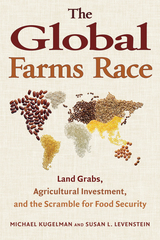
The debate over large-scale land acquisition is typically polarized, with critics lambasting it as a form of “neocolonialism,” and proponents lauding it as an elixir for the poor yields, inefficient technology, and unemployment plaguing global agriculture. The Global Farms Race instead offers diverse perspectives, featuring contributions from agricultural investment consultants, farmers’ organizations, international NGOs, and academics. The book addresses historical context, environmental impacts, and social effects, and covers all the major geographic areas of investment.
Nearly 230 million hectares of farmland—an area equivalent to the size of Western Europe—have been sold or leased since 2001, with most of these transactions occurring since 2008. As the deals continue to increase, it is imperative for anyone concerned with food security to understand them and their consequences. The Global Farms Race is a critical resource to develop that understanding.
"[A] fascinating study of how people―and their capital―seek to move around a world that is at once hugely interconnected and driven by inequities…definitive, detailed, and unusually nuanced.”
―Atossa Araxia Abrahamian, Foreign Affairs
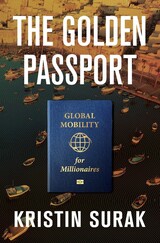
The first comprehensive on-the-ground investigation of the global market for citizenship, examining the wealthy elites who buy passports, the states and brokers who sell them, and the normalization of a once shadowy practice.
Our lives are in countless ways defined by our citizenship. The country we belong to affects our rights, our travel possibilities, and ultimately our chances in life. Obtaining a new citizenship is rarely easy. But for those with the means—billionaires like Peter Thiel and Jho Low, but also countless unknown multimillionaires—it’s just a question of price.
More than a dozen countries, many of them small islands in the Mediterranean, Caribbean, and South Pacific, sell citizenship to 50,000 people annually. Through six years of fieldwork on four continents, Kristin Surak discovered how the initially dubious sale of passports has transformed into a full-blown citizenship industry that thrives on global inequalities. Some “investor citizens” hope to parlay their new passport into visa-free travel—or use it as a stepping stone to residence in countries like the United States. Other buyers take out a new citizenship as an insurance policy or to escape state control at home. Almost none, though, intend to move to their selected country and live among their new compatriots, whose relationship with these global elites is complex.
A groundbreaking study of a contentious practice that has become popular among the nouveaux riches, The Golden Passport takes readers from the details of the application process to the geopolitical hydraulics of the citizenship industry. It’s a business that thrives on uncertainty and imbalances of power between big, globalized economies and tiny states desperate for investment. In between are the fascinating stories of buyers, brokers, and sellers, all ready to profit from the citizenship trade.
Yu Zheng challenges the idea that democracy is the prerequisite for developing countries to attract foreign direct investment (FDI) and promote economic growth. He examines the relationship between political institutions and FDI through the use of cross-national analysis and case studies of three rapidly growing Asian economies with a focus on the role of microinstitutional “special economic zones” (SEZ).
China’s authoritarian system allows for bold, radical economic reform, but China has attracted FDI largely because of its increasingly credible investment environment as well as its central and local governments’ efforts to overcome constraints on investment. India’s democratic institutions provide more political assurance to foreign investors, but its market became conducive to FDI only when the government adopted more flexible investment policies. Taiwan’s democratic transition shifted its balance of policy credibility and flexibility, which was essential for the nation’s economic takeoff and sustained growth.
Zheng concludes that a more accurate understanding of the relationship between political institutions and FDI comes from careful analysis of institutional arrangements that entail a trade-off between credibility and flexibility of governance.
Mira Wilkins, the foremost authority on foreign investment in the United States, continues her magisterial history in a work covering the critical years 1914–1945.
Wilkins includes all long-term inward foreign investments, both portfolio (by individuals and institutions) and direct (by multinationals), across such enterprises as chemicals and pharmaceuticals, textiles, insurance, banks and mortgage providers, other service sector companies, and mining and oil industries. She traces the complex course of inward investments, presents the experiences of the investors, and examines the political and economic conditions, particularly the range of public policies, that affected foreign investments. She also offers valuable discussions on the intricate cross-investments of inward and outward involvements and the legal precedents that had long-term consequences on foreign investment.
At the start of World War I, the United States was a debtor nation. By the end of World War II, it was a creditor nation with the strongest economy in the world. Integrating economic, business, technological, legal, and diplomatic history, this comprehensive study is essential to understanding the internationalization of the American economy, as well as broader global trends.
From the colonial era to 1914, America was a debtor nation in international accounts—owing more to foreigners than foreigners owed to us. By 1914 it was the world’s largest debtor nation. Mira Wilkins provides the first complete history of foreign investment in the United States during that period. The book shows why the United States was attractive to foreign investors and traces the changing role of foreign capital in the nation’s development, covering both portfolio and direct investment. The immense new wave of foreign investment in the United States today, and our return to the status of a debtor nation—once again the world’s largest debtor nation—makes this strong exposition far more than just historically interesting.
Wilkins reviews foreign portfolio investments in government securities (federal, state, and local) and in corporate stocks and bonds, as well as foreign direct investments in land and real estate, manufacturing plants, and even such service-sector activities as accounting, insurance, banking, and mortgage lending. She finds that between 1776 and 1875, public-sector securities (principally federal and state securities) drew in the most long-term foreign investment, whereas from 1875 to 1914 the private sector was the main attraction. The construction of the American railroad system called on vast portfolio investments from abroad; there was also sizable direct investment in mining, cattle ranching, the oil industry, the chemical industry, flour production, and breweries, as well as the production of rayon, thread, and even submarines. In addition, there were foreign stakes in making automobile and electrical and nonelectrical machinery. America became the leading industrial country of the world at the very time when it was a debtor nation in world accounts.
Organized into three main parts, the book first discusses the evolution and nature of China's FDI regulatory framework. Part 2 examines the various modes and variant patterns of FDI in China in the reform years. Part 3's central task is to demonstrate a systematic link between institutional changes in China's FDI regulatory framework and the changing patterns of FDI. In conclusion, Jun Fu finds that China has made substantial progress from a command economy to a market system, but that it still has a long way to go before it truly attains a transparent and rule-based system.
This book adds new dimensions to the scholarship on China as a growing economic power and will be of particular interest to international economists, political scientists, and business scholars studying China.
Jun Fu is Associate Professor in the School of Economics and Management, Tsinghua University.
Comprised of twelve fascinating studies, International Trade in East Asia highlights many of the trading practices between countries within the region as well as outside of it. The contributors bring into focus some of the region's endemic and external barriers to international trade and discuss strategies for improving productivity and fostering trade relationships. Studies on some of the factors that drive exports, the influence of research and development, the effects of foreign investment, and the ramifications of different types of protectionism will particularly resonate with the financial and economic communities who are trying to keep pace with this dramatically altered landscape.
Eight essays examine such issues as the current extent of international market integration, gains to U.S. investors through international diversification, home-country bias in investing, the role of time and location around the world in stock trading, and the behavior of country funds. Other, long-standing questions about equity markets are also addressed, including market efficiency and the accuracy of models of expected returns, with a particular focus on variances, covariances, and the price of risk according to the Capital Asset Pricing Model.
Graham’s analysis draws on new data from face-to-face interviews with the managers of over 450 foreign firms operating in two developing countries: Georgia and the Philippines. Diaspora-owned and diaspora-managed firms are better connected than other foreign firms and they use social ties to resolve disputes and influence government policy. At the same time, Graham shows that diaspora-affiliated firms are no more socially responsible than their purely foreign peers—at root, they are profit-seeking enterprises, not development NGOs. Graham identifies implications for policymakers seeking to capture the development potential of diaspora investment and for managers of multinational firms who want to harness diasporans as a source of sustained competitive advantage.
Investing Japan demonstrates that foreign investment is a vital and misunderstood aspect of Japan’s modern economic development. The drive to become a modern industrial power from the 1860s to the 1930s necessitated the adoption and internalization of foreign knowledge. This goal could only be achieved by working within the overarching financial and technological frameworks of Western capitalism. Foreign borrowing, supported by the gold standard, was the crux of Japan’s pre-war capital formation. It simultaneously financed domestic industrial development, the conduct of war, and territorial expansion on the Asian continent. Foreign borrowing also financed the establishment of infrastructure in Japan’s largest cities, the nationalization of railways, the interlinked capital-raising programs of “special banks” and parastatal companies, and the rapid electrification of Japanese industry in the 1920s.
Simon James Bytheway investigates the role played by foreign companies in the Japanese experience of modernization while highlighting their identity as key agents in the processes of industrialization and technology transfer. Investing Japan delivers a complex, multifaceted analysis, intersecting with the histories of formal and informal economic imperialism, diplomacy, war financing, domestic and international financial markets, parastatal and multinational enterprise, and Japan’s “internationalization” vis-à-vis the emerging global market.
Measuring Wealth and Financial Intermediation and Their Links to the Real Economy identifies measurement problems associated with the financial crisis and improvements in measurement that may prevent future crises, taking account of the dynamism of the financial marketplace in which measures that once worked well become misleading. In addition to advances in measuring financial activity, the contributors also investigate the effects of the crisis on households and nonfinancial businesses. They show that households’ experiences varied greatly and some even experienced gains in wealth, while nonfinancial businesses’ lack of access to credit in the recession may have been a more important factor than the effects of policies stimulating demand.
Mexico was second only to the United States as the world's largest oil producer in the years following the Mexican Revolution. As the revolutionary government became institutionalized, it sought to assure its control of Mexico's oil resources through the Constitution of 1917, which returned subsoil rights to the nation. This comprehensive study explores the resulting struggle between oil producers, many of which were U.S. companies, and the Mexican government.
Linda Hall goes beyond the diplomacy to look at the direct impact of a powerful, highly profitable foreign-controlled industry on a government and a nation trying to recover from a major civil war. She draws on extensive research in Mexican archives, including both government sources and the private papers of Presidents Alvaro Obregón and Plutarco Elías Calles, as well as U.S. government and private sources.
Since the North American Free Trade Agreement has expanded United States business ties to Mexico, this study of a crucial moment in U.S.-Mexican business relations will be of interest to a wide audience in business, diplomatic, and political history.
The Power of Productivity provides powerful and controversial answers to these questions. William W. Lewis, the director emeritus of the McKinsey Global Institute, here draws on extensive microeconomic studies of thirteen nations over twelve years—conducted by the Institute itself—to counter virtually all prevailing wisdom about how best to ameliorate economic disparity. Lewis's research, which included studying everything from state-of-the-art auto makers to black-market street vendors and mom-and-pop stores, conclusively demonstrates that, contrary to popular belief, providing more capital to poor nations is not the best way to help them. Nor is improving levels of education, exchange-rate flexibility, or government solvency enough. Rather, the key to improving economic conditions in poor countries, argues Lewis, is increasing productivity through intense, fair competition and protecting consumer rights.
As The Power of Productivity explains, this sweeping solution affects the economies of poor nations at all levels—from the viability of major industries to how the average consumer thinks about his or her purchases. Policies must be enacted in developing nations that reflect a consumer rather than a producer mindset and an attendant sense of consumer rights. Only one force, Lewis claims, can stand up to producer special privileges—consumer interests.
The Institute's unprecedented research method and Lewis's years of experience with economic policy combine to make The Power of Productivity the most authoritative and compelling view of the global economy today, one that will inform political and economic debate throughout the world for years to come.
Offering the clearest look yet at China’s state-driven investment in Africa, this book is rooted in six years of extensive fieldwork in copper mines and construction sites in Zambia, Africa’s copper giant. Lee shadowed Chinese, Indian, and South African managers in underground mines, interviewed Zambian miners and construction workers, and worked with Zambian officials. Distinguishing carefully between Chinese state capital and global private capital in terms of their business objectives, labor practices, managerial ethos, and political engagement with the Zambian state and society, she concludes that Chinese state investment presents unique potential and perils for African development. The Specter of Global China will be a must-read for anyone interested in the future of China, Africa, and capitalism worldwide.
With the growing debate about the effect of financial interdependence on the ability of states to conduct economic policy and indeed to preserve their independence in the face of unprecedented economic linkages, this book will be of interest to political scientists and economists as well as policy makers concerned with the impact of financial globalization and the causes of differentials in access to capital.
Andrew C. Sobel is Assistant Professor of Political Science and Resident Fellow, Center in Political Economy, Washington University, St. Louis. He is the author of Domestic Choices, International Markets: Dismantling National Barriers and Liberalizing Securities Markets.
The contributors examine the effects of taxation on decisions about international financial management, business investment, and international income shifting. They consider the influence of tax rules on dividend policy decisions within multinationals; the extent to which tax incentives affect the level and location of research and development across countries; and the fact that foreign-controlled companies operating in the United States pay lower taxes than do domestically controlled companies.
The contributors to this volume are Rosanne Altshuler, Alan J. Auerbach, Neil Bruce, Timothy Goodspeed, Roger H. Gordon, Harry Grubert, Bronwyn H. Hall, David Harris, Kevin Hassett, James R. Hines Jr., Roy D. Hogg, Joosung Jun, Jeffrey K. Mackie-Mason, Jack M. Mintz, Randall Morck, John Mutti, T. Scott Newlon, James M. Poterba, Joel Slemrod, Deborah Swenson, G. Peter Wilson, and Bernard Yeung.
This book has broad implications for the political economy of reform because it illuminates the political determinants of privatization and the resources used to resist it. In addition, Sznajder Lee sheds new light on why some countries are more likely than others to be subject to external constraints, such as IMF conditionality, and how some allegedly pro-market reformers manage to maintain public ownership over certain industry sectors.
Global trade is of vital interest to citizens as well as policymakers, yet it is widely misunderstood. This compact exposition of the market forces underlying international commerce addresses both of these concerned groups, as well as the needs of students and scholars. Although it contains no equations, it is almost mathematical in its elegance, precision, and power of expression.
Understanding Global Trade provides a thorough explanation of what shapes the international organization of production and distribution and the resulting trade flows. It reviews the evolution of knowledge in this field from Adam Smith to today as a process of theoretical modeling, accumulation of new empirical data, and then revision of analytical frameworks in response to evidence and changing circumstances. It explains the sources of comparative advantage and how they lead countries to specialize in making products which they then sell to other countries. While foreign trade contributes to the overall welfare of a nation, it also creates winners and losers, and Helpman describes mechanisms through which trade affects a country's income distribution.
The book provides a clear and original account of the revolutions in trade theory of the 1980s and the most recent decade. It shows how scholars shifted the analysis of trade flows from the sectoral level to the business-firm level, to elucidate the growing roles of multinational corporations, offshoring, and outsourcing in the international division of labor. Helpman’s explanation of the latest research findings is essential for an understanding of world affairs.
READERS
Browse our collection.
PUBLISHERS
See BiblioVault's publisher services.
STUDENT SERVICES
Files for college accessibility offices.
RECENTLY PUBLISHED


UChicago Accessibility Resources
home | accessibility | search | about | contact us
BiblioVault ® 2001 - 2024
The University of Chicago Press