
 A SCHOLARLY BOOK REPOSITORY
This is the book Tony Blair doesn't want you to read about 7/7.
In February 2003, Tony Blair was warned by British intelligence that the invasion of Iraq would 'heighten' the risk of terrorism in Britain.
In July 2005, al-Qaeda struck in the heart of London. Despite the British Government's increasingly desperate attempts at denial, polls show that an overwhelming majority of people in Britain are convinced that there is a connection between the London bombings and the war on Iraq. A majority of Britons fault Tony Blair himself.
Using secret government documents declassified since the bombings, and leaks from British intelligence, Milan Rai exposes official deceit at the highest levels, and establishes the crucial role of British foreign policy in generating a home-grown version of al-Qaeda. Rai shows how an official report drawn up by the Home Office and Foreign Office in early 2004 identified 'foreign policy' - and the war in Iraq in particular - as a major cause of alienation among young British Muslims.
Examining the backgrounds of the 7/7 bombers, Milan Rai demonstrates that Islam is not to blame. Most importantly, the book shows us how to make sure that this never happens again -- and offers brief obituaries for the 52 people who lost their lives that day.

Despite the frequent appearances of Osama Bin Laden and Ayman al-Zawahiri on television screens worldwide, Al Qaeda remains an elusive entity. As the world has grown increasingly familiar with the spectacle of Islamist terrorism, Al Qaeda’s essential worldview has remained bewilderingly opaque. To reveal its inner workings, Gilles Kepel and his collaborators, all scholars of Arabic and Islam, have collected and brilliantly annotated key texts of the major figures from whom the movement has drawn its beliefs and direction. The resulting volume offers an unprecedented glimpse into the assumptions of the salafist jihadists who have reshaped political life at the beginning of the third millennium.
Excerpts from the work of Azzabdallah Azzam, Ayman al-Zawahiri, Osama Bin Laden, and Abu Musab al-Zarqawi—drawn from speeches, internet postings, and published writings—tell the story of Al Qaeda’s evolution, from its origins in the Afghan war through the war in Iraq. These texts reveal the rational, discursive mode used to persuade and to justify violent armed struggle in a universe defined by militant Islam. Substantial interpretive introductions to each leader’s work and extensive critical commentary provide unparalleled access to the intellectual and doctrinal context of Al Qaeda in which these radical ideas have taken shape.
By viewing Al Qaeda from within, this indispensable volume reveals the terrorist network’s insidious role in the global web culture of today and the full dimensions of its frightening threat to world stability and security.
Jihad, with its many terrifying associations, is a term widely used today, though its meaning is poorly grasped. Few people understand the circumstances requiring a jihad, or "holy" war, or how Islamic militants justify their violent actions within the framework of the religious tradition of Islam. How Islam, with more than one billion followers, interprets jihad and establishes its precepts has become a critical issue for both the Muslim and the non-Muslim world.
John Kelsay's timely and important work focuses on jihad of the sword in Islamic thought, history, and culture. Making use of original sources, Kelsay delves into the tradition of shari'a--Islamic jurisprudence and reasoning--and shows how it defines jihad as the Islamic analogue of the Western "just" war. He traces the arguments of thinkers over the centuries who have debated the legitimacy of war through appeals to shari'a reasoning. He brings us up to the present and demonstrates how contemporary Muslims across the political spectrum continue this quest for a realistic ethics of war within the Islamic tradition.
Arguing the Just War in Islam provides a systematic account of how Islam's central texts interpret jihad, guiding us through the historical precedents and Qur'anic sources upon which today's claims to doctrinal truth and legitimate authority are made. In illuminating the broad spectrum of Islam's moral considerations of the just war, Kelsay helps Muslims and non-Muslims alike make sense of the possibilities for future war and peace.
The question of how Islam arrived in India remains markedly contentious in South Asian politics. Standard accounts center on the Umayyad Caliphate’s incursions into Sind and littoral western India in the eighth century CE. In this telling, Muslims were a foreign presence among native Hindus, sowing the seeds of a mutual animosity that presaged the subcontinent’s partition into Pakistan and India many centuries later.
But in a compelling reexamination of the history of Islam in India, Manan Ahmed Asif directs attention to a thirteenth-century text that tells the story of Chach, the Brahmin ruler of Sind, and his kingdom’s later conquest by the Muslim general Muhammad bin Qasim in 712 CE. The Chachnama has long been a touchstone of Indian history, yet it is seldom studied in its entirety. Asif offers a close and complete analysis of this important text, untangling its various registers and genres in order to reconstruct the political vision at its heart.
Asif challenges the main tenets of the Chachnama’s interpretation: that it is a translation of an earlier Arabic text and that it presents a history of conquest. Debunking both ideas, he demonstrates that the Chachnama was originally Persian and, far from advancing a narrative of imperial aggression, is a subtle and sophisticated work of political theory, one embedded in both the Indic and Islamic ethos. This social and intellectual history of the Chachnama is an important corrective to the divisions between Muslim and Hindu that so often define Pakistani and Indian politics today.
A political theorist teases out the century-old ideological transformation at the heart of contemporary discourse in Muslim nations undergoing political change.
The Arab Spring precipitated a crisis in political Islam. In Egypt Islamists have been crushed. In Turkey they have descended into authoritarianism. In Tunisia they govern but without the label of “political Islam.” Andrew March explores how, before this crisis, Islamists developed a unique theory of popular sovereignty, one that promised to determine the future of democracy in the Middle East.
This began with the claim of divine sovereignty, the demand to restore the sharīʿa in modern societies. But prominent theorists of political Islam also advanced another principle, the Quranic notion that God’s authority on earth rests not with sultans or with scholars’ interpretation of written law but with the entirety of the Muslim people, the umma. Drawing on this argument, utopian theorists such as Abū’l-Aʿlā Mawdūdī and Sayyid Quṭb released into the intellectual bloodstream the doctrine of the caliphate of man: while God is sovereign, He has appointed the multitude of believers as His vicegerent. The Caliphate of Man argues that the doctrine of the universal human caliphate underpins a specific democratic theory, a kind of Islamic republic of virtue in which the people have authority over the government and religious leaders. But is this an ideal regime destined to survive only as theory?
In the post-Soviet era, democracy has made little progress in Central Asia. In Chaos, Violence, Dynasty, Eric McGlinchey presents a compelling comparative study of the divergent political courses taken by Kyrgyzstan, Uzbekistan, and Kazakhstan in the wake of Soviet rule. McGlinchey examines economics, religion, political legacies, foreign investment, and the ethnicity of these countries to evaluate the relative success of political structures in each nation.
McGlinchey explains the impact of Soviet policy on the region, from Lenin to Gorbachev. Ruling from a distance, a minimally invasive system of patronage proved the most successful over time, but planted the seeds for current “neo-patrimonial” governments. The level of direct Soviet involvement during perestroika was the major determinant in the stability of ensuing governments. Soviet manipulations of the politics of Uzbekistan and Kazakhstan in the late 1980s solidified the role of elites, while in Kyrgyzstan the Soviets looked away as leadership crumbled during the ethnic riots of 1990. Today, Kyrgyzstan is the poorest and most politically unstable country in the region, thanks to a small, corrupt, and fractured political elite. In Uzbekistan, Islam Karimov maintains power through the brutal suppression of disaffected Muslims, who are nevertheless rising in numbers and influence. In Kazakhstan, a political machine fueled by oil wealth and patronage underlies the greatest economic equity in the region, and far less political violence.
McGlinchey’s timely study calls for a more realistic and flexible view of the successful aspects of authoritarian systems in the region that will be needed if there is to be any potential benefit from foreign engagement with the nations of Central Asia, and similar political systems globally.

Twice in this century popular revolts against colonial rule have occured in the Banten district of West Java. These revolts, conducted largely under an Islamic leadership, also proclaimed themselves Communist. Islamic Communism is seemingly a paradox. This is especially the case when one considers that probably no religion has proved more resistant to Communist ideology than Islam.
Michael Williams here details the complicated history of the Bantenese revolts in the twentieth century and probes the ideological riddle of Islamic Communism. Modern history is replete with examples of regions with a long history of organizing themselves politically to resist intrusion on their territory, resources, and people. This book establishes that in Indonesia, the Bantenese were among the most practiced exponents of resistance.
The Contemporary Arab Reader on Political Islam brings together the writings of highly influential figures in the field of Islamism in the contemporary Arab world, many of whose writings have never been available before in English.
Addressing the key issues such as human rights, civil society, secularism, globalisation and ummah, and the impact of the West on the modern Arab world, this is the perfect starting point for students and academics looking to understand 'Political Islam' in contemporary Arab and Muslim societies.
The contributors include such important Islamist thinkers and activists as Abdullah Azzam, central to the spread of Islamism in Afghanistan, Sayyid Muhammad Hussain Fadlallah, a major Shiite figure in contemporary Lebanon and Ahmad Bin Yousuf, a political advisor to Akram Haniyya in Gaza.
Contemporary Arab Thought is a complex term, encompassing a constellation of social, political, religious and ideological ideas that have evolved over the past two hundred years — ideas that represent the leading positions of the social classes in modern and contemporary Arab societies.
Distinguished Islamic scholar Ibrahim Abu-Rabi‘ addresses such questions as the Shari‘ah, human rights, civil society, secularism and globalization. This is complimented by a focused discussion on the writings of key Arab thinkers who represent established trends of thought in the Arab world, including Muhammad ‘Abid al-Jabiri, Adallah Laroui, Muhammad al-Ghazali, Rashid al-Ghannoushi, Qutatnine Zurayk, Mahdi ‘Amil and many others.
Before 1967, some Arab countries launched hopeful programmes of modernisation. After the 1967 defeat with Israel, many of these hopes were dashed. This book retraces the Arab world’s aborted modernity of recent decades. Abu-Rabi‘ explores the development of contemporary Arab thought against the historical background of the rise of modern Islamism, and the impact of the West on the modern Arab world.
From the paternalistic Christianity used to justify ever-intensifying neoliberalism, to the ethnonationalist and protectionist Christianity of Theresa May and Brexit, to the socialist constructions of Christianity by Jeremy Corbyn and Momentum, Crossley guides us through the love affair between politics and Christianity.. Drawing on interviews with politicians, activists, revolutionaries, and voters on either side of Brexit, Crossley reveals how religion is linked to positions on issues of class, capitalism, and foreign policy, and how it can can often challenge dominant class interests, obfuscate potential causes of unrest, and even justify military intervention.
The Green Movement protests that erupted in Iran in 2009 amid allegations of election fraud shook the Islamic Republic to its core. For the first time in decades, the adoption of serious liberal reforms seemed possible. But the opportunity proved short-lived, leaving Iranian activists and intellectuals to debate whether any path to democracy remained open.
Offering a new framework for understanding democratization in developing countries governed by authoritarian regimes, Democracy in Iran is a penetrating, historically informed analysis of Iran’s current and future prospects for reform. Beginning with the Iranian Revolution of 1979, Misagh Parsa traces the evolution of Iran’s theocratic regime, examining the challenges the Islamic Republic has overcome as well as those that remain: inequalities in wealth and income, corruption and cronyism, and a “brain drain” of highly educated professionals eager to escape Iran’s repressive confines. The political fortunes of Iranian reformers seeking to address these problems have been uneven over a period that has seen hopes raised during a reformist administration, setbacks under Ahmadinejad, and the birth of the Green Movement. Although pro-democracy activists have made progress by fits and starts, they have few tangible reforms to show for their efforts.
In Parsa’s view, the outlook for Iranian democracy is stark. Gradual institutional reforms will not be sufficient for real change, nor can the government be reformed without fundamentally rethinking its commitment to the role of religion in politics and civic life. For Iran to democratize, the options are narrowing to a single path: another revolution.
The distinguished contributors analyze Turkish Islam and attempt to determine how significant a factor it is in Turkey's compatibility with the democratic and humanitarian aims of EU member states. Their incisive essays argue that Islamic religious forces will not undermine the autonomy of the secular Turkish state. They also contend that Islam-inspired political parties actually support the secular government. Included in the volume is the thought-provoking study "Searching for the Fault-Line" by E. J. Zürcher and H. van der Linden that examines Turkey's current religious landscape and ultimately dismisses the notion of an inevitable clash between Turkish Islam and European cultures.
A valuable study for political scientists, European scholars, and interested observers, The European Union, Turkey and Islam offers a timely and masterfully argued case for why Islam as practiced in Turkey should not be an impediment to the nation's membership in the European Union.

The relationship between Western democracies and Islam, rarely entirely comfortable, has in recent years become increasingly tense. A growing immigrant population and worries about cultural and political assimilation—exacerbated by terrorist attacks in the United States, Europe, and around the world—have provoked reams of commentary from all parts of the political spectrum, a frustrating majority of it hyperbolic or even hysterical.
In The Fear of Barbarians, the celebrated intellectual Tzvetan Todorov offers a corrective: a reasoned and often highly personal analysis of the problem, rooted in Enlightenment values yet open to the claims of cultural difference. Drawing on history, anthropology, and politics, and bringing to bear examples ranging from the murder of Theo van Gogh to the French ban on headscarves, Todorov argues that the West must overcome its fear of Islam if it is to avoid betraying the values it claims to protect. True freedom, Todorov explains, requires us to strike a delicate balance between protecting and imposing cultural values, acknowledging the primacy of the law, and yet strenuously protecting minority views that do not interfere with its aims. Adding force to Todorov's arguments is his own experience as a native of communist Bulgaria: his admiration of French civic identity—and Western freedom—is vigorous but non-nativist, an inclusive vision whose very flexibility is its core strength.
The record of a penetrating mind grappling with a complicated, multifaceted problem, The Fear of Barbarians is a powerful, important book—a call, not to arms, but to thought.
In Senegal, the Muridiyya, a large Islamic Sufi order, is the single most influential religious organization, including among its numbers the nation’s president. Yet little is known of this sect in the West. Drawn from a wide variety of archival, oral, and iconographic sources in Arabic, French, and Wolof, Fighting the Greater Jihad offers an astute analysis of the founding and development of the order and a biographical study of its founder, Cheikh Ahmadu Bamba Mbakke.
Cheikh Anta Babou explores the forging of Murid identity and pedagogy around the person and initiative of Amadu Bamba as well as the continuing reconstruction of this identity by more recent followers. He makes a compelling case for reexamining the history of Muslim institutions in Africa and elsewhere in order to appreciate believers’ motivation and initiatives, especially religious culture and education, beyond the narrow confines of political collaboration and resistance. Fighting the Greater Jihad also reveals how religious power is built at the intersection of genealogy, knowledge, and spiritual force, and how this power in turn affected colonial policy.
Fighting the Greater Jihad will dramatically alter the perspective from which anthropologists, historians, and political scientists study Muslim mystical orders.
This beginner's guide to Hamas has been fully revised and updated. It now covers all the major events since the January 2006 elections, including the conflict with Fatah and Israel's brutal offensive in Gaza at the end of 2008.
Explaining the reasons for Hamas's popularity, leading Al-Jazeera journalist and Cambridge academic Khaled Hroub provides the key facts that are so often missing from conventional news reports. It's a one-stop guide that gives a clear overview of Hamas's history, key beliefs, and its political agenda.
This unique book provides a refreshing perspective that gets to the heart of Hamas.
For thirty years, Hezbollah has played a pivotal role in Lebanese and global politics. That visibility has invited Hezbollah’s lionization and vilification by outside observers, and at the same time has prevented a clear-eyed view of Hezbollah’s place in the history of the Middle East and its future course of action. Dominique Avon and Anaïs-Trissa Khatchadourian provide here a nonpartisan account which offers insights into Hezbollah that Western media have missed or misunderstood.
Now part of the Lebanese government, Hezbollah nevertheless remains in tension with both the transnational Shiite community and a religiously diverse Lebanon. Calling for an Islamic regime would risk losing critical allies at home, but at the same time Hezbollah’s leaders cannot say that a liberal regime is the solution for the future. Consequently, they use the ambiguous expression “civil but believer state.”
What happens when an organization founded as a voice of “revolution” and then “resistance” occupies a position of power, yet witnesses the collapse of its close ally, Syria? How will Hezbollah’s voice evolve as the party struggles to reconcile its regional obligations with its religious beliefs? The authors’ analyses of these key questions—buttressed by their clear English translations of foundational documents, including Hezbollah’s open letter of 1985 and its 2009 charter, and an in-depth glossary of key theological and political terms used by the party’s leaders—make Hezbollah an invaluable resource for all readers interested in the future of this volatile force.
Winner of the Albert Hourani Book Award
Sufis created the most extensive Muslim revivalist network in Asia before the twentieth century, generating a vibrant Persianate literary, intellectual, and spiritual culture while tying together a politically fractured world.
In a pathbreaking work combining social history, religious studies, and anthropology, Waleed Ziad examines the development across Asia of Muslim revivalist networks from the eighteenth to the twentieth centuries. At the center of the story are the Naqshbandi-Mujaddidi Sufis, who inspired major reformist movements and articulated effective social responses to the fracturing of Muslim political power amid European colonialism. In a time of political upheaval, the Mujaddidis fused Persian, Arabic, Turkic, and Indic literary traditions, mystical virtuosity, popular religious practices, and urban scholasticism in a unified yet flexible expression of Islam. The Mujaddidi “Hidden Caliphate,” as it was known, brought cohesion to diverse Muslim communities from Delhi through Peshawar to the steppes of Central Asia. And the legacy of Mujaddidi Sufis continues to shape the Muslim world, as their institutional structures, pedagogies, and critiques have worked their way into leading social movements from Turkey to Indonesia, and among the Muslims of China.
By shifting attention away from court politics, colonial actors, and the standard narrative of the “Great Game,” Ziad offers a new vision of Islamic sovereignty. At the same time, he demonstrates the pivotal place of the Afghan Empire in sustaining this vast inter-Asian web of scholastic and economic exchange. Based on extensive fieldwork across Afghanistan, Uzbekistan, and Pakistan at madrasas, Sufi monasteries, private libraries, and archives, Hidden Caliphate reveals the long-term influence of Mujaddidi reform and revival in the eastern Muslim world, bringing together seemingly disparate social, political, and intellectual currents from the Indian Ocean to Siberia.
Hizbu’llah is the largest and most prominent political party in Lebanon, and one of the most renowned Islamist movements in the world. In this book, Amal Saad-Ghorayeb examines the organisation’s understanding of jihad and how this, together with its belief in martyrdom, brought about the withdrawal of Israeli occupation forces from Lebanon in May 2000.
Saad-Ghorayeb explores the nature of the party’s struggle against the West by studying its views on the use of violence against Westerners. Crucially, she also addresses the question of whether Hizbu’llah depicts this struggle in purely political or civilisational terms. The existential nature of the movement’s conflict with Israel is analysed and the Islamic roots of its anti-Judaism is unearthed.
The author explores the mechanics and rationale behind the party’s integration into the Lebanese political system, and sheds light on how it has reconciled its national idenitity with its solidarity with the Muslim umma.
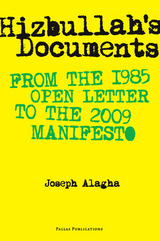
Despite the controversial reputation of Hizbullah in the West, and the significant role this powerful Islamist organization plays in Lebanese politics, there are few reliable, published English translations of the party’s primary documents. With this extensive work, Joseph Alagha seeks to remedy this problem and rectify the distortions and misrepresentations that have resulted from inaccurate translations.
Through privileged access to the party, Alagha was able to compile and meticulously translate a host of original primary documents, from the party’s 1985 Open Letter; through its eight clandestine conclaves from 1989 to 2009; to all of its election programs from 1992 to 2010, as well as all of the agreements, understandings, and pacts the party has ratified over the years; ending with the 2009 Political Manifesto. This firsthand portrait of Hizbullah’s metamorphosis, especially in the past decade, is complete with thorough footnotes, commentary, background information, chronology, and a detailed introductory chapter that maps the party’s transformation by analytically comparing the Open Letter with the 2009 Manifesto. This volume will be an invaluable companion for both scholars and policy makers.
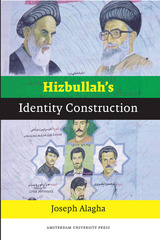
As the dominant political force in Lebanon and one of the most powerful post-Islamist organizations in the world, Hizbullah is a source of great controversy and uncertainty in the West. Despite the significant attention paid to this group by the media, the details of Hizbullah’s evolution have frequently confounded politicians—and even scholars. In this important study, Joseph Alagha, a scholar with unprecedented access to the organization, exhaustively and objectively analyzes Hizbullah’s historical evolution and offers a revolutionary new perspective on the political phenomenon of the organization.
In How Informal Institutions Matter, Zeki Sarigil examines the role of informal institutions in sociopolitical life and addresses the following questions: Why and how do informal institutions emerge? To ask this differently, why do agents still create or resort to informal institutions despite the presence of formal institutional rules and regulations? How do informal institutions matter? What roles do they play in sociopolitical life? How can we classify informal institutions? What novel types of informal institutions can we identify and explain? How do informal institutions interact with formal institutions? How do they shape formal institutional rules, mechanisms, and outcomes? Finally, how do existing informal institutions change? What factors might trigger informal institutional change? In order to answer these questions, Sarigil examines several empirical cases of informal institution as derived from various issue areas in the Turkish sociopolitical context (i.e., civil law, conflict resolution, minority rights, and local governance) and from multiple levels (i.e., national and local).
Political mobilization tends to take different forms in contemporary Catholic- and Sunni-majority countries. Luis Felipe Mantilla attributes this dynamic to changes taking place in religious communities and the political institutions that govern religious political engagement.
In How Political Parties Mobilize Religion, Mantillaevenhandedly traces the emergence and success of religious parties in Mexico and Turkey, two countries shaped by assertive secular regimes. In doing so, he demonstrates that religious parties are highly responsive to political institutions, such as electoral laws, as well as to the structure of broader religious communities.
Whereas in both countries, the electoral success of religious mobilizers was initially a boon for democracy, in Mexico it was marred by political mismanagement and became entangled with persistent corruption and escalating violence. In Turkey, the democratic credentials of religious mobilizers were profoundly eroded as the government became increasingly autocratic, concentrating power in very few hands and rolling back basic liberal rights.
Mantilla investigates the role religious mobilization plays in the evolution of electoral politics and democratic institutions, and to what extent their trajectories reflect broader trends in political Catholicism and Islam.
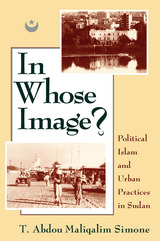
Drawing a detailed portrait of political fundamentalism during the 1985-89 period of democratic rule in the Sudan, Simone shows how the Shari‘a Movement attempted to shape a viable social order by linking religious integrity and economic development, where religious practice was to dominate all aspects of society and individuals' daily lives. However, because Sudanese society is remarkably diverse ethnically and religiously, this often led to conflict, fragmentation, and violence in the name of Islam.
Simone's own Islamic background leads him to deplore the violence and the devastating psychological, economic, and cultural consequences of one form of Islamic radicalism, while holding to hope that a viable form of this inherently political religion can in fact be applied. As a counterpoint, he ends with a discussion of South Africa's Call of Islam, which seeks political unity through a more tolerant interpretation of Islam.
As an introduction to religious discourse in Africa, this book will be widely read by students and scholars throughout African Studies, Religious Studies, Anthropology, and Political Science.
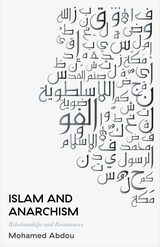
Discourse around Muslims and Islam all too often lapses into a false dichotomy of Orientalist and fundamentalist tropes. A popular reimagining of Islam is urgently needed. Yet it is a perhaps unexpected political philosophical tradition that has the most to offer in this pursuit: anarchism.
Islam and Anarchism is a highly original and interdisciplinary work, which simultaneously disrupts two commonly held beliefs - that Islam is necessarily authoritarian and capitalist; and that anarchism is necessarily anti-religious and anti-spiritual. Deeply rooted in key Islamic concepts and textual sources, and drawing on radical Indigenous, Islamic anarchistic and social movement discourses, Abdou proposes 'Anarcha-Islam'.
Constructing a decolonial, non-authoritarian and non-capitalist Islamic anarchism, Islam and Anarchism philosophically and theologically challenges the classist, sexist, racist, ageist, queerphobic and ableist inequalities in both post- and neo-colonial societies like Egypt, and settler-colonial societies such as Canada and the USA.
This book compares Islamic and Western political formulations, highlighting areas of agreement and disparity. Building on this analysis, the author goes on to show that political Islam offers a serious alternative to the dominant political system and ideology of the West.
Sabet argues that rather than leading to a "Clash of Civlizations" or the assimilation of Islam into the Western system, a positive process of interactive self-reflection between Islam and liberal democracy is the best way forward.
Beginning this process, Sabet highlights key concepts of Islamic political thought and brings them into dialogue with Western modernity. The resulting synthesis is essential reading for advanced undergraduate and graduate students of Islamic and Middle Eastern politics, political theory, comparative politics and international relations.
Justice (al-‘adl) is one of the principal values of the Islamic faith. In Islam, Justice, and Democracy, Sabri Ciftci explores the historical, philosophical, and empirical foundations of justice to examine how religious values relate to Muslim political preferences and behavior. He focuses on Muslim agency and democracy to explain how ordinary Muslims use the conceptions of divine justice—either servitude to God or exercising free will against oppressors—to make sense of real-world problems.
Using ethnographic research, interviews, and public opinion surveys as well as the works of Islamist ideologues, archives of Islamist journals, and other sources, Ciftci shows that building contemporary incarnations of Islamist justice is, in essence, a highly practical political project that has formative effects on Muslim political attitudes. Islam, Justice, and Democracy compares the recent Arab Spring protests to the constitutionalist movements of the nineteenth and twentieth centuries in the Middle East to demonstrate the continuities and rifts a century apart.
By putting justice at the center of democratic thinking in the Muslim world, Ciftci reconsiders Islam's potential in engendering both democratic ideals and authoritarian preferences.
The chapters provide analysis through four distinct categories: the everyday practice of Islam across local communities; state policies toward Islam, focusing on attempts to regulate public and private practice through cultural, legal, and political institutions and how these differ from Soviet policies; how religious actors influence communities in the practice of Islam, state policies towards the religion, and subsequent communal responses to state regulations; and how knowledge of and interaction with the larger Islamic world is shaping Central Asia’s current Islamic revival and state responses.
The contributors, a multidisciplinary and international group of leading scholars, develop fresh insights that both corroborate and contradict findings from previous research, while also highlighting the problem of making any generalizations about Islam in individual states or the region. As such, this volume provides new and impactful analysis for scholars, students, and policy makers concerned with Central Asia.
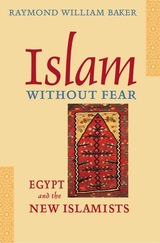
For the last several decades an influential group of Egyptian scholars and public intellectuals has been having a profound effect in the Islamic world. Raymond Baker offers a compelling portrait of these New Islamists--Islamic scholars, lawyers, judges, and journalists who provide the moral and intellectual foundations for a more fully realized Islamic community, open to the world and with full rights of active citizenship for women and non-Muslims.
The New Islamists have a record of constructive engagement in Egyptian public life, balanced by an unequivocal critique of the excesses of Islamist extremists. Baker shows how the New Islamists are translating their thinking into action in education and the arts, economics and social life, and politics and foreign relations despite an authoritarian political environment. For the first time, Baker allows us to hear in context the most important New Islamist voices, including Muhammad al Ghazzaly, Kamal Abul Magd, Muhammad Selim al Awa, Fahmy Huwaidy, Tareq al Bishry, and Yusuf al Qaradawy--regarded by some as the most influential Islamic scholar in the world today. A potentially transformative force in global Islam, the New Islamists define Islam as a civilization that engages others and searches for common ground through shared values such as justice, peace, human rights, and democracy.
Islam without Fear is an impressive achievement that contributes to the understanding of Islam in general and the possibilities of a centrist Islamist politics in particular.
In the hysteria surrounding Political Islam, it is difficult to find analysis that doesn't feel the need to justify the existence of Islamic leaders or react to the West's fear of 'extremists'. In Islamic Activists, Deina Ali Abdelkader shows us what Islamic leaders and activists believe and what they think about just governance.
Explaining and comparing Islamist ideas, including those about leadership, justice and minority rights, Abdelkader explains how these have been represented in the writings of important historical and contemporary Islamists. In doing so, Abdelkader reveals that democracy is not the sole preserve of those who support Enlightenment values, offering the reader a chance to understand the populist non-violent side of Islamic activism. This includes an examination of the ideas of the leaders of the populist Islamist movements in Egypt, Tunisia and Morocco.
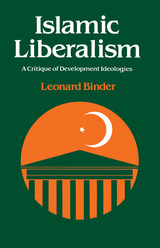
The Islamic political community presents special problems to the development of an indigenous liberalism. That community is conceived of as divinely ordained, and its notions of the good are to be derived from scriptural revelation, not arrived at through rational discourse. Liberal politics would seem to stand little chance of surviving in such an atmosphere, let alone thriving.
Binder responds to the challenge of Edward Said's critique of Orientalism, of a range of neo-Marxian development theorists, of Sayyid Qutb's fundamentalist vision, of Samir Amin's vision of Egypt's role in the Arab awakening, of Tariq al-Bishri's new populism, of Zaki Najib Mahmud's pragmatism, and the structuralism of Arkoun and Laroui. The deconstruction of these varied texts produces a number of persuasive hermeneutical conclusions that are sequentially woven together in a critical argument that refocuses our attention on the central question of political freedom and democracy. In the course of constructing this argument, Binder reopens the dialogue between Western modernity and Islamic authenticity and reveals the surprising extent to which there is a convergent interest in liberal, democratic, civil society. Finally, in a concluding chapter, he addresses the prospects for liberalism in the three major bourgeois states of Islam—Egypt, Turkey, and Iran.
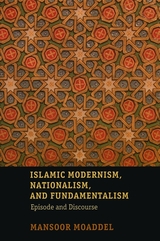
An ambitious comparative historical analysis of ideological production in the Islamic world from the mid-1800s to the present, Mansoor Moaddel's Islamic Modernism, Nationalism, and Fundamentalism provides a unique perspective for understanding the social conditions of these discourses. Moaddel characterizes these movements in terms of a sequence of cultural episodes characterized by ideological debates and religious disputations, each ending with a revolution or military coup. Understanding how the leaders of these movements formulated their discourses is, for Moaddel, the key to understanding Middle Eastern history. This premise allows him to unlock for readers the historical process that started with Islamic modernism and ended with fundamentalism.

Loimeier's careful scholarship combines astute readings of the work of previous scholars--both published and unpublished--with archival material and the findings of his own fieldwork in Nigeria. His work fills a substantial gap in contemporary Nigerian studies. This book provides invaluable and essential reading for serious students of Nigerian politics and of Islamic movements in Africa.
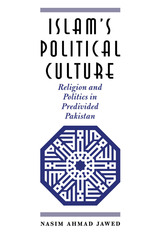
This book examines the political dimension of Islam in predivided Pakistan (1947-1971), one of the first new Muslim nations to commit itself to an Islamic political order and one in which the national debate on Islamic, political, and ideological issues has been the most persistent, focused, and rich of any dialogues in the contemporary Muslim world.
Nasim Jawed draws on the findings of a survey he conducted among two influential social groups—the ulama (traditional religious leaders) and the modern professionals—as well as on the writings of Muslim intellectuals. He probes the major Islamic positions on critical issues concerning national identity, the purpose of the state, the form of government, and free, socialist, and mixed economies.
This study contributes to an enhanced understanding of Islam's political culture worldwide, since the issues, positions, and arguments are often similar across the Muslim world. The empirical findings of the study not only outline the ideological backdrop of contemporary Islamic reassertion, but also reveal diversity as well as tensions within it.
The late twentieth century has witnessed the emergence of an unexpected and extraordinary phenomenon: Islamist political movements. Beginning in the early 1970s, militants revolted against the regimes in power throughout the Muslim world and exacerbated political conflicts everywhere. Their jihad, or “Holy Struggle,” aimed to establish a global Islamic state based solely on a strict interpretation of the Koran. Religious ideology proved a cohesive force, gathering followers ranging from students and the young urban poor to middle-class professionals.
After an initial triumph with the Islamic revolution in Iran, the movement waged jihad against the USSR in Afghanistan, proclaiming for the first time a doctrine of extreme violence. By the end of the 1990s, the failure to seize political power elsewhere led to a split: movement moderates developed new concepts of “Muslim democracy” while extremists resorted to large-scale terrorist attacks around the world.
Jihad is the first extensive, in-depth attempt to follow the history and geography of this disturbing political-religious phenomenon. Fluent in Arabic, Gilles Kepel has traveled throughout the Muslim world gathering documents, interviews, and archival materials inaccessible to most scholars, in order to give us a comprehensive understanding of the scope of Islamist movements, their past, and their present. As we confront the threat of terrorism to our lives and liberties, Kepel helps us make sense of the ominous reality of jihad today.
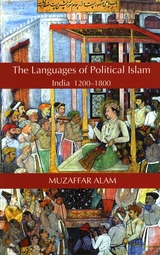
Muzaffar Alam shows that the adoption of Arabo-Persian Islam in India changed the manner in which Islamic rule and governance were conducted. Islamic regulation and statecraft in a predominately Hindu country required strategic shifts from the original Islamic injunctions. Islamic principles could not regulate beliefs in a vast country without accepting cultural limitations and limits on the exercise of power. As a result of cultural adaptation, Islam was in the end forced to reinvent its principles for religious rule. Acculturation also forced key Islamic terms to change so fundamentally that Indian Islam could be said to have acquired a character substantially different from the Islam practiced outside of India.
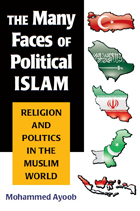
---Peter J. Katzenstein, Walter S. Carpenter, Jr. Professor of International Studies and Stephen H. Weiss Presidential Teaching Fellow, Cornell University
---Fawaz A. Gerges, Carnegie Scholar, and holds the Christian A. Johnson Chair in International Affairs and Middle Eastern Studies, Sarah Lawrence College
---François Burgat, Director, French National Centre for Scientific Research (CNRS) and the Institute for Research and Study on the Arab and Muslim World (IREMAM), Aix-en-Provence, France
---Shibley Telhami, Anwar Sadat Professor for Peace and Development, University of Maryland, and Senior Fellow, Brookings Institution
Analysts and pundits from across the American political spectrum describe Islamic fundamentalism as one of the greatest threats to modern, Western-style democracy. Yet very few non-Muslims would be able to venture an accurate definition of political Islam. Fully revised and updated, The Many Faces of Political Islam thoroughly analyzes the many facets of this political ideology and shows its impact on global relations.
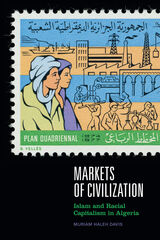
Building on the work of Foucault, Hammoudi argues that at the heart of Moroccan culture lies a paradigm of authority that juxtaposes absolute authority against absolute submission. Rooted in Islamic mysticism, this paradigm can be observed in the drama of mystic initiation, with its fundamental dialectic between Master and Disciple; in conflict with other cultural forms, and reelaborated in colonial and postcolonial circumstances, it informs all major aspects of Moroccan personal, political, and gender relations. Its influence is so pervasive and so firmly embedded that it ultimately legitimizes the authoritarian structure of power. Hammoudi contends that as long as the Master-Disciple dialectic remains the dominant paradigm of power relations, male authoritarianism will prevail as the dominant political form.
"Connecting political domination to gift exchange, ritual initiation, social loyalty, and gender reversals, Master and Disciple is nothing less than a thoroughgoing revision of our understanding of authoritarian rule in Morocco and in the Arab world in general."—Clifford Geertz, Institute for Advanced Study
A Foreign Affairs Best Book of the Year
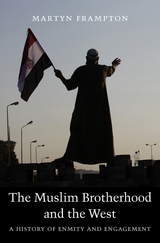
In the century since the Muslim Brotherhood first emerged in Egypt, its idea of “the West” has remained a key driver of its behavior. From its founding, the Brotherhood stood opposed to the British Empire and Western cultural influence. Its leaders hoped to create more pristine, authentically Islamic societies. As British power gave way to American, the Brotherhood oscillated between anxiety about the West and the need to engage with it, while American and British officials struggled to understand the group, unsure whether to shun or embrace it.
The Muslim Brotherhood and the West offers the first comprehensive history of the relationship between the world’s largest Islamist movement and the powers that have dominated the Middle East for the past hundred years. Drawing on extensive archival research in London and Washington and the Brotherhood’s writings in Arabic and English, Martyn Frampton reveals the history of this charged relationship down to the eve of the Arab Spring. What emerges is an authoritative account of a story that is crucial to understanding one of the world’s most turbulent regions.
“Rigorous yet absorbing…Fills a crucial gap in the literature and will be essential reading not just for scholars, but for anyone seeking to understand the ever-problematic relationship between religion and politics in today’s Middle East.”
—Financial Times
“Breaks new ground by examining the links between the Egyptian Brotherhood’s relations with Britain and…the United States.”
—Times Literary Supplement
An estimated twenty million Muslims now reside in Europe, mostly as a result of large-scale postwar immigration. In The Muslim Question in Europe, Peter O’Brien challenges the popular notion that the hostilities concerning immigration—which continues to provoke debates about citizenship, headscarves, secularism, and terrorism—are a clash between “Islam and the West.” Rather, he explains, the vehement controversies surrounding European Muslims are better understood as persistent, unresolved intra-European tensions.
O’Brien contends that the best way to understand the politics of state accommodation of European Muslims is through the lens of three competing political ideologies: liberalism, nationalism, and postmodernism. These three broadly understood philosophical traditions represent the most influential normative forces in the politics of immigration in Europe today. He concludes that Muslim Europeans do not represent a monolithic anti-Western bloc within Europe. Although they vehemently disagree among themselves, it is along the same basic liberal, nationalist, and postmodern contours as non-Muslim Europeans.
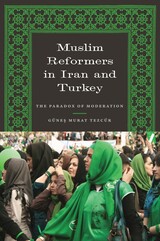
Moderation theory describes the process through which radical political actors develop commitments to electoral competition, political pluralism, human rights, and rule of law and come to prefer negotiation, reconciliation, and electoral politics over provocation, confrontation, and contentious action. Revisiting this theory through an examination of two of the most prominent moderate Islamic political forces in recent history, Muslim Reformers in Iran and Turkey analyzes the gains made and methods implemented by the Reform Front in the Islamic Republic of Iran and the Justice and Development Party in Turkey.
Both of these groups represent Muslim reformers who came into continual conflict with unelected adversaries who attempted to block their reformist agendas. Based on extensive field research in both locales, Muslim Reformers in Iran and Turkey argues that behavioral moderation as practiced by these groups may actually inhibit democratic progress. Political scientist Güneş Murat Tezcür observes that the ability to implement conciliatory tactics, organize electoral parties, and make political compromises impeded democracy when pursued by the Reform Front and the Justice and Development Party. Challenging conventional wisdom, Tezcür's findings have broad implications for the dynamics of democratic progress.
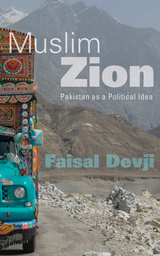
Pakistan, founded less than a decade after a homeland for India’s Muslims was proposed, is both the embodiment of national ambitions fulfilled and, in the eyes of many observers, a failed state. Muslim Zion cuts to the core of the geopolitical paradoxes entangling Pakistan to argue that India’s rival has never been a nation-state in the conventional sense. Pakistan is instead a distinct type of political geography, ungrounded in the historic connections of lands and peoples, whose context is provided by the settler states of the New World but whose closest ideological parallel is the state of Israel.
A year before the 1948 establishment of Israel, Pakistan was founded on a philosophy that accords with Zionism in surprising ways. Faisal Devji understands Zion as a political form rather than a holy land, one that rejects hereditary linkages between ethnicity and soil in favor of membership based on nothing but an idea of belonging. Like Israel, Pakistan came into being through the migration of a minority population, inhabiting a vast subcontinent, who abandoned old lands in which they feared persecution to settle in a new homeland. Just as Israel is the world’s sole Jewish state, Pakistan is the only country to be established in the name of Islam.
Revealing how Pakistan’s troubled present continues to be shaped by its past, Muslim Zion is a penetrating critique of what comes of founding a country on an unresolved desire both to join and reject the world of modern nation-states.
The twenty-first century has been a volatile period for American Muslims. Anti-Muslim hate crimes peaked after September 11, 2001, then increased again dramatically in parallel with the candidacy and presidency of Donald Trump. Yet American Muslims now have unprecedented avenues of influence in US politics. Muslims and US Politics Today explores the various representations of Muslims in American political and civic life, the myriad ways American Muslims are affected by politics, and how American Muslims are engaging political life as individuals and communities.
This integrative volume reaches back to presidential elections after 9/11 (Edward E. Curtis IV), further back to Iranian immigrants after the Iranian Revolution (Mohsen Mostafavi Mobasher), and back even to fundamentals of religious freedom in the United States (Kambiz GhaneaBassiri; Mucahit Bilici). Aspects of anti-Muslim politics and marginalization, as well as mobilization and activism, are covered in essays by Salah D. Hassan, Evelyn Alsultany, Juliane Hammer, Alisa Perkins, and Sally Howell. In a final section on rethinking Muslim politics, Donna Auston and Sylvia Chan-Malik dialogue on Black American Islam and Junaid Rana looks broadly to a global Muslim left. In this critically-timed volume, editor Mohammad Hassan Khalil has drawn together leading scholars to provide a deep look at the rich political history and future of American Muslims.
Muslims in a Post-9/11 America examines how public fears about Muslims in the United States compare with the reality of American Muslims’ attitudes on a range of relevant issues. While most research on Muslim Americans focuses on Arab Muslims, a quarter of the Muslim American population, Rachel Gillum includes perspectives of Muslims from various ethnic and national communities—from African Americans to those of Pakistani, Iranian, or Eastern European descent. Using interviews and one of the largest nationwide surveys of Muslim Americans to date, Gillum examines more than three generations of Muslim American immigrants to assess how segments of the Muslim American community are integrating into the U.S. social fabric, and how they respond to post-9/11 policy changes. Gillum’s findings challenge perceptions of Muslims as a homogeneous, isolated, un-American, and potentially violent segment of the U.S. population.
Despite these realities, negative political rhetoric around Muslim Americans persists. The findings suggest that the policies designed to keep America safe from terrorist attacks may have eroded one of law enforcement’s greatest assets in the fight against violent extremism—a relationship of trust and goodwill between the Muslim American community and the U.S. government. Gillum argues for policies and law enforcement tactics that will bring nuanced understandings of this diverse category of Americans and build trust, rather than alienate Muslim communities.
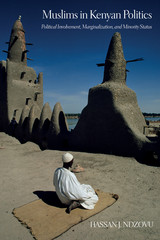
Kenya’s Muslim population comprises ethnic Arabs, Indians, and black Africans, and its status has varied historically. Under British rule, an imposed racial hierarchy affected Muslims particularly, thwarting the development of a united political voice. Drawing on a broad range of interviews and historical research, Ndzovu presents a nuanced picture of political associations during the postcolonial period and explores the role of Kenyan Muslims as political actors.
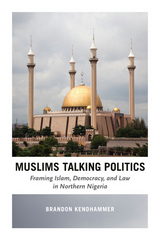
Kendhammer argues that despite Nigeria’s struggles with jihadist insurgency, its recent history is really one of tenuous and fragile reconciliation between mass democratic aspirations and concerted popular efforts to preserve Islamic values in government and law. Combining an innovative analysis of Nigeria’s Islamic and political history with visits to the living rooms of working families, he sketches how this reconciliation has been constructed in the conversations, debates, and everyday experiences of Nigerian Muslims. In doing so, he uncovers valuable new lessons—ones rooted in the real politics of ordinary life—for how democracy might work alongside the legal recognition of Islamic values, a question that extends far beyond Nigeria and into the Muslim world at large.
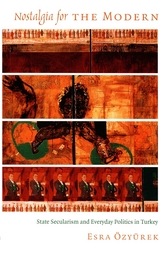
Drawing on her ethnographic research in Istanbul and Ankara during the late 1990s, Özyürek describes how ordinary Turkish citizens demonstrated their affinity for Kemalism in the ways they organized their domestic space, decorated their walls, told their life stories, and interpreted political developments. She examines the recent interest in the private lives of the founding generation of the Republic, reflects on several privately organized museum exhibits about the early Republic, and considers the proliferation in homes and businesses of pictures of Atatürk, the most potent symbol of the secular Turkish state. She also explores the organization of the 1998 celebrations marking the Republic’s seventy-fifth anniversary. Özyürek’s insights into how state ideologies spread through private and personal realms of life have implications for all societies confronting the simultaneous rise of neoliberalism and politicized religion.
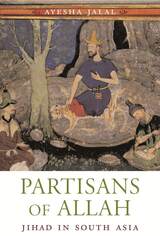
The idea of jihad is central to Islamic faith and ethics, and yet its meanings have been highly contested over time. They have ranged from the philosophical struggle to live an ethical life to the political injunction to wage war against enemies of Islam. Today, more than ever, jihad signifies the political opposition between Islam and the West. As the line drawn between Muslims and non-Muslims becomes more rigid, Ayesha Jalal seeks to retrieve the ethical meanings of this core Islamic principle in South Asian history.
Drawing on historical, legal, and literary sources, Jalal traces the intellectual itinerary of jihad through several centuries and across the territory connecting the Middle East with South Asia. She reveals how key innovations in modern Islamic thought resulted from historical imperatives. The social and political scene in India before, during, and after British colonial rule forms the main backdrop. We experience the jihad as armed warfare waged by Sayyid Ahmad of Rai Bareilly between 1826 and 1831, the calls to jihad in the great rebellion of 1857, the fusion of jihad with a strand of anti-colonial nationalism in the early twentieth century, and the contemporary politics of self-styled jihadis in Pakistan, waging war to liberate co-religionists in Afghanistan and Kashmir.
Partisans of Allah surveys this rich and tumultuous history of South Asian Muslims and its critical contribution to the intellectual development of the key concept of jihad. Analyzing the complex interplay of ethics and politics in Muslim history, the author effectively demonstrates the preeminent role of jihad in the Muslim faith today.
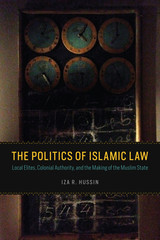
Drawing on extensive archival work in English, Arabic, and Malay—from court records to colonial and local papers to private letters and visual material—Hussin offers a view of politics in the colonial period as an iterative series of negotiations between local and colonial powers in multiple locations. She shows how this resulted in a paradox, centralizing Islamic law at the same time that it limited its reach to family and ritual matters, and produced a transformation in the Muslim state, providing the frame within which Islam is articulated today, setting the agenda for ongoing legislation and policy, and defining the limits of change. Combining a genealogy of law with a political analysis of its institutional dynamics, this book offers an up-close look at the ways in which global transformations are realized at the local level.

This volume of the Building Bridges Seminar, Power: Divine and Human, Christian and Muslim Perspectives, comprises pairs of essays by Christians and Muslims which introduce texts for dialogical study, plus the actual text-excerpts themselves.
This new book goes far beyond mere reporting on a dialogical seminar; rather, it provides guidance and materials for constructing a similar dialogical experience on a particular topic. As a resource for comparative theology, Power: Divine and Human is unique in that it takes up a topic not usually explored in depth in Christian-Muslim conversations. It is written by scholars for scholars. However, in tone and structure, it is suitable for the non-specialist as well. Students (undergraduate and graduate), religious leaders, and motivated non-specialists will find it readable and useful. While it falls solidly in the domain of comparative theology, it can also be used in courses on dialogical reading of scripture, interreligious relations, and political philosophy.
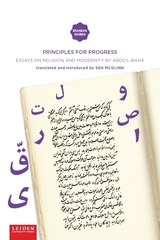
This book presents three of the works of Abduʾl-Bahā, son of the founder of the Bahāʾi Faith, which deal with social and political issues.
In The Secret of Divine Civilization (1875) Abduʾl-Bahā supports the administrative and broader social reforms of Mirzā Hosayn Khān, but looks mainly for organic reform through the efforts of Iranian intellectuals to awaken and educate the masses. In this work, Abduʾl-Bahā gives virtuous and progressive Islamic clerics a leading role among these intellectuals—indeed most of his appeals are directed specifically to them. A Traveller’s Narrative (1889/90) is an authoritative statement of the overarching concepts of Bahā’i social and political thinking. The Art of Governance (1892/93) was written as Iran entered a prerevolutionary phase, and ideas that we recognize today as the precursors of political Islam were spreading. It sets out the principles underlying the ideal relationship between religion and politics and between the government and the people.
In addition to presenting the first parallel text translations of these works, the Persian texts incorporate notes on variants in the early published sources. An introduction outlines the intellectual and political landscape from which Abduʾl-Bahā wrote, and in which his readers lived.
In Radical Arab Nationalism and Political Islam, Lahouari Addi attempts to assess the history and political legacy of radical Arab nationalism to show that it contained the seeds of its own destruction. While the revolutionary regimes promised economic and social development and sought the unity of Arab nations, they did not account for social transformations, such as freedom of speech, that would eventually lead to their decline. But while radical Arab nationalism fell apart, authoritarian populism did not disappear. Today it is expressed by political Islam that aims to achieve the kind of social justice radical Arab nationalism once promised.
Addi creatively links the past and present while also raising questions about the future of Arab countries. Is political Islam the heir of radical Arab nationalism? If political Islam succeeds, will it face the same challenges faced by radical Arab nationalism? Will it be able to implement modernity? The future of Arab countries, Addi writes, depends on this crucial issue.
Published in collaboration with Center for Contemporary Arab Studies, Georgetown University.
Utah Series in Middle East Studies
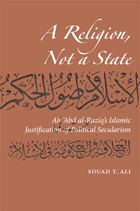
In this notable work, Souad T. Ali examines the seminal writings of Egyptian reformist scholar Ali'Abd al-Raziq, often regarded as the intellectual father of Islamic secularism, and his controversial argument that the caliphate should be considered a human innovation, rather than a religious imperative. 'Abd al Raziq contended that Islam is "a religion, not a state; a message, not a government," a major departure from the traditional view that religious and political spheres are intertwined and inseparable in Islam.
Opponents denounced 'Abd al-Raziq's ideas as a foreign corruption imported from the West. Ali's careful, objective, and scholarly examination of 'Abd al-Raziq's work, however, reveals that his arguments are not based in Western thought. Rather, they sit firmly within the dictates of Islam's sacred texts, particularly the Quran and Hadith, and also enjoy considerable support from the historical record.
This analysis critically challenges prevalent misinterpretations of Islam that have endured for centuries. Ali recognizes the varied models and discourses that have arisen throughout different epochs, especially so the role that Western intervention has played in placing the question of Islam's modernity at the forefront of intellectual debate. Throughout, the study emphasizes the atmosphere of openness and tolerance that is a requisite for free, intelligent debate.
This book traces the essence of the Islamist Revolution from its origins in Egypt, through Najaf, Lebanon, Iran and the Iranian Revolution to today. Alastair Crooke presents a compelling account of the ideas and energy which are mobilising the Islamic world.
Crooke argues that the West faces a mass mobilisation against the US-led Western project. The roots of this conflict are described in terms of religious themes that extend back over 500 years. They represent clashing systems of thinking and values. Islamists have a vision for the future of their own societies which would entail radical change from Western norms. Resistance is presented as the means to force Western behaviour to change and to expose the essential differences between the two modes of thinking.
This is a rigourous account that traces the threads of revolution of various movements, including the influence of 'political Shi'ism' and the Iranian Revolution and its impact on Hezbollah and Hamas.
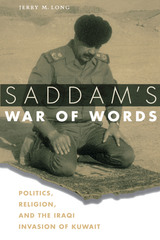
From a Western perspective, the Persian Gulf War of 1990-1991 largely fulfilled the first President Bush's objective: "In, out, do it, do it right, get gone. That's the message." But in the Arab world, the causes and consequences of Saddam Hussein's invasion of Kuwait and his subsequent defeat by a U.S.-led coalition were never so clear-cut. The potent blend of Islam and Arab nationalism that Saddam forged to justify the unjustifiable—his invasion of a Muslim state—gained remarkable support among both Muslims and Arabs and continued to resonate in the Middle East long after the fighting ended. Indeed, as this study argues in passing, it became a significant strand in the tangled web of ideologies and actions that led to the attacks of 9/11.
This landmark book offers the first in-depth investigation of how Saddam Hussein used Islam and Arab nationalism to legitimate his invasion of Kuwait in the eyes of fellow Muslims and Arabs, while delegitimating the actions of the U.S.-led coalition and its Arab members. Jerry M. Long addresses three fundamental issues: how extensively and in what specific ways Iraq appealed to Islam during the Kuwait crisis; how elites, Islamists, and the elusive Arab "street," both in and out of the coalition, responded to that appeal and why they responded as they did; and the longer-term effects that resulted from Saddam's strategy.
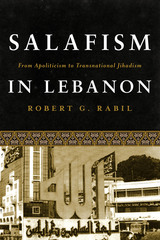
Salafism, comprised of fundamentalist Islamic movements whose adherents consider themselves the only “saved” sect of Islam, has been little studied, remains shrouded in misconceptions, and has provoked new interest as Salafists have recently staked a claim to power in some Arab states while spearheading battles against “infidel” Arab regimes during recent rebellions in the Arab world. Robert G. Rabil examines the emergence and development of Salafism into a prominent religious movement in Lebanon, including the ideological and sociopolitical foundation that led to the three different schools of Salafism in Lebanon: quietist Salafists, Haraki (active) Salafists; and Salafi Jihadists.
Emphasizing their manhaj (methodology) toward politics, the author surveys Salafists’ ideological transformation from opponents to supporters of political engagement. Their antagonism to Hezbollah, which they denounce as the party of Satan, has risen exponentially following the party’s seizure of Beirut in 2008 and support of the tyrannical Syrian regime. Salafism in Lebanon also demonstrates how activists and jihadi Salafists, in response to the political weakness of Sunni leadership, have threatened regional and international security by endorsing violence and jihad.
Drawing on field research trips, personal interviews, and Arabic primary sources, the book explores the relationship between the ideologies of the various schools of Salafism and their praxis in relation to Lebanese politics. The book should interest students and scholars of Islamic movements, international affairs, politics and religion, and radical groups and terrorism.
The State of Islam tells the story of Pakistan through the lens of the Cold War, and more recently the War on Terror, to shed light on the domestic and international processes behind the global rise of militant Islam.
Unlike existing scholarship on nationalism, Islam and the state in Pakistan, which tends to privilege events in a narrowly-defined ‘political’ realm, Saadia Toor highlights the significance of cultural politics in Pakistan from its origins to the contemporary period. This extra dimension allows Toor to explain how the struggle between Marxists and liberal nationalists was influenced and eventually engulfed by the agenda of the religious right.
Timely and unique, this book is a must for anyone who wants to understand the roots of modern Pakistan and the likely outcome of current power struggles in the country.
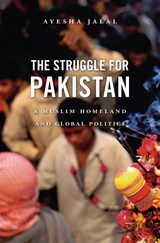
Established as a homeland for India’s Muslims in 1947, Pakistan has had a tumultuous history. Beset by assassinations, coups, ethnic strife, and the breakaway of Bangladesh in 1971, the country has found itself too often contending with religious extremism and military authoritarianism. Now, in a probing biography of her native land amid the throes of global change, Ayesha Jalal provides an insider’s assessment of how this nuclear-armed Muslim nation evolved as it did and explains why its dilemmas weigh so heavily on prospects for peace in the region.
“[An] important book…Ayesha Jalal has been one of the first and most reliable [Pakistani] political historians [on Pakistan]…The Struggle for Pakistan [is] her most accessible work to date…She is especially telling when she points to the lack of serious academic or political debate in Pakistan about the role of the military.”
—Ahmed Rashid, New York Review of Books
“[Jalal] shows that Pakistan never went off the rails; it was, moreover, never a democracy in any meaningful sense. For its entire history, a military caste and its supporters in the ruling class have formed an ‘establishment’ that defined their narrow interests as the nation’s.”
—Isaac Chotiner, Wall Street Journal
Political Islam, to be distinguished from Islam as a culture or a religion, and from Islamic Fundamentalism, is an increasingly important feature of the western political scene. The ideologies of Political Islam reflect the fact that some of their adherents live and work within a Western socio-political context.
Although Political Islam has been widely written about in Muslim countries, very little has been published the West, and this book attempts to redress that imbalance.
With a range of outstanding contributors that includes academics and human rights advocates this book tackles the diversity of Islamist thinking and practice in various Western countries and explores their transnational connections in both East and West.
The book analyses developments in Islamist thinking and activities, and their connections to the latest global political and economic trends, and discusses future evolutions of the ideology and its manifestations.
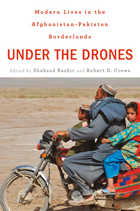
In the West, media coverage of Afghanistan and Pakistan is framed by military and political concerns, resulting in a simplistic picture of ageless barbarity, terrorist safe havens, and peoples in need of either punishment or salvation. Under the Drones looks beyond this limiting view to investigate real people on the ground, and to analyze the political, social, and economic forces that shape their lives. Understanding the complexity of life along the 1,600-mile border between Afghanistan and Pakistan can help America and its European allies realign their priorities in the region to address genuine problems, rather than fabricated ones.
This volume explodes Western misunderstandings by revealing a land that abounds with human agency, perpetual innovation, and vibrant complexity. Through the work of historians and social scientists, the thirteen essays here explore the real and imagined presence of the Taliban; the animated sociopolitical identities expressed through traditions like Pakistani truck decoration; Sufism’s ambivalent position as an alternative to militancy; the long and contradictory history of Afghan media; and the simultaneous brutality and potential that heroin brings to women in the area.
Moving past shifting conceptions of security, the authors expose the West’s prevailing perspective on the region as strategic, targeted, and alarmingly dehumanizing. Under the Drones is an essential antidote to contemporary media coverage and military concerns.
Somalia has been devastated by a US-backed Ethiopian invasion and years of civil war, and it has long been without a central government. Against this background of violence, Somali academic Afyare Abdi Elmi, attempts to explain the multiple dimensions of the conflict and find a peace-building consensus.
Somalia is a failed state and a Muslim state. This combination means the West assumes that it will become a breeding ground for extremism. The country regularly hits the headlines as a piracy hotspot. This combination of internal division and outside interference makes for an intensely hostile landscape. Elmi shows that only by addressing the problem of the statelessness in the country can the long process of peace begin. He highlights clan identities, Islam and other countries in the region as the key elements in any peace-building effort.
This unique account from an author who truly understands Somalia should be required reading for students and academics of international relations and peace / conflict studies.
What is driving political extremism in Pakistan? In early 2011, the prominent Pakistani politician Salmaan Taseer was assassinated by a member of his own security team for insulting Islam by expressing views in support of the rights of women and religious minorities. Benazir Bhutto, the former prime minister, was killed by gunfire and explosive devices as she left a campaign event in December 2007; strong evidence links members of extremist organizations to her slaying.
These murders underscore the fact that religion, politics, and policy are inextricably linked in Pakistan. In this book, Haroon K. Ullah analyzes the origins, ideologies, bases of support, and electoral successes of the largest and most influential Islamic parties in Pakistan. Based on his extensive field work in Pakistan, he develops a new typology for understanding and comparing the discourses put forth by these parties in order to assess what drives them and what separates the moderate from the extreme. A better understanding of the range of parties is critical for knowing how the US and other Western nations can engage states where Islamic political parties hold both political and moral authority.
Pakistan’s current democratic transition will hinge on how well Islamic parties contribute to civilian rule, shun violence, and mobilize support for political reform. Ullah’s political-party typology may also shed light on the politics of other majority-Muslim democracies, such as Egypt and Tunisia, where Islamist political parties have recently won elections.
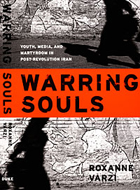
Highlighting trends that belie the government’s claim that Islamic values have taken hold—including rising rates of suicide, drug use, and sex outside of marriage—Varzi argues that by concentrating on images and the performance of proper behavior, the government’s campaign to produce model Islamic citizens has affected only the appearance of religious orthodoxy, and that the strictly religious public sphere is partly a mirage masking a profound crisis of faith among many Iranians. Warring Souls is a powerful account of contemporary Iran made more vivid by Varzi’s inclusion of excerpts from the diaries she maintained during her research and from journal entries written by Iranian university students with whom she formed a study group.
READERS
Browse our collection.
PUBLISHERS
See BiblioVault's publisher services.
STUDENT SERVICES
Files for college accessibility offices.
RECENTLY PUBLISHED





UChicago Accessibility Resources
home | accessibility | search | about | contact us
BiblioVault ® 2001 - 2024
The University of Chicago Press