
 A SCHOLARLY BOOK REPOSITORY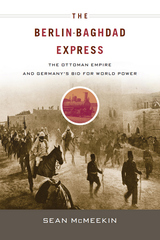
The modern Middle East was forged in the crucible of the First World War, but few know the full story of how war actually came to the region. As Sean McMeekin reveals in this startling reinterpretation of the war, it was neither the British nor the French but rather a small clique of Germans and Turks who thrust the Islamic world into the conflict for their own political, economic, and military ends.
The Berlin-Baghdad Express tells the fascinating story of how Germany exploited Ottoman pan-Islamism in order to destroy the British Empire, then the largest Islamic power in the world. Meanwhile the Young Turks harnessed themselves to German military might to avenge Turkey’s hereditary enemy, Russia. Told from the perspective of the key decision-makers on the Turco-German side, many of the most consequential events of World War I—Turkey’s entry into the war, Gallipoli, the Armenian massacres, the Arab revolt, and the Russian Revolution—are illuminated as never before.
Drawing on a wealth of new sources, McMeekin forces us to re-examine Western interference in the Middle East and its lamentable results. It is an epic tragicomedy of unintended consequences, as Turkish nationalists give Russia the war it desperately wants, jihad begets an Islamic insurrection in Mecca, German sabotage plots upend the Tsar delivering Turkey from Russia’s yoke, and German Zionism midwifes the Balfour Declaration. All along, the story is interwoven with the drama surrounding German efforts to complete the Berlin to Baghdad railway, the weapon designed to win the war and assure German hegemony over the Middle East.
Beyond Debt describes efforts to create a transnational economy free of debt. Based on ethnographic fieldwork in Malaysia, Daromir Rudnyckyj illustrates how the state, led by the central bank, seeks to make the country’s capital Kuala Lumpur “the New York of the Muslim world”—the central node of global financial activity conducted in accordance with Islam. Rudnyckyj shows how Islamic financial experts have undertaken ambitious experiments to create more stable economies and stronger social solidarities by facilitating risk- and profit-sharing, enhanced entrepreneurial skills, and more collaborative economic action. Building on scholarship that reveals the impact of financial devices on human activity, he illustrates how Islamic finance is deployed to fashion subjects who are at once more pious Muslims and more ambitious entrepreneurs. In so doing, Rudnyckyj shows how experts seek to create a new “geoeconomics”—a global Islamic alternative to the conventional financial network centered on New York, London, and Tokyo. A groundbreaking analysis of a timely subject, Beyond Debt tells the captivating story of efforts to re-center international finance in an emergent Islamic global city and, ultimately, to challenge the very foundations of conventional finance.
A political theorist teases out the century-old ideological transformation at the heart of contemporary discourse in Muslim nations undergoing political change.
The Arab Spring precipitated a crisis in political Islam. In Egypt Islamists have been crushed. In Turkey they have descended into authoritarianism. In Tunisia they govern but without the label of “political Islam.” Andrew March explores how, before this crisis, Islamists developed a unique theory of popular sovereignty, one that promised to determine the future of democracy in the Middle East.
This began with the claim of divine sovereignty, the demand to restore the sharīʿa in modern societies. But prominent theorists of political Islam also advanced another principle, the Quranic notion that God’s authority on earth rests not with sultans or with scholars’ interpretation of written law but with the entirety of the Muslim people, the umma. Drawing on this argument, utopian theorists such as Abū’l-Aʿlā Mawdūdī and Sayyid Quṭb released into the intellectual bloodstream the doctrine of the caliphate of man: while God is sovereign, He has appointed the multitude of believers as His vicegerent. The Caliphate of Man argues that the doctrine of the universal human caliphate underpins a specific democratic theory, a kind of Islamic republic of virtue in which the people have authority over the government and religious leaders. But is this an ideal regime destined to survive only as theory?
After 9/11, many Americans took the view that the attacks on the World Trade Center and the Pentagon were the leading edge of a new war: Islam versus the West. Yet the attacks were also part of the current struggle within Islam between fundamentalist and moderate approaches and were staged for maximum effect in the Muslim world.
This book is based on a special-topic issue of the American Journal of Islamic Social Sciences (Fall 2005), and brings together prominent Muslim voices from the policy and academic communities to debate the nature of moderate Islam and what moderation means in both a theological and a geopolitical sense. Participants reflect on the future of political Islam, its role in Muslim politics, western policies in the Muslim world, and the future of American-Muslim relations. This book and the debate it presents are vital to understanding these complex issues.

The Diagram as Paradigm is the first book that looks at medieval diagrams in a cross-cultural perspective, focusing on three regions—Byzantium, the Islamicate world, and the Latin West—each culturally diverse and each closely linked to the others through complex processes of intellectual, artistic, diplomatic, and mercantile exchange.
The volume unites case studies, often of little-known material, by an international set of specialists, and is prefaced by four introductory essays that provide broad overviews of diagrammatic traditions in these regions in addition to considering the theoretical dimensions of diagramming. Among the historical disciplines whose use of diagrams is explored are philosophy, theology, mysticism, music, medicine, mathematics, astronomy, and cosmology. Despite the sheer variety, ingenuity, and visual inventiveness of diagrams from the premodern world, in conception and practical use they often share many similarities, both in construction and application. Diagrams prove to be an essential part of the fabric of premodern intellectual, scientific, religious, artistic, and artisanal life.
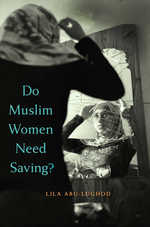
Frequent reports of honor killings, disfigurement, and sensational abuse have given rise to a consensus in the West, a message propagated by human rights groups and the media: Muslim women need to be rescued. Lila Abu-Lughod boldly challenges this conclusion. An anthropologist who has been writing about Arab women for thirty years, she delves into the predicaments of Muslim women today, questioning whether generalizations about Islamic culture can explain the hardships these women face and asking what motivates particular individuals and institutions to promote their rights.
In recent years Abu-Lughod has struggled to reconcile the popular image of women victimized by Islam with the complex women she has known through her research in various communities in the Muslim world. Here, she renders that divide vivid by presenting detailed vignettes of the lives of ordinary Muslim women, and showing that the problem of gender inequality cannot be laid at the feet of religion alone. Poverty and authoritarianism—conditions not unique to the Islamic world, and produced out of global interconnections that implicate the West—are often more decisive. The standard Western vocabulary of oppression, choice, and freedom is too blunt to describe these women's lives.
Do Muslim Women Need Saving? is an indictment of a mindset that has justified all manner of foreign interference, including military invasion, in the name of rescuing women from Islam—as well as a moving portrait of women's actual experiences, and of the contingencies with which they live.
Descriptions of dreams abound in the literatures of the Near East and North Africa. The Prophet Muhammad endowed them with a theological dimension, saying that after him “true dreams” would be the only channel for prophecy. Dreams were often used to support conflicting theological and political arguments, and the local chronicles contain many accounts of royal dreams justifying the advent of new dynasties.
This volume explores the context of these theological speculations and political aspirations through the medium of dreams to present fascinating insights into the social history of the pre-modern Islamic world in all its cultural diversity. Wider cultural exchanges are discussed through concrete examples such as the Arabic version of the Aristotelian treatise De divinatione per somnum. Some of the current scholarly assumptions about dreams being merely stylized expressions of social conventions are challenged by personal reports that express individual personalities, self-awareness, and spiritual development.
This is the first volume of the Ilex Series on Themes and Traditions. The series explores cross-cultural constructs without losing sight of the rich texture of local variations of traditions or beliefs.

The relationship between Western democracies and Islam, rarely entirely comfortable, has in recent years become increasingly tense. A growing immigrant population and worries about cultural and political assimilation—exacerbated by terrorist attacks in the United States, Europe, and around the world—have provoked reams of commentary from all parts of the political spectrum, a frustrating majority of it hyperbolic or even hysterical.
In The Fear of Barbarians, the celebrated intellectual Tzvetan Todorov offers a corrective: a reasoned and often highly personal analysis of the problem, rooted in Enlightenment values yet open to the claims of cultural difference. Drawing on history, anthropology, and politics, and bringing to bear examples ranging from the murder of Theo van Gogh to the French ban on headscarves, Todorov argues that the West must overcome its fear of Islam if it is to avoid betraying the values it claims to protect. True freedom, Todorov explains, requires us to strike a delicate balance between protecting and imposing cultural values, acknowledging the primacy of the law, and yet strenuously protecting minority views that do not interfere with its aims. Adding force to Todorov's arguments is his own experience as a native of communist Bulgaria: his admiration of French civic identity—and Western freedom—is vigorous but non-nativist, an inclusive vision whose very flexibility is its core strength.
The record of a penetrating mind grappling with a complicated, multifaceted problem, The Fear of Barbarians is a powerful, important book—a call, not to arms, but to thought.
The use of perspective in Renaissance painting caused a revolution in the history of seeing, allowing artists to depict the world from a spectator’s point of view. But the theory of perspective that changed the course of Western art originated elsewhere—it was formulated in Baghdad by the eleventh-century mathematician Ibn al Haithan, known in the West as Alhazen. Using the metaphor of the mutual gaze, or exchanged glances, Hans Belting—preeminent historian and theorist of medieval, Renaissance, and contemporary art—narrates the historical encounter between science and art, between Arab Baghdad and Renaissance Florence, that has had a lasting effect on the culture of the West.
In this lavishly illustrated study, Belting deals with the double history of perspective, as a visual theory based on geometrical abstraction (in the Middle East) and as pictorial theory (in Europe). How could geometrical abstraction be reconceived as a theory for making pictures? During the Middle Ages, Arab mathematics, free from religious discourse, gave rise to a theory of perspective that, later in the West, was transformed into art when European painters adopted the human gaze as their focal point. In the Islamic world, where theology and the visual arts remained closely intertwined, the science of perspective did not become the cornerstone of Islamic art. Florence and Baghdad addresses a provocative question that reaches beyond the realm of aesthetics and mathematics: What happens when Muslims and Christians look upon each other and find their way of viewing the world transformed as a result?
This collection shows Islam to be a diverse set of variable practices and beliefs shaped by region, nation, ethnicity, sect, and class, as well as by responses to many cultural and economic processes. In examining women's participation in religious and nationalist projects, these critics debate controversial issues: Does Islamic feminism provide an alternative, revolutionary paradigm to Eurocentric liberal humanism and western feminism? Is Islam more oppressive to women than the modern secular state? How are the lives and texts of Arab and Muslim women constructed for local or western consumption? These essays expose the shortcomings of the secularist assumptions of many recent feminist analyses, which continue to treat religion in general and fundamentalism in particular as a tool of oppression used against women, rather than as a viable form of feminist agency producing contradictory effects for its participants.
The essays in this book first appeared in Signs: Journal of Women in Culture and Society.
Contributors:
S. M. Shamsul Alam
Amal Amireh
Mary Elaine Heglund
Shahnaz Khan
Anouar Majid
Val Moghadam
Julia Peteet
Elora Shehabbudin
Gabriele vom Bruck.
Among the great civilizations of the world, Islam remains an enigma to Western readers. Now, in a beautifully illustrated historical atlas, noted scholar of religion Malise Ruthven recounts the fascinating and important history of the Islamic world.
From the birth of the prophet Muhammed to the independence of post-Soviet Muslim states in Central Asia, this accessible and informative atlas explains the historical evolution of Islamic societies. Short essays cover a wide variety of themes, including the central roles played by sharia (divine law) and fiqh (jurisprudence); philosophy; arts and architecture; the Muslim city; trade, commerce, and manufacturing; marriage and family life; tribal distributions; kinship and dynastic power; ritual and devotional practices; Sufism; modernist and reformist trends; the European domination of the Islamic world; the rise of the modern national state; oil exports and arms imports; and Muslim populations in non-Muslim countries, including the United States.
Lucid and inviting full-color maps chronicle the changing internal and external boundaries of the Islamic world, showing the principal trade routes through which goods, ideas, and customs spread. Ruthven traces the impact of various Islamic dynasties in art and architecture and shows the distribution of sects and religious minorities, the structure of Islamic cities, and the distribution of resources. Among the book's valuable contributions is the incorporation of the often neglected geographical and environmental factors, from the Fertile Crescent to the North African desert, that have helped shape Islamic history.
Rich in narrative and visual detail that illuminates the story of Islamic civilization, this timely atlas is an indispensable resource to anyone interested in world history and religion.
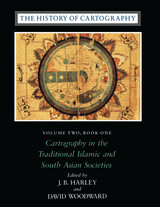
"[The six-volume set] is certain to be the standard reference for all subsequent scholarship. The editors . . . have assembled and analyzed a vast collection of knowledge. . . . If the first volume is an indication, the complete set will be comprehensive and judicious." —John Noble Wilford, New York Times Book Review
"As well as enlarging the mind and lifting the spirits through the sheer magnitude of its endeavor, the collection delights the senses. The illustrations are exquisite: browsing fingers will instinctively alight on the sheaf of maps reproduced on stock slightly thicker than that of the text. The maps are so beguiling in the tantalizing glimpses they offer of other, seemingly incomprehensible, worlds, that the sight of them will stir the connoisseur in even the most-guarded scholar." —Ronald Rees, Geographical Review
"The corpus it brings to light, along with the extensive references, bibliography, and exhaustive appendices containing valuable comments about many of the pieces discussed, together make this book an important resource for the scholar."—Robert Provin, Professional Geographer
"This volume is a landmark of new research and will certainly contribute to further discoveries, translations, interpretations, inventories, more precise dating and the construction of stemmata." —Christian Jacob, Cartographica
"In seeking to characterize the cartography of premodern Islamic and south Asian societies, the editors offer the image of an archipelago of cartographically conscious islands in a silent sea. The research potential which they have revealed is clearly vast and underappreciated, with many islands still to be discovered or enlarged. This important book, does more, therefore, than plug a huge gap in cartographic historiography. It provides the foundation for crosscultural cartographic research in two major world regions."-Jeffrey Stone, Ecumene
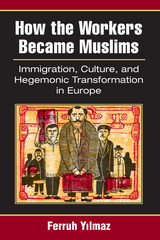
Yilmaz’s primary case study is Danish immigration discourse, but his argument contextualizes his study in terms of questions of current concern across Europe, where right-wing groups that were long on the fringes of “legitimate” politics have managed to make significant gains with populations traditionally aligned with the Left. Specifically, Yilmaz argues that sociopolitical space has been transformed in the last three decades such that group classification has been destabilized to emphasize cultural rather than economic attributes.
According to this point-of-view, traditional European social and political splits are jettisoned for new “cultural” alliances pulling the political spectrum to the right, against the “corrosive” presence of Muslim immigrants, whose own social and political variety is flattened into an illusion of alien sameness.
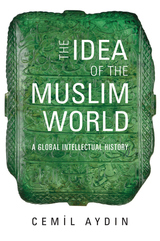
“Superb… A tour de force.”
—Ebrahim Moosa
“Provocative… Aydin ranges over the centuries to show the relative novelty of the idea of a Muslim world and the relentless efforts to exploit that idea for political ends.”
—Washington Post
When President Obama visited Cairo to address Muslims worldwide, he followed in the footsteps of countless politicians who have taken the existence of a unified global Muslim community for granted. But as Cemil Aydin explains in this provocative history, it is a misconception to think that the world’s 1.5 billion Muslims constitute a single entity. How did this belief arise, and why is it so widespread? The Idea of the Muslim World considers its origins and reveals the consequences of its enduring allure.
“Much of today’s media commentary traces current trouble in the Middle East back to the emergence of ‘artificial’ nation states after the fall of the Ottoman Empire… According to this narrative…today’s unrest is simply a belated product of that mistake. The Idea of the Muslim World is a bracing rebuke to such simplistic conclusions.”
—Times Literary Supplement
“It is here that Aydin’s book proves so valuable: by revealing how the racial, civilizational, and political biases that emerged in the nineteenth century shape contemporary visions of the Muslim world.”
—Foreign Affairs
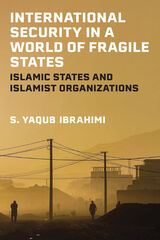
Following the 9/11 attacks on New York and Washington, DC, there has been an increasing interest among scholars, students, and the interested public to study and learn about the Islamist-oriented terrorist organizations called Jihadi Salafi Groups (JSGs). Considering that these organizations emerged in highly fragile states, S. Yaqub Ibrahimi asks: how and why is state fragility linked to the emergence of JSGs?
Ibrahimi bases his study on three events: the establishment of al-Qaeda in Afghanistan in 1998, the rise of Islamic State in the post-Saddam Hussein Iraq, and the failed al-Qaeda effort to establish a base in Saudi Arabia in 2003. These case studies contain major aspects and features of the rise of JSGs and, together, explain the contribution of state fragility to the process of the formation and expansion of these terrorist organizations.
International Security in a World of Fragile States stands out as a pivotal work on the interconnection between the root causes of JSGs and state fragility conditions and their amalgamated role in the formation and evolution of these organizations. It contributes to IR and international security debates by developing a comprehensive but readily understandable narrative of the rise of JSGs in Islamic countries, and examining them in an analytical framework in which their root causes are categorized on individual, group, and international levels.
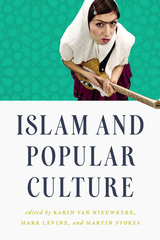
Popular culture serves as a fresh and revealing window on contemporary developments in the Muslim world because it is a site where many important and controversial issues are explored and debated. Aesthetic expression has become intertwined with politics and religion due to the uprisings of the “Arab Spring,” while, at the same time, Islamist authorities are showing increasingly accommodating and populist attitudes toward popular culture. Not simply a “westernizing” or “secularizing” force, as some have asserted, popular culture now plays a growing role in defining what it means to be Muslim.
With well-structured chapters that explain key concepts clearly, Islam and Popular Culture addresses new trends and developments that merge popular arts and Islam. Its eighteen case studies by eminent scholars cover a wide range of topics, such as lifestyle, dress, revolutionary street theater, graffiti, popular music, poetry, television drama, visual culture, and dance throughout the Muslim world from Indonesia, Africa, and the Middle East to Europe. The first comprehensive overview of this important subject, Islam and Popular Culture offers essential new ways of understanding the diverse religious discourses and pious ethics expressed in popular art productions, the cultural politics of states and movements, and the global flows of popular culture in the Muslim world.

This book compares Islamic and Western political formulations, highlighting areas of agreement and disparity. Building on this analysis, the author goes on to show that political Islam offers a serious alternative to the dominant political system and ideology of the West.
Sabet argues that rather than leading to a "Clash of Civlizations" or the assimilation of Islam into the Western system, a positive process of interactive self-reflection between Islam and liberal democracy is the best way forward.
Beginning this process, Sabet highlights key concepts of Islamic political thought and brings them into dialogue with Western modernity. The resulting synthesis is essential reading for advanced undergraduate and graduate students of Islamic and Middle Eastern politics, political theory, comparative politics and international relations.
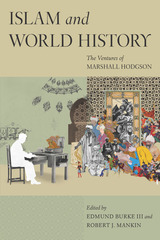
In our post-9/11 world, Hodgson’s historical vision and moral engagement have never been more relevant. A towering achievement, Islam and World History will prove to be the definitive statement on Hodgson’s relevance in the twenty-first century and will introduce his influential work to a new generation of readers.
In the hysteria surrounding Political Islam, it is difficult to find analysis that doesn't feel the need to justify the existence of Islamic leaders or react to the West's fear of 'extremists'. In Islamic Activists, Deina Ali Abdelkader shows us what Islamic leaders and activists believe and what they think about just governance.
Explaining and comparing Islamist ideas, including those about leadership, justice and minority rights, Abdelkader explains how these have been represented in the writings of important historical and contemporary Islamists. In doing so, Abdelkader reveals that democracy is not the sole preserve of those who support Enlightenment values, offering the reader a chance to understand the populist non-violent side of Islamic activism. This includes an examination of the ideas of the leaders of the populist Islamist movements in Egypt, Tunisia and Morocco.
The Islamic political community presents special problems to the development of an indigenous liberalism. That community is conceived of as divinely ordained, and its notions of the good are to be derived from scriptural revelation, not arrived at through rational discourse. Liberal politics would seem to stand little chance of surviving in such an atmosphere, let alone thriving.
Binder responds to the challenge of Edward Said's critique of Orientalism, of a range of neo-Marxian development theorists, of Sayyid Qutb's fundamentalist vision, of Samir Amin's vision of Egypt's role in the Arab awakening, of Tariq al-Bishri's new populism, of Zaki Najib Mahmud's pragmatism, and the structuralism of Arkoun and Laroui. The deconstruction of these varied texts produces a number of persuasive hermeneutical conclusions that are sequentially woven together in a critical argument that refocuses our attention on the central question of political freedom and democracy. In the course of constructing this argument, Binder reopens the dialogue between Western modernity and Islamic authenticity and reveals the surprising extent to which there is a convergent interest in liberal, democratic, civil society. Finally, in a concluding chapter, he addresses the prospects for liberalism in the three major bourgeois states of Islam—Egypt, Turkey, and Iran.
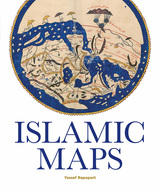
Islamic Maps examines Islamic visual interpretations of the world in their historical context through the map-makers themselves. What was the purpose of their maps, what choices did they make, and what arguments about the world were they trying to convey? Lavishly illustrated with stunning manuscripts, beautiful instruments, and Qibla charts, this book shows how maps constructed by Muslim map-makers capture the many dimensions of Islamic civilization across the centuries.
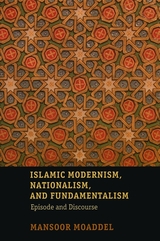
An ambitious comparative historical analysis of ideological production in the Islamic world from the mid-1800s to the present, Mansoor Moaddel's Islamic Modernism, Nationalism, and Fundamentalism provides a unique perspective for understanding the social conditions of these discourses. Moaddel characterizes these movements in terms of a sequence of cultural episodes characterized by ideological debates and religious disputations, each ending with a revolution or military coup. Understanding how the leaders of these movements formulated their discourses is, for Moaddel, the key to understanding Middle Eastern history. This premise allows him to unlock for readers the historical process that started with Islamic modernism and ended with fundamentalism.
Islamicate Sexualities: Translations across Temporal Geographies of Desire explores different genealogies of sexuality and questions some of the theoretical emphases and epistemic assumptions affecting current histories of sexuality. Concerned with the dynamic interplay between cultural constructions of gender and sexuality, the anthology moves across disciplinary fields, integrating literary criticism with social and cultural history, and establishes a dialogue between historians (Kathryn Babayan, Frédéric Lagrange, Afsaneh Najmabadi, and Everett Rowson), comparative literary scholars (Sahar Amer and Leyla Rouhi), and critical theorists of sexualities (Valerie Traub, Brad Epps, and Dina al-Kassim).
As a whole, the anthology challenges Middle Eastern Studies with questions that have arisen in recent studies of sexualities, bringing into conversation Euro-American scholarship of sexuality with that of scholars engaged in studies of sexualities across a vast cultural (Iberian, Arabic, and Iranian) and temporal field (from the tenth century to the medieval and the modern).
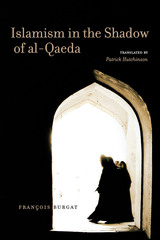
A renowned authority on Islamic movements, François Burgat lived for eighteen years in the Arab world, including his time as director of the French Center for Archaeology and Social Sciences at Yemen. He also dedicated many months to fieldwork in North Africa. Bringing Burgat's decades of expertise to the complex dialogues that have marked the post-9/11 world, Islamism in the Shadow of al-Qaeda delivers much-needed clarity and historical perspective.
In Burgat's eyes, most of the West's political and media rhetoric has only fueled al-Qaeda's case, revealing a woeful lack of comprehension regarding the violent authoritarianism that divides the Middle East and creates a breeding ground for terrorism. Islamism in the Shadow of al-Qaeda provides a primer of the three eras of political Islam, from the 1928 founding of the Muslim Brothers to the rise of post-colonial dictatorships and the current radicalization of "Generation al-Qaeda." Offering a new roadmap for stability, Burgat bridges the ideologies—political, religious, and cultural—that must be traversed if the deadly sectarianism is to be superseded.
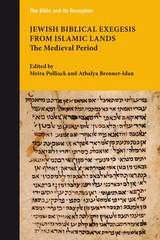
An accessible point of entry into the rich medieval religious landscape of Jewish biblical exegesis s
Medieval Judeo-Arabic translations of the Hebrew Bible and their commentaries provide a rich source for understanding a formative period in the intellectual, literary, and cultural history and heritage of Jews in Islamic lands. The carefully selected texts in this volume offer intriguing insight into Arabic translations and commentaries by Rabbanite and Karaite Jewish exegetes from the tenth to the twelfth centuries CE, arranged according to the three divisions of the Torah, the Former and Latter Prophets, and the Writings. Each text is embedded within an essay discussing its exegetical context, reception, and contribution.
Features:
- Focus on underrepresented medieval Jewish commentators of the Eastern world
- A list of additional resources, including major Judeo-Arabic commentators in the medieval period
- Previously unpublished texts from the Cairo Geniza
---Peter J. Katzenstein, Walter S. Carpenter, Jr. Professor of International Studies and Stephen H. Weiss Presidential Teaching Fellow, Cornell University
---Fawaz A. Gerges, Carnegie Scholar, and holds the Christian A. Johnson Chair in International Affairs and Middle Eastern Studies, Sarah Lawrence College
---François Burgat, Director, French National Centre for Scientific Research (CNRS) and the Institute for Research and Study on the Arab and Muslim World (IREMAM), Aix-en-Provence, France
---Shibley Telhami, Anwar Sadat Professor for Peace and Development, University of Maryland, and Senior Fellow, Brookings Institution
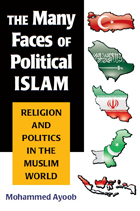
Analysts and pundits from across the American political spectrum describe Islamic fundamentalism as one of the greatest threats to modern, Western-style democracy. Yet very few non-Muslims would be able to venture an accurate definition of political Islam. Fully revised and updated, The Many Faces of Political Islam thoroughly analyzes the many facets of this political ideology and shows its impact on global relations.
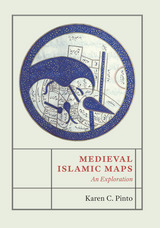
Pinto focuses on the distinct tradition of maps known collectively as the Book of Roads and Kingdoms (Kitab al-Masalik wa al-Mamalik, or KMMS), examining them from three distinct angles—iconography, context, and patronage. She untangles the history of the KMMS maps, traces their inception and evolution, and analyzes them to reveal the identities of their creators, painters, and patrons, as well as the vivid realities of the social and physical world they depicted. In doing so, Pinto develops innovative techniques for approaching the visual record of Islamic history, explores how medieval Muslims perceived themselves and their world, and brings Middle Eastern maps into the forefront of the study of the history of cartography.
Tracing the connections between music making and built space in both historical and contemporary times, Music, Sound, and Architecture in Islam brings together domains of intellectual reflection that have rarely been in dialogue to promote a greater understanding of the centrality of sound production in constructed environments in Muslim religious and cultural expression.
Representing the fields of ethnomusicology, anthropology, art history, architecture, history of architecture, religious studies, and Islamic studies, the volume’s contributors consider sonic performances ranging from poetry recitation to art, folk, popular, and ritual musics—as well as religious expressions that are not usually labeled as “music” from an Islamic perspective—in relation to monumental, vernacular, ephemeral, and landscape architectures; interior design; decoration and furniture; urban planning; and geography. Underscoring the intimate relationship between traditional Muslim sonic performances, such as the recitation of the Qur’an or devotional songs, and conventional Muslim architectural spaces, from mosques and Sufi shrines to historic aristocratic villas, gardens, and gymnasiums, the book reveals Islam as an ideal site for investigating the relationship between sound and architecture, which in turn proves to be an innovative and significant angle from which to explore Muslim cultures.
Muslim Cosmopolitanism in the Age of Empire recovers the stories of five Indian Muslim scholars who, in the aftermath of the uprising of 1857, were hunted by British authorities, fled their homes in India for such destinations as Cairo, Mecca, and Istanbul, and became active participants in a flourishing pan-Islamic intellectual network at the cusp of the British and Ottoman empires. Seema Alavi traces this network, born in the age of empire, which became the basis of a global Muslim sensibility—a form of political and cultural affiliation that competes with ideas of nationhood today as it did in the previous century.
By demonstrating that these Muslim networks depended on European empires and that their sensibility was shaped by the West in many subtle ways, Alavi challenges the idea that all pan-Islamic configurations are anti-Western or pro-Caliphate. Indeed, Western imperial hegemony empowered the very inter-Asian Muslim connections that went on to outlive European empires. Diverging from the medieval idea of the umma, this new cosmopolitan community stressed consensus in matters of belief, ritual, and devotion and found inspiration in the liberal reforms then gaining traction in the Ottoman world. Alavi breaks new ground in the writing of nineteenth-century history by engaging equally with the South Asian and Ottoman worlds, and by telling a non-Eurocentric story of global modernity without overlooking the importance of the British Empire.
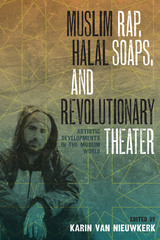
From "green" pop and "clean" cinema to halal songs, Islamic soaps, Muslim rap, Islamist fantasy serials, and Suficized music, the performing arts have become popular and potent avenues for Islamic piety movements, politically engaged Islamists, Islamic states, and moderate believers to propagate their religio-ethical beliefs. Muslim Rap, Halal Soaps, and Revolutionary Theater is the first book that explores this vital intersection between artistic production and Islamic discourse in the Muslim world.
The contributors to this volume investigate the historical and structural conditions that impede or facilitate the emergence of a "post-Islamist" cultural sphere. They discuss the development of religious sensibilities among audiences, which increasingly include the well-to-do and the educated young, as well as the emergence of a local and global religious market. At the heart of these essays is an examination of the intersection between cultural politics, performing art, and religion, addressing such questions as where, how, and why pop culture and performing arts have been turned into a religious mission, and whether it is possible to develop a new Islamic aesthetic that is balanced with religious sensibilities. As we read about young Muslims and their quest for a "cool Islam" in music, their struggle to quell their stigmatized status, or the collision of morals and the marketplace in the arts, a vivid, varied new perspective on Muslim culture emerges.
The roster of Muslim superheroes in the comic book medium has grown over the years, as has the complexity of their depictions. Muslim Superheroes tracks the initial absence, reluctant inclusion, tokenistic employment, and then nuanced scripting of Islamic protagonists in the American superhero comic book market and beyond.
This scholarly anthology investigates the ways in which Muslim superhero characters fulfill, counter, or complicate Western stereotypes and navigate popular audience expectations globally, under the looming threat of Islamophobia. The contributors consider assumptions buried in the very notion of a character who is both a superhero and a Muslim with an interdisciplinary and international focus characteristic of both Islamic studies and comics studies scholarship. Muslim Superheroes investigates both intranational American racial formation and international American geopolitics, juxtaposed with social developments outside U.S. borders.
Providing unprecedented depth to the study of Muslim superheroes, this collection analyzes, through a series of close readings and comparative studies, how Muslim and non-Muslim comics creators and critics have produced, reproduced, and represented different conceptions of Islam and Muslimness embodied in the genre characters.
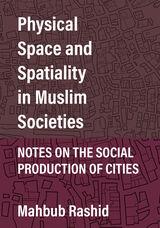
Mahbub Rashid embarks on a fascinating journey through urban space in all of its physical and social aspects, using the theories of Foucault, Bourdieu, Lefebvre, and others to explore how consumer capitalism, colonialism, and power disparity consciously shape cities. Using two Muslim cities as case studies, Algiers (Ottoman/French) and Zanzibar (Ottoman/British), Rashid shows how Western perceptions can only view Muslim cities through the lens of colonization—a lens that distorts both physical and social space. Is it possible, he asks, to find a useable urban past in a timeline broken by colonization? He concludes that political economy may be less relevant in premodern cities, that local variation is central to the understanding of power, that cities engage more actively in social reproduction than in production, that the manipulation of space is the exercise of power, that all urban space is a conscious construct and is therefore not inevitable, and that consumer capitalism is taking over everyday life. Ultimately, we reconstruct a present from a fragmented past through local struggles against the homogenizing power of abstract space.
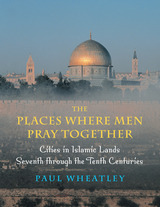
Building on the tenth-century geographer al-Maqdisi's writings on urban centers of the Islamic world, buttressed by extensive comparative material from roadbooks, topographies, histories, adab literatures, and gazetteers of the time, Wheatley identifies the main functions of different Islamic urban centers. Chapters on each of the thirteen centers that al-Maqdisi identified, ranging from the Atlantic to the Indus and from the Caspian to the Sudan, form the heart of this book. In each case Wheatley shows how specific agglomeration and accessibility factors combined to make every city functionally distinct as a creator of effective space. He also demonstrates that, far from revolutionizing every aspect of life in these cities, the adoption of Islam often affected the development of these cities less than previously existing local traditions.
The Places Where Men Pray Together is a monumental work that will speak to scholars and readers across a broad variety of disciplines, from historians, anthropologists, and sociologists to religious historians, archaeologists, and geographers.
"Lewis's own style, combining erudition with a simple elegance and subtle humor, continues to inspire. In an era of specialization and narrowing academic vision, he stands alone as one who deserves, without qualification, the title of historian of Islam."—Martin Kramer, Middle East Review
"A superb effort at synthesis that presents all the relevant facts of Middle Eastern history in an eminently lucid form. . . . It is a book that should prove both rewarding and congenial to the Muslim reader."—S. Parvez Manzor, Muslim World Book Review
"By bringing his thoughts together in this clear, concise and readable account, [Lewis] has placed in his debt scholars and all who seek to understand the Muslim world."—Ann K. S. Lambton, Bulletin of the School of Oriental and African Studies
"[Lewis] constructs a fascinating account of the ways in which Muslims have conceived of the relations between ruler and ruled, rights and duties, legitimacy and illegitimacy, obedience and rebellion, justice and oppression. And he shows how changes in political attitudes and concepts can be traced through changes in the political vocabulary."—Shaul Bakhash, New York Review of Books
There exists today a tragic rift between Americans and the world’s Muslims. Yet in the immediate aftermath of 9/11, there was widespread sympathy for the U.S. throughout the Muslim world. This book explores what happened. It examines the disconnect that leads Americans and Muslims to view the same words and images in fundamentally different ways. Partly a result of a centuries-old 'us' against 'them' dichotomy, the problem is exacerbated by an increasingly polarised media and by leaders on both sides who either don't understand or don't care what impact their words and policies have in the world at large.
Journalist-scholar Lawrence Pintak, a former CBS News Middle East correspondent, argues that the Arab media revolution and the rise of 'patriot-journalists' in the US marginalized voices of moderation, distorting perceptions on both sides of the divide with potentially disastrous results.
Built on the author's extensive journalistic experience, the book will appeal to policymakers, students of media studies, Middle East studies and Islamic studies, and general current affairs readers.
During the Golden Age of Islam (seventh through seventeenth centuries A.D.), Muslim philosophers and poets, artists and scientists, princes and laborers created a unique culture that has influenced societies on every continent. This book offers a fully illustrated, highly accessible introduction to an important aspect of that culture—the scientific achievements of medieval Islam.
Howard Turner opens with a historical overview of the spread of Islamic civilization from the Arabian peninsula eastward to India and westward across northern Africa into Spain. He describes how a passion for knowledge led the Muslims during their centuries of empire-building to assimilate and expand the scientific knowledge of older cultures, including those of Greece, India, and China. He explores medieval Islamic accomplishments in cosmology, mathematics, astronomy, astrology, geography, medicine, natural sciences, alchemy, and optics. He also indicates the ways in which Muslim scientific achievement influenced the advance of science in the Western world from the Renaissance to the modern era. This survey of historic Muslim scientific achievements offers students and general readers a window into one of the world's great cultures, one which is experiencing a remarkable resurgence as a religious, political, and social force in our own time.
During the Middle Ages, a thriving center for learning and research was Muslim Spain, where students gathered to consult Arabic manuscripts of earlier scientific works and study with famous teachers. One of these teachers was Sa'id al-Andalusi, who in 1068 wrote Kitab Tabaqat al-'Umam, or "Book of the Categories of Nations," which recorded the contributions to science of all known nations. Today, it is one of few surviving medieval Spanish Muslim texts, and this is its first English translation.
Science ('ulum), as used by Sa'id and other scholars of that period, is a broad term covering virtually all aspects of human knowledge. After initial discussions of the categories of nations that did or did not cultivate science, Sa'id details the specific contribution of nine nations or peoples-India, Persia, Chaldea, Greece, Rome, Egypt, the Arab Orient, al-Andalus, and the Hebrews. He includes the names of many individual scientists and scholars and describes their various contributions to knowledge, making his book a significant work of reference as well as history.
Secular Power Europe and Islam argues that secularism is not the central principle of international relations but should be considered as one belief system that influences international politics. Through an exploration of Europe’s secular identity, an identity that is seen erroneously as normative, author Sarah Wolff shows how Islam confronts the EU’s existential anxieties about its security and its secular identity. Islam disrupts Eurocentric assumptions about democracy and revolution and human rights. Through three case studies, Wolff encourages the reader to unpack secularism as a bedrock principle of IR and diplomacy. This book argues that the EU’s interest and diplomacy activities in relation to religion, and to Islam specifically, are shaped by the insistence on a European secular identity that should be reconsidered.
Cooley marshals a wealth of evidence - from the assassination of Sadat, the destabilisation of Algeria and Chechnya and the emergence of the Taliban, to the bombings of the World Trade Center and the US embassies in Africa. He examines the crucial role of Pakistan’s military intelligence organisation; uncovers China’s involvement and its aftermath; the extent of Saudi financial support; the role of 'America's most wanted man' Osama bin Laden; the BCCI connection; the CIA's cynical promotion of drug traffic in the Golden Crescent; the events in Pakistan since the military coup of October 1999; and, finally, the events of September 11th 2001 and their continuing impact on world affairs.
Majid moves beyond Edward Said’s unmasking of orientalism in the West to examine the intellectual assumptions that have prevented a more nuanced understanding of Islam’s legacies. In addition to questioning the pervasive logic that assumes the “naturalness” of European social and political organizations, he argues that it is capitalism that has intensified cultural misunderstanding and created global tensions. Besides examining the resiliency of orientalism, the author critically examines the ideologies of nationalism and colonialist categories that have redefined the identity of Muslims (especially Arabs and Africans) in the modern age and totally remapped their cultural geographies. Majid is aware of the need for Muslims to rethink their own assumptions. Addressing the crisis in Arab-Muslim thought caused by a desire to simultaneously “catch up” with the West and also preserve Muslim cultural authenticity, he challenges Arab and Muslim intellectuals to imagine a post-capitalist, post-Eurocentric future. Critical of Islamic patriarchal practices and capitalist hegemony, Majid contends that Muslim feminists have come closest to theorizing a notion of emancipation that rescues Islam from patriarchal domination and resists Eurocentric prejudices.
Majid’s timely appeal for a progressive, multicultural dialogue that would pave the way to a polycentric world will interest students and scholars of postcolonial, cultural, Islamic, and Marxist studies.
Dönmez-Colin examines prevalent cinematic archetypes, including the naïve country girl who is deceived and dishonored, or the devious seductress who destroys the sanctity of marriage, and looks well at controversial elements such as screen rape, which, feminist film critics claim, caters to male voyeurism. She also discusses recurring themes, such as the myths of femininity, the endorsement of polygamy and the obsession with male children, as well as the most common stereotypes, depicting women as mothers, wives and daughters.
Given the diversity of cultures, rather than viewing national cinemas as aspects of a single development, the author focuses on individual histories, traditions and social and economic circumstances as points of reference, which are examined in the context of social and political evolution and the status of women within Islam.
Women, Islam and Cinema is a much-needed and timely work that will appeal to the curious reader as well as to the student of film.
READERS
Browse our collection.
PUBLISHERS
See BiblioVault's publisher services.
STUDENT SERVICES
Files for college accessibility offices.
RECENTLY PUBLISHED




UChicago Accessibility Resources
home | accessibility | search | about | contact us
BiblioVault ® 2001 - 2024
The University of Chicago Press