
 A SCHOLARLY BOOK REPOSITORY
6 start with M start with M
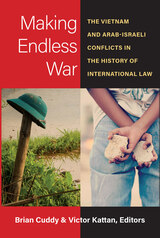
Making Endless War is built on the premise that any attempt to understand how the content and function of the laws of war changed in the second half of the twentieth century should consider two major armed conflicts, fought on opposite edges of Asia, and the legal pathways that link them together across time and space. The Vietnam and Arab-Israeli conflicts have been particularly significant in the shaping and attempted remaking of international law from 1945 right through to the present day. This carefully curated collection of essays by lawyers, historians, philosophers, sociologists, and political geographers of war explores the significance of these two conflicts, including their impact on the politics and culture of the world’s most powerful nation, the United States of America. The volume foregrounds attempts to develop legal rationales for the continued waging of war after 1945 by moving beyond explaining the end of war as a legal institution, and toward understanding the attempted institutionalization of endless war.
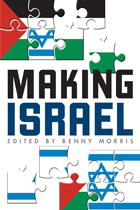
---Zeev Maoz, Professor of Political Science at the University of California, Davis, and Distinguished Fellow at the Interdisciplinary Center, Herzliya
---William B. Quandt, University of Virginia
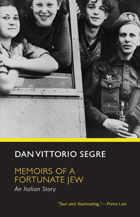
“Taut and illuminating . . . memorable . . . written with the humility of he who confesses himself and with the honesty of he who bore witness.”—Primo Levi
“The writing of memoirs is a difficult art that Dan Segre fully possesses. Under his pen, history and psychology merge in one captivating narrative which illuminates the turmoils, fears and triumphs of his generation.”—Elie Wiesel
“Beautifully written. . . . [A] labyrinthine, spell-binding autobiography, full of passionate tenderness.”—New York Review of Books
“An unusually attractive book—attractive in its irony, its energy and its moral insight. Mr. Segre had some rich material to work with, and he has done it justice.”—New York Times
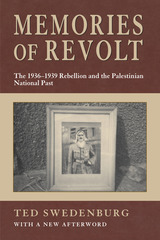
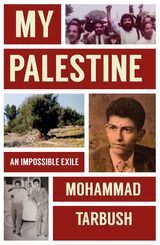
Mohammad Tarbush was born in British Mandate Palestine. As an infant, he and his family were forced to evacuate their village together with its entire population, after the Zionist victory that led to the establishment of the State of Israel. Then as landless refugees in the West Bank, the family sank into poverty. When, as a teenager, Tarbush left home one day under the pretext of visiting relatives in Jordan, he in fact set off on a year-long hitchhiking journey to Europe, where he would eventually become a highly successful international banker and a key behind-the-scenes promoter of the Palestinian cause. In My Palestine, Mohammad Tarbush combines poignant personal memoir with incisive political and economic commentary on the tumultuous events that shaped the history of Israel, Palestine, and the modern Middle East.
READERS
Browse our collection.
PUBLISHERS
See BiblioVault's publisher services.
STUDENT SERVICES
Files for college accessibility offices.
RECENTLY PUBLISHED


UChicago Accessibility Resources
home | accessibility | search | about | contact us
BiblioVault ® 2001 - 2024
The University of Chicago Press