
 A SCHOLARLY BOOK REPOSITORY
11 start with S start with S
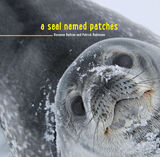
Scientists Roxanne Beltran and Patrick Robinson set off on a polar adventure, traveling to Antarctica to study the lives of Weddell seals. By finding Patches, a wily seal they’ve been tracking since its birth, they’ll be able to learn a lot about how much the seals get to eat and how many pups they raise. A Seal Named Patches takes young readers into the world at the very bottom of the globe, where they meet the extraordinary animals that live in cold, icy conditions. Through breathtaking photos and real-life stories, young readers will learn about how scientists do fieldwork, the challenges of researching animals in harsh climates, and even what it’s like to fly a helicopter over Antarctica. This engaging story will especially entertain and educate children in grades K-2 (ages 5–8.)
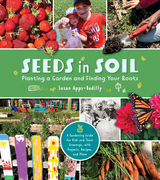
natural curiosity about nature. Seeds in Soil includes all the details to start planting and growing, whether working with a whole yard, a community or school garden, or just a balcony.
Chapters feature advice for selecting the seeds and tools to get started; ideas for planning and being creative in the garden; and tips for harvesting, storing, and cooking with fresh produce. Written by a second-grade teacher, the book includes engaging lessons about the science of climate, soil, and pollinators; and connections to history through the stories of First Nations and immigrant gardeners. Told through the author’s family stories and experience, Seeds in Soil will get kids having fun in the garden while digging, planting, growing, and finding their roots.
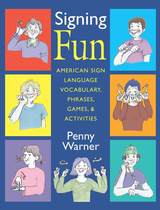
Signing Fun provides dozens of entertaining games and activities, too, such as Alphabet Sign, Finger Fun Gesture Guess, Match Signs, Mime and Sign, Oppo-Sign, Picture Hand, Secret Sign, Sign-A-Gories, Signo Bingo, Snap and Sign, and Truth or Sign. It also features a list of tips on how to sign, including how to fingerspell, use numbers, and communicate with deaf people. Whimsical drawings clearly illustrate all of the signs, and a full index lists all of their English meanings for quick reference. Signing Fun is a terrific first book for learning sign while having a great time.
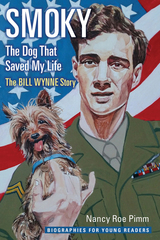
World War II soldier Bill Wynne met Smoky while serving in New Guinea, where the dog, who was smaller than Wynne’s army boot, was found trying to scratch her way out of a foxhole. After he adopted her, she served as the squadron mascot and is credited as being the first therapy dog for the emotional support she provided the soldiers. When they weren’t fighting, Bill taught Smoky hundreds of tricks to entertain the troops. Smoky became a war hero herself at an airstrip in Luzon, the Philippines, where she helped save forty airplanes and hundreds of soldiers from imminent attack.
After the war, Bill worked as a Hollywood animal trainer and then returned to his hometown of Cleveland, Ohio. He and Smoky continued to perform their act, even getting their own TV show, How to Train Your Dog with Bill Wynne and Smoky.
Nancy Roe Pimm presents Bill and Smoky’s story to middle-grade readers in delightful prose coupled with rich archival illustrations. Children will love learning about World War II from an unusual perspective, witnessing the power of the bond between a soldier and his dog, and seeing how that bond continued through the exciting years following the war.

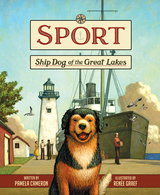
In this beautifully illustrated children’s book based on historical documents and photographs, readers share in Sport’s adventures while discovering the various ways lighthouse tender ships helped keep the lake safe for others. Helpful diagrams, a map, and a historical note supplement this engaging story for young readers.
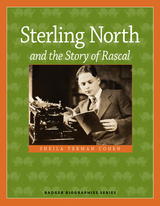
This Badger Bio shares the story of author Sterling North – his adventures and misadventures as a young boy growing up in Edgerton, Wisconsin. Young readers will learn how North’s early experience in Wisconsin influenced him in writing some of his best loved children’s books – such as Rascal and So Dear To My Heart.
The story gives readers a glimpse of early 20th century customs and lifestyles in the rural Midwest. It also includes global issues of the time, including World War I and the Spanish flu pandemic, which greatly affected Sterling’s boyhood. As examples, his admired older brother Hershel served overseas in WWI as Sterling was growing up, bringing world events to the North family’s doorstep. His mother Gladys died when Sterling was only 7 years old because of the lack of medical advances in the early 1900s. And, as a young man, Sterling was hit by polio, a common epidemic scourge that left many children with paralysis.
Readers will learn of Sterling North’s successes, not only as a beloved author of children’s books, but as a columnist for the Chicago Daily News, an editor of North Star children’s history books, and a well-respected critic of other children’s literature.
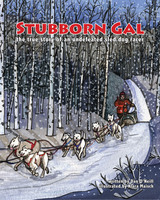
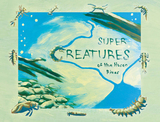
Super Creatures of the Huron River aims to teach children about stream ecology, with a focus on the fascinating “bugs” that can be found in the Huron River. State and national inventories record one hundred dams on the Huron River system, which is typical of rivers and tributaries in the Great Lakes Basin. What was once a free-flowing system is now interrupted by dams on both the river’s main stem and its tributaries. Although dams can provide some benefits, they produce severe negative impacts on the rivers they harness. Dams alter a river’s chemical, physical, and biological processes, including fragmenting and blocking the natural movement of fish and other aquatic species. Although these negative impacts have become more obvious over the past two decades, the environmental costs of dams have only recently captured scientific attention.
Super Creatures of the Huron River is a project conducted by a team of University of Michigan (UM) faculty and students, in collaboration with Huron River Watershed Council (HRWC) researchers. Sara Adlerstein developed the project. Working closely with her were Carolyn Berge, Jeffrey Evans, and Mike Wiley from UM and Paul Steen and Pam Labadie from HRWC. Illustrations for the book were created by master of science student Jennifer Fuller. The picture book will be used as a tool to support streamside activities led by the HRWC.
READERS
Browse our collection.
PUBLISHERS
See BiblioVault's publisher services.
STUDENT SERVICES
Files for college accessibility offices.
RECENTLY PUBLISHED





UChicago Accessibility Resources
home | accessibility | search | about | contact us
BiblioVault ® 2001 - 2024
The University of Chicago Press