
 A SCHOLARLY BOOK REPOSITORY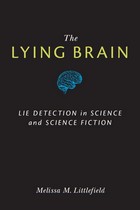
"The Lying Brain is a study to take seriously. Its argument is timely, clear, and of particular importance to the enlargement of our understanding of the relationships among science studies, literary studies, and technology studies."
---Ronald Schleifer, University of Oklahoma
Real and imagined machines, including mental microscopes, thought translators, and polygraphs, have long promised to detect deception in human beings. Now, via fMRI and EEG, neuroscientists seem to have found what scientists, lawyers, and law enforcement officials have sought for over a century: foolproof lie detection. But are these new lie detection technologies any different from their predecessors? The Lying Brain is the first book to explore the cultural history of an array of lie detection technologies: their ideological assumptions, the scientific and fictional literatures that create and market them, and the literacies required for their interpretation.
By examining a rich archive of materials about lie detection---from science to science fiction---The Lying Brain demonstrates the interconnections of science, literature, and popular culture in the development and dissemination of deception detection in the American cultural imagination. As Melissa Littlefield demonstrates, neuroscience is not building a more accurate lie detector; it is simply recycling centuries-old ideologies about deception and its detection.
Cover art: "Human Brain" © Denis Barbulet, courtesy of Shutterstock.com
The documents are presented with an introduction, transcription of the original Greek or Latin, translation, commentary, and images. A unique community prayer to the emperor and gods (827) is the volume’s most notable contribution. The other papyri are a mix of private and public documents (petitions, declarations, letters, lists, etc.) that date from between the first century BCE and the fourth century CE. The typological and chronological mix of texts shows that they do not form an undisturbed archive but were rather a dump of wastepaper and other household objects.
Michigan’s excavated papyri are here presented for the first time on the basis of their archaeological find spot rather than being organized according to content. The volume’s introduction provides a possible model for analyzing legacy data from the Karanis excavations stored at the University of Michigan. The book will be of interest to papyrologists, ancient historians, and archaeologists of Greco- Roman Egypt.
READERS
Browse our collection.
PUBLISHERS
See BiblioVault's publisher services.
STUDENT SERVICES
Files for college accessibility offices.
RECENTLY PUBLISHED




UChicago Accessibility Resources
home | accessibility | search | about | contact us
BiblioVault ® 2001 - 2025
The University of Chicago Press