
 A SCHOLARLY BOOK REPOSITORY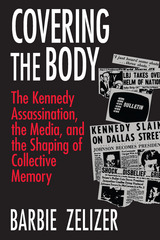
Covering the Body (the title refers to the charge given journalists to follow a president) is a powerful reassessment of the media's role in shaping our collective memory of the assassination—at the same time as it used the assassination coverage to legitimize its own role as official interpreter of American reality. Of the more than fifty reporters covering Kennedy in Dallas, no one actually saw the assassination. And faced with a monumentally important story that was continuously breaking, most journalists had no time to verify leads or substantiate reports. Rather, they took discrete moments of their stories and turned them into one coherent narrative, blurring what was and was not "professional" about their coverage.
Through incisive analyses of the many accounts and investigations in the years since the shooting, Zelizer reveals how journalists used the assassination not just to relay the news but to address the issues they saw as central to the profession and to promote themselves as cultural authorities. Indeed, argues Zelizer, these motivations are still alive and are at the core of the controversy surrounding Oliver Stone's movie, JFK.
At its heart, Covering the Body raises serious questions about the role of the media in defining our reality, and shaping our myths and memories. In tracing how journalists attempted to answer questions that still trouble most Americans, Zelizer offers a fascinating analysis of the role of the media as cultural authorities.
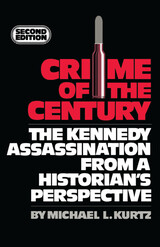
This book recounts the tragic events of November 22, 1963, and provides a detailed critical analysis of the investigations of the Warren Commission and the House Select Committee on Assassinations. Professor Kurtz outlines the major areas of controversy about the assassination and sifts all the known evidence before concluding that both official inquiries failed to evaluate the considerable evidence of an assassination conspiracy. Operating on the a priori assumption that Lee Harvey Oswald was guilty, the Commission and the Committee both ignored and distorted the overwhelming evidence that more than one assassin fired shots at the president. Professor Kurtz also shows why the most prevalent conspiracy theories fail to fit the facts and concludes by offering a new and more plausible theory of how the assassination occurred.
Thoroughly documented and based on the most exhaustive research carried out to date on John Kennedy’s murder, Crime of the Century draws on a variety of primary source materials from the National Archives and the FBI’s and CIA’s declassified assassination files. It utilizes the latest source materials released by the House Select Committee’s investigation. The depth of research, the rigorously objective sifting of evidence, and the incisive critique of official investigative bias make this a book of importance not only to students of the Kennedy assassination in particular, but also to scholars of government response to political violence in general.
Michael L. Kurtz is professor of history at Southeastern Louisiana University, Hammond, Louisiana. He is co-author of LOUISIANA: A HISTORY and was associate editor for READINGS IN LOUISIANA HISTORY.
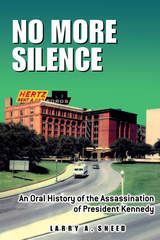
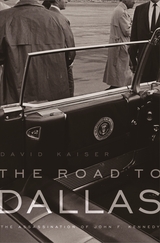
Neither a random event nor the act of a lone madman—the assassination of President John F. Kennedy was an appalling and grisly conspiracy. This is the unvarnished story.
With deft investigative skill, David Kaiser shows that the events of November 22, 1963, cannot be understood without fully grasping the two larger stories of which they were a part: the U.S. government’s campaign against organized crime, which began in the late 1950s and accelerated dramatically under Robert Kennedy; and the furtive quest of two administrations—along with a cadre of private interest groups—to eliminate Fidel Castro.
The seeds of conspiracy go back to the Eisenhower administration, which recruited top mobsters in a series of plots to assassinate the Cuban leader. The CIA created a secretive environment in which illicit networks were allowed to expand in dangerous directions. The agency’s links with the Mafia continued in the Kennedy administration, although the President and his closest advisors—engaged in their own efforts to overthrow Castro—thought this skullduggery had ended. Meanwhile, Cuban exiles, right-wing businessmen, and hard-line anti-Communists established ties with virtually anyone deemed capable of taking out the Cuban premier. Inevitably those ties included the mob.
The conspiracy to kill JFK took shape in response to Robert Kennedy’s relentless attacks on organized crime—legal vendettas that often went well beyond the normal practices of law enforcement. Pushed to the wall, mob leaders merely had to look to the networks already in place for a solution. They found it in Lee Harvey Oswald—the ideal character to enact their desperate revenge against the Kennedys.
Comprehensive, detailed, and informed by original sources, The Road to Dallas adds surprising new material to every aspect of the case. It brings to light the complete, frequently shocking, story of the JFK assassination and its aftermath.
READERS
Browse our collection.
PUBLISHERS
See BiblioVault's publisher services.
STUDENT SERVICES
Files for college accessibility offices.
RECENTLY PUBLISHED


UChicago Accessibility Resources
home | accessibility | search | about | contact us
BiblioVault ® 2001 - 2024
The University of Chicago Press