
 A SCHOLARLY BOOK REPOSITORY
Mapping the transformative personal journeys of the displaced
The travel writing genre has long been associated with a certain kind of privileged and autonomous journey, encouraged by society and geared toward individual growth. Presenting an important counterpoint to this tradition, Invisible Exile considers a diverse set of narratives that explore travel undertaken as a result of displacement. In this creative work of cultural geography, Kimberley Kinder sheds light on the transformative accounts of those who must navigate across and within spatial boundaries due to marginalization and violence.
Unfolding as an extended trip, with each chapter marking out the next phase of one imaginatively constructed itinerary, Invisible Exile analyzes forty works in which the authors grapple with themes of loss and alienation. Kinder emphasizes the aspect of travel writing that posits spatial movement as a means of reinventing oneself, showcasing the personal insight and renewal these travelers find on their paths into, through, and partially out of exile.
By foregrounding the experiences of forced and reluctant migrants and refugees, Invisible Exile poses a critical challenge to the existing genre of travel literature, expanding its scope. Examining a vast range of twenty-first-century writings, Kinder crafts a moving, episodic journey that carries readers through displacement, transformation, and redemption.
Retail e-book files for this title are screen-reader friendly.
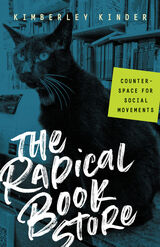
Examines how radical bookstores and similar spaces serve as launching pads for social movements
How does social change happen? It requires an identified problem, an impassioned and committed group, a catalyst, and a plan. In this deeply researched consideration of seventy-seven stores and establishments, Kimberley Kinder argues that activists also need autonomous space for organizing, and that these spaces are made, not found. She explores the remarkably enduring presence of radical bookstores in America and how they provide infrastructure for organizing—gathering places, retail offerings that draw new people into what she calls “counterspaces.”
Kinder focuses on brick-and-mortar venues where owners approach their businesses primarily as social movement tools. These may be bookstores, infoshops, libraries, knowledge cafes, community centers, publishing collectives, thrift stores, or art installations. They are run by activist-entrepreneurs who create centers for organizing and selling books to pay the rent. These spaces allow radical and contentious ideas to be explored and percolate through to actual social movements, and serve as crucibles for activists to challenge capitalism, imperialism, white privilege, patriarchy, and homophobia. They also exist within a central paradox: participating in the marketplace creates tensions, contradictions, and shortfalls. Activist retail does not end capitalism; collective ownership does not enable a retreat from civic requirements like zoning; and donations, no matter how generous, do not offset the enormous power of corporations and governments.
In this timely and relevant book, Kinder presents a necessary, novel, and apt analysis of the role these retail spaces play in radical organizing, one that demonstrates how such durable hubs manage to persist, often for decades, between the spikes of public protest.
READERS
Browse our collection.
PUBLISHERS
See BiblioVault's publisher services.
STUDENT SERVICES
Files for college accessibility offices.
RECENTLY PUBLISHED




UChicago Accessibility Resources
home | accessibility | search | about | contact us
BiblioVault ® 2001 - 2025
The University of Chicago Press