
 A SCHOLARLY BOOK REPOSITORY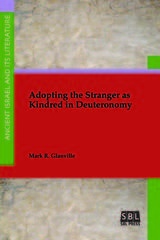
Investigate how Deuteronomy incorporates vulnerable, displaced people
Deuteronomy addresses social contexts of widespread displacement, an issue affecting 65 million people today. In this book Mark R. Glanville investigates how Deuteronomy fosters the integration of the stranger as kindred into the community of Yahweh. According to Deuteronomy, displaced people are to be enfolded within the household, within the clan, and within the nation. Glanville argues that Deuteronomy demonstrates the immense creativity that communities may invest in enfolding displaced and vulnerable people. Inclusivism is nourished through social law, the law of judicial procedure, communal feasting, and covenant renewal. Deuteronomy’s call to include the stranger as kindred presents contemporary nation-states with an opportunity and a responsibility to reimagine themselves and their disposition toward displaced strangers today.
Features:
- Exploration of the relationship of ancient Israel’s social history to biblical texts
- An integrative methodology that brings together literary-historical, legal, sociological, comparative, literary, and theological approaches
- A thorough study of Israelite identity and ethnicity
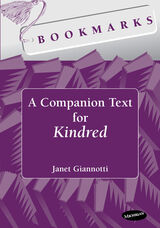
The textbook is designed to be used along with Kindred, a novel by Octavia Butler (published by Beacon Press), which tells the story of a young black woman who disappears from her home in 1970s California to save the life of her white slave-owner ancestor in the early nineteenth century. Through the novel and textbook, students learn about nineteenth-century American life, the origins of slavery in America, the conditions under which slaves lived, the Underground Railroad, important historical figures (like Harriet Tubman and Frederick Douglass), and the civil rights movement of the twentieth century.
Each of the six units begins with a preview of the reading and free writing topics, followed by exercises that improve comprehension and vocabulary building. Students use response journals to think about their personal connection with the novel. They are encouraged to discuss different topics and then write about what they've discussed. The Beyond the Novel section in each unit introduces factual background information in which students learn about slavery and other material mentioned in the novel. Puzzles and out-of-class activities are also included at the end of each unit.
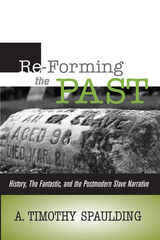
In their rejection of mimetic representation and traditional historiography, Spaulding contextualizes postmodern slave narrative. By addressing both literary and popular African American texts, Re-Forming the Past expands discussions of both the African American literary tradition and postmodern culture.
READERS
Browse our collection.
PUBLISHERS
See BiblioVault's publisher services.
STUDENT SERVICES
Files for college accessibility offices.
RECENTLY PUBLISHED


UChicago Accessibility Resources
home | accessibility | search | about | contact us
BiblioVault ® 2001 - 2025
The University of Chicago Press