
 A SCHOLARLY BOOK REPOSITORY
635 start with A start with A

Abandoning the Black Hero is the first book to examine the postwar African American white-life novel—novels with white protagonists written by African Americans. These fascinating works have been understudied despite having been written by such defining figures in the tradition as Richard Wright, Zora Neale Hurston, James Baldwin, Ann Petry, and Chester Himes, as well as lesser known but formerly best-selling authors Willard Motley and Frank Yerby.
John C. Charles argues that these fictions have been overlooked because they deviate from two critical suppositions: that black literature is always about black life and that when it represents whiteness, it must attack white supremacy. The authors are, however, quite sympathetic in the treatment of their white protagonists, which Charles contends should be read not as a failure of racial pride but instead as a strategy for claiming creative freedom, expansive moral authority, and critical agency.
In an era when “Negro writers” were expected to protest, their sympathetic treatment of white suffering grants these authors a degree of racial privacy previously unavailable to them. White writers, after all, have the privilege of racial privacy because they are never pressured to write only about white life. Charles reveals that the freedom to abandon the “Negro problem” encouraged these authors to explore a range of new genres and themes, generating a strikingly diverse body of novels that significantly revise our understanding of mid-twentieth-century black writing.
A hard-hitting look at the regulation of sexual difference and its role in circumscribing African American culture
The sociology of race relations in America typically describes an intersection of poverty, race, and economic discrimination. But what is missing from the picture—sexual difference—can be as instructive as what is present. In this ambitious work, Roderick A. Ferguson reveals how the discourses of sexuality are used to articulate theories of racial difference in the field of sociology. He shows how canonical sociology—Gunnar Myrdal, Ernest Burgess, Robert Park, Daniel Patrick Moynihan, and William Julius Wilson—has measured African Americans’s unsuitability for a liberal capitalist order in terms of their adherence to the norms of a heterosexual and patriarchal nuclear family model. In short, to the extent that African Americans’s culture and behavior deviated from those norms, they would not achieve economic and racial equality.
Aberrations in Black tells the story of canonical sociology’s regulation of sexual difference as part of its general regulation of African American culture. Ferguson places this story within other stories—the narrative of capital’s emergence and development, the histories of Marxism and revolutionary nationalism, and the novels that depict the gendered and sexual idiosyncrasies of African American culture—works by Richard Wright, Ralph Ellison, James Baldwin, Audre Lorde, and Toni Morrison. In turn, this book tries to present another story—one in which people who presumably manifest the dysfunctions of capitalism are reconsidered as indictments of the norms of state, capital, and social science. Ferguson includes the first-ever discussion of a new archival discovery—a never-published chapter of Invisible Man that deals with a gay character in a way that complicates and illuminates Ellison’s project.
Unique in the way it situates critiques of race, gender, and sexuality within analyses of cultural, economic, and epistemological formations, Ferguson’s work introduces a new mode of discourse—which Ferguson calls queer of color analysis—that helps to lay bare the mutual distortions of racial, economic, and sexual portrayals within sociology.

In the opening of the book, Wilt discusses real case histories of several women. After studying the ambiguities of their decisions, she turns to their counterpoints depicted in contemporary fiction. Working from a feminist perspective, Wilt traces the theme of maternal choice in works by Margaret Atwood, Margaret Drabble, Joan Didion, Mary Gordon, Alice Walker, Toni Morrison, Gloria Naylor, Marge Piercy, Thomas Keneally, Graham Swift, Ernest Hemingway, William Faulkner, John Barth, John Irving, and others.
Behind the political, medical, and moral debates on abortion, Wilt argues, is a profound psychocultural shock at the recognition that maternity is passing from the domain of instinct to that of conscious choice. Although never wholly instinctual, maternity's potential capture by consciousness raises complex questions. The novels Wilt discusses portray worlds in which principles are endangered by sexual inequality, male power and hidden male fear of abandonment, impotence, female submission, and covert rage, and, in the case of black maternity, the hideous aftermath of slavery.
Wilt provides a resonant new context for debates—whether political or personal—on the issue of abortion and maternal choice. Ultimately she enables us to rethink how we shape our own identities and lives.
In addition to the editors and David S. Reynolds, contributors include Jeffrey Bilbro, Dawn Coleman, Jonathan A. Cook, Tracy Fessenden, Zachary Hutchins, Richard Kopley, Mason I. Lowance Jr., John Matteson, Christopher N. Phillips, Vivian Pollak, Michael Robertson, Gail K. Smith, Claudia Stokes, and Timothy Sweet.
In Above Time, James R. Guthrie explores the origins of the two preeminent transcendentalists' revolutionary approaches to time, as well as to the related concepts of history, memory, and change. Most critical discussions of this period neglect the important truth that the entire American transcendentalist project involved a transcendence of temporality as well as of materiality. Correspondingly, both writers call in their major works for temporal reform, to be achieved primarily by rejecting the past and future in order to live in an amplified present moment.
Emerson and Thoreau were compelled to see time in a new light by concurrent developments in the sciences and the professions. Geologists were just then hotly debating the age of the earth, while zoologists were beginning to unravel the mysteries of speciation, and archaeologists were deciphering the Egyptian hieroglyphs. These discoveries worked collectively to enlarge the scope of time, thereby helping pave the way for the appearance of Darwin's Origin of Species in 1859.
Well aware of these wider cultural developments, Emerson and Thoreau both tried (although with varying degrees of success) to integrate contemporary scientific thought with their preexisting late-romantic idealism. As transcendentalists, they already believed in the existence of "correspondences"—affinities between man and nature, formalized as symbols. These symbols could then be decoded to discover the animating presence in the world of eternal laws as pervasive as the laws of science. Yet unlike scientists, Emerson and Thoreau hoped to go beyond merely understanding nature to achieving a kind of passionate identity with it, and they believed that such a union might be achieved only if time was first recognized as being a purely human construct with little or no validity in the rest of the natural world. Consequently, both authors employ a series of philosophical, rhetorical, and psychological strategies designed to jolt their readers out of time, often by attacking received cultural notions about temporality.

As the first African-American fiction writer to achieve a national reputation, Ohio native Charles W. Chesnutt (1858–1932) in many ways established the terms of the black literary tradition now exemplified by such writers as Toni Morrison, Alice Walker, and Charles Johnson.
Following the highly autobiographical nonfiction produced by Frederick Douglass, Harriet Jacobs, and other slave narrative writers, Chesnutt’s complex, multi-layered short fiction transformed the relationship between African-American writers and their readers. But despite generous praise from W. D. Howells and other important critics of his day, and from such prominent readers as William L. Andrews, Henry Louis Gates, Jr., and Eric Sundquist in ours, Chesnutt occupies a curiously ambiguous place in American literary history.
In The Absent Man, Charles Duncan demonstrates that Chesnutt’s uneasy position in the American literary tradition can be traced to his remarkable narrative subtlety. Profoundly aware of the delicacy of his situation as a black intellectual at the turn of the century, Chesnutt infused his work with an intricate, enigmatic artistic vision that defies monolithic or unambiguously political interpretation, especially with regard to issues of race and identity that preoccupied him throughout his career.
In this first book-length study of the innovative short fiction, Duncan devotes particular attention to elucidating these sophisticated narrative strategies as the grounding for Chesnutt’s inauguration of a tradition of African-American fiction.
Following the highly autobiographical nonfiction produced by Frederick Douglass, Harriet Jacobs, and other slave narrative writers, Chesnutt's complex, multi-layered short fiction transformed the relationship between African-American writers and their readers. But despite generous praise from W. D. Howells and other important critics of his day, and from such prominent readers as William L. Andrews, Henry Louis Gates, Jr., and Eric Sundquist in ours, Chesnutt occupies a curiously ambiguous place in American literary history.
In The Absent Man, Charles Duncan demonstrates that Chesnutt's uneasy position in the American literary tradition can be traced to his remarkable narrative subtlety. Profoundly aware of the delicacy of his situation as a black intellectual at the turn of the century, Chesnutt infused his work with an intricate, enigmatic artistic vision that defies monolithic or unambiguously political interpretation, especially with regard to issues of race and identity that preoccupied him throughout his career.
In this first book-length study of the innovative short fiction, Duncan devotes particular attention to elucidating these sophisticated narrative strategies as the grounding for Chesnutt's inauguration of a tradition of African-American fiction.
They were not the "Banquet Years," those anxious wartime years when poets and novelists were made to feel embarrassed by their impulse to write literature. And yet it was the attitude of those writers and critics in the 1930s and 1940s that shaped French literature--the ideas of Derrida, Foucault, de Man, Deleuze, and Ricoeur--and has so profoundly influenced literary enterprise in the English-speaking world since 1968. This literary history, the prehistory of postmodernism, is what Denis Hollier recovers in his interlocking studies of the main figures of French literary life before the age of anxiety gave way to the era of existentialist commitment.
Georges Bataille, Michel Leiris, Roger Caillois, André Malraux, the early Jean-Paul Sartre are the figures Hollier considers, writers torn between politics and the pleasures of the text. They appear here uneasily balancing the influences of the philosopher and the man of action. These studies convey the paradoxical heroism of writers fighting for a world that would extend no rights or privileges to writers, writing for a world in which literature would become a reprehensible frivolity. If the nineteenth century was that of the consecration of the writer, this was the time for their sacrificial death, and Hollier captures the comical pathos of these writers pursuing the ideal of "engagement" through an exercise in dispossession. His work identifies, as none has before, the master plot for literature that was crafted in the 1940s, a plot in which we are still very much entangled.
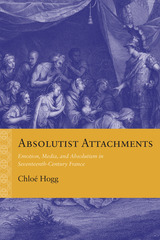
Louis XIV’s subjects explored new kinds of affective relations with their sovereign, joining with the king in acts of aesthetic judgment, tender feeling, or the “newsiness” of emerging print news culture. Such alternative modes of adhesion countered the hegemonic model of kingship upheld by divine right, reason of state, or corporate fidelities and privileges with subject-driven attachments and practices. Absolutist Attachments discovers absolutism’s alternative political and cultural legacy—not the spectacle of an unbound king but the binding connections of his subjects.
When The Absurd Hero in American Fiction was first released in 1966, Granville Hicks praised it in a lead article for the Saturday Review as a sensitive and definitive study of a new trend in postwar American literature. In the years that followed, David Galloway’s analysis of the writings of John Updike, William Styron, Saul Bellow, and J. D. Salinger became a standard critical work, an indispensable tool for readers concerned with contemporary American literature. The New York Times described the book as “a seminal study of the modern literary imagination."
David Galloway, himself an established novelist, later extensively revised The Absurd Hero to include authoritative discussions of more than a dozen novels which had appeared since the first revised edition was released in 1970. Among them are John Updike’s Couples, Rabbit Redux, and The Coup; William Styron’s The Confessions of Nat Turner and Sophie’s Choice; and Saul Bellow’s Mr. Sammler’s Planet and Humboldt’s Gift. Through detailed analyses of these works, Galloway demonstrates the continuing relevance of his own provocative concept of the absurd hero and provides important insights into the literary achievements of four of America’s most influential postwar novelists.
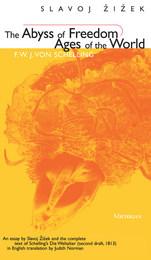
Zizek argues that Schelling's most profound thoughts are found in the series of three consecutive attempts he made to formulate the "ages of the world/Weltalter," the stages of the self-development of the Absolute. Of the three versions, claims Zizek, it is the second that is the most eloquent and definitive encompassing of Schelling's lyrical thought. It centers on the problem of how the Absolute (God) himself, in order to become actual, to exist effectively, has to accomplish a radically contingent move of acquiring material, bodily existence. Never before available in English, this version finally renders accessible one of the key texts of modern philosophy, a text that is widely debated in philosophical circles today.
The Abyss of Freedom is Zizek's own reading of Schelling based upon Lacanian psychoanalytic theory. It focuses on the notion that Lacan's theory--which claims that the symbolic universe emerged from presymbolic drives--is prefigured in Schelling's idea of logos as given birth to from the vortex of primordial drives, or from what "in God is not yet God." For Zizek, this connection is monumental, showing that Schelling's ideas forcefully presage the post-modern "deconstruction" of logocentrism.
Slavoj Zizek is not a philosopher who stoops to conquer objects but a radical voice who believes that philosophy is nothing if it is not embodied, nothing if it is only abstract. For him, true philosophy always speaks of something rather than nothing. Those interested in the genesis of contemporary thought and the fate of reason in our "age of anxiety" will find this coupling of texts not only philosophically relevant, but vitally important.
Slavoj Zizek is the author of The Sublime Object of Ideology, Tarrying with the Negative: Kant, Hegel and the Critique of Ideology, and most recently, The Indivisible Remainder: An Essay on Schelling and Related Matters. Currently he is a Senior Researcher at the Institute for Social Sciences, University of Ljubljana. Judith Norman is Assistant Professor of Philosophy at Trinity University in San Antonio, Texas.
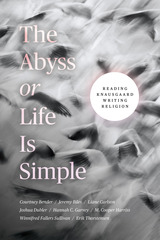
Min kamp, or My Struggle, is a six-volume novel by Karl Ove Knausgaard and one of the most significant literary works of the young twenty-first century. Published in Norwegian between 2009 and 2011, the novel presents an absorbing first-person narrative of the life of a writer with the same name as the author, in a world at once fully disillusioned and thoroughly enchanted.
In 2015, a group of scholars began meeting to discuss the peculiarly religious qualities of My Struggle. Some were interested in Knausgaard’s attention to explicitly religious subjects and artworks, others to what they saw as more diffuse attention to the religiousness of contemporary life. The group wondered what reading these textures of religion in these volumes might say about our times, about writing, and about themselves. The Abyss or Life Is Simple is the culmination of this collective endeavor—a collection of interlocking essays on ritual, beauty, and the end of the world.
In Abysses, the newest addition to the series, Quignard brings us yet more of his troubling, questing characters—souls who are fascinated by what preceded and conceived them. He writes with a rich mix of anecdote and reflection, aphorism and quotation, offering enigmatic glimpses of the present, and confident, pointed borrowings from the past. But when he raids the murkier corners of the human record, he does so not as a historian but as an antiquarian. Quignard is most interested in the pursuit of those stories that repeat and echo across the seasons in their timelessness.
Simpson examines defining features of postmodern thought—storytelling, autobiography, anecdote, and localism—and traces their unacknowledged roots in literature and literary criticism. Considering such examples as the conversational turn in philosophy led by Richard Rorty and the anecdotal qualities of the New Historicism, he argues that much of contemporary scholarship is literary in its terms, methods, and assumptions about knowledge; in their often unconscious adoption of literary approaches, scholars in philosophy, history, anthropology, and other disciplines have confined themselves to a traditional—and limited—way of looking at the world. Simpson is the first to uncover the largely unacknowledged ancestry of the key paradigms and sensibilities of the academic postmodern—tracing their roots to nineteenth-century Romanticism and to more general traditions of literature. He warns scholars against mistaking the migration of ideas from one discipline to another for a radically new response to the postmodern age.
In his nuanced and balanced assessment of the academic postmodern enterprise, Simpson recognizes that both the literary turn and the emphasis on local, subjective voices have done much to enrich knowledge. But he also identifies the danger in abandoning synthetic knowledge to particular truths, cautioning that "we would be foolish to pretend that little narratives are true alternatives to grand ones, rather than chips off a larger block whose shape we can no longer see because we are not looking."


A volume in the American Literatures Initiative
An accidental glance at a newspaper notice causes Rousseau to collapse under the force of a vision. A car accidentally hits Giacometti, and he experiences an epiphany. Darwin introduces accident to the basic process of life, and Freud looks to accident as the expression of unconscious desire. Accident, Ross Hamilton claims, is the force that makes us modern. Tracing the story of accident from Aristotle to Buster Keaton and beyond, Hamilton’s daring book revives the tradition of the grand history of ideas.
Accident tells an original history of Western thought from the perspective of Aristotle’s remarkably durable categories of accident and substance. Throughout antiquity and the Middle Ages, Aristotle’s distinction underwrote an insistence on order and subordination of the inessential. In a groundbreaking innovation, Hamilton argues that after the Reformation, the concept of accident began to change places with that of substance: accident became a life-transforming event and effectively a person’s essence. For moderns, it is the accidental, seemingly trivial moments of consciousness that, like Wordsworth’s “spots of time,” create constellations of meaning in our lives. Touching on a broad array of images and texts—Augustine, Dante, the frescoes of Raphael, Descartes, Jane Austen, the work of the surrealists, and twentieth-century cinema—Hamilton provides a new way to map the mutations of personal identity and subjectivity.

Described as “all under Heaven,” the Chinese empire might have extended infinitely, covering all worlds and cultures. That ideology might have been convenient for the state, but what did late imperial people really think about the scope and limits of the human community?
Writers of late imperial fiction and drama were, the author argues, deeply engaged with questions about the nature of the Chinese empire and of the human community. Fiction and drama repeatedly pose questions concerning relations both among people and between people and their possessions: What ties individuals together, whether permanently or temporarily? When can ownership be transferred, and when does an object define its owner? What transforms individual families or couples into a society?
Tina Lu traces how these political questions were addressed in fiction through extreme situations: husbands and wives torn apart in periods of political upheaval, families so disrupted that incestuous encounters become inevitable, times so desperate that people have to sell themselves to be eaten.
This book offers a clear and accessible narrative of the period between the Persian Wars and the wars of the early Hellenistic period, two nominal liberations of the region. The volume complements existing histories of Classical Greece. Close inspection reveals that the Ionians were active partners in the imperial endeavor, even as imperial competition constrained local decision-making and exacerbated local and regional tensions. At the same time, the book offers interventions on critical issues related to Ionia such as the Athenian conquest of Samos, rhetoric about the freedom of the Greeks, the relationship between Ionian temple construction and economic activity, the status of the Panionion, Ionian poleis and their relationship with local communities beyond the circle of the dodecapolis, and the importance of historical memory to our understanding of ancient Greece. The result is a picture of an Aegean world that is more complex and less beholden narratives that give primacy to the imperial actors at the expense of local developments.
The master of Old Comedy.
Aristophanes of Athens, one of the world’s greatest comic dramatists, has been admired since antiquity for his iridescent wit and beguiling fantasy, exuberant language, and brilliant satire of the social, intellectual, and political life of Athens at its height. The Loeb Classical Library edition of his plays is in four volumes.
The Introduction to the edition is in Volume I. Also in the first volume is Acharnians, in which a small landowner, tired of the Peloponnesian War, magically arranges a personal peace treaty; and Knights, perhaps the most biting satire of a political figure (Cleon) ever written.
Three plays are in Volume II. Socrates’ “Thinkery” is at the center of Clouds, which spoofs untraditional techniques for educating young men. Wasps satirizes Athenian enthusiasm for jury service. In Peace, a rollicking attack on war-makers, the hero travels to heaven on a dung beetle to discuss the issues with Zeus.
The enterprising protagonists of Birds create a utopian counter-Athens ruled by birds. Also in Volume III is Lysistrata, in which our first comic heroine organizes a conjugal strike of young wives until their husbands end the war between Athens and Sparta. Women again take center stage in Women at the Thesmophoria, this time to punish Euripides for portraying them as wicked.
Frogs, in Volume IV, features a contest between the traditional Aeschylus and the modern Euripides, yielding both sparkling comedy and insight on ancient literary taste. In Assemblywomen Athenian women plot to save Athens from male misgovernance—with raucously comical results. Here too is Wealth, whose gentle humor and straightforward morality made it the most popular of Aristophanes’ plays from classical times to the Renaissance.
Covering the entire body of Mark Twain's fiction, Clark Griffith in Achilles and the Tortoise answers two questions: How did Mark Twain write? And why is he funny? Griffith defines and demonstrates Mark Twain's poetics and, in doing so, reveals Twain's ability to create and sustain human laughter.
As he attempted to attain the comic resolution and comically transfigured characters he yearned for, Twain forever played, for Griffith, the role of the Achilles of Zeno's Paradox. Like the tortoise that Achilles cannot overtake in Zeno's tale, the richness of comic life forever remained outside Twain's grasp.
The last third of Griffith's study draws parallels between Mark Twain and Herman Melville. Although the two authors never met and seem not to have read each other's works, they labored under the sense of what, in Moby-Dick, Ishmael calls "a vast practical joke . . . at nobody's expense but [one's] own." The laughter occasioned by this cosmic conspiracy shapes the career of Huckleberry Finn fully as much as it does Ishmael's voyage. Out of the laughter are generated the respective obsessions of Captain Ahab and Bartleby, of Pudd'nhead Wilson and Hadleyburg. Reduced at last to a dry mock, the laughter is the prevailing tone of both Billy Budd and The Mysterious Stranger Manuscripts.
Though Achilles the character is bound by fate and by narrative tradition, Achilles’s poem, the Iliad, was never fixed and monolithic in antiquity—it was multiform. And the wider epic tradition, from which the Iliad emerged, was yet more multiform. In Achilles Unbound, Casey Dué, building on nearly twenty years of work as coeditor of the Homer Multitext (www.homermultitext.org), explores both the traditionality and multiformity of the Iliad in a way that gives us a greater appreciation of the epic that has been handed down to us.
Dué argues that the attested multiforms of the Iliad—in ancient quotations, on papyrus, and in the scholia of medieval manuscripts—give us glimpses of the very long history of the text, access to even earlier Iliads, and a greater awareness of the mechanisms by which such a remarkable poem could be composed in performance. Using methodologies grounded in an understanding of Homeric poetry as a system, Achilles Unbound argues for nothing short of a paradigm shift in our approach to the Homeric epics, one that embraces their long evolution and the totality of the world of epic song, in which each performance was newly composed and received by its audience.

Based on original archival research in Buenos Aires, Havana, Paris, and the United States, the book develops a literary media theory that understands sound as a transmedial phenomenon and radio as a transnational medium. Analyzing the construction of new social and political relations in the wake of the United States’ 1930s Good Neighbor Policy, Acoustic Properties challenges standard narratives of hemispheric influence through new readings of Richard Wright’s cinematic work in Argentina, Severo Sarduy’s radio plays in France, and novels by John Dos Passos, Manuel Puig, Raymond Chandler, and Carson McCullers. Alongside these writers, the book also explores Che Guevara and Fidel Castro’s Radio Rebelde, FDR’s fireside chats, Félix Caignet’s invention of the radionovela in Cuba, Evita Perón’s populist melodramas in Argentina, Orson Welles’s experimental New Deal radio, Cuban and U.S. “radio wars,” and the 1960s African American activist Robert F. Williams’s proto–black power Radio Free Dixie.
From the doldrums of the Great Depression to the tumult of the Cuban Revolution, Acoustic Properties illuminates how novelists in the radio age converted writing into a practice of listening, transforming realism as they struggled to channel and shape popular power.

In this ear-opening journey into the sound-worlds of Shakespeare's contemporaries, Bruce R. Smith explores both the physical aspects of human speech (ears, lungs, tongue) and the surrounding environment (buildings, landscape, climate), as well as social and political structures. Drawing on a staggeringly wide range of evidence, he crafts a historical phenomenology of sound, from reconstructions of the "soundscapes" of city, country, and court to detailed accounts of the acoustic properties of the Globe and Blackfriars theaters and how scripts designed for the two spaces exploited sound very differently.
Critical for anyone who wants to understand the world of early modern England, Smith's pathbreaking "ecology" of voice and listening also has much to offer musicologists and acoustic ecologists.
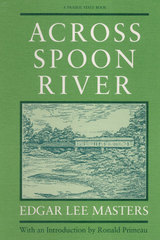
The autobiography of the influential American poet
This intimate and provocative autobiography, first published in 1936, reveals the innermost thoughts of a great American poet. Edgar Lee Masters was a transitional figure in American literature with one foot planted in the nineteenth century and the other firmly placed on the path of what we now think of as the modern period.
Masters expounds on his own development as a poet and as a human being; he shares his views on American culture, politics, and the literary criticism of the times. Masters's friends and acquaintances discussed here include some of the most prominent writers and politicians of his age. And he reflects on his life events that shaped, haunted, and inspired his writings of the classic Spoon River Anthology.
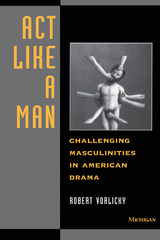
In the first comprehensive study of plays written for male characters only, Robert Vorlicky offers a new theory that links cultural codes governing gender and the conventions determining dramatic form. Act Like a Manlooks at a range of plays, including those by O'Neill, Albee, Mamet, Baraka, and Rabe as well as new works by Philip Kan Gotanda, Alonzo Lamont, and Robin Swados, to examine how dialogue within these works reflects the social codes of male behavior and inhibits individualization among men.
Plays in which women are absent are often characterized by the location of a male "other"—a female presence who distances himself from the dominant, impersonal masculine ethos and thereby becomes a facilitator of personal communication. The potential authority of this figure is so powerful that its presence becomes the primary determinant of the quality of men's interaction and of the range of male subjectivities possible. This formulation becomes the basis of an alternative theory of American dramatic construction, one that challenges traditional dramaturgical notions of realism.
The book will appeal to scholars and students interested in drama, gender, race, sexuality, and American culture, as well as playwrights, teachers of playwrights, and artistic directors. It includes an extensive bibliography of more than four hundred male-cast plays and monodramas, the first such compilation and one that points to further research into a previously unexplored area.
There is, Sartwell contends, a fundamental elusiveness to that identity. Whiteness defines itself as normative, as a neutral form of the human condition, marking all other forms of identity as "racial" or "ethnic" deviations. Invisible to itself, white identity seeks to define its essence over and against those other identities, in effect defining itself through opposition and oppression. By maintaining fictions of black licentiousness, violence, and corruption, white identity is able to cast itself as humane, benevolent, and pure; the stereotype fabricates not only the oppressed but the oppressor as well. Sartwell argues that African-American autobiography perceives white identity from a particular and unique vantage point; one that is knowledgeable and intimate, yet fundamentally removed from the white world and thus unencumbered by its obfuscating claims to normativity.
Throughout this provocative work, Sartwell steadfastly recognizes the many ways in which he too is implicated in the formulation and perpetuation of racial attitudes and discourse. In Act Like You Know, he challenges both himself and others to take a long, hard look in the mirror of African-American autobiography, and to find there, in the light of those narratives, the visible features of white identity.
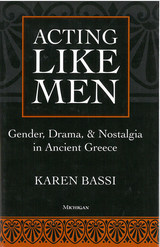
In her discussion of theaterlike practices and experiences, Bassi proposes new conceptual categories for understanding Greek drama as a cultural institution, viewing theatrical performance as part of what Foucault has called a discursive formation. Bassi also provides an important new analysis of gender in Greek culture at large and in Athenian civic ideology in particular, where spectatorship at the civic theater was a distinguishing feature of citizenship, and where citizenship was denied women.
Acting Like Men includes detailed discussions of message-sending as a form of scripted speech in the Iliad, of disguise and the theatrical body of Odysseus in the Odyssey, of tyranny as a theaterlike phenomenon in the narratives of Herodotus, and of Dionysus as the tyrannical and effeminate god of the theater in Euripides' Bacchae and Aristophanes' Frogs. Bassi concludes that the validity of an idealized masculine identity in Greek and Athenian culture is highly contested in the theater, where--in principle--citizens become passive spectators. Thereafter the author considers Athenian theater and Athenian democracy as mutually reinforcing mimetic regimes.
Acting Like Men will interest those interested in the history of the theater, performance theory, gender and cultural studies, and feminist approaches to ancient texts.
Karen Bassi is Associate Professor of Classics, University of California, Santa Cruz.
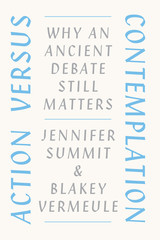
It is truly an ancient debate: Is it better to be active or contemplative? To do or to think? To make an impact, or to understand the world more deeply? Aristotle argued for contemplation as the highest state of human flourishing. But it was through action that his student Alexander the Great conquered the known world. Which should we aim at? Centuries later, this argument underlies a surprising number of the questions we face in contemporary life. Should students study the humanities, or train for a job? Should adults work for money or for meaning? And in tumultuous times, should any of us sit on the sidelines, pondering great books, or throw ourselves into protests and petition drives?
With Action versus Contemplation, Jennifer Summit and Blakey Vermeule address the question in a refreshingly unexpected way: by refusing to take sides. Rather, they argue for a rethinking of the very opposition. The active and the contemplative can—and should—be vibrantly alive in each of us, fused rather than sundered. Writing in a personable, accessible style, Summit and Vermeule guide readers through the long history of this debate from Plato to Pixar, drawing compelling connections to the questions and problems of today. Rather than playing one against the other, they argue, we can discover how the two can nourish, invigorate, and give meaning to each other, as they have for the many writers, artists, and thinkers, past and present, whose examples give the book its rich, lively texture of interplay and reference.
This is not a self-help book. It won’t give you instructions on how to live your life. Instead, it will do something better: it will remind you of the richness of a life that embraces action and contemplation, company and solitude, living in the moment and planning for the future. Which is better? Readers of this book will discover the answer: both.
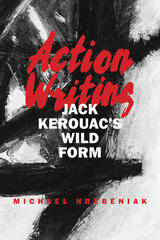
Action Writing: Jack Kerouac's Wild Form connects the personal and creative development of the Beat generation's famous icon with cultural changes in postwar America. Michael Hrebeniak asserts that Jack Kerouac's "wild form"—self-organizing narratives free of literary, grammatical, and syntactical conventions—moves within an experimental continuum across the arts to generate a Dionysian sense of writing as raw process. Action Writing highlights how Kerouac made concrete his 1952 intimation of "something beyond the novel" by assembling ideas from Beat America, modernist poetics, action painting, bebop, and subterranean oral traditions.
Geared to scholars and students of American literature, Beat studies, and creative writing, Action Writing places Kerouac's writing within the context of the American art scene at midcentury. Reframing the work of Kerouac and the Beat generation within the experimental modernist and postmodernist literary tradition, this probing inquiry offers a direct engagement with the social and cultural history at the foreground of Kerouac's career from the 1940s to the late 1960s.
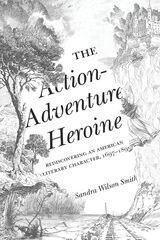
Unlike the “tomboy” or the American frontierswoman, this more encompassing figure has been understudied until now. The action-adventure heroine has special relevance today, as scholars are forcefully challenging the once-dominant separate-spheres paradigm and offering alternative interpretations of gender conventions in nineteenth-century America. The hard-body action heroine in our contemporary popular culture is often assumed to be largely a product of the twentieth-century television and film industries (and therefore influenced by the women’s movement); however, physically strong, agile, sometimes violent female figures have appeared in American popular culture and literature for a very long time.
Smith analyzes captivity narratives, war narratives, stories of manifest destiny, dime novels, and tales of seduction to reveal the long literary history of female protagonists who step into traditionally masculine heroic roles to win the day. Smith’s study includes such authors as Herman Mann, Mercy Otis Warren, Catharine Maria Sedgwick, E.D.E.N. Southworth, Edward L. Wheeler, and many more who are due for critical reassessment. In examining the female hero—with her strength, physicality, and violence—in eighteenth-and nineteenth-century American narratives, The Action-Adventure Heroine represents an important contribution to the field of American studies.
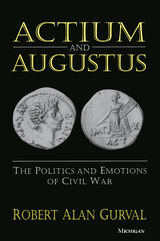
Actium and Augustus marks a turning point as well. Robert Alan Gurval's unusual approach is to examine contemporary views of the battle and its immediate political and social consequences. He starts with a consideration of the official celebration and public commemoration of the Actian victory and then moves on to other questions. What were the "Actian" monuments that Octavian erected on the battle site and later in Rome? What role did the Actian victory play in the political formation of the Principate and its public ideology? What was the response of contemporary poetry? Throughout, this volume concentrates on contemporary views of Actium and its results.
Written to include the general reader, Actium and Augustus presents a thoughtful examination of a complex period. All Greek and Latin quotations are translated, and extensive illustrations present graphic evidence about the issues Romans faced.
Robert Alan Gurval is Associate Professor of Classics, University of California, Los Angeles, and has been a recipient of the Rome Prize awarded by the American Academy in Rome.
Literary history generally locates the primary movement toward poetic innovation in twentieth-century modernism, an impulse carried out against a supposedly enervated “late-Romantic” poetry of the nineteenth century. The original essays in Active Romanticism challenge this interpretation by tracing the fundamental continuities between Romanticism’s poetic and political radicalism and the experimental movements in poetry from the late nineteenth century to the present day.
According to editors July Carr and Jeffrey C. Robinson, “active romanticism” is a poetic response, direct or indirect, to pressing social issues and an attempt to redress forms of ideological repression; at its core, “active romanticism” champions democratic pluralism and confronts ideologies that suppress the evidence of pluralism. “Poetry fetter’d, fetters the human race,” declared poet William Blake at the beginning of the nineteenth century. No other statement from the era of the French Revolution marks with such terseness the challenge for poetry to participate in the liberation of human society from forms of inequality and invisibility. No other statement insists so vividly that a poetic event pushing for social progress demands the unfettering of traditional, customary poetic form and language.
Bringing together work by well-known writers and critics, ranging from scholarly studies to poets’ testimonials, Active Romanticism shows Romantic poetry not to be the sclerotic corpse against which the avant-garde reacted but rather the wellspring from which it flowed.
Offering a fundamental rethinking of the history of modern poetry, Carr and Robinson have grouped together in this collection a variety of essays that confirm the existence of Romanticism as an ongoing mode of poetic production that is innovative and dynamic, a continuation of the nineteenth-century Romantic tradition, and a form that reacts and renews itself at any given moment of perceived social crisis.
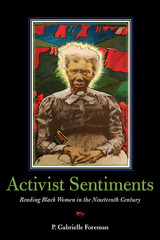
Activist Sentiments takes as its subject women who in fewer than fifty years moved from near literary invisibility to prolific productivity. Grounded in primary research and paying close attention to the historical archive, this book offers against-the-grain readings of the literary and activist work of Harriet Jacobs, Harriet Wilson, Frances E. W. Harper, Victoria Earle Matthews and Amelia E. Johnson.
Part literary criticism and part cultural history, Activist Sentiments examines nineteenth-century social, political, and representational literacies and reading practices. P. Gabrielle Foreman reveals how Black women's complex and confrontational commentary–often expressed directly in their journalistic prose and organizational involvement--emerges in their sentimental, and simultaneously political, literary production.
When Nero took the stage, the audience played along--or else. The drama thus enacted, whether in the theater proper or in the political arena, unfolds in all its rich complexity in Actors in the Audience. This is a book about language, theatricality, and empire--about how the Roman emperor dramatized his rule and how his subordinates in turn staged their response. The focus is on Nero: his performances onstage spurred his contemporaries to reflect on the nature of power and representation, and to make the stage a paradigm for larger questions about the theatricality of power. Through these portrayals by ancient writers, Shadi Bartsch explores what happens to language and representation when all discourse is distorted by the pull of an autocratic authority.
Some Roman senators, forced to become actors and dissimulators under the scrutinizing eye of the ruler, portrayed themselves and their class as the victims of regimes that are, for us, redolent of Stalinism. Other writers claimed that doublespeak--saying one thing and meaning two--was the way one could, and did, undo the constraining effects of imperial oppression. Tacitus, Suetonius, and Juvenal all figure in Bartsch's shrewd analysis of historical and literary responses to the brute facts of empire; even the Panegyricus of Pliny the Younger now appears as a reaction against the widespread awareness of dissimulation. Informed by theories of dramaturgy, sociology, new historicism, and cultural criticism, this close reading of literary and historical texts gives us a new perspective on the politics of the Roman empire--and on the languages and representation of power.
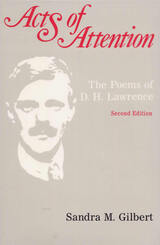
In the Preface to this second edition of her first book, Sandra M. Gilbert addresses the inevitable question: "How can you be a feminist and a Lawrentian?" The answer is intellectually satisfying and historically revealing as she traces an array of early twentieth-century women of letters, some of them proto-feminists, who revered Lawrence despite his countless statements that would today be condemned as "sexist."
H.D. regarded him as one of her "initiators" whose words "flamed alive, blue serpents on the page." Anais Nin insisted that he "had a complete realization of the feelings of women."
By focusing on Lawrence’s own definition of a poem as an "act of attention," Gilbert demonstrates how he developed the mature style of Birds, Beasts and Flowers, his finest collection of poetry. She discusses this volume at length, examines many of his later poems in detail, including the hymns from The Plumed Serpent, Pansies, Nettles, and More Pansies, and ends with a close look at Last Poems. Her detailed examination provides a clearer image of Lawrence as an artist—an artist whose poetry complements his novels and whose fiction enriches but does not outshine his poetry.
American poets’ theater emerged in the postwar period alongside the rich, performance-oriented poetry and theater scenes that proliferated on the makeshift stages of urban coffee houses, shared apartments, and underground theaters, yet its significance has been largely overlooked by critics. Acts of Poetry shines a spotlight on poets’ theater’s key groups, practitioners, influencers, and inheritors, such as the Poets’ Theatre, the Living Theatre, Gertrude Stein, Bunny Lang, Frank O’Hara, Amiri Baraka, Carla Harryman, and Suzan-Lori Parks. Heidi R. Bean demonstrates the importance of poets’ theater in the development of twentieth-century theater and performance poetry, and especially evolving notions of the audience’s role in performance, and in narratives of the relationship between performance and everyday life. Drawing on an extensive archive of scripts, production materials, personal correspondence, theater records, interviews, manifestoes, editorials, and reviews, the book captures critical assessments and behind-the-scenes discussions that enrich our understanding of the intertwined histories of American theater and American poetry in the twentieth century.
In Addressing Postmodernity, Barbara Biesecker examines the relationship between rhetoric and social change and the ways human beings transform social relations through the purposeful use of symbols. In discerning the conditions of possibility for social transformation and the role of human beings and rhetoric in it, Biesecker turns to the seminal work of Kenneth Burke.
Through a close reading of Burke's major works, A Grammar of Motives, A Rhetoric of Motives, and The Rhetoric of Religion: Studies in Logology, the author addresses the critical topic of the
fragmentation of the contemporary lifeworld revealing postmodernity will have a major impact on Burkeian scholarship and on the rhetorical critique of social relations in general.
Directly confronting the challenges posed by postmodernity to social theorists and critics alike and juxtaposing the work of Burke and Jurgen Habermas, Biesecker argues that a radicalized rereading of Burke's theory of the negative opens the way toward a resolutely rhetorical theory of social change and human agency.
---Choice
"Sheds new light on the roots of this complex and fascinating institution."
---Library Journal
"Well-written and accessible . . . showcases the wide-ranging scholarship underway on the history of adoption."
---Adoptive Families
"[T]his volume is a significant contribution to the literature and can serve as a catalyst for further research."
---Social Service Review
Adoption affects an estimated 60 percent of Americans, but despite its pervasiveness, this social institution has been little examined and poorly understood. Adoption in America gathers essays on the history of adoptions and orphanages in the United States. Offering provocative interpretations of a variety of issues, including antebellum adoption and orphanages; changing conceptions of adoption in late-nineteenth-century novels; Progressive Era reform and adoptive mothers; the politics of "matching" adoptive parents with children; the radical effect of World War II on adoption practices; religion and the reform of adoption; and the construction of birth mother and adoptee identities, the essays in Adoption in America will be debated for many years to come.

Novy considers 45 memoirs, mostly from the twenty-first century, by birthmothers, adoptees, and adoptive parents, about same-race and transracial adoption. These adoptees, she recounts, wanted to learn about their ancestry and appreciated adoptive parents who helped. Birthmother Amy Seek shows why open adoption is not simple, and many other memoirs tell stories that continue past reunion.
Adoption Memoirs will enlighten readers who lack experience with adoption and help those looking for a shared experience to also understand adoption from a different standpoint.
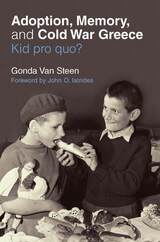
This book presents a committed quest to unravel and document the postwar adoption networks that placed more than 3,000 Greek children in the United States, in a movement accelerated by the aftermath of the Greek Civil War and by the new conditions of the global Cold War. Greek-to-American adoptions and, regrettably, also their transactions and transgressions, provided the blueprint for the first large-scale international adoptions, well before these became a mass phenomenon typically associated with Asian children. The story of these Greek postwar and Cold War adoptions, whose procedures ranged from legal to highly irregular, has never been told or analyzed before. Adoption, Memory, and Cold War Greece answers the important questions: How did these adoptions from Greece happen? Was there any money involved? Humanitarian rescue or kid pro quo? Or both? With sympathy and perseverance, Gonda Van Steen has filled a decades-long gap in our understanding, and provided essential information to the hundreds of adoptees and their descendants whose lives are still affected today.
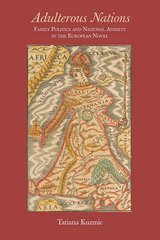
In Adulterous Nations, Tatiana Kuzmic enlarges our perspective on the nineteenth-century novel of adultery, showing how it often served as a metaphor for relationships between the imperialistic and the colonized. In the context of the long-standing practice of gendering nations as female, the novels under discussion here—George Eliot’s Middlemarch, Theodor Fontane’s Effi Briest, and Leo Tolstoy’s Anna Karenina, along with August Šenoa’s The Goldsmith’s Gold and Henryk Sienkiewicz’s Quo Vadis—can be understood as depicting international crises on the scale of the nuclear family. In each example, an outsider figure is responsible for the disruption experienced by the family. Kuzmic deftly argues that the hopes, anxieties, and interests of European nations during this period can be discerned in the destabilizing force of adultery. Reading the work of Šenoa and Sienkiewicz, from Croatia and Poland, respectively, Kuzmic illuminates the relationship between the literature of dominant nations and that of the semicolonized territories that posed a threat to them. Ultimately, Kuzmic’s study enhances our understanding of not only these five novels but nineteenth-century European literature more generally.
The book begins by summarizing, commenting on, and evaluating previous descriptive and theoretical contributions on Spanish exclamatives. This introductory overview also contains a detailed classification of Spanish exclamative grammatical types, along with an analysis of their main properties. Special attention is devoted in the book throughoutto the syntactic structures displayed by exclamative patterns; the differences between exclamations and other speech acts (specifically questions and imperatives); the peculiar semantic denotation of exclamative words and their relationship to quantifiers denoting high degree; the semantics of adjectives and adverbs expressing extreme evaluation; the form and interpretation of negated and embedded exclamatives; the properties of optative utterances; and the different ways in which expressive contents are related to unexpected reactions of the speaker, as well as possible knowledge shared by interlocutors.
This groundbreaking volume provides a complete and accurate picture of Spanish exclamation by integrating its numerous component parts.
Published by University of Delaware Press. Distributed worldwide by Rutgers University Press.
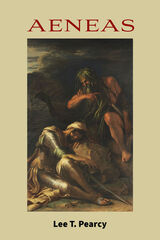
Three tactical treatises.
Aeneas was perhaps a general, and certainly author of several didactic military works of which the sole survivor is that on defense against siege. From it we can deduce that he was a Peloponnesian of the fourth century BC who served in the Aegean and in Asia Minor and composed the work from direct knowledge and from oral and some literary tradition, possibly in 357–6 BC. It is devoted entirely to defense of fortified places and deals specially with use of defending troops; defensive positions; morale; resistance to attacks and to actual assault; guards; obviation of treachery and revolution; and other subjects.
Asclepiodotus, philosopher and pupil of the Stoic Posidonius, wrote a rather dry but ordered work on tactics as if a subject of the lecture room, based not on personal experience but on earlier manuals. His main subjects were the branches of a military force; infantry; cavalry; chariots; elephants; arms; maneuvers; military evolutions; marching formation. The work ends with words of command.
Onasander (Onasandros), a Platonic philosopher, dedicated his work “The General” to the Roman Veranius, who was a consul in AD 49. The work deals in plain style with the sort of morals and social and military qualities and attitudes expected of a virtuous and militarily successful general. It is also concerned with such matters as his choice of staff; attitude to war; religious duties; military formations; conduct in allied and hostile lands; difficult terrains; camps; drill; spies; guards; deserters; battle formations and maneuvers; and other matters, ending with conduct after victory.
“The classic of all Europe.” —T. S. Eliot
Virgil (Publius Vergilius Maro) was born in 70 BC near Mantua and was educated at Cremona, Milan, and Rome. Slow in speech, shy in manner, thoughtful in mind, weak in health, he went back north for a quiet life. Influenced by the group of poets there, he may have written some of the doubtful poems included in our Virgilian manuscripts. All his undoubted extant work is written in his perfect hexameters. Earliest comes the collection of ten pleasingly artificial bucolic poems, the Eclogues, which imitated freely Theocritus’ idylls. They deal with pastoral life and love. Before 29 BC came one of the best of all didactic works, the four books of Georgics on tillage, trees, cattle, and bees. Virgil’s remaining years were spent in composing his great, not wholly finished, epic the Aeneid, on the traditional theme of Rome’s origins through Aeneas of Troy. Inspired by the Emperor Augustus’ rule, the poem is Homeric in metre and method but influenced also by later Greek and Roman literature, philosophy, and learning, and deeply Roman in spirit. Virgil died in 19 BC at Brundisium on his way home from Greece, where he had intended to round off the Aeneid. He had left in Rome a request that all its twelve books should be destroyed if he were to die then, but they were published by the executors of his will.
The Loeb Classical Library edition of Virgil is in two volumes.
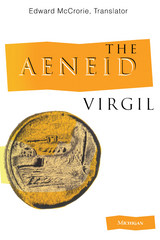
In this new translation Edward McCrorie has performed the difficult task of rendering Virgil's compact, dense Latin into fine, readable, modern English verse. The sometimes complex text is made clear and comprehensible even for first-time readers, and a glossary of names helps identify characters and place-names in the poem. The translation is well suited for students at all levels, and readers already familiar with Virgil will find many fresh images and ideas.
"A brilliant effort."--Robert Bly
"I admire the ambition of the project, and the generosity of many of the lines."--Robert Fagles
Edward McCrorie is Professor of English, Providence College. His poetry and translations of Latin verse have been widely published.
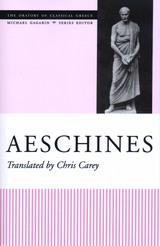
This is the third volume in the Oratory of Classical Greece series. Published over several years, the series presents all of the surviving speeches from the late fifth and fourth centuries B.C. in new translations prepared by classical scholars who are at the forefront of the discipline. These translations are especially designed for the needs and interests of today's undergraduates, Greekless scholars in other disciplines, and the general public.
Classical oratory is an invaluable resource for the study of ancient Greek life and culture. The speeches offer evidence on Greek moral views, social and economic conditions, political and social ideology, and other aspects of Athenian culture that have been largely ignored: women and family life, slavery, and religion, to name just a few.
This volume contains the three surviving speeches of Aeschines (390-? B.C.). His speeches all revolve around political developments in Athens during the second half of the fourth century B.C. and reflect the internal political rivalries in an Athens overshadowed by the growing power of Macedonia in the north. The first speech was delivered when Aeschines successfully prosecuted Timarchus, a political opponent, for having allegedly prostituted himself as a young man. The other two speeches were delivered in the context of Aeschines' long-running political feud with Demosthenes. As a group, the speeches provide important information on Athenian law and politics, Demosthenes and his career, sexuality and social history, and the historical rivalry between Athens and Macedonia.
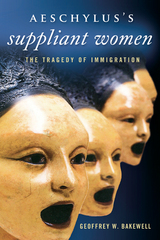

Ben Edwin Perry's Aesopica remains the definitive edition of all fables reputed to be by Aesop. The volume begins traditionally with a life of Aesop, but in two different and previously unedited Greek versions, with collations that record variations in the major recensions. It includes 179 proverbs attributed to Aesop and 725 carefully organized fables, for which Perry also provides their eldest known sources. To better evaluate the place of Aesop in literary history, Perry includes testimonies about Aesop made by Greek and Latin authors, from Herodotus to Maximus Planudes.
Providing unusual insights into the heart of Roman culture, these clever poems open up odd avenues of ancient lore and life as they explore social types and physical aspects of the body, regularly mocking the limitations of human nature and offering vulgar or promiscuous interpretations of the stuff of social life.
Featuring folksy proverbs and satirical anecdotes, filled with saucy naughtiness and awful puns, Aesop's Human Zoo will amuse you with its eccentricities and hit home with its shrewdly candid and red raw messages. The entertainment offered in this volume of impeccably accurate translations is truly a novelty—a good-hearted and knowing laugh courtesy of classical poetry. Beginning to advanced classicists and Latin scholars will appreciate the original Latin text provided in this bilingual edition. The splash of classic Thomas Bewick wood engravings to accompany the fables renders the collection complete.
One hundred twenty-two sonnets that touch on contemporary American popular culture, social trends, and personalities. Poet Roger Armbrust is described by some as a mystic, by others as a spiritualist, and by yet others as a guy who toys with really big thoughts, making them objects both of serious study and of humor. His sonnets will push you to laughter and meditation: a satisfying literary ride.
In The Aesthetic Astronaut, Roger Armbrust escorts readers on an insightful journey throughout Earth and beyond. We experience the loneliness and instpiration of "the Aesthetic Astronaut"; cold-blooded calculations of "The Armchair Assassin"; passion and sense of the romantic lover; reflective memories of a gentle heart growing older; ironic vision of an observer to history, and subtle--and sometimes not so subtle--humor of a fellow human involved in our day-to-day challenge of living a worthwhile life. The poet's imagery and attitude. . . may fascinate, thrill, sadden, anger, or push you to laughter or meditation. But you'll find the trip a fascinating literary ride.
During the past twenty years, the world’s most renowned critical theorist—the scholar who defined the field of postcolonial studies—has experienced a radical reorientation in her thinking. Finding the neat polarities of tradition and modernity, colonial and postcolonial, no longer sufficient for interpreting the globalized present, she turns elsewhere to make her central argument: that aesthetic education is the last available instrument for implementing global justice and democracy.
Spivak’s unwillingness to sacrifice the ethical in the name of the aesthetic, or to sacrifice the aesthetic in grappling with the political, makes her task formidable. As she wrestles with these fraught relationships, she rewrites Friedrich Schiller’s concept of play as double bind, reading Gregory Bateson with Gramsci as she negotiates Immanuel Kant, while in dialogue with her teacher Paul de Man. Among the concerns Spivak addresses is this: Are we ready to forfeit the wealth of the world’s languages in the name of global communication? “Even a good globalization (the failed dream of socialism) requires the uniformity which the diversity of mother-tongues must challenge,” Spivak writes. “The tower of Babel is our refuge.”
In essays on theory, translation, Marxism, gender, and world literature, and on writers such as Assia Djebar, J. M. Coetzee, and Rabindranath Tagore, Spivak argues for the social urgency of the humanities and renews the case for literary studies, imprisoned in the corporate university. “Perhaps,” she writes, “the literary can still do something.”
This study of modern Japan engages the fields of art history, literature, and cultural studies, seeking to understand how the “beautiful woman” (bijin) emerged as a symbol of Japanese culture during the Meiji period (1868–1912). With origins in the formative period of modern Japanese art and aesthetics, the figure of the bijin appeared across a broad range of visual and textual media: photographs, illustrations, prints, and literary works, as well as fictional, critical, and journalistic writing. It eventually constituted a genre of painting called bijinga (paintings of beauties).
Aesthetic Life examines the contributions of writers, artists, scholars, critics, journalists, and politicians to the discussion of the bijin and to the production of a national discourse on standards of Japanese beauty and art. As Japan worked to establish its place in the world, it actively presented itself as an artistic nation based on these ideals of feminine beauty. The book explores this exemplary figure for modern Japanese aesthetics and analyzes how the deceptively ordinary image of the beautiful Japanese woman—an iconic image that persists to this day—was cultivated as a “national treasure,” synonymous with Japanese culture.
A critical reading of the unstable structures that organize biological and social life
This timely and radically interdisciplinary volume uncovers the aesthetics and politics of infrastructure. From roads and bridges to harbors and canals, infrastructure is conventionally understood as the public works that allow for the circulation of capital. Yet this naturalized concept of infrastructure, driven by capital’s restless expansion, is haunted by imperial tendencies to occupy territory, extract resources, and organize life. Infrastructure thus undergirds the living nexus of modernity in an ongoing project of racialization, affective embodiment, and environmental praxis. Rather than merely making visible infrastructure’s modes of power, however, The Aesthetic Life of Infrastructure brings literary methods to bear on the interpretive terrain, reading infrastructural space and temporalities to show that their aesthetic and sensorial experience cannot be understood apart from histories of production and political economies.
Building on critical infrastructure studies in anthropology, geography, and media studies, this collection demonstrates the field’s vitality to scholars working across the humanities, including in literary, visual, and cultural studies. By querying the presumed invisibility of infrastructure’s hidden life, the volume’s contributors revitalize ongoing literary debates about reading surface and depth. How, they ask, might infrastructure and aesthetics then function as epistemic tools for rethinking each other? And what urgency do they acquire in light of current crises that bear on death, whether biological, social, or planetary?
In Aesthetics and Revolution, Dawes demonstrates that there is an objective grounding for cultural studies found in the aesthetic means of production. By analyzing the relations and forces of production in this realm we inevitably cross over into the economic means of production as well as the struggle for political representation. Ultimately, aesthetics is at the intersection of class and gender interests and their struggle for hegemony.
In Aesthetics and Revolution, Dawes has chosen a group of writers of different theoretical sympathies, class, gender, and social positions to reveal the conflictual interests of the social classes and genders as a whole. Through close readings of their work, Dawes examines the thematic nodes that are expressed in positions as diverse as Ernesto Cardenal’s liberation theology, Pablo Antonio Cuadra’s populism, the campesino’s oral tradition, and Gioconda Belli’s erotic verses in relation to the changes taking place in revolutionary Nicaragua.
In chapters on Proletkult, RAPP, LEF, and Pereval, Dobrenko reexamines the theories generated by these major Marxist literary groupings of the early Soviet Union. He shows how each approached the problems of literature's response to the presumed social mandate of the young communist society, and how Socialist Realism emerged as a conglomerate of these earlier, revolutionary theories. With extensive and detailed reference to supporting testimony and documents, Dobrenko clearly demonstrates how Socialist Realism was created from within the revolutionary culture, and how this culture and its disciples fully participated in this creative process. His work represents a major breakthrough in our current understanding of the complex sources that contributed to early Soviet culture.
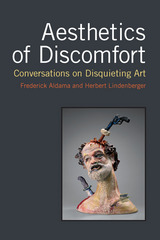
Beginning with a survey of the history and theory of avant- garde art, David Graver critically juxtaposes important competing interpretations of the avant-garde, establishes basic distinctions between forms of avant-garde art, compares the aesthetic interests of the avant- garde to those of modernism, and discusses the relationship between the avant-garde and drama. Then, through close readings of the works of five preeminent avant-garde playwrights and visual artists- Oskar Kokoschka, Gottfried Benn, Raymond Roussel, Roger Vitrac, and Wyndham Lewis- he examines the innovations in dramatic literature carried out by these visionaries and finally relates them to the innovations in theater articulated by Brecht and Artaud. Graver argues that anti-art principles, most noticeable in the confrontational tactics of dada performance, can also be found within literary dramatic texts, where they create an "aesthetics of disturbance" that destabilizes the integrity of the work without allowing it to self-destruct.
"A corrective to the oft-repeated, over-simple idea that anti-art consists of the same destructive gesture repeated in different forms. This is a useful book that fills a gap, both conceptually and in terms of the figures discussed." --Philip Auslander, Georgia Institute of Technology
"Original, important, well- done."--Anthony Kubiak, Harvard University
David Graver is Assistant Professor of English and Comparative Literature, Columbia University.
Violence in the modernist mode, an ostensible intrusion of raw bodily harm into the artwork, aspires to transcend its own textuality, and yet, as An Aesthetics of Injury establishes, the wound paradoxically remains the essence of inscription. Fleishman thus shows how the wound, once the modernist emblem par excellence of an immediate aesthetic experience, comes to be implicated in a postmodern understanding of reality reduced to ceaseless mediation. In so doing, he demonstrates how what we think of as the most real object, the human body, becomes indistinguishable from its “nonreal” function as text. At stake in this tautological textual model is the heritage of narrative thought: both the narratological workings of these texts (how they tell stories) and the underlying epistemology exposed (whether these narrativists still believe in narrative at all).
With fresh and revealing readings of canonical authors and filmmakers seldom treated alongside one another, An Aesthetics of Injury is important reading for scholars working on literary or cinematic modernism and the postmodern, philosophy, narratology, body culture studies, queer and gender studies, trauma studies, and cultural theory.
Myths are a central part of our reality. But merely debunking them lets us forget why they are created in the first place and why we need them. André Fischer draws on key examples from German postwar culture, from novelists Hans Henny Jahnn and Hubert Fichte, to sculptor and performance artist Joseph Beuys, and filmmaker Werner Herzog, to show that mythmaking is an indispensable human practice in times of crisis.
Against the background of mythologies based in nineteenth-century romanticism and their ideological continuation in Nazism, fresh forms of mythmaking in the narrative, visual, and performative arts emerged as an aesthetic paradigm in postwar modernism. Boldly rewriting the cultural history of an era and setting in transition, The Aesthetics of Mythmaking in German Postwar Culture counters the predominant narrative of an exclusively rational Vergangenheitsbewältigung (“coming to terms with the past”). Far from being merely reactionary, the turn toward myth offered a dimension of existential orientation that had been neglected by other influential aesthetic paradigms of the postwar period. Fischer’s wide-ranging, transmedia account offers an inclusive perspective on myth beyond storytelling and instead develops mythopoesis as a formal strategy of modernism at large.
In The Aesthetics of Service in Early Modern England, Elizabeth Rivlin explores the ways in which servant-master relationships reshaped literature. The early modern servant is enjoined to obey his or her master out of dutiful love, but the servant's duty actually amounts to standing in for the master, a move that opens the possibility of becoming master. Rivlin shows that service is fundamentally a representational practice, in which the servant who acts for a master merges with the servant who acts as a master.
Rivlin argues that in the early modern period, servants found new positions as subjects and authors found new forms of literature. Representations of servants and masters became a site of contact between pressing material concerns and evolving aesthetic ones. Offering readings of dramas by Shakespeare, Jonson, and Thomas Dekker and prose fictions by Thomas Deloney and Thomas Nashe, Rivlin suggests that these authors discovered their own exciting and unstable projects in the servants they created.
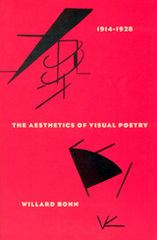
"An important contribution. Highly sophisticated, the study tends to raise its reader's impression of visual poetry in the twentieth century from trivial pastime to serious preoccupation."—Eric Sellin, Journal of Modern Literature
"With his definitive analyses full of quotable observations and sharp critical insights, Bohn has provided a model, pioneering study, one from which current and future studies of visual poetry will most certainly benefit."—Gerald J. Janacek, Romance Quarterly
"Bohn substantiates his thesis with thoughtful and often ingenious explications of texts both well known and hard to find. . . . Aesthetics of Visual Poetry is a thoroughly researched, beautifully written and fascinating introduction to an infinitely intriguing genre."—Mechthild Cranston, French Review
Callimachus of Cyrene, born ca. 310 BCE, after studying philosophy at Athens, became a teacher of grammar and poetry at Alexandria. Ptolemy II Philadelphus of Egypt (reigned 285–247) made him when still young a librarian in the new library at Alexandria; he prepared a great catalogue of its books.
Callimachus was author of much poetry and many works in prose, but not much survives. His hymns and epigrams are given with works by Aratus and Lycophron in another volume (no. 129) of the Loeb Classical Library. In the present volume are included fragments of the Aetia (Causes), aetiological legends concerning Greek history and customs; fragments of a book of Iambi; 147 fragments of the epic poem Hecale, which described Theseus’s victory over the bull which infested Marathon; and other fragments.
We have no explicit information about the poet Musaeus, author of the short epic poem on Hero and Leander, except that he is given in some manuscripts the title Grammatikos, a teacher learned in the rhetoric, poetry and philosophy of his time. He was obviously a follower of the Egyptian poet Nonnus of Panopolis, of the fifth century AD, and his poem seems also to presuppose the Paraphrase of the Psalms of Pseudo-Apollinarius which can be dated to the period 460–470.
Musaeus takes up a subject whose first detailed treatment is preserved in Ovid’s Heroides (Epistles 18 and 19), but he presents it in a quite different manner. Among the literary antecedents to which this learned grammatikos expressly alludes, the most prominent are Books 5 and 6 of the Odyssey and Plato’s Phaedrus. He draws too on the Hymns of Proclus and the Metaphrasis of the Gospel of St. John by Nonnus. He was most probably a Christian Neoplatonist writing a Christian allegory.
The premier scholar-poet of the Hellenistic age.
Callimachus (ca. 303–ca. 235 BC), a proud and well-born native of Cyrene in Libya, came as a young man to the court of the Ptolemies at Alexandria, where he composed poetry for the royal family; helped establish the Library and Museum as a world center of literature, science, and scholarship; and wrote an estimated 800 volumes of poetry and prose on an astounding variety of subjects, including the Pinakes, a descriptive bibliography of the Library’s holdings in 120 volumes. Callimachus’ vast learning richly informs his poetry, which ranges broadly and reworks the language and generic properties of his predecessors in inventive, refined, and expressive ways. The “Callimachean” style, combining learning, elegance, and innovation and prizing brevity, clarity, lightness, and charm, served as an important model for later poets, not least at Rome for Catullus, Virgil, Horace, Ovid, and the elegists, among others.
This edition, which replaces the earlier Loeb editions by A. W. Mair (1921) and C. A. Trypanis (1954, 1958), presents all that currently survives of and about Callimachus and his works, including the ancient commentaries (Diegeseis) and scholia. Volume I contains Aetia, Iambi, and lyric poems; Volume II Hecale, Hymns, and Epigrams; and Volume III miscellaneous epics and elegies, other fragments, and testimonia, together with concordances and a general index. The Greek text is based mainly on Pfeiffer’s but enriched by subsequently published papyri and the judgment of later editors, and its notes and annotation are fully informed by current scholarship.
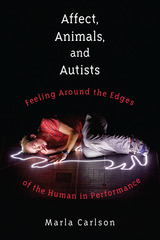
By analyzing specific structures of affect with the vocabulary of emotions, Marla Carlson builds upon the conception of affect articulated by psychologist Silvan Tomkins. The book treats a diverse selection of live performance and archival video and analyzes the ways in which they affect their audiences. The range of performances includes commercially successful productions such as The Curious Incident of the Dog in the Night-Time, War Horse, and The Lion King as well as to the more avant-garde and experimental theater created by Robert Wilson and Christopher Knowles, Back to Back Theatre, Elevator Repair Service, Pig Iron Theatre, and performance artist Deke Weaver.
Contributors. Sara Ahmed, Ben Anderson, Lauren Berlant, Lone Bertelsen, Steven D. Brown, Patricia Ticineto Clough, Anna Gibbs,Melissa Gregg, Lawrence Grossberg, Ben Highmore, Brian Massumi, Andrew Murphie, Elspeth Probyn, Gregory J. Seigworth, Kathleen Stewart, Nigel Thrift, Ian Tucker, Megan Watkins
Contributors. Lauren Berlant, Lisa Blackman, Rizvana Bradley, Ann Cvetkovich, Ezekiel J. Dixon-Román, Adam J. Frank, M. Gail Hamner, Omar Kasmani, Cecilia Macón, Hil Malatino, Erin Manning, Derek P. McCormack, Patrick Nickleson, Susanna Paasonen, Tyrone S. Palmer, Carolyn Pedwell, Jasbir K. Puar, Jason Read, Michael Richardson, Dylan Robinson, Tony D. Sampson, Kyla Schuller, Gregory J. Seigworth, Nathan Snaza, Kathleen Stewart, Elizabeth A. Wilson
What happens when the cerebral--that is, theories of literature and of affect--encounters the corporeal, the human body? In this study by Jane Thrailkill, what emerges from the convergence is an important vision of late-nineteenth-century American realist literature and the role of emotion and physiology in literary criticism.
Affecting Fictions offers a new understanding of American literary realism that draws on neuroscience and cognitive psychology. Thrailkill positions herself against the emotionless interpretations of the New Critics. Taking as her point of departure realist works of medicine, psychology, and literature, she argues that nineteenth-century readers and critics would have taken it for granted that texts engaged both mind and body. Feeling, she writes, is part of interpretation.
Examining literary works by Henry James, Kate Chopin, Charlotte Perkins Gilman, and Oliver Wendell Holmes, Thrailkill explores the connections among the aesthetic, emotion, consciousness, and the body in readings that illuminate lesser-known works such as "Elsie Venner" and that resuscitate classics such as "The Yellow Wallpaper."
Focusing on pity, fear, nervousness, pleasure, and wonder, Thrailkill makes an important contribution to the growing body of critical work on affect and aesthetics, presenting a case for the indispensability of emotions to the study of fiction.
How do we experience the virtual environments we encounter in literature and film on the sensory and emotional level? How do environmental narratives invite us to care for human and nonhuman others who are put at risk? And how do we feel about the speculative futures presented to us in ecotopian and ecodystopian texts? Weik von Mossner explores these central questions that are important to anyone with an interest in the emotional appeal and persuasive power of environmental narratives.
Pursuing this argument, Sierra-Rivera examines print, radio, and web materials by authors whose emotional discourses have also had a measurable impact on the formation of communities that demand their full political inclusion in society. This book therefore fills a significant gap in the study of the relationship between materiality (space and bodies), emotions, and the political imagination. Affective Intellectuals demonstrates that writers and intellectuals themselves are vital in reshaping their communities and fighting for social justice in the Hemispheric Americas.
The surprising claim of this book is that dwelling on loss is not necessarily depressing. Instead, Jonathan Flatley argues, embracing melancholy can be a road back to contact with others and can lead people to productively remap their relationship to the world around them. Flatley demonstrates that a seemingly disparate set of modernist writers and thinkers showed how aesthetic activity can give us the means to comprehend and change our relation to loss.
The texts at the center of Flatley’s analysis—Henry James’s Turn of the Screw, W. E. B. Du Bois’s The Souls of Black Folk, and Andrei Platonov’s Chevengur—share with Freud an interest in understanding the depressing effects of difficult losses and with Walter Benjamin the hope that loss itself could become a means of connection and the basis for social transformation. For Du Bois, Platonov, and James, the focus on melancholy illuminates both the historical origins of subjective emotional life and a heretofore unarticulated community of melancholics. The affective maps they produce make possible the conversion of a depressive melancholia into a way to be interested in the world.
Ogunyemi uses the novels to trace a Nigerian women's literary tradition that reflects an ideology centered on children and community. Of prime importance is the paradoxical Mammywata figure, the independent, childless mother, who serves as a basis for the new woman in these novels. Ogunyemi tracks this figure through many permutations, from matriarch to exile to woman writer, her multiple personalities reflecting competing loyalties—to self and other, children and nation. Such fragmented personalities characterize the postcolonial condition in their writing. Mapping geographies of pain and endurance, the work opens a space for addressing the palava between different groups of people. Valuable as the first sustained critical study of a substantial but little known body of literature, this book also counters the shortcomings of prevailing "masculinist" theories of black literature in a powerful narrative of the Nigerian world.
June 17, 2008, is the fiftieth anniversary of the publication of Chinua Achebe’s Things Fall Apart by Heinemann. This publication provided the impetus for the foundation of the African Writers Series in 1962 with Chinua Achebe as the editorial adviser.
Africa Writes Back: The African Writers Series and the Launch of African Literature captures the energy of literary publishing in a new and undefined field. Portraits of the leading characters and the many consultants and readers providing reports and advice to new and established writers make Africa Writes Back a stand-out book. James Currey’s voice and insights are an added bonus.
CONTENTS
Publishing and selling the African Writers Series
The African Writers Series Portfolio & George Hallett’s covers
Main dates for the African Writers Series
INTRODUCTION: The establishment of African Literature
Publishing Chinua Achebe
1. WRITERS FROM WEST AFRICA
Nigeria: The country where so much started
Negritude from Senegal to Cameroun
Magic & realism from Ghana, The Gambia & Sierra Leone
2. WRITERS FROM EASTERN AFRICA
Towards the oral & the popular in Kenya, Uganda & Tanzania
Publishing Ngugi
3. WRITERS FROM THE HORN & NORTH-EASTERN AFRICA
Emperors in Ethiopia
Publishing Nuruddin Farah
Arab authors in Egypt & Sudan
4. WRITERS FROM SOUTH AFRICA
Resistance in South Africa
Publishing Alex la Guma
Publishing Dennis Brutus
Publishing Bessie Head
Publishing Masizi Kunene
5. WRITERS FROM SOUTHERN AFRICAN
Guns & Guerrillas in Mozambique &Angola
Zambia Shall be Free
Death & detention in Malawi
The struggle to become Zimbabwe
Publishing Dambudzo Marechera
CONCLUSION: Is there still a role for the African Writers Series?
Satire's real purpose as a literary genre is to criticize through humor, irony, caricature, and parody, and ultimately to defy the status quo. In African American Satire, Darryl Dickson-Carr provides the first book-length study of African American satire and the vital role it has played. In the process he investigates African American literature, American literature, and the history of satire.
Dickson-Carr argues that major works by such authors as Rudolph Fisher, Ishmael Reed, Ralph Ellison, Langston Hughes, and George S. Schuyler should be read primarily as satires in order to avoid misinterpretation and to gain a greater understanding of their specific meanings and the eras in which they were written. He also examines the satirical rhetoric and ideological bases of complex works such as John Oliver Killens's The Cotillion and Cecil Brown's The Life and Loves of Mr. Jiveass Nigger—books that are currently out of print and that have received only scant critical attention since they were first published.
Beginning with the tradition of folk humor that originated in West Africa and was forcibly transplanted to the Americas through chattel slavery, Dickson-Carr focuses in each chapter on a particular period of the twentieth century in which the African American satirical novel flourished. He analyzes the historical contexts surrounding African American literature and culture within discrete crucial movements, starting with the Harlem Renaissance of the 1920s and ending in the present. He also demonstrates how the political, cultural, and literary ethos of each particular moment is manifested and contested in each text.
By examining these texts closely within their historical and ideological contexts, Dickson-Carr shows how African American satirical novels provide the reader of African American literature with a critique of popular ideologies seldom found in nonsatirical works. Providing a better understanding of what satire is and why it is so important for fulfilling many of the goals of African American literature, African American Satire will be an important addition to African American studies.
In this book, Gary Totten examines the global travel narratives of a diverse set of African American writers, including Ida B. Wells, Booker T. Washington, Matthew Henson, Jessie Redmon Fauset, and Zora Neale Hurston. While these writers deal with issues of identity in relation to a reimagined sense of self—in a way that we might expect to find in travel narratives—they also push against the constraints and conventions of the genre, reconsidering discourses of tourism, ethnography, and exploration. This book not only offers new insights about African American writers and mobility, it also charts the ideological distinctions and divergent agendas within this group of writers. Totten demonstrates how these travelers and their writings challenged dominant ideologies about African American experience, expression, and identity in a period of escalating racial violence. By setting these texts in their historical context and within the genre of travel writing, Totten presents a nuanced understanding of both popular and recovered work of the period.
READERS
Browse our collection.
PUBLISHERS
See BiblioVault's publisher services.
STUDENT SERVICES
Files for college accessibility offices.
RECENTLY PUBLISHED



UChicago Accessibility Resources
home | accessibility | search | about | contact us
BiblioVault ® 2001 - 2024
The University of Chicago Press