
 A SCHOLARLY BOOK REPOSITORY
"Sociologists recurrently complain about how seldom it is that we produce books that combine serious theorizing about important issues of public policy with original and sensitive field research. Several rounds of enthusiastic applause, then, are due Jane Mansbridge . . . for having produced a dense and well written book whose subject is nothing less ambitious than the theory of democracy and its problems of equality, solidarity, and consensus. Beyond Adversary Democracy, however, is not simply a work of political theory; Mansbridge explores her abstract subject matter by close studies (using ethnographic, documentary, and questionnaire methods) of two small actual democracies operating at their most elemental American levels (1) a New England town meeting ("Selby," Vermont) and (2) an urban crisis center ("Helpline"), whose 41 employees shared a New Left-Counterculture belief in participatory democracy and consensual decision-making. [Mansbridge] is a force to contend with. It is in our common interest that she be widely read."—Bennett M. Berger, Contemporary Sociology

This book examines two eras of Chinese history that have commonly been viewed as periods of state disintegration or retreat. And they were—at the central level. When re-examined at the local level, however, both are revealed as periods of state building. In both the Nanjing decade of Guomindang rule (1927-1937) and the early post-Mao reform era (1980-1992), both national and local factors shaped local state building and created variations in local state structures and practices. This book focuses on one key area of the state, taxation and public finance, to trace the processes of local state building in these two eras. Using the records of local tax and finance offices in the Tianjin area and in Guangdong province, the author maps the process by which these county-level offices grew.
This book highlights variation in local state structures and practices between localities and between the central and local governments. As the author shows, this variation is important because it results in regional differences in state-society relations and affects central state capacity in terms of the local state's ability to implement central state policies as well as its own.
Dazzled by the model of Japan’s Western-style constitutional government, Chinese officials and elite activists made plans to establish locally elected councils. By October 1911, government agencies had reported the establishment of about 5,000 councils.
Throughout the period, data on self-government reforms collected from localities were compiled in provincial capitals, then collated, summarized, and archived in Beijing. Simultaneously, directives were being sent from the capital to the provinces. From this wealth of previously unexamined material, Roger R. Thompson draws a portrait-in-motion of the reforms. He demonstrates the energy and significance of the late-Qing local-self-government movement, while making a compelling case that it was separate from the well-studied phenomenon of provincial assemblies and constitutionalism in general.
Sanchun (a pseudonym) is a small rural market center in Malaysia made up of predominantly Chinese shopkeepers, wage laborers, and rubber tappers and small holders. It is one of the so-called “new villages” originally set up during the communist insurgency as forced relocation camps to contain rural Chinese. Judith Strauch lived in Sanchun for eighteen months, conducting lengthy socioeconomic family surveys, examining local records, documents, and census data, and participating in community life.
This study offers detailed analysis of the manipulative strategies of local rivals active over several decades in the competition for local status and power. But significantly, it treats relevant aspects of the broader Malaysian political environment as well, situating local-level politics firmly in the larger context of national politics. Special attention is given to a rural mass-mobilization movement undertaken by the major Chinese-Malaysian political party in the early 1970s. The focus is on the interconnections between the various levels of a modern multi-ethnic political system, demonstrating the ways in which local political actors are both constrained and supported by power structures and resources that lie outside the local system.
The book draws together in an innovative manner important intellectual strands of both anthropology and political analysis. It should be of interest not only to Southeast Asia area specialists and students of contemporary ethnic Chinese society but also to those concerned with the problems of plural societies everywhere.
The City We Make Together looks at how we make art with communities, how we perform power and who gets to play which roles, and how we might use creativity and rigorous inquiry to look at our structures of democracy anew.

Collaborating to Manage captures the basic ideas and approaches to public management in an era where government must partner with external organizations as well as other agencies to work together to solve difficult public problems. In this primer, Robert Agranoff examines current and emergent approaches and techniques in intergovernmental grants and regulation management, purchase-of-service contracting, networking, public/nonprofit partnerships and other lateral arrangements in the context of the changing public agency. As he steers the reader through various ways of coping with such organizational richness, Agranoff offers a deeper look at public management in an era of shared public program responsibility within governance.
Geared toward professionals working with the new bureaucracy and for students who will pursue careers in the public or non-profit sectors, Collaborating to Manage is a student-friendly book that contains many examples of real-world practices, lessons from successful cases, and summaries of key principles for collaborative public management.

In addition, in November 2008, despite massive doses of terrible financial news, voters across the U.S. approved land conservation funding measures. It was a record-breaking year for land protection financing, with voters demonstrating substantial support for open space ballot measures despite the economic and fiscal crisis of the time.
The Conservation Program Handbook is a manual that provides all of the information—on a broad spectrum of topics—that conservation professionals are likely to encounter. It compiles and distills advice from professionals based on successful conservation efforts across the country, including a list of “best practices” for the most critical issues conservationists can expect to face. By providing information on how to do conservation work in the best possible manner, The Conservation Program Handbook has the goal of increasing the amount, quality, and pace of conservation being achieved by local governments throughout the nation.
Bolivia decentralized in an effort to deepen democracy, improve public services, and make government more accountable. Unlike many countries, Bolivia succeeded. Over the past generation, public investment shifted dramatically toward primary services and resource distribution became far more equitable, partly due to the creation of new local governments. Many municipalities responded to decentralization with transparent, accountable government, yet others suffered ineptitude, corruption, or both. Why? Jean-Paul Faguet combines broad econometric data with deep qualitative evidence to investigate the social underpinnings of governance. He shows how the interaction of civic groups and business interests determines the quality of local decision making.
In order to understand decentralization, Faguet argues, we must understand governance from the ground up. Drawing on his findings, he offers an evaluation of the potential benefits of decentralization and recommendations for structuring successful reform.
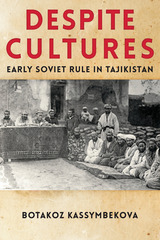
In a region marked by ethnic, linguistic, and cultural diversity, the Soviet plan was to recognize these differences while subsuming them within the conglomerate of official Soviet culture. As Kassymbekova reveals, the local ruling system was built upon an intricate network of individuals, whose stated loyalty to communism was monitored through a chain of command that stretched from Moscow through Tashkent to Dushanbe/Stalinabad. The system was tenuously based on individual leaders who struggled to decipher the language of Bolshevism and maintain power through violent repression.
Until recently, policy evaluation has mostly meant assessing whether government programs raise reading levels, decrease teen pregnancy rates, improve air quality levels, lower drunk-driving rates, or achieve any of the other goals that government programs are ostensibly created to do. Whether or not such programs also have consequences with respect to future demands for government action and whether government programs can heighten—or dampen—citizen involvement in civic activities are questions that are typically overlooked.
This book applies such questions to local government. Employing policy feedback theory to a series of local government programs, Elaine B. Sharp shows that these programs do have consequences with respect to citizens’ political participation. Unlike other feedback theory investigations, which tend to focus on federal government programs, Sharp’s looks at a broad range of policy at the local level, including community policing programs, economic development for businesses, and neighborhood empowerment programs.
With this clear-eyed analysis, Sharp finds that local governments’ social program activities actually dampen participation of the have-nots, while cities’ development programs reinforce the political involvement of already-privileged business interests. Meanwhile, iconic urban programs such as community policing and broader programs of neighborhood empowerment fail to enhance civic engagement or build social capital at the neighborhood level; at worst, they have the potential to deepen divisions—especially racial divisions—that undercut urban neighborhoods.
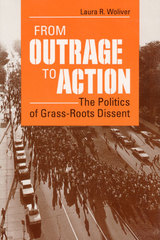
Through in-depth interviews with activists, Laura Woliver examines these community actions, studying the groups involved and linking her conclusions to larger questions of political power and the impact of social movements. Her findings will make fascinating reading for those interested in the rise and fall of grass-roots interest groups, the nature of dissent, and
the reasons why people volunteer countless hours, sometimes in the face
of community opposition and isolation, to dedicate themselves to a cause.
The ad hoc interest groups studied are the Committee to Recall Judge
Archie Simonson (Madison), the Coalition for Justice for Ernest Lacy (Milwaukee),
Concerned Citizens for Children (Grant County, Wisconsin), and Citizens
Taking Action (Madison). Woliver relates the community responses in these
cases to those in the Jeffrey Dahmer mass murder case and the beating
by Los Angeles police of Rodney King.
"A pioneering investigation of local, ad hoc interest groups that
are launched by a blatant injustice. . . . Explores the impressive defensive
capabilities against change of established social groups and portrays
the complex consequences of 'sputtering interests' for attitudes (such
as consciousness raising), for action, and for future policy. An important
and innovative contribution."
-- Mary Edelman, author of The Symbolic Uses of Politics
"A truly humanistic piece of social science research, offering fascinating
insights on grassroots participants, their feelings, and their fates."
-- Janet K. Boles, author of American Feminism: New Issues for
a Mature Movement
Gendering Politics explores the place of women in democratic politics by means of a detailed study of women in Israeli politics who were elected to municipal councils from 1950 to 1989. Drawing from a variety of sources, including questionnaires, interviews, newspaper coverage, and existing statistical data, as well as examinations of studies of the role of women in politics in other democracies, Herzog analyzes the extent of success and failure of women in Israeli elections. She then explores reasons why female participation in Israeli politics has been relatively slight, despite historical precedents and social circumstances that would indicate otherwise.
The author examines the gendered bias of the power structure as it is shaped by basic cultural organizing principles. She exposes hidden assumptions--and notes the overt assumptions--which by definition exclude women from politics. The author also looks at the structure of opportunities within the prevailing political system, uncovering the relevant blocking and facilitating elements.
Gendering Politics will be of interest to students and scholars of women's studies, Israeli studies, political sociology, and political science.
Hanna Herzog is Associate Professor of Sociology, Tel Aviv University.
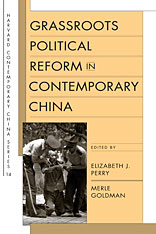
Observers often note the glaring contrast between China's stunning economic progress and stalled political reforms. Although sustained growth in GNP has not brought democratization at the national level, this does not mean that the Chinese political system has remained unchanged. At the grassroots level, a number of important reforms have been implemented in the last two decades.
This volume, written by scholars who have undertaken substantial fieldwork in China, explores a range of grassroots efforts--initiated by the state and society alike--intended to restrain arbitrary and corrupt official behavior and enhance the accountability of local authorities. Topics include village and township elections, fiscal reforms, legal aid, media supervision, informal associations, and popular protests. While the authors offer varying assessments of the larger significance of these developments, their case studies point to a more dynamic Chinese political system than is often acknowledged. When placed in historical context--as in the Introduction--we see that reforms in local governance are hardly a new feature of Chinese political statecraft and that the future of these experiments is anything but certain.

The Nevada of lesser-known cities, towns, and outposts deserve their separate chronicles, and here Hulse fills a wide gap. He contributes in a text rich with memories tramping through rural Nevada as a child, then as a journalist seeking news and gossip, then later as an academic historian and a parent trying to share the wonders of the high desert with his family. Nobody is more qualified to write about the cultural nuances of rural Nevada than Hulse, who retired after 35 years as a professor of history at University of Nevada, Reno.
Robert Laxalt wrote an article in National Geographic in 1974 entitled “The Other Nevada” in which he referred to “the Nevada that has been eclipsed by the tinsel trimmings of Las Vegas, the round-the-clock casinos, the ski slopes of the Sierra. It is a Nevada that few tourists see.” With this book Hulse reflects on Laxalt’s insights and shows changes—often slow-moving and incremental—that have occurred since then. Much of the terrain of rural Nevada has not changed at all, while others have adapted to technological revolutions of recent times. Hulse states that there is no single “other” Nevada, but several subcultures with distinct features. He offers a tour of sorts to what John Muir called the “bewildering abundance” of the Nevada landscape.
Just as investors want the companies they hold equity in to do well, homeowners have a financial interest in the success of their communities. If neighborhood schools are good, if property taxes and crime rates are low, then the value of the homeowner’s principal asset—his home—will rise. Thus, as William Fischel shows, homeowners become watchful citizens of local government, not merely to improve their quality of life, but also to counteract the risk to their largest asset, a risk that cannot be diversified. Meanwhile, their vigilance promotes a municipal governance that provides services more efficiently than do the state or national government.
Fischel has coined the portmanteau word “homevoter” to crystallize the connection between homeownership and political involvement. The link neatly explains several vexing puzzles, such as why displacement of local taxation by state funds reduces school quality and why local governments are more likely to be efficient providers of environmental amenities. The Homevoter Hypothesis thereby makes a strong case for decentralization of the fiscal and regulatory functions of government.
Reed compares how each prefecture addresses pollution control, public housing, and access to the best high school education, and concludes that despite some inefficiency in the system, the results are usually very good. Japan's prefectures are important sources of governmental flexibility and responsiveness.

As concrete examples, Clark analyzes four court disputes in depth, showing that the concept of local autonomy has very different meanings and implications in each of them. These cases—Boston's defense of resident-preference hiring policies, conflict over urban land-use zoning in Toronto, a Chicago's suburb's fight against a sewage treatment plant, and the evolution of the City of Denver's power since 1900—demonstrate that legal reasoning is not impervious to other kinds of reasoning, and the solutions provided by the courts are not unique. To ground his explorations, Clark investigates both liberalism and structuralism, showing that both are inadequate bases for determining social policy. He mounts provocative critiques of the works of de Tocqueville, Nozick, Tiebout, and Posner on the one hand and Castells and Poulantzas on the other.
This ambitious and important work will command the interest of geographers, political scientists, economists, sociologists, and legal scholars.
Based on interviews with more than 1,200 mayors, local officials, and farmers in 390 municipal territories in four Latin American nations, the authors analyze the ways in which different forms of decentralization affect the governance arrangements for rural development “on the ground.” Their comparative analysis suggests that rural development outcomes are systemically linked to locally negotiated institutional arrangements—formal and informal—between government officials, NGOs, and farmer groups that operate in the local sphere. They find that local-government actors contribute to public services that better assist the rural poor when local actors cooperate to develop their own institutional arrangements for participatory planning, horizontal learning, and the joint production of services.
This study brings substantive data and empirical analysis to a discussion that has, until now, more often depended on qualitative research in isolated cases. With more than 60 percent of Latin America’s rural population living in poverty, the results are both timely and crucial.
Local politics in the United States once seemed tranquil compared to the divisiveness and dysfunction of the country’s national politics. Those days have passed. As multiple wide-ranging crises have thrust America’s local governments into the spotlight, they have also exposed policy failures and systemic problems that have mounted for years. While issues such as policing and the cost of housing are debated nationally, much of the policymaking surrounding these issues occurs locally. In Local Interests, Sarah F. Anzia explores how local governments—and the interest groups that try to influence them—create the policies that drive the national conversation: policing, economic development, housing, and challenges of taxing and spending.
Anzia examines local interest groups in terms of the specific policies they pursue, including how these groups get active in politics and what impact they have. By offering new perspectives on these issues, Anzia contributes to our knowledge of how interest groups function and the significant role they play in shaping broader social outcomes.
The most difficult questions of sustainability are not about technology; they are about values. Answers to such questions cannot be found by asking the "experts," but can only be resolved in the political arena. In The Local Politics of Global Sustainability, author Thomas Prugh, with Robert Costanza and Herman Daly, two ofthe leading thinkers in the field of ecological economics, explore the kind of politics that can help enable us to achieve a sustainable world of our choice, rather than one imposed by external forces.
The authors begin by considering the biophysical and economic dimensions of the environmental crisis, and tracing the crisis in political discourse and our public lives to its roots. They then offer an in-depth examination of the elements of a re-energized political system that could lead to the development of more sustainable communities. Based on a type of self-governance that political scientist Benjamin Barber calls "strong democracy," the politics is one of engagement rather than consignment, empowering citizens by directly involving them in community decisionmaking. After describing how it should work, the authors provide examples of communities that are experimenting with various features of strong democratic systems.
The Local Politics of Global Sustainability explains in engaging, accessible prose the crucial biophysical, economic, and social issues involved with achieving sustainability. It offers a readable exploration of the political implications of ecological economics and will be an essential work for anyone involved in that field, as well as for students and scholars in environmental politics and policy, and anyone concerned with the theory and practical applications of the concept of sustainable development.

Drawing on a staggering range of materials—including texts by both known and obscure writers, numismatics, pottery analysis, and archeological records—Beck develops fine-grained case studies that illustrate the significance of the local experience. Localism and the Ancient Greek City-State builds bridges across disciplines and ideas within the humanities and shows how looking back at the history of Greek localism is important not only in the archaeology of the ancient Mediterranean, but also in today’s conversations about globalism, networks, and migration.
Neil Kraus evaluates both the influence of public opinion on local policy-making and the extent to which public policy addresses economic and social inequalities. Drawing on several years of fieldwork and multiple sources of data, including surveys and polls; initiatives, referenda, and election results; government documents; focus groups; interviews; and a wide assortment of secondary sources, Kraus presents case studies of two Midwestern cities, Minneapolis, Minnesota, and Gary, Indiana. Specifically, he focuses on several major policy decisions in recent decades concerning education, law enforcement, and affordable housing in Minneapolis; and education and riverboat casino development in Gary.
Kraus finds that, on these issues, local officials frequently take action that reflects public opinion, yet the resulting policies often fail to meet the needs of the disadvantaged or ameliorate the effects of concentrated poverty. In light of citizens’ current attitudes, he concludes that if patterns of inequality are to be more effectively addressed, scholars and policymakers must transform the debate about the causes and effects of inequality in urban and metropolitan settings.
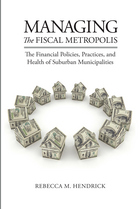
Managing the Fiscal Metropolis: The Financial Policies, Practices, and Health of Suburban Municipalities is an important book. This first comprehensive analysis of the financial condition, management, and policy making of local governments in a metropolitan region offers local governments currently dealing with the Great Recession a better understanding of what affects them financially and how to operate with less revenue.
Hendrick’s groundbreaking study covers 264 Chicago suburban municipalities from the late 1990s to the present. In it she identifies and describes the primary factors and events that affect municipal financial decisions and financial conditions, explores the strategies these governments use to manage financial conditions and solve financial problems, and looks at the impact of contextual factors and stresses on government financial decisions. Managing the Fiscal Metropolis offers new evidence about the role of contextual factors— including other local governments—in the financial condition of municipalities and how municipal financial decisions and practices alter these effects. The wide economic and social diversity of the municipalities studied make its findings relevant on a national scale.

As the state continues to deal with many of these challenges, Michiganders more than ever need a clear picture of how their state’s political institutions, actors, and processes work. To that end, this book provides a comprehensive analysis of Michigan’s politics and government that will help readers better understand the state’s history and its future prospects. Chapters elucidate the foundational aspects of the state’s government (the Michigan Constitution and intergovernmental relations); its political institutions (the state legislature, governor, and court system); its politics (political parties and elections); and its public policy (education, economic development, and budget and fiscal policy). The book’s four themes—historical context, decline, responses to challenges, and state-local government relations—run throughout and are buttressed by coverage of recent events. Moreover, they are brought together in a compelling chapter with a particular focus on the Flint water crisis.
An ideal fit for courses on state and local government, this thorough, well-written text will also appeal to readers simply interested in learning more about the inner workings of government in the Great Lakes State.
Since the publication of the first edition in 1985, Missouri Government and Politics has been widely acclaimed as an outstanding text. This revised and enlarged edition updates all of the chapters to reflect the changes that have occurred in the state's government during the last decade. Five new chapters have been added on topics previously unaddressed: economic development, energy, and the environment; state policy making in higher education; funding for education in the 1990s; the statewide elected executive officials; and the types of law in Missouri.
The twenty-six chapters are grouped into four main categories: "The Context of Missouri Politics," "State Governmental Framework," "Policies and Policy Making in Missouri," and "Local Government and Politics in Missouri." Helpful additions to the basic text include more than fifty tables and figures, a glossary giving clear definitions of many governmental terms, and a bibliography on Missouri politics and government.
The authors have become experts about Missouri by serving as teachers and researchers in Missouri colleges and universities, as candidates and workers in Missouri political campaigns, and as officeholders and public administrators in Missouri state government. Their collective experience in Missouri politics ensures that this new edition provides the most thorough and comprehensive overview of the structure and inner workings of Missouri's political system.
The Mongolian Yuan dynasty, 1272-1368, is a short but interesting chapter in the long history of Sino-Mongolian relations. Faced with the challenge of governing a huge sedentary empire, the traditionally nomadic Mongols acceded to some Chinese institutional precedents, but, in large part, adhered to their own Inner Asian practices of staffing and administering the government apparatus.
Yuan administrative documents provide information that permits a fairly accurate reconstruction of the day-to-day functioning of the local government bureaucracy. From these materials, Endicott-West has put together a detailed picture of the Mongols' methods of selecting local officials, the ethnic backgrounds of officials, and policy formation and implementation at the local level.

Kwame Nkrumah, who won independence for Ghana in 1957, was the first African statesman to achieve world recognition. Nkrumah and his movement also brought about the end of independent chieftaincy—one of the most fundamental changes in the history of Ghana.
Kwame Nkrumah’s Convention Peoples’ Party was committed not only to the rapid termination of British colonial rule but also to the elimination of chiefly power. This book is an account of Kwame Nkrumah and his government’s long struggle to wrest administrative control of the Ghanaian countryside from the chiefs. Based largely upon previously unstudied documentation in Ghana, this study charts the government’s frustrated attempts to democratize local government and the long and bitter campaigns mounted by many southern chiefs to resist their political marginalization.
Between 1951 and the creation of the First Republic in 1960, Ghanaian governments sought to discard the chiefly principle in local government, then to weaken chieftaincy by attrition and eventually, by altering the legal basis of chieftaincy, to incorporate and control a considerably altered chieftaincy. The book demonstrates that chieftaincy was consciously and systematically reconstructed in the decade of the 1950s with implications which can still be felt in modern Ghana.

In 23 B.C., when he published the first three books of his lyrics, Horace was 42 years old, secure in the favor of the emperor Augustus, and living in ease and comfort as a country gentleman on his Sabine farm. Serenity is reflected in these lyrics, certainly, but so are other experiences, for Horace had lived through three major political crises in a society that was the center of the world, that was sophisticated, refined—and beginning to decay. A worldly, high-spirited, cultivated man, Horace responds in his poetry to the myriad elements of Roman life he knew so well.
The Odes and Epodes of Horace collects the entirety of his lyric poetry, comprising all 103 odes, the Carmen Saeculare ("Festival Hymn"), and the earlier epodes. Joseph P. Clancy has achieved a mirroring of the originals that is worthy in its own right as English verse, and his introductions to each book of lyrics are both lively and informed.

This book explores how policy ideas are spread—or diffused—in an age in which policymaking has become increasingly complex and specialized. Using the concept of enterprise zones as a case study in policy diffusion, Karen Mossberger compares the process of their adoption in Virginia, Indiana, Michigan, New York, and Massachusetts over a twelve-year period.
Enterprise zones were first proposed by the Reagan administration as a supply-side effort to reenergize inner cities, and they were eventually embraced by liberals and conservatives alike. They are a compelling example of a policy idea that spread and evolved rapidly. Mossberger describes the information networks and decisionmaking processes in the five states, assessing whether enterprise zones spread opportunistically, as a mere fad, or whether well-informed deliberation preceded their adoption.

A sobering exploration of the near unchecked power of sheriffs in the United States.
Across the United States, more than 3,000 sheriffs occupy a unique position in the US political and legal systems. Elected by voters—usually in low-visibility, noncompetitive elections—sheriffs oversee more than a third of law enforcement employees and control almost all local jails. They have the power to both set and administer policies, and they can imprison, harm, and even kill members of their communities. Yet, they enjoy a degree of autonomy not seen by other political officeholders.
The Power of the Badge offers an unprecedented, data-rich look into the politics of the office and its effects on local communities. Emily M. Farris and Mirya R. Holman draw on two surveys of sheriffs taken nearly a decade apart, as well as election data, case studies, and administrative data to show how a volatile combination of authority and autonomy has created an environment where sheriffs rarely change; elections seldom create meaningful accountability; employees, budgets, and jails can be used for political gains; marginalized populations can be punished; and reforms fail. Farris and Holman also track the increasingly close linkages between sheriffs and right-wing radical groups in an era of high partisanship and intra-federal conflict.


In this groundbreaking study, Paul Friedrich looks closely at the strong men of the Tarascan Indian village of Naranja: their leadership, friendship, kinship, and violent local politics (over a time depth of one generation), and ways to understand such phenomena. What emerges is an acutely observed portrait of the men who form the very basis of the grass-roots power structure in Mexico today.
Of interest to historians, sociologists, and political scientists, as well as Latin Americanists and anthropologists, The Princes of Naranja is a sequel to Friedrich's now classic Agrarian Revolt in a Mexican Village. It begins with biographical character studies of seven leaders—peasant gunmen, judges, politicos; here the book will grip the reader and provoke strong emotional response, from laughter to horror. A middle section places these "princes" in relation to each other, and to the contexts of village society and the larger entities of which it forms a part. Friedrich's synthesis of anthropology, local (mainly oral) history, macrohistory, microsociology, psychology, and literature gives new insight into the structure of Mexican politics from the local level up, and provides a model for other scholars doing analogous work in other parts of the world, especially in the developing world. The concluding section raises vital questions about the dynamic relations between the fieldworker, fieldwork, field notes, the villagers, the writing of a fieldwork-based book, and, implicitly, the audience for such books.
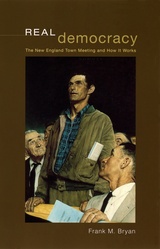
A nationally recognized expert on this topic, Bryan has now done just that. Studying 1,500 town meetings in his home state of Vermont, he and his students recorded a staggering amount of data about them—238,603 acts of participation by 63,140 citizens in 210 different towns. Drawing on this evidence as well as on evocative "witness" accounts—from casual observers to no lesser a light than Aleksandr Solzhenitsyn—Bryan paints a vivid picture of how real democracy works. Among the many fascinating questions he explores: why attendance varies sharply with town size, how citizens resolve conflicts in open forums, and how men and women behave differently in town meetings. In the end, Bryan interprets this brand of local government to find evidence for its considerable staying power as the most authentic and meaningful form of direct democracy.
Giving us a rare glimpse into how democracy works in the real world, Bryan presents here an unorthodox and definitive book on this most cherished of American institutions.
Uncertainty in the Empire of Routine investigates the administrative revolution of China’s eighteenth-century Qing state. It begins in the mid-seventeenth century with what seemed, at the time, to be straightforward policies to clean up the bureaucracy: a regulation about deadlines here, a requirement about reporting standards there. Over the course of a hundred years, the central court continued to demand more information from the provinces about local administrative activities. By the middle of the eighteenth century, unprecedented amounts of data about local offices throughout the empire existed.
The result of this information coup was a growing discourse of crisis and decline. Gathering data to ensure that officials were doing their jobs properly, it turned out, repeatedly exposed new issues requiring new forms of scrutiny. Slowly but surely, the thicket of imperial routines and standards binding together local offices, provincial superiors, and central ministries shifted the very epistemological foundations of the state. A vicious cycle arose whereby reporting protocols implemented to solve problems uncovered more problems, necessitating the collection of more information. At the very moment that the Qing knew more about itself than ever before, the central court became certain that it had entered an age of decline.
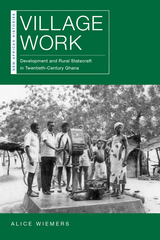
A robust historical case study that demonstrates how village development became central to the rhetoric and practice of statecraft in rural Ghana.
Combining oral histories with decades of archival material, Village Work formulates a sweeping history of twentieth-century statecraft that centers on the daily work of rural people, local officials, and family networks, rather than on the national governments and large-scale plans that often dominate development stories. Wiemers shows that developmentalism was not simply created by governments and imposed on the governed; instead, it was jointly constructed through interactions between them.
The book contributes to the historiographies of development and statecraft in Africa and the Global South by
- emphasizing the piecemeal, contingent, and largely improvised ways both development and the state are comprised and experienced
- providing new entry points into longstanding discussions about developmental power and discourse
- unsettling common ideas about how and by whom states are made
- exposing the importance of unpaid labor in mediating relationships between governments and the governed
- showing how state engagement could both exacerbate and disrupt inequities
Despite massive changes in twentieth-century political structures—the imposition and destruction of colonial rule, nationalist plans for pan-African solidarity and modernization, multiple military coups, and the rise of neoliberal austerity policies—unremunerated labor and demonstrations of local leadership have remained central tools by which rural Ghanaians have interacted with the state. Grounding its analysis of statecraft in decades of daily negotiations over budgets and bureaucracy, the book tells the stories of developers who decided how and where projects would be sited, of constituents who performed labor, and of a chief and his large cadre of educated children who met and shaped demands for local leaders. For a variety of actors, invoking “the village” became a convenient way to allocate or attract limited resources, to highlight or downplay struggles over power, and to forge national and international networks.
When the State Meets the Street probes the complex moral lives of street-level bureaucrats: the frontline social and welfare workers, police officers, and educators who represent government’s human face to ordinary citizens. Too often dismissed as soulless operators, these workers wield a significant margin of discretion and make decisions that profoundly affect people’s lives. Combining insights from political theory with his own ethnographic fieldwork as a receptionist in an urban antipoverty agency, Bernardo Zacka shows us firsthand the predicament in which these public servants are entangled.
Public policy consists of rules and regulations, but its implementation depends on how street-level bureaucrats interpret them and exercise discretionary judgment. These workers are expected to act as sensible moral agents in a working environment that is notoriously challenging and that conspires against them. Confronted by the pressures of everyday work, they often and unknowingly settle for one of several reductive conceptions of their responsibilities, each by itself pathological in the face of a complex, messy reality. Zacka examines the factors that contribute to this erosion of moral sensibility and what it takes to remain a balanced moral agent in such difficult conditions.
Zacka’s revisionary portrait reveals bureaucratic life as more fluid and ethically fraught than most citizens realize. It invites us to approach the political theory of the democratic state from the bottom-up, thinking not just about what policies the state should adopt but also about how it ought to interact with citizens when implementing these policies.
READERS
Browse our collection.
PUBLISHERS
See BiblioVault's publisher services.
STUDENT SERVICES
Files for college accessibility offices.
RECENTLY PUBLISHED




UChicago Accessibility Resources
home | accessibility | search | about | contact us
BiblioVault ® 2001 - 2024
The University of Chicago Press