
 A SCHOLARLY BOOK REPOSITORY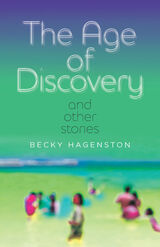
“These ingenious stories are so funny and sparkling and slyly inventive that their pain catches you by surprise, like a sunburn after a day at the beach.”—Eric Puchner
Winner, 2022 Mississippi Institute for Arts and Letters Prize for Best Fiction
In Becky Hagenston’s fourth collection, the real and the fantastic collide in stories that span from Mississippi to Europe, and from the recent past to the near future. The characters are sex-toy sellers, internet trolls, parents, students, and babysitters—all trying to make sense of a world where nothing is quite what it appears to be. A service robot makes increasingly disturbing requests. A middle school teacher is accused of witchcraft—and realizes the accusations might be true. Two college students devise a way to avoid getting hit on in bars. A baker finds bizarre anomalies in his sourdough. A librarian follows her dead ex-husband through the Atlanta airport. In these stories, men and women confront grief, danger, loneliness, and sometimes—the strangest discovery of all—unexpected joy. Hagenston delivers a collection that is, at its weird and shining heart, about people discovering what—for better or worse—they are capable of.
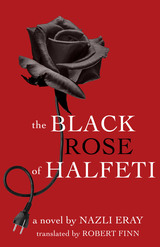
The Black Rose of Halfeti opens with a letter delivered at midnight in Ankara, Turkey. In this letter, an elderly doctor who has begun to experience the first signs of dementia professes his love and desire for a relationship with the narrator, a woman in middle age beginning to contemplate her own mortality. From there, the novel moves between Mardin, Izmir, and Ankara; the past and the present; and the real and the imagined as the narrator seeks to know the doctor both in his prime and in his struggle to hold senility at bay. In these dreamlike landscapes, the author effortlessly introduces King Darius, the Spanish director Luis Buñuel, the actress Silvia Pinal, and the archetypal dream woman as the narrator’s guides in her efforts to understand the human psyche.
Nazli Eray has established herself as a master of magical realism, the perfect tool to bring to life this poignant meditation on love, aging, and the role of memory. And, as in her earlier novels, she paints vivid images of the urban landscapes of Turkey, capturing both the present and the past.
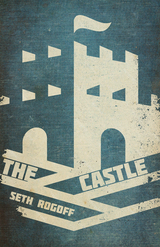
A fictional return to the unsettling world of Franz Kafka’s iconic unfinished novel, The Castle
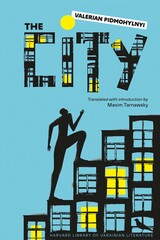
Valerian Pidmohylnyi’s The City was a landmark event in the history of Ukrainian literature. Written by a master craftsman in full control of the texture, rhythm, and tone of the text, the novel tells the story of Stepan, a young man from the provinces who moves to the capital of Ukraine, Kyiv, and achieves success as a writer through a succession of romantic encounters with women.
At its core, the novel is a philosophical search for harmony in a world where our intellectual side expects rational order, whereas the instinctive natural world follows its own principles. The resulting alienation and disorientation reflect the basic principles of existential philosophy, in which Pidmohylnyi is close to his European counterparts of the day.

Born from the fertile volcanic soil and the sea and mists surrounding the Azorean islands, the characters who inhabit these stories blend realism with magic. Like the nine Muses, each island has its own special attributes. Whether searching for love, power, or meaning, these characters are subject to the whims of Fate and Fortune. Here the commonplace present confronts forces both natural and supernatural. In the Azorean microcosm, they come to represent a far larger sphere, embodying the foibles and idiosyncrasies of humanity the world over.
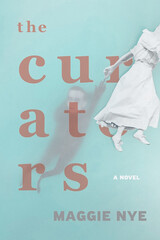
A dark, lyrical blend of historical fiction and magical realism, The Curators examines a critically underexplored event in American history through unlikely eyes. All of Atlanta is obsessed with the two-year-long trial and subsequent lynching of Jewish factory superintendent Leo Frank in 1915. None more so than thirteen-year-old Ana Wulff and her friends, who take history into their own hands—quite literally—when they use dirt from Ana’s garden to build and animate a golem in Frank’s image. They’ll do anything to keep his story alive, but when their scheme gets out of hand, they must decide what responsibility requires of them. The Curators tells the story of five zealous girls and the cyclonic power of their friendship as they come of age in a country riven by white supremacy.

Italian doctor Leonardo Pazzi and Alcesta, his “future lover,” travel through the picturesque, hilly region of Sloboda, near Kharkiv in northeast Ukraine. They experience a series of encounters with local Ukrainians and nature, disappearances, and transformations filled with paradoxes. The characters are bright, marionette-like caricatures whom the author constructs and moves ostentatiously in full view of the reader, revealing his artistic devices with a sense of absurd, mischievous humor.
A novel of exuberance and whim that deconstructs the very principles of writing and estranges everyday phenomena, Dr. Leonardo’s Journey marks the highpoint of Ukrainian modernism right before it was violently cut down by Stalin’s repressions. The novel shifts away from character or plot as such and instead celebrates the places and spaces in which these things come into being, and the sheer joy of movement and experience. In this sense, Maik Yohansen’s heroes echo Mykola Hohol, whose tour through Russia’s vast spaces in Nikolai Gogol’s Dead Souls is an obvious reference point, and Laurence Sterne, whose irreverent narrative style and textual games Yohansen emulates. Presented here in a contemporary, deft English translation, the novel is a must read for everyone interested in discovering the rich heritage of Ukrainian modernism.
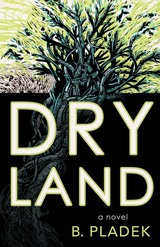
While at camp, Rand also realizes the true price of his gift: everything he grows withers and dies, leaving the soil empty of all living matter. Horrified, he throws himself into ever more self-destructive trials, buckling under the pressure of so many secrets. In order to survive, he must confront the terrifying possibility that his gift is actually a curse, upending everything he believes about nature, love, and himself.

Earth Gods presents the early writings of Taras Prokhasko, one of Ukraine’s most prominent contemporary writers. Collected here for the first time in one book, these works span various genres yet form a single chronicle. Anna’s Other Days, Prokhasko’s first publication, testifies to the desire to free Ukrainian culture of overt influences of voices, styles, and genres that have dominated it for centuries. FM Galicia collects reflections delivered by the author at a Ukrainian radio show over a five-month period. Emphasizing the relevance of the oral genre as the origin of the text, Prokhasko has created a unique diary that strives to exist outside of literature and invites the reader to meditate on the human condition. The UnSimple—a novel whose action unfolds between the two world wars near Ialivets, in the Ukrainian Carpathian Mountains—documents the collapse of the grand narratives of the past, embodied here by the Carpathian earth gods who, despite their magical powers, are unable to save the patriarchal community they’ve been entrusted with from being overrun by the forces of modernization.
A master of reflexive, finely nuanced prose, Prokhasko weaves together narrative strands testifying to the sophistication and integration of Ukrainian culture with the world.
Wendy Wimmer’s debut short story collection, Entry Level, contains a range of characters who are trying to find, assert, or salvage their identities. These fifteen stories center around the experience of being underemployed—whether by circumstance, class, gender, race, or other prevailing factors—and the toll this takes on an individual. Wimmer pushes the boundaries of reality, creating stories that are funny, fantastic, and at times terrifying. Her characters undergo feats of endurance, heartbreak, and loneliness, all while trying to succeed in a world that so often undervalues them. From a young marine biologist suffering from imposter syndrome and a haunting to a bingo caller facing another brutal snowstorm and a creature that may or not be an angel, Wimmer’s characters are all confronting an oppressive universe that seemingly operates against them or is, at best, indifferent to them. These stories reflect on the difficulties of modern-day survival and remind us that piecing together a life demands both hope and resilience.
Entry Level was selected by Deesha Philyaw as the winner of the 2021 Autumn House Fiction Prize.

Wendy Wimmer’s debut short story collection, Entry Level, contains a range of characters who are trying to find, assert, or salvage their identities. These fifteen stories center around the experience of being underemployed—whether by circumstance, class, gender, race, or other prevailing factors—and the toll this takes on an individual. Wimmer pushes the boundaries of reality, creating stories that are funny, fantastic, and at times terrifying. Her characters undergo feats of endurance, heartbreak, and loneliness, all while trying to succeed in a world that so often undervalues them. From a young marine biologist suffering from imposter syndrome and a haunting to a bingo caller facing another brutal snowstorm and a creature that may or not be an angel, Wimmer’s characters are all confronting an oppressive universe that seemingly operates against them or is, at best, indifferent to them. These stories reflect on the difficulties of modern-day survival and remind us that piecing together a life demands both hope and resilience.
Entry Level was selected by Deesha Philyaw as the winner of the 2021 Autumn House Fiction Prize.
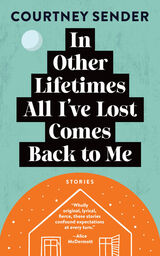
“A deep and howling portrait of longing and loneliness.” —Boston Globe
“A distinctive debut from a promising author.” —Kirkus Reviews
“A stunner from the very first page.” —Deesha Philyaw, author of The Secret Lives of Church Ladies, in the Millions
And praise from Ann Patchett, Alice McDermott, Danielle Evans, Elisa Albert, and Aimee Bender
Populated with lovers who leave and return, with ghosts of the Holocaust and messages from the dead, Courtney Sender’s debut collection speaks in a singular new voice about the longings and loneliness of contemporary love. The world of these fourteen interlocking stories is fiercely real but suffused with magic and myth, dark wit, and distinct humor. Here, ancient loss works its way deep into the psyche of modern characters, stirring their unrelenting lust for life.
In “To Do With the Body,” the Museum of Period Clothes becomes the perfect setting for a bloody crime. In “Lilith in God’s Hands,” Adam’s first wife has an affair in the Garden of Eden. And in the title story, a woman spends her life waiting for any of the men who have left her to come back, only to find them all at her doorstep at once.
For readers of Elena Ferrante, Nicole Krauss, and Carmen Maria Machado, and for anyone who has known love and loneliness, In Other Lifetimes All I’ve Lost Comes Back to Me is a wise and sensual collection of old hauntings, new longings, and unexpected returns, with a finale that is a rousing call to the strength we each have, together or alone.
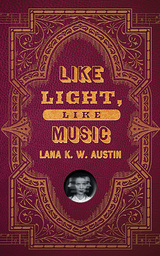
But to help her hometown’s haunted women, Emme must also face the things that haunt her, things she thought she had lost when she chose to move away: the majestic music of her family’s beloved hills and hollows, the mysterious old ways of her Appalachian kin, and the memory of her remarkable first love, Evan. Through it all, she must reckon with her magical “mountain gift”—is it real, or merely a unique synesthesia? And can she trust it to help heal her family and her town, a place still plagued by the social injustice that first drove her away? Can she trust it to help heal herself?
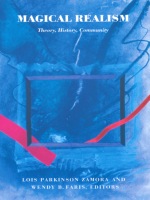
Presenting the first English translation of Franz Roh’s 1925 essay in which the term magical realism was coined, as well as Alejo Carpentier’s classic 1949 essay that introduced the concept of lo real maravilloso to the Americas, this anthology begins by tracing the foundations of magical realism from its origins in the art world to its current literary contexts. It offers a broad range of critical perspectives and theoretical approaches to this movement, as well as intensive analyses of various cultural traditions and individual texts from Eastern Europe, Asia, North America, Africa, the Caribbean, and Australia, in addition to those from Latin America. In situating magical realism within the expanse of literary and cultural history, this collection describes a mode of writing that has been a catalyst in the development of new regional literatures and a revitalizing force for more established narrative traditions—writing particularly alive in postcolonial contexts and a major component of postmodernist fiction.
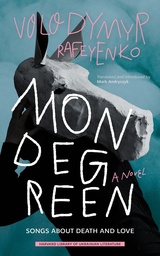
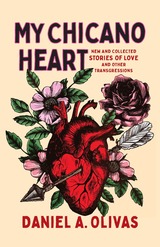
Each story is drawn from Olivas’s nearly twenty-five years of experience writing fiction deeply steeped in Chicano and Mexican culture. Some of the stories are fanciful and full of magic, while others are more realistic, and still others border on noir. All touch upon that most ephemeral and confounding of human emotions: love in all its wondrous forms.
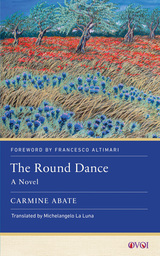

A former child star haunted by a past she can't remember. An Afro-French girl with an obsession for ear lobes. A loner whose only friend is hiding a terrible, otherworldly secret. Each of these stories shares situations that are sometimes fantastical, sometimes commonplace, but always strange. From a Corsican vacation town in its off-season to hospital rooms and a seedy hotel suite in Chicago, experience the every day come fully untethered from reality.
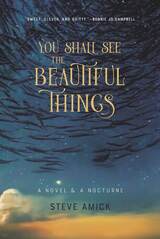
In the fishing village of Scheveningen in 1889, three men build and secretly launch an unorthodox fishing vessel, departing from the long tradition of netting herring using massive boats and large crews. Collaborating in this venture are Wyn van Winkel, a cavalier joker and opium addict currently AWOL from the Aceh War in Sumatra; Ned Nodder, a seasoned fisherman trying to support his family while plagued by narcolepsy and prophetic dreams; and Luuk Blenkin, a scattered young troubadour failing at love and searching for his place in the world.
As formally innovative as the “picarooner” this mismatched trio construct, the narrative lifts off into the fantastical, flitting between reality and irreality. Sparked by lines of the “Dutch lullaby,” the inexplicable adventure unfolds—and along the way, we learn of Wyn’s romantic recklessness, his broken relationship with his father, and the tragedies of war that scarred and changed him. We witness Ned’s unconventional path toward matrimony, as well as the painful loss that made his marriage a true union. We follow Luuk’s fumblings for purpose and fulfillment beyond the disgrace that befell his family and marred both his outlook and his prospects.
In the spirit of a nocturne, Steve Amick envelops his characters in the world of night and dreams. Lyrical, historical, surprising, magical, heartwarming, and heartbreaking, You Shall See the Beautiful Things will make readers look at the stars—and herring—in a new light.
READERS
Browse our collection.
PUBLISHERS
See BiblioVault's publisher services.
STUDENT SERVICES
Files for college accessibility offices.
RECENTLY PUBLISHED



UChicago Accessibility Resources
home | accessibility | search | about | contact us
BiblioVault ® 2001 - 2024
The University of Chicago Press