
 A SCHOLARLY BOOK REPOSITORY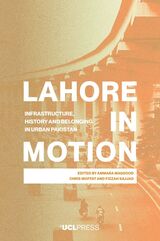
Lahore is a city in constant flux, and nowhere is this transformation more visible than along the tracks of its first metro rail corridor. Lahore in Motion follows the Orange Line’s 27-kilometer path, weaving together reflections from academics, activists, artists, and architects on the ways infrastructure reshapes urban belonging. Moving far beyond the train stations themselves, the book critically studies how this mega-project has displaced residents, reconfigured neighborhoods, and sparked new desires for modernity while also deepening existing social differences.
Each chapter unfolds through the lens of a particular metro stop, providing intimate glimpses into the frictions of development—where connectivity and fragmentation, aspiration, and dispossession collide. Engaging with broader debates on urban transformation in the Global South, Lahore in Motion goes against familiar narratives of top-down development, revealing instead a city that resists and reinvents itself in response. An eye-opening, beautifully written work for all interested in urbanism, infrastructure politics, and a glance into the everyday lives of one of the world’s most dynamic cities.

Pakistan’s presence in the outside world is dominated by images of religious extremism and violence. These images—and the narratives that interpret them—inform events in the international realm, but they also twist back around to shape local class politics. In The New Pakistani Middle Class, Ammara Maqsood focuses on life in contemporary Lahore, where she unravels these narratives to show how central they are for understanding competition and the quest for identity among middle-class groups.
Lahore’s traditional middle class has asserted its position in the socioeconomic hierarchy by wielding significant social capital and dominating the politics and economics of urban life. For this traditional middle class, a Muslim identity is about being modern, global, and on the same footing as the West. Recently, however, a more visibly religious, upwardly mobile social group has struggled to distinguish itself against this backdrop of conventional middle-class modernity, by embracing Islamic culture and values. The religious sensibilities of this new middle-class group are often portrayed as Saudi-inspired and Wahhabi.
Through a focus on religious study gatherings and also on consumption in middle-class circles—ranging from the choice of religious music and home décor to debit cards and the cut of a woman’s burkha—The New Pakistani Middle Class untangles current trends in piety that both aspire toward, and contest, prevailing ideas of modernity. Maqsood probes how the politics of modernity meets the practices of piety in the struggle among different middle-class groups for social recognition and legitimacy.
READERS
Browse our collection.
PUBLISHERS
See BiblioVault's publisher services.
STUDENT SERVICES
Files for college accessibility offices.
RECENTLY PUBLISHED




UChicago Accessibility Resources
home | accessibility | search | about | contact us
BiblioVault ® 2001 - 2025
The University of Chicago Press