
 A SCHOLARLY BOOK REPOSITORY
Hartley describes how modern theory from Kant through Lacan attempts to come to terms with the sublime limits of representation and how ideas developed with the Marxist tradition—such as Marx’s theory of value, Althusser’s theory of structural causality, or Zizek’s theory of ideological enjoyment—can be seen as variants of the sublime object. Representation, he argues, is ultimately a political problem. Whether that problem be a Marxist representation of global capitalism, a deconstructive representation of subaltern women, or a Chicano self-representation opposing Anglo-American images of Mexican Americans, it is only through this grappling with the negative, Hartley explains, that a Marxist theory of postmodernism can begin to address the challenges of global capitalism and resurgent imperialism.
Contributors. Emily Apter, Alain Badiou, Étienne Balibar, Bruno Bosteels, Adrian Johnston, Warren Montag, Fernanda Navarro, Nick Nesbitt, Knox Peden, Nina Power, Robert J. C. Young
Marx made extremely creative use of dialectical method to analyze the origins, operation, and direction of capitalism. Unfortunately, his promised book on method was never written, so that readers wishing to understand and evaluate Marx's theories, or to revise or use them, have had to proceed without a clear grasp of the dialectic in which the theories are framed. The result has been more disagreement over "what Marx really meant" than over the writings of any other major thinker.
In putting Marx's philosophy of internal relations and his use of the process of abstraction--two little-studied aspects of dialectics--at the center of this account, Ollman provides a version of Marx's method that is at once systematic, scholarly, clear and eminently useful.
Ollman not only sheds important new light on what Marx really meant in his varied theoretical pronouncements, but in carefully laying out the steps in Marx's method makes it possible for a reader to put the dialectic to work in his or her own research. He also convincingly argues the case for why social scientists and humanists as well as philosophers should want to do so.
Excavating Marx’s early writings to rethink the rights of the poor and the idea of the commons in an era of unprecedented privatization
The politics of dispossession are everywhere. Troubling developments in intellectual property, genomics, and biotechnology are undermining established concepts of property, while land appropriation and ecological crises reconfigure basic institutions of ownership. In The Dispossessed, Daniel Bensaïd examines Karl Marx’s early writings to establish a new framework for addressing the rights of the poor, the idea of the commons, and private property as a social institution.
In his series of articles from 1842–43 about Rhineland parliamentary debates over the privatization of public lands and criminalization of poverty under the rubric of the “theft of wood,” Marx identified broader anxieties about customary law, property rights, and capitalist efforts to privatize the commons. Bensaïd studies these writings to interrogate how dispossession continues to function today as a key modality of power. Brilliantly tacking between past and present, The Dispossessed discloses continuity and rupture in our relationships to property and, through that, to one another.
In addition to Bensaïd’s prescient work of political philosophy, The Dispossessed includes new translations of Marx’s original “theft of wood” articles and an introductory essay by Robert Nichols that lucidly contextualizes the essays.

Gregory Elliott argues that Marx is central to all three accounts and that, along with the Manifesto, they form a quartet of analyses of the results and prospects of capitalism and socialism, which are of enduring significance for the Left.
Senses of an Ending provides a readable survey of key historical and political thinkers that will appeal to anyone interested in modern political thought.

Students are urged to think for themselves and engage with Marx's powerful methods of argument and explanation. Shapiro shows that Capital is key to understanding critical theory and cultural production.
This highly focused book will prove invaluable to students of politics, cultural studies, and literary theory.
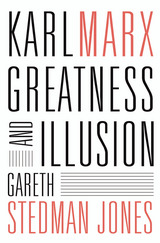
As much a portrait of his time as a biography of the man, Karl Marx: Greatness and Illusion returns the author of Das Kapital to his nineteenth-century world, before twentieth-century inventions transformed him into Communism’s patriarch and fierce lawgiver. Gareth Stedman Jones depicts an era dominated by extraordinary challenges and new notions about God, human capacities, empires, and political systems—and, above all, the shape of the future.
In the aftermath of the Battle of Waterloo, a Europe-wide argument began about the industrial transformation of England, the Revolution in France, and the hopes and fears generated by these occurrences. Would the coming age belong to those enthralled by the revolutionary events and ideas that had brought this world into being, or would its inheritors be those who feared and loathed it? Stedman Jones gives weight not only to Marx’s views but to the views of those with whom he contended. He shows that Marx was as buffeted as anyone else living through a period that both confirmed and confounded his interpretations—and that ultimately left him with terrible intimations of failure.
Karl Marx allows the reader to understand Marx’s milieu and development, and makes sense of the devastating impact of new ways of seeing the world conjured up by Kant, Hegel, Feuerbach, Ricardo, Saint-Simon, and others. We come to understand how Marx transformed and adapted their philosophies into ideas that would have—through twists and turns inconceivable to him—an overwhelming impact across the globe in the twentieth century.
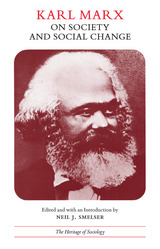
The first section, "The Structure of Society," contains Marx's writings on the material basis of classes, the basis of the state, and the basis of the family. Among the writings included in this section are Marx's well-known summary from the Preface of A Contribution to a Critique of Political Economy and his equally famous observations on the functional significance of religion in relation to politics.
The second section is titled "The Sweep of Historical Change." The first selection here contains Marx's first statement of the main precapitalist forms of production. The second selection focuses on capitalism, its contradictions, and its impending destruction. Two brief final selections treat the nature of communism, particularly its freedom from the kinds of contradictions that have plagued all earlier forms of societies.
The last section, "The Mechanisms of Change," reproduces several parts of Marx's analysis of the mechanisms by which contradictions develop in capitalism and generate group conflicts. Included is an analysis of competition and its effects on the various classes, a discussion of economic crises and their effects on workers, and Marx's presentation of the historical specifics of the class struggle.
In his comprehensive Introduction to the selections, Professor Smelser provides a biography of Marx, indentifies the various intellectual traditions which formed the background for Marx's writings, and discusses the selections which follow. The editor describes Marx's conception of society as a social system, the differences between functionalism and Marx's theories, and the dynamics of economic and political change as analyzed by Marx.
Yet these concepts, within a specifically Marxist framework, are not always easy to understand. This book is an ideal student introduction that explains, in clear and concise chapters, the precise meaning and implications of each of Marx's key concepts. Furthermore, the contributors show how these ideas continue to be relevant, and how they relate to modern society.
The contributors include leading academics in the field of politicial science. Outlining clearly what each concept means, they move on to situate it within cutting-edge contemporary political theory.
Concepts include historical materialism, capitalism, class, the state, imperialism, the division of labour, oppression, production and reproduction, revolution, working class internationalism, equality and democracy.
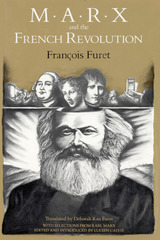
With his early critique of Hegel, Marx started moving toward his fundamental thesis: that the state is a product of civil society and that the French Revolution was the triumph of bourgeois society. Furet's interpretation follows the evolution of this idea and examines the dilemmas it created for Marx as he considered all the faces the new state assumed over the course of the Revolution: the Jacobin Terror following the constitutional monarchy, Bonaparte's dictatorship following the parliamentary republic.
The problem of reconciling his theory with the reality of the Revolution's various manifestations is one of the major difficulties Marx contended with throughout his work. The hesitation, the remorse, and the contradictions of the resulting analyses offer a glimpse of a great thinker struggling with the constraints of his own system. Marx never did elaborate a theory of an autonomous state, but he never stopped wrestling with the challenge to his doctrine posed by late eighteenth-century France, whose changing conditions and successive regimes prompted some of his most intriguing and, until now, unexplored thought.

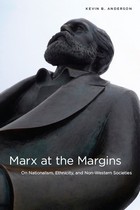
In Marx at the Margins, Kevin Anderson uncovers a variety of extensive but neglected texts by the well-known political economist which cast what we thought we knew about his work in a startlingly different light. Analyzing a variety of Marx’s writings, including journalistic work written for the New York Tribune, Anderson presents us with a Marx quite at odds with our conventional interpretations. Rather than providing us with an account of Marx as an exclusively class-based thinker, Anderson here offers a portrait of Marx for the twenty-first century: a global theorist whose social critique was sensitive to the varieties of human social and historical development, including not just class, but nationalism, race, and ethnicity, as well.
Marx at the Margins ultimately argues that alongside his overarching critique of capital, Marx created a theory of history that was multi-layered and not easily reduced to a single model of development or revolution. Through highly-informed readings on work ranging from Marx’s unpublished 1879–82 notebooks to his passionate writings about the antislavery cause in the United States, this volume delivers a groundbreaking and canon-changing vision of Karl Marx that is sure to provoke lively debate in Marxist scholarship and beyond.

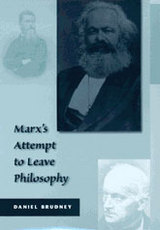
Daniel Brudney traces the development of post-Hegelian thought from Ludwig Feuerbach and Bruno Bauer to Karl Marx's work of 1844 and his Theses on Feuerbach, and concludes with an examination of The German Ideology. Brudney focuses on the transmutations of a set of ideas about human nature, the good life, and our relation to the world and to others; about how we end up with false beliefs about these matters; about whether one can, in a capitalist society, know the truth about these matters; and about the critique of capitalism which would flow from such knowledge.
Brudney shows how Marx, following Feuerbach, attempted to reveal humanity's nature and what would count as the good life, while eschewing and indeed polemicizing against "philosophy"--against any concern with metaphysics and epistemology. Marx attempted to avoid philosophy as early as 1844, and the central aims of his texts are the same right through The German Ideology. There is thus no break between an early and a late Marx; moreover, there is no "materialist" Marx, no Marx who subscribes to a metaphysical view, even in The German Ideology, the text canonically taken as the origin of Marxist materialism. Rather, in all the texts of this period Marx tries to mount a compelling critique of the present while altogether avoiding the dilemmas central to philosophy in the modern era.
With Marx’s Dream, Tom Rockmore offers a much-needed alternative view, distinguishing rigorously between Marx and Marxism. Rockmore breaks with the Marxist view of Marx in three key ways. First, he shows that the concern with the relation of theory to practice—reflected in Marx’s famous claim that philosophers only interpret the world, while the point is to change it—arose as early as Socrates, and has been central to philosophy in its best moments. Second, he seeks to free Marx from his unsolicited Marxist embrace in order to consider his theory on its own merits. And, crucially, Rockmore relies on the normal standards of philosophical debate, without the special pleading to which Marxist accounts too often resort. Marx’s failures as a thinker, Rockmore shows, lie less in his diagnosis of industrial capitalism’s problems than in the suggested remedies, which are often unsound.
Only a philosopher of Rockmore’s stature could tackle a project this substantial, and the results are remarkable: a fresh Marx, unencumbered by doctrine and full of insights that remain salient today.

Jean-Paul Sartre’s Critique of Dialectical Reason, released to great fanfare in 1960, has since then receded in philosophical visibility. As Sartre’s reputation is now making a comeback, it is time for a reappraisal of his later work. In Practice, Power, and Forms of Life, philosopher Terry Pinkard interprets Sartre’s late work as a fundamental reworking of his earlier ideas, especially in terms of his understanding of the possibility of communal action as genuinely free, which the French philosopher had previously argued was impossible.
Pinkard reveals how Sartre was drawn back to Hegel, a move that was itself incited by Sartre’s newfound interest in Marxism. Pinkard argues that Sartre constructed a novel position on freedom that has yet to be adequately taken up and analyzed within philosophy and political theory. Through Sartre, Pinkard advances an argument that contributes to the history of philosophy as well as key debates on action and freedom.
In A Weak Nature Alone, Johnston develops his transcendental materialist account of nature through engaging with and weaving together five main sources of inspiration: Hegelian philosophy, Marxist materialism, Freudian-Lacanian metapsychology, Anglo-American analytic neo-Hegelianism, and evolutionary theory and neurobiology. Johnston argues that these seemingly (but not really) strange bedfellows should be brought together so as to construct a contemporary ontology of nature. Through this ontology, nonnatural human subjects can be seen to arise in an immanent, bottom-up fashion from nature itself.

As Karl Marx the icon has fallen along with so many communist regimes, we are left with the mystery of Karl Marx the man, the complexities of a life that has profoundly affected millions. A Requiem for Karl Marx is Frank Manuel's searching meditation on that life, a learned and elegantly written engagement with the man and his work.
Manuel gives us a psychological portrait rendered with sympathy and critical detachment, a probing look at the connections between the private drama of Marx's life and his revolutionary ideas. Manuel pursues these connections from Marx's adolescence and education in Trier through his university studies, marriage to a German baroness, and early affiliation with French and German radical groups. Here we see Marx in moments of youthful rapture, in periods of despair, in maneuvers of blatant hypocrisy, in outbursts of self-mockery. We follow his involuted response to his status as a converted Jew, observe the psychic toll of debilitating bouts of illness, and witness the shattering effects of his aggressive, often brutal conduct toward friend and foe alike. Manuel analyzes in intricate detail the central role of Marx's enduring relationship with Friedrich Engels, which appears to transcend the bounds of friendship, and his changing behavior toward his wife, Jenny, the neurotic and tragic figure who shared his dismal London exile.
What becomes clear in this narrative is the link between Marx's personal life and his ideas about class struggle, revolutionary strategy, and utopia--as well as the impact of his personal vision and political tactics on the movements that followed him, down to our day.
In this important and wide-ranging critique of Rosa Luxemburg (1871-1919) Raya Dunayevskaya examines the life, political thought, and action of one of the most critical revolutionary figures of our time. Dunayevskaya sheds new light on the questions of socialist democracy after the revolution, disclosing both the unprobed feminist dimension of Rosa Luxemburg and the previously unrecognized new moments in Marx's last decade concerning the role of women and the peasantry. As the founder of Marxist-Humanism in the United States, Dunayevskaya (1910-87) was an internationally respected writer, philosopher, and revolutionary. This new and expanded edition includes two previously unpublished articles by Dunayevskaya, including her "Challenge to all Post-Marx Marxists."

The Scientific Marx was first published in 1986. Minnesota Archive Editions uses digital technology to make long-unavailable books once again accessible, and are published unaltered from the original University of Minnesota Press editions.
Marx advanced Capital to the public as a scientific explanation of the capitalist economy, intending it to be evaluated by ordinary standards of scientific adequacy. Today, however, most commentators emphasize Marx's humanism or his theory of historical materialism over his scientific claims. The Scientific Marx thus represents a break with many current views of Marx's analysis of capitalism in that it takes seriously his claim that Capital is a rigorous scientific investigation of the capitalist mode of production. Daniel Little discusses the main features of Marx's account, applying the tools of contemporary philosophy of science.
He analyzes Marx's views on theory and explanation in the social sciences, the logic of Marx's empirical practices, the relation between Capital and historical materialism, the centrality of micro-foundations in Marx's analysis, and the minimal role that dialectics plays in his scientific method. Throughout, Little relies on "evidence taken from Marx's actual practice as a social scientist rather than from his explicit methodological writings." The book contributes to current controversies in the literature of "analytic Marxism" joined by such authors as Jon Elster, G.A. Cohen, and John Roemer.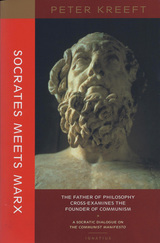
Humorous, frank, and insightful, this book challenges the reader to step in and take hold of what is right and to cast away what is wrong. Topics covered included such varied subjects as private property, the individual, the Three Philosophies of Man, women, individualism, and more. A wonderful introduction to philosophy for the neophyte, and a joy for the experienced student of thought.
“Imagine two of the most influential thinkers of all time, and two of the most diametrically opposed, thrust together in a no holds barred debate about some of the most important questions: Does man move the world or is he only a puppet of forces beyond his control? Is there a human nature or only market forces? Is Communism the liberator of mankind or a deadly scourge? In Peter Kreeft’s Socrates Meets Marx, the father of philosophy cross examines the founder of communism using the Communist Manifesto, details from the life of Marx himself, and the witnesses of history as evidence to be considered for judgment. If only every edition of the Communist Manifesto would have been bound together with a copy of this book, the world would be a much saner place.” – Christopher Kaczor, author of Proportionalism and the Natural Law Tradition
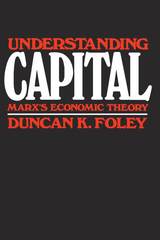
Understanding Capital is a brilliantly lucid introduction to Marxist economic theory. Duncan Foley builds an understanding of the theory systematically, from first principles through the definition of central concepts to the development of important applications. All of the topics in the three volumes of Capital are included, providing the reader with a complete view of Marxist economics.
Foley begins with a helpful discussion of philosophical problems readers often encounter in tackling Marx, including questions of epistemology, explanation, prediction, determinism, and dialectics. In an original extension of theory, he develops the often neglected concept of the circuit of capital to analyze Marx’s theory of the reproduction of capital. He also takes up central problems in the capitalist economy: equalization of the rates of profit (the “transformation problem”); productive and unproductive labor and the division of surplus value; and the falling rate of profit. He concludes with a discussion of the theory of capitalist crisis and of the relation of Marx’s critique of capitalism to his conception of socialism.
Through a careful treatment of the theory of money in relation to the labor theory of value, Foley clarifies the relation of prices to value and of Marx’s categories of analysis to conventional business and national income accounts, enabling readers to use Marx’s theory as a tool for the analysis of practical problems. The text is closely keyed throughout to the relevant chapters in Capital and includes suggestions for further reading on the topics discussed.
READERS
Browse our collection.
PUBLISHERS
See BiblioVault's publisher services.
STUDENT SERVICES
Files for college accessibility offices.
RECENTLY PUBLISHED



UChicago Accessibility Resources
home | accessibility | search | about | contact us
BiblioVault ® 2001 - 2024
The University of Chicago Press