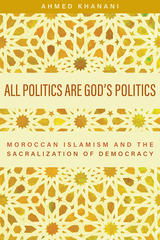
front cover of All Politics Are God’s Politics
All Politics Are God’s Politics
Moroccan Islamism and the Sacralization of Democracy
Ahmed Khanani
Rutgers University Press, 2021
Contemporary mass media descriptions of Muslims often suggest that Islam and Muslims are fundamentally undemocratic. Policy-makers in the West have weaponized these descriptions in attempts to legitimize anti-Muslim right-wing policy developments across the West and in the United States in particular, from surveillance in the aftermath of 9/11 to the anti-Islamic travel ban of 2017. But are Muslims undemocratic? Ahmed Khanani argues that this is not the case. In All Politics are God's Politics, Khanani shows that in fact, the opposite holds true: for socially conservative, politically active Muslims (Islamists), democracy or dimuqrāṭiyya reflects and extends their religious values. By drawing on conversations with over 100 Islamists in Morocco, this book enables readers to understand and appreciate the significance of dimuqrāṭiyya as a concept alongside new prospects for Islam and democracy in the Arab Middle East and North Africa (MENA). Khanani's in-depth analysis of the Moroccan case brings these Islamists and their attending political views to the forefront.

 
[more]

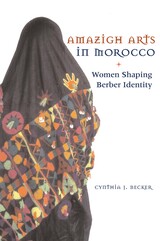
front cover of Amazigh Arts in Morocco
Amazigh Arts in Morocco
Women Shaping Berber Identity
By Cynthia Becker
University of Texas Press, 2006

In southeastern Morocco, around the oasis of Tafilalet, the Ait Khabbash people weave brightly colored carpets, embroider indigo head coverings, paint their faces with saffron, and wear ornate jewelry. Their extraordinarily detailed arts are rich in cultural symbolism; they are always breathtakingly beautiful—and they are typically made by women. Like other Amazigh (Berber) groups (but in contrast to the Arab societies of North Africa), the Ait Khabbash have entrusted their artistic responsibilities to women. Cynthia Becker spent years in Morocco living among these women and, through family connections and female fellowship, achieved unprecedented access to the artistic rituals of the Ait Khabbash. The result is more than a stunning examination of the arts themselves, it is also an illumination of women's roles in Islamic North Africa and the many ways in which women negotiate complex social and religious issues.

One of the reasons Amazigh women are artists is that the arts are expressions of ethnic identity, and it follows that the guardians of Amazigh identity ought to be those who literally ensure its continuation from generation to generation, the Amazigh women. Not surprisingly, the arts are visual expressions of womanhood, and fertility symbols are prevalent. Controlling the visual symbols of Amazigh identity has given these women power and prestige. Their clothing, tattoos, and jewelry are public identity statements; such public artistic expressions contrast with the stereotype that women in the Islamic world are secluded and veiled. But their role as public identity symbols can also be restrictive, and history (French colonialism, the subsequent rise of an Arab-dominated government in Morocco, and the recent emergence of a transnational Berber movement) has forced Ait Khabbash women to adapt their arts as their people adapt to the contemporary world. By framing Amazigh arts with historical and cultural context, Cynthia Becker allows the reader to see the full measure of these fascinating artworks.
[more]

front cover of Arab American Public History
Arab American Public History
Edited by Edward E. Curtis IV
Temple University Press, 2026
How have public history projects celebrated Arab American life and culture and countered anti-Arab bias and discrimination? The editor and contributors to Arab American Public History show how this vibrant community creates their own narratives through writing, blogging, curating, collaborating, and broadcasting. They also consider how the larger social and political contexts affect their work and offer self-reflection.

Arab American Public History is an invitation to engage more deeply with Arab American communities. Chapters examine Arab Americans’ origins, ethnic identities, and efforts to belong in America through case studies of the community’s food cultures, genealogy research, cultural production, and neighborhood enclaves.   

The first formal study of Arab American public history, this exciting volume charts various ways Arab Americans have interpreted their past as a source of defiant humanity, cultural enfranchisement, social solidarity, and political power.

Contributors: Reem Awad-Rashmawi, Chloe Bordewich, Richard M. Breaux, Maria F. Curtis, Lydia Harrington, Randa A. Kayyali, Matthew Jaber Stiffler, Rebecca K. Shrum, and the editor

In the series History and the Public
[more]

front cover of Architecture and the Right to Heal
Architecture and the Right to Heal
Resettler Nationalism in the Aftermath of Conflict and Disaster
Esra Akcan
Duke University Press, 2025
In Architecture and the Right to Heal, Esra Akcan calls for architecture to take an active role in healing communities affected by socioeconomic, political, and environmental disasters. Akcan frames these processes by discussing buildings and spaces in relation to climate change mitigation and transitional justice. Focusing on lands held by the former Ottoman Empire, Akcan highlights the ongoing struggle to heal after internal social, state, and business-led violence ranging from forced disappearance to mass extinction. Putting forth the concept of resettler nationalism as a source of displacement and partition, she argues that while architecture and urban planning have been weaponized to segregate and subjugate minorities throughout history, they could instead confront systemic violence and make accountability and reparations possible. For Akcan, healing constitutes a matter of rights as well as a holistic notion of justice that addresses the intersections of social, global, and environmental issues and one can be achieved through architecture. By locating spaces of political and ecological harm, Akcan advocates for healing on individual, communal, and planetary levels.
[more]

front cover of Assyria’s Plunder
Assyria’s Plunder
From Ancient Empire to Modern Loot
Jessie DeGrado
University Press of Colorado, 2026

Assyria’s Plunder offers a new history of ancient Assyria and its interactions with its client states of Israel and Judah. Considering the entanglement of modern imperialism with the historiography of ancient empire, Jessie DeGrado reassesses the conventional understanding of the Neo-Assyrian Empire using textual analysis, art history, and archaeology.

Engaging texts from Israel and Judah, DeGrado refuses the usual framings of Biblical resistance to Assyrian despotism and asks instead why subject populations may have capitulated to Assyrian rule. Paired chapters consider specific Assyrian imperial practices and biblical texts that engage them. As the study moves from the awe-filled spectacle of Assyrian throne rooms to the Assyrian policy of deporting divine statues, Assyria’s Plunder centers the embodied experiences of those subjected to Assyrian hegemony. DeGrado also explores how the empire’s violence still holds sway in the popular imagination while Euro-American imperialism goes largely unacknowledged.

Drawing on decolonial studies alongside epigraphic and textual analysis, Assyria’s Plunder shows how critical historiography and theory can enrich historical analysis and provide a fuller portrait of Assyrian interaction with its client states.

[more]

front cover of Bargaining for Reality
Bargaining for Reality
The Construction of Social Relations in a Muslim Community
Lawrence Rosen
University of Chicago Press, 1984
Much modern anthropology has assumed that an adequate description of any society consists of rules that inform its members' relationships and the logic that unites their cultural symbols. In this book Lawrence Rosen argues that, for the people who live in and around the Moroccan city of Sefrou, attachment to others and the terms by which they are conceived are, at their most fundamental level, subject to a constant process of negotiation.

Drawing on the philosophy of speech acts as well as interpretive theory, Rosen shows how, for the people of this Muslim community, reality consists of the network of obligations formed by individuals out of a repertoire of relational possibilities whose defining terms are comprised by a set of essentially negotiable concepts. He thus demonstrates that the bonds of family, tribe, and political alliance take shape only as the bargains struck in and through the malleable terms that describe them take shape; that statements about relationship are no more true than a price mentioned in the marketplace until properly validated; that the relations between men and women, Arabs and Berbers, Muslims and Jews test the limits of interpersonal negotiation; and that the concepts of time, character, and narrative style are consonant with a view of reality as bargained-for network of obligations.

Bargaining for Reality makes an important contribution to our understanding of contemporary Middle Eastern society and to the development of powerful new interpretive strategies for a wide range of social theorists.

"[Rosen's] book is extremely useful for African and Middle Eastern historians, because he challenges some of our most basic ideas about the nature and force of kinship, tribe, ethnicity, and other large- and small-scale political ties."—Allan R. Meyers, International Journal of African Historical Studies

"The book conveys a compelling image of Moroccan social experience and is peppered with vivid anecdotes and case histories."—Stephen William Foster, American Anthropologist

[more]

front cover of Bedouin Life in the Egyptian Wilderness
Bedouin Life in the Egyptian Wilderness
By Joseph J. Hobbs
University of Texas Press, 1992

Between the Nile River and the Red Sea, in the northern half of Egypt's Eastern Desert, live the Bedouins of the Ma'aza tribe. Joseph Hobbs lived with the Khushmaan Ma'aza clan for almost two years, gathering information for a study of traditional Bedouin life and culture. The resulting work, Bedouin Life in the Egyptian Wilderness, is the first modern ethnographic portrait of the Ma'aza Bedouins.
[more]

front cover of Beyond the Wall
Beyond the Wall
Writing a Path through Palestine
Bidisha
Seagull Books, 2025
Through the voices of those who live it, Beyond the Wall unveils the everyday realities of occupation, resilience, and the fight for dignity in Palestine.

Their voices come from Bethlehem and Hebron. You can hear them from Jerusalem to Nazareth, and witness their protests in Gaza and Ramallah. From the refugee camps in the West Bank, you can hear the voices of the Palestinian people call out to demand self-determination and a better quality of life. But outside of Israel and the occupied territories, these individual voices are rarely heard—until now.

In Beyond the Wall: Writing a Path through Palestine, internationally renowned feminist critic and writer Bidisha collects the testimonies of an occupied people—ordinary citizens, activists, and children—alongside those of international aid workers and foreign visitors for a revelatory look at a population on the margins.

Called “beautifully belligerent, [and] fiercely intelligent” by The Independent and a “dazzlingly creative writer” by the London Times, Bidisha amplifies the voices of the Palestinian people in this book and lends them her own considerable strength.
[more]

logo for Duke University Press
Bordering Blackness
Migration and Dispossession in the Afro-Mediterranean
Leslie Gross-Wyrtzen
Duke University Press, 2027
Bordering Blackness is an ethnography of the EurAfrican border told through the experiences of African migrants as they travel through the Sahara Desert into Morocco and across the Mediterranean Sea. Leslie Gross-Wyrtzen sheds light on the racial and economic logics that organize the transnational border regime across various sites and actors, historicizing them within the longue durée of African captivity, commodification, and racial othering. In contrast to Euro-American theories of blackness originating in the Middle Passage and western Atlantic slavery, she traces how West and Central Africans become black through present-day desert and maritime passages, which are entangled in earlier pathways across Atlantic and Mediterranean worlds. By historicizing and spatializing blackness, Gross-Wyrtzen forwards a relational understanding of contemporary borders, not as manifestations of an unchanging colonial or racial past but as contingent, if durable, ensembles ripe for reworking and resistance.
[more]

front cover of Boundaries That Divide
Boundaries That Divide
How Journalists in Turkey Surrendered Their Power over Politics
Defne Över
Rutgers University Press, 2026

Turkey presents a striking example of the most recent wave of global authoritarian turns. The two-decade-long transition in the country’s political system also transformed its media environment. As mainstream journalists gradually yielded their places to sycophants, much more willing to praise the government in their news, the mainstream media that once oversaw—however imperfectly—political decisions started devoting its full service to cheerleading the government. Simultaneously, a new sphere of critical journalism began to emerge, with mainstream media journalists joining their fellows in the peripheries of the media. Considering the transformation of Turkey’s news media as the decay of a democratic institution, this book asks, How does the media break down under the rule of an elected government?
 
Drawing on fieldwork and in-depth interviews, the book traces the ruling AKP’s manipulation of social divides to consolidate power and journalists’ navigation of the resulting climate of fear, hope, doubt, and anger. The book shows how Turkey’s news media surrendered its power over politics as some journalists embraced disinformation as a path to heightened status, others turned to self-censorship for protection, and still others resisted capture through continuous but fragmented efforts.
 
The book portrays journalists as central actors in media decay, while also revealing that resilience to decay emerges where rising demand for “news” meets the contentious mobilization of journalists. Although focused on Turkey, the book’s insights extend far beyond, offering urgent lessons about the future of journalism in an age of populism, polarization, and institutional erosion.

[more]

front cover of The Color Black
The Color Black
Enslavement and Erasure in Iran
Beeta Baghoolizadeh
Duke University Press, 2024
In The Color Black, Beeta Baghoolizadeh traces the twin processes of enslavement and erasure of Black people in Iran during the nineteenth and twentieth centuries. She illustrates how geopolitical changes and technological advancements in the nineteenth century made enslaved East Africans uniquely visible in their servitude in wealthy and elite Iranian households. During this time, Blackness, Africanness, and enslavement became intertwined—and interchangeable—in Iranian imaginations. After the end of slavery in 1929, the implementation of abolition involved an active process of erasure on a national scale, such that a collective amnesia regarding slavery and racism persists today. The erasure of enslavement resulted in the erasure of Black Iranians as well. Baghoolizadeh draws on photographs, architecture, theater, circus acts, newspapers, films, and more to document how the politics of visibility framed discussions around enslavement and abolition during the nineteenth and twentieth centuries. In this way, Baghoolizadeh makes visible the people and histories that were erased from Iran and its diaspora.
[more]

logo for University of Chicago Press
Concrete Futures
Technology and Decolonization in Modern Morocco
Daniel Williford
University of Chicago Press, 2026

Struggles over critical urban technologies during and after Morocco’s French Protectorate reveal a fundamental conflict over the nature of decolonization in the country.

Concrete Futures is a history of concrete that complicates our view of the building material, revealing it as a site of contestation over resources and authority in twentieth-century Morocco. Beginning with the French protectorate period between 1912 and 1956 and continuing into the post-independence era, Daniel Williford uses debates surrounding concrete building technologies as a conduit through which to explore struggles over colonization, modernization, and decolonization. The half-finished cinder block buildings found in cities all over Morocco, he shows, are a product of the system that colonial engineers and officials developed to deal with labor disputes, contests over knowledge, and anticolonial unrest.

By exploring concrete and its uses, Williford discloses how conflicts between experts, workers, and residents over construction and urban renewal—from the introduction of reinforced concrete to strategies of slum clearance—shaped the meaning and the trajectory of decolonization in Morocco.

[more]

front cover of Contested Lands
Contested Lands
A History of the Middle East From the First World War to the Present
T. G. Fraser
Haus Publishing, 2024
A history of the last century of tensions in the Middle East.

Until the First World War, the Ottoman Empire had dominated the Middle East for four centuries. Its collapse, coupled with the subsequent clash of European imperial policies, unleashed a surge of political feelings among the people of the Middle East as they vied for national self-determination. Over the century that followed, the region has become almost synonymous with unrest and conflict.

An accessible survey of the last century, Contested Lands tells the story of what happened in the Middle East and what it means today. T. G. Fraser analyzes the fault lines of the tension, including the damage brought by imperialism, the creation of the State of Israel, competition between secular rulers and emerging democratic and theocratic forces, and the rise of Arab Nationalism in the face of fraying regional alliances and the Islamic revival. Fraser offers a close look at how the events of the twenty-first century—the tragedy of 9/11, the Arab Spring, and Syria’s civil war—have combined with complex social and economic changes to transform the region. Untangling the history of the Middle East, this book offers a detailed and insightful picture of the region and why its heritage remains important today.
[more]

front cover of Contours of Israeli Politics
Contours of Israeli Politics
Jewish Ethnicity, Religious Nationalism, and Democracy
Hannah M. Ridge
Temple University Press, 2025
There is no single Jewish ethnicity, and no single Jewish ethnic group constitutes a clear majority of Jewish Israelis. These intra-Jewish differences permit a social hierarchy within the “in-group” – Jewish Israelis – that privileges the Ashkenazi Jews of European descent over Mizrahi/Sephardi Jews of Middle Eastern backgrounds.

The timely Contours of Israeli Politics focuses on the socio-political ramifications of this hierarchy within the upper stratum of Israeli society. Using public opinion studies and qualitative data, Hannah Ridge examines the effects of this social hierarchy to address attitudes on Israeli ethnicity and religious majoritarianism, support for Israeli democracy, and preference for an expanded territorial state and peace with its neighbors.

As various Jewish ethnic groups face greater pressure to assert their in-group membership (their Jewishness), they are more likely to protect the status privileges of that group. This can strengthen their ideas about identity, nationalism, democratic values, and conflict attitudes. Ridge’s findings reveal the ways in which Jewish ethnicity continues to influence the politics of Israel, a Jewish ethno-religious state.
[more]

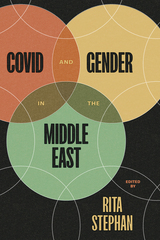
front cover of COVID and Gender in the Middle East
COVID and Gender in the Middle East
Edited by Rita Stephan
University of Texas Press, 2023

As the coronavirus ravages the globe, its aftermaths have brought gender inequalities to the forefront of many conversations. Countries in the Middle East and North Africa have been slow to prepare for, adapt to, and mitigate the COVID-19 health crisis and its impacts on governance, economics, security, and rights. Women’s physical well-being, social safety nets, and economic participation have been disproportionately affected, and with widespread shutdowns and capricious social welfare programs, women are exiting the workplace and the classroom, carrying the caregiving burden.

With feminist foregrounding, Rita Stephan's collection COVID and Gender in the Middle East gathers an impressive group of local scholars, activists, and policy experts. The book examines a range of national and localized responses to gender-specific issues around COVID’s health impact and the economic fallout and resulting social vulnerabilities, including the magnified marginalization of Syrian refugees; the inequitable treatment of migrant workers in Bahrain; and the inadequate implementation of gender-based violence legislation in Morocco. An essential global resource, this book is the first to provide empirical evidence of COVID’s gendered effects.
[more]

front cover of Deadly Refusals
Deadly Refusals
Kurdish Decolonization in Times of Counterterrorism
Serra M. Hakyemez
University of Minnesota Press, 2026

Revolutionary desire and decolonial struggle inside the heart of the carceral state

Deadly Refusals offers an intimate portrait of Kurdish decolonial struggle within the carceral and legal apparatuses of the Turkish state. Set in the counterterrorism courts and maximum-security prisons of Northern Kurdistan, Serra M. Hakyemez’s ethnography examines how prosecuted and imprisoned Kurds from different socioeconomic backgrounds organize in refusal of the criminalization and colonization of their political demands and desires. Through acts of self-criticism, revolutionary education, and comradely care, these prisoners articulate a political subjectivity that challenges the foundations of colonial power.

Based on more than seventeen years of ethnographic research—including interviews with former prisoners, lawyers, judges, and prosecutors; observations of more than one hundred court hearings; and analysis of prison memoirs, poetry, and legal archives—Deadly Refusals uncovers the mechanisms through which counterterrorism law reproduces the colonial state. Yet it is not solely a study of repression. Engaging psychoanalytic concepts of subject, desire, and ethics, Hakyemez illuminates how these carceral spaces also become sites of revolutionary responsibility. Here, refusal is not resignation but a political act in which the colonized self is killed—literally or figuratively—to make way for a larger collective subjectivity.

Using the interplay of comradeship and intimacy, political desire and ordinary pleasure, death and love, Deadly Refusals examines how Kurdish political prisoners forge multilayered relations of decolonization in an ongoing psychopolitical struggle. Hakyemez shows how both small gestures of withdrawal, restraint, and negation as well as radical acts like language protests, hunger strikes, and death protests become part of a shared struggle for alternative futures that state power cannot fully contain or comprehend.

Retail e-book files for this title are screen-reader friendly with images accompanied by short alt text and/or extended descriptions.

[more]

front cover of Decolonizing Afghanistan
Decolonizing Afghanistan
Countering Imperial Knowledge and Power
Wazhmah Osman and Robert D. Crews, editors
Duke University Press, 2025
As the first comprehensive volume to explore the impact of empire on Afghanistan’s past and present, Decolonizing Afghanistan marks a decolonial turn in Afghanistan and American studies. Featuring new and often sidelined ground-up perspectives, this collection examines how Afghan communities have subverted, resisted, and participated in colonial projects from the early twentieth century to the present, with a particular focus on the US intervention that began in 2001. Contributors interrogate the relationship between knowledge and power to analyze how narratives about Afghanistan have framed and legitimated imperial governance. Topics span the contradictions and consequences of the US “Forever” War, the rise of private security contracting, the deployment of biometric and surveillance technologies, the politics of US and Taliban countermedia operations, the evolution of gender discourses, and the mobilization of Afghan Americans and “Afghan culture,” among others. Throughout, contributors draw important connections and insights to ongoing global anticolonial struggles and offer paths to decolonial futures.

Contributors. Matthieu Aikins, Dawood Azami, Purnima Bose, Paula Chakravartty, Robert D. Crews, Marya Hannun, Ali Karimi, Nivi Manchanda, Sabauon Nasseri, Tausif Noor, Wazhmah Osman, Hosai Qasmi, Zohra Saed, Gazelle Samizay, Morwari Zafar, Helena Zeweri
[more]

front cover of Displacing Territory
Displacing Territory
Syrian and Palestinian Refugees in Jordan
Karen Culcasi
University of Chicago Press, 2023
Displacing Territory explores the core concepts of territory and belonging—and humanizes refugees in the process.
 
Based on fieldwork with Palestinian and Syrian refugees in Jordan, Displacing Territory explores how the lived realities of refugees are deeply affected by their imaginings of what constitutes territory and their sense of belonging to different places and territories. Karen Culcasi shows how these individual conceptualizations about territory don’t always fit the Western-centric division of the world into states and territories, thus revealing alternative or subordinated forms and scales of territory. She also argues that disproportionate attention to “refugee crises” in the Global North has diverted focus from other parts of the world that bear the responsibility of protecting the majority of the world’s refugees. By focusing on Jordan, a Global South state that hosts the world’s second-largest number of refugees per capita, this book provides insights to consider alternate ways to handle the situation of refugees elsewhere. In the process, Culcasi brings the reader into refugees’ diverse realities through their own words, inherently arguing against the tendency of many people in the Global North to see refugees as aberrant, burdensome, or threatening.
 
[more]

logo for Pluto Press
Doomed by Hope
Essays on Arab Theatre
Edited by Eyad Houssami and Elias Khoury
Pluto Press, 2012

Doomed by Hope is a beautifully presented collection of essays by writers and artists which traces the history of contemporary Arab theatre and its relationship to social change.

With contributors from Syria, Egypt, Lebanon, Palestine, Kuwait and Yemen, this book includes both academic discussions and personal narratives, alongside a number of specially commissioned portraits of contemporary Arab theatre artists. The essays revolve around the legacy of the late Syrian dramatist Saadallah Wannous, whose monumental plays incited audiences to rise up against tyranny decades ago.

This unique book is one of the first English language volumes on Arab theatre. In a highly topical manner following the Arab Spring, it explores cultural practices – from reading plays in a classroom to performing in a security state and directing in theatres, prisons, and international festivals – in times of revolt.

[more]

logo for Duke University Press
Enacting Decolonization
Political Subjectivity in Contemporary Arab Thought
Yasmeen Daifallah
Duke University Press, 2027
In Enacting Decolonization, Yasmeen Daifallah examines the forms that intellectual decolonization takes after the demise of anticolonial revolutions. Daifallah argues that rather than crafting political visions, decolonization operates through anticolonial thinkers’ efforts to cultivate a political subjectivity capable of mastering and critically reworking a colonially imparted modernity. She recovers this argument through Abdallah Laroui and Mohammed Abed al-Jabri, two of the most consequential Arab thinkers of the twentieth century. Typically read as opponents over the fate of the Islamic tradition, Daifallah argues that they share a diagnosis: colonialism produced an epistemological rupture that cannot be wished away. What differs is the ecology of critique each cultivates in response. Laroui wields Marxist historicism to submit anticolonial Arab thought to critique, recovering its possibilities for a subject capable of contesting the postcolonial present, while al-Jabri deploys structuralism to reinterpret the Islamic tradition, modeling a relationship of command and critical distance toward it. Through close readings of their work, Daifallah shows how these thinkers inventively weave conceptual and rhetorical devices to bring decolonized political subjects into being.
[more]

front cover of Gaza on Screen
Gaza on Screen
Nadia Yaqub, editor
Duke University Press, 2023
Gaza’s long association with resistance and humanitarian need has generated a complex and ever shifting range of visual material, comprising not just news reports and documentaries, but also essay, experimental, and fiction films, militant videos, and solidarity images. Contributors to Gaza on Screen, who include scholars and Gazan filmmakers, explore the practice, production, and impact of film and videos from and about the Gaza Strip. Conceptualizing screens—both large and small—as tools for mediation that are laden with power, the volume explores Gazan film and video in relation to humanitarianism and human rights, care, community, environment, mobility and confinement, and decolonization. The volume includes visual material ranging from solidarity broadcasts on Lebanese television, mid-twentieth-century British Pathé newsreels, and fiction films to breaking news, visuals of contemporary militant resistance, documentaries, and found footage films, arguing for a visual ecosystem in which differing types of film and video affect and inform each other. Throughout, Gaza on Screen demonstrates that screens shape and sustain relationships between Gaza and the world, and help to sustain the possibility of a different future.

Contributors. Nayrouz Abu Hatoum, Shahd Abusalama, Samirah Alkassim, Basma Alsharif, Hadeel Assali, Azza El-Hassan, Hatim El-Hibri, Mohamed Jabaly, Ahmed Mansour, Arab Nasser, Tarzan Nasser, Kamran Rastegar, Viviane Saglier, Abdelsalam Shehada, Yaron Shemer, Rebecca L. Stein, Helga Tawil-Souri, Shaira Vadasaria, Nadia Yaqub
[more]

front cover of Gendered Fortunes
Gendered Fortunes
Divination, Precarity, and Affect in Postsecular Turkey
Zeynep K. Korkman
Duke University Press, 2023
In Gendered Fortunes, Zeynep K. Korkman examines Turkey’s commercial fortunetelling cafés where secular Muslim women and LGBTIQ individuals navigate the precarities of twenty-first-century life. Criminalized by long-standing secularist laws and disdained by contemporary Islamist government, fortunetelling cafés proliferate in part because they offer shelter from the conservative secularist, Islamist, neoliberal, and gender pressures of the public sphere. Korkman shows how fortunetelling is a form of affective labor through which its participants build intimate feminized publics in which they share and address their hopes and fears. Korkman uses feeling—which is how her interlocutors describe the divination process—as an analytic to view the shifting landscape of gendered vulnerability in Turkey. In so doing, Korkman foregrounds “feeling” as a feminist lens to explore how those who are pushed to the margins feel their way through oppressive landscapes to create new futures.
[more]

logo for Duke University Press
The Indigenous Anti-Colonial
A Palestinian Resistance Tradition and a World Beyond Settler Colonialism
Linda Tabar
Duke University Press, 2026
In The Indigenous Anti-Colonial, Linda Tabar explores the radical tradition in which Palestinians remain defiant and undeterred as they hold onto their world and resist settler colonialism. Using a living archive of memory and oral knowledges to trace this long tradition, Tabar outlines the way Palestinians refuse and counter Zionist efforts to erase Palestinian presence and history from the land with an unyielding resistance that is distinctly Indigenous, shaped by Palestinians’ bonds with the land and the world that they built with it. This Indigenous anticolonial radical tradition produces its own imaginaries of liberation that seek a world beyond settler colonialism, white supremacy, and capitalism, constructing alternative conditions for freedom. As Israeli settler colonialism accelerates its attempts to eradicate the Palestinian people and the horrors of its genocide in Gaza are broadcast to the world, Tabar puts Palestinian conceptions of liberation at the center of conversations around settler colonialism.
[more]

front cover of Keepers of the Golden Shore
Keepers of the Golden Shore
A History of the United Arab Emirates
Michael Quentin Morton
Reaktion Books, 2016
For those who visit the United Arab Emirates (UAE), staying in its the lavish hotels and browsing in the ultra-modern shopping malls of Abu Dhabi or Dubai, the country can be a mystery, a glass and concrete creation that seems to have sprung from the desert overnight. Keepers of the Golden Shore looks behind this glossy façade, illuminating the region’s history, which stretches from the ancient Arabian tribes who controlled a desolate but economically important shoreline to the ostentatious architectural wonders—bankrolled by a massive wealth of oil—that characterize it today.
           
As Michael Quentin Morton recounts, the region now known as the UAE likely began as a trading post between Mesopotamia and Oman, and since that time has been the stage of important economic and cultural exchanges. It has seen the rise and fall of a thriving pearl industry, piracy, invasions and wars, and the arrival of the oil age that would make it one of the richest countries on earth. Since the early 1970s, when seven sheikhs agreed to enter into a union, it has been a sovereign nation, carrying on the resourceful spirit—with resplendent fervor—that the brutally inhospitable landscape has long demanded of the people. Ultimately, Morton shows that the country is not only rich in oil and money but in an extraordinarily deep history and culture. 
[more]

front cover of Making Down Syndrome
Making Down Syndrome
Motherhood and Kinship Futures in Urban Jordan
Christine Sargent
Rutgers University Press, 2026

Making Down Syndrome: Motherhood and Kinship Futures in Urban Jordan draws on ethnographic research conducted primarily in Jordan’s capital city of Amman to explore how the label and identity of Down syndrome is gaining increasing cohesiveness. Focused on the experiences of mothers, who serve as an entry point for understanding broader family dynamics and choices, the book argues that practices and ideologies of care play a central role in making Down syndrome’s embodied and political realities. They do so through the momentum of kinship futures, or futures imagined through the prism of kinship roles and relations, which shape how families organize and distribute care between and beyond kinship networks and under conditions of economic and political uncertainty. By approaching everyday life in Jordan through the lens of disability, Making Down Syndrome offers new insights into how people navigate structures of family, gender, power, inequality, and precarity, all while trying to maintain hope for and cultivate better futures.

[more]

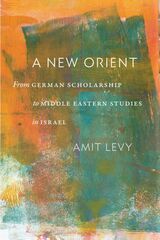
front cover of A New Orient
A New Orient
From German Scholarship to Middle Eastern Studies in Israel
Amit Levy
Brandeis University Press, 2024
A history of knowledge transfer of Oriental Studies stretching along an axis from Germany to Palestine/Israel.
 
This study examines the history of Zionist academic Orientalism—referred to throughout as Oriental studies, the term contemporary English speakers would have used—in light of its German-Jewish background, as a history of knowledge transfer stretching along an axis from Germany to Palestine. The transfer, which took place primarily during the 1920s and 1930s, involved questions about the re-establishment, far from Germany, of a field of knowledge with deep German roots. Like other German-Jewish scholars arriving in Palestine at the time, some of the Orientalist agents of transfer did so out of Zionist conviction as olim (immigrants making aliyah, or literally “ascending” to the homeland), while others joined them later as refugees from Nazi Germany; both groups were integrated into the institutional apparatus of the Hebrew University. Unlike other fields of knowledge or professions, however, the transfer of Orientalist knowledge was unique in that the axis involved an essential change in the nature of its encounter with the Orient: from a textual-scientific encounter at German universities, largely disconnected from contemporary issues to a living, substantive, and unmediated encounter with an essentially Arab region—and the escalating Jewish-Arab conflict in the background. Within the new context, German-Jewish Orientalist expertise was charged with political and cultural significance it had not previously faced, fundamentally influencing the course of the discipline’s development in Palestine and Israel.
[more]

logo for Duke University Press
Ninety-Nine
A Kaleidoscopic Portrait of Allah
Amira Mittermaier
Duke University Press, 2026
According to Islamic tradition, God has at least ninety-nine names. In Ninety-Nine, Amira Mittermaier presents ninety-nine short chapters based on her fieldwork and interviews with over one hundred Egyptians about who God is to them. In Egypt’s turbulent twenty-first century—the Egyptian uprising, a military coup, a pandemic, a climate crisis, wars across the region—God is talked about endlessly yet remains elusive. Ninety-Nine follows Allah into different spaces and conversations without ever claiming to get the full picture. We meet a Cairo beggar, an enigmatic dervish, a queer agnostic, and a Salafi housewife. We meet a depressed God, a cute God, a God who has stopped caring, a loving God, and a God who is a bully. We learn about divine interventions, big and small, and about daily struggles, even fights, with God. An intimate mosaic of Allah, Ninety-Nine celebrates the multiplicity inherent to the Islamic tradition and offers insight into how present-day Muslims grapple with big theological questions amidst their busy lives.
[more]

logo for Pluto Press
On the Arab-Jew, Palestine, and Other Displacements
Selected Writings of Ella Shohat
Ella Shohat
Pluto Press, 2017
*Winner of the MEMO Palestine Book Awards 2017*

Spanning several decades, Ella Shohat's work has introduced conceptual frameworks that fundamentally challenged conventional understandings of Palestine, Zionism and the Middle East, focusing on the pivotal figure of the Arab-Jew. This book gathers together her most influential political essays, interviews, speeches, testimonies and memoirs, as well as previously unpublished material.

Defying the binarist and Eurocentric Arab-versus-Jew rendering of the Israeli/Palestinian conflict, Shohat's work has dared to engage with the deeper historical and cultural questions swirling around colonialism, Orientalism and nationalism. Shohat's paradigm-shifting work unpacks such fraught issues as the anomalies of the national/colonial in Zionist discourse; the narrating of Jewish pasts in Muslim spaces; the links and distinctions between the dispossession of the Nakba and the dislocation of Arab-Jews; the traumatic memories triggered by partition and border-crossing; the echoes within Islamophobia of the anti-Semitic figure of 'the Jew'; and the efforts to imagine a possible future inter-communal 'convivencia'.

Shohat's transdisciplinary perspective illuminates the cultural politics in and around the Middle East. Juxtaposing texts of various genres written in divergent contexts, the book offers a vivid sense of the author's intellectual journey.
[more]

front cover of On the Semicivilized
On the Semicivilized
Coloniality, Finance, and Embodied Sovereignty in Cairo
Julia Elyachar
Duke University Press, 2025
On the Semicivilized by Julia Elyachar is a sweeping analysis of the coloniality that shaped—and blocked—sovereign futures for those dubbed barbarian and semicivilized in the former Ottoman Empire. Drawing on thirty years of ethnographic research in Cairo, family archives from Palestine and Egypt, and research on Ottoman debt and finance to rethink catastrophe and potentiality in Cairo and the world today, Elyachar theorizes a global condition of the “semicivilized” marked by nonsovereign futures, crippling debts, and the constant specter of violence exercised by those who call themselves civilized. Originally used to describe the Ottoman Empire, whose perceived “civilizational differences” rendered it incompatible with a Western-dominated global order, semicivilized came to denote lands where unitary territorial sovereignty was stymied at the end of WWI. Elyachar’s theorizing offers a new analytic vocabulary for thinking beyond territoriality, postcolonialism, and the “civilized"/"primitive” divide. Looking at the world from the perspective of the semicivilized, Elyachar argues, allows us to shift attention to embodied infrastructures, collective lives, and practices of moving and acting in common that bypass lingering assumptions of territorialism and unitary sovereign rule.
[more]

logo for Pluto Press
Our Way to Fight
Peace-Work Under Siege in Israel-Palestine
Michael Riordon
Pluto Press, 2011
This book follows the dangerous lives of peace activists in Israel and Palestine. It explores the crises that stirred them to act, the risks they face, and the small victories that sustain them.

Michael Riordon takes us to thousand year-old olive groves, besieged villages, refugee camps, checkpoints and barracks. In the face of deepening conflict, Our Way to Fight offers courageous grassroots action on both sides of the wall, and points the way to a liveable future.
[more]

front cover of Palestinians Born in Exile
Palestinians Born in Exile
Diaspora and the Search for a Homeland
By Juliane Hammer
University of Texas Press, 2005

In the decade following the 1993 Oslo Peace Accords, some 100,000 diasporic Palestinians returned to the West Bank and Gaza. Among them were children and young adults who were born in exile and whose sense of Palestinian identity was shaped not by lived experience but rather through the transmission and re-creation of memories, images, and history. As a result, "returning" to the homeland that had never actually been their home presented challenges and disappointments for these young Palestinians, who found their lifeways and values sometimes at odds with those of their new neighbors in the West Bank and Gaza.

This original ethnography records the experiences of Palestinians born in exile who have emigrated to the Palestinian homeland. Juliane Hammer interviews young adults between the ages of 16 and 35 to learn how their Palestinian identity has been affected by living in various Arab countries or the United States and then moving to the West Bank and Gaza. Their responses underscore how much the experience of living outside of Palestine has become integral to the Palestinian national character, even as Palestinians maintain an overwhelming sense of belonging to one another as a people.

[more]

front cover of Poetics of Repair
Poetics of Repair
Contemporary Arts and Afterlives of Colonial-Era Mass Housing in the Maghreb
Katarzyna Pieprzak
Duke University Press, 2025
Today, most colonial-era modernist mass housing is seen as fundamentally broken: crumbling concrete spaces of social alienation and containment that fractured societies both then and now. In Poetics of Repair, Katarzyna Pieprzak examines how contemporary visual, literary, and performance art of the Maghreb has the potential to change the terms, histories, and imagined futures of mass housing in North Africa and France. Pieprzak dives deeply into contemporary art engagements with three mass housing sites that epitomize the French colonial geography of modernist architecture in the Maghreb. She identifies in this art what she names a transformative “poetics of repair”: a practice that conjoins, puts in relation, or simply brings closer together broken materials, separated people, and severed timelines. Reading art and its engagements with mass housing, Pieprzak argues, has the potential to unmoor established knowledge and rehearse the tensions and productive ambiguities inherent to practices of constitution and revision. She demonstrates that such a reading practice is a step toward a reparative epistemology for mass housing that turns sites of wreckage and alienation into sites of possible solidarities and new formulations of history and experience.
[more]

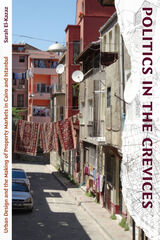
front cover of Politics in the Crevices
Politics in the Crevices
Urban Design and the Making of Property Markets in Cairo and Istanbul
Sarah El-Kazaz
Duke University Press, 2023
In Politics in the Crevices, Sarah El-Kazaz takes readers into the world of urban planning and design practices in Istanbul and Cairo. In this transnational ethnography of neighborhoods undergoing contested rapid transformations, she reveals how the battle for housing has shifted away from traditional political arenas onto private crevices of the city. She outlines how multiple actors—from highly capitalized international NGOs and corporations to city dwellers, bureaucrats, and planning experts—use careful urban design to empower conflicting agendas, whether manipulating property markets to protect affordable housing or corner luxury real estate. El-Kazaz shows that such contemporary politicizations of urban design stem from unresolved struggles at the heart of messy transitions from the welfare state to neoliberalism, which have shifted the politics of redistribution from contested political arenas to design practices operating within market logics, ultimately relocating political struggles onto the city’s most intimate crevices. In so doing, she raises critical questions about the role of market reforms in redistributing resources and challenges readers to rethink neoliberalism and the fundamental ways it shapes cities and polities.
[more]

front cover of Post/Revolutionary Conditions
Post/Revolutionary Conditions
Renewed Visions of the Iranian Freedom Struggle
Alborz Ghandehari
Northwestern University Press, 2025

An exploration of how the Iranian people have renewed their longtime struggle for freedom

The Woman, Life, Freedom uprising is only the latest manifestation of a century-long struggle for liberation in Iran. This ongoing movement for justice has encompassed two revolutions against domestic dictatorship and foreign imperialism, as well as a series of uprisings since the 1979 Iranian Revolution, which was followed by a new era of repression. Post/Revolutionary Conditions: Renewed Visions of the Iranian Freedom Struggle offers an intersectional analysis of how progressive and radical movement builders have reenvisioned liberation in the post-’79 era, despite new forms of oppression under the Islamic Republic and from US and other foreign imperial powers. Bringing together a diverse array of sources, including oral histories with Iranian labor, student, and gender justice organizers, as well as resistance literature and art, Alborz Ghandehari challenges narratives that treat working-class, feminist, queer, and oppressed ethnic minorities’ movements as separate from one another. Post/Revolutionary Conditions demonstrates how such potent reimaginings of collective liberation and a radically democratic future have been shaped by multiple generations of protest and kindred struggles globally.

[more]

front cover of The Purple Color of Kurdish Politics
The Purple Color of Kurdish Politics
Women Politicians Write from Prison
Gultan Kisanak
Pluto Press, 2022

Prison writings from twenty-two Kurdish women who were elected to office in Turkey and then imprisoned by the state on political grounds.

Gültan Kışanak, a Kurdish journalist and former MP, was elected co-mayor of Diyarbakır in 2014. Two years later, the Turkish state arrested and imprisoned her. Her story is remarkable, but not unique. While behind bars, she wrote about her own experiences and collected similar accounts from other Kurdish women, all co-chairs, co-mayors, and MPs in Turkey; all incarcerated on political grounds.

The Purple Colour of Kurdish Politics is a one-of-a-kind collection of prison writings from twenty-two Kurdish women politicians. Here they reflect on their personal and collective struggles against patriarchy and anti-Kurdish repression in Turkey; on the radical feminist principles and practices through which they transformed the political structures and state offices in which they operated. They discuss what worked and what didn’t, and the ways in which Turkey’s anti-capitalist and socialist movements closely informed their political stances and practices.

Demonstrating Kurdish women’s ceaseless political determination and refusal to be silenced – even when behind bars – the book ultimately hopes to inspire women living under even the most unjust conditions to engage in collective resistance.
[more]

logo for Duke University Press
Resisting War
The Politics of Conscientious Objection
Pinar Kemerli
Duke University Press, 2027

logo for Duke University Press
Resisting War
The Politics of Conscientious Objection
Pinar Kemerli
Duke University Press, 2027

front cover of Resurgency
Resurgency
Outlasting the War on Terror in Iraq
Kali Rubaii
Duke University Press, 2026
Resurgency examines how Iraqi farmers outlast the long shadow of US military intervention as they return to repair their war-damaged homeland. Based on detailed ethnographic research, Kali Rubaii expands the temporal and descriptive definitions of war, displacement, and resistance.

In Resurgency, Kali Rubaii offers detailed ethnographic insight into how decades of war have affected everyday life in Iraq. Drawing on fieldwork in Anbar province and Iraqi Kurdistan in 2014–15 and 2021–24, Rubaii foregrounds the practices of displaced people who stubbornly outlast their occupiers, returning to homes that feel estranging, repairing war-damaged land, and surviving into futures to which they have been disinvited. Following Anbari farmers in their struggle to counter the social and environmental fallout from toxic military waste, depleted ecosystems, and transformed political economies, Resurgency expands the temporal and descriptive categories of what war is—and what resistance looks like. By asking what actions and dispositions make sense when conditions of survival are diminished, and when today may be better than tomorrow, Rubaii offers new methods and insights to those concerned about the possibilities of life amid environmental devastation, mass displacement, and the slow violence of the forever wars.
[more]

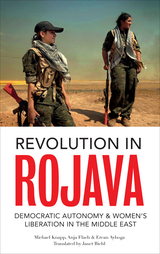
front cover of Revolution in Rojava
Revolution in Rojava
Democratic Autonomy and Women's Liberation in the Syrian Kurdistan
Michael Knapp, Ercan Ayboga, and Anja Flach
Pluto Press, 2016
“Their first-hand experiences and active participation in the anti-capitalist society being built in the region make this the first detailed account of the popular revolution….The definitive book so far on Rojava."― Morning Star                                         
 
Revolution in Rojava tells the story of Rojava's groundbreaking experiment in what they call democratic confederalism, a communally organized democracy that is fiercely anti-capitalist and committed to female equality, while rejecting reactionary nationalist ideologies.
 
Rooted in the ideas of imprisoned Kurdish leader Abdullah Ocalan, the system is built on effective gender quotas, bottom-up democratic structures, far-sighted ecological policies, and a powerful militancy that has allowed the region to keep ISIS at bay.
 
Given the widespread violence and suffering in Syria, it's not unreasonable that outsiders look at the situation as unrelentingly awful. And while the reality of the devastation is undeniable, there is reason for hope in at least one small pocket of the nation: the cantons of Rojava in Syrian Kurdistan, where in the wake of war people are quietly building one of the most progressive societies in the world today. Chapters here include:
 
*Rojava's Diverse Cultures
*Democratic Confederalism 
*The Liberation
*A Women's Revolution
*Democratic Autonomy in Rojava
*Civil Society Associations
*The Theory of the Rose: Defense 
*The New Justice System
*Democratization of Education
*Health Care 
*The Social Economy
*Ecological Challenges 
 
This first full-length study of democratic developments in Rojava tells an extraordinary and powerfully hopeful story of a little-known battle for true freedom in dark times. With excellent first-hand background information about this important, but little understood struggle, Revolution in Rojava will educate and inspire the reader to learn more about Rojava, Syria, and the fight for change in one of the world’s most dangerous regions.
 
[more]

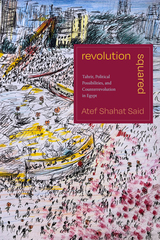
front cover of Revolution Squared
Revolution Squared
Tahrir, Political Possibilities, and Counterrevolution in Egypt
Atef Shahat Said
Duke University Press, 2024
In Revolution Squared Atef Shahat Said examines the 2011 Egyptian Revolution to trace the expansive range of liberatory possibilities and containment at the heart of every revolution. Drawing on historical analysis and his own participation in the revolution, Said outlines the importance of Tahrir Square and other physical spaces as well as the role of social media and digital spaces. He develops the notion of lived contingency—the ways revolutionary actors practice and experience the revolution in terms of the actions they do or do not take—to show how Egyptians made sense of what was possible during the revolution. Said charts the lived contingencies of Egyptian revolutionaries from the decade prior to the revolution’s outbreak to its peak and the so-called transition to democracy to the 2013 military coup into the present. Contrary to retrospective accounts and counterrevolutionary thought, Said argues that the Egyptian Revolution was not doomed to defeat. Rather, he demonstrates that Egyptians did not fully grasp their immense clout and that limited reformist demands reduced the revolution’s potential for transformation.
[more]

front cover of Riding
Riding
Pardis Mahdavi
Duke University Press, 2025
In Riding, Pardis Mahdavi meditates on the lessons learned over a lifetime of horseback riding and the falling, failing, and joy it brings. At once a history of Caspian horses, an exploration of Mahdavi’s Iranian-American identity and family history, and a consideration of the capacity for self-reflection and self-compassion through human-animal relationships, Riding offers a roadmap for learning to live in harmony with the self and the environment around us. Mahdavi shows how her relationship with horses gives her insights into intergenerational strength and tools for healing intergenerational trauma. Riding from the mountains of Iran to the beaches of California, Mahdavi shares her love affair with horses, rediscovers a homeland she longs for, and ultimately finds her strength.
[more]

front cover of The Right Kind of Suffering
The Right Kind of Suffering
Gender, Sexuality, and Arab Asylum Seekers in America
Rhoda Kanaaneh
University of Texas Press, 2023

2024 Evelyn Shakir Non-Fiction Academic Award, The Arab American National Museum

An examination of Arab asylum seekers who feel compelled to package their tales of disenfranchisement and suffering to satisfy a deeply reluctant immigration system.

From the overloaded courts with their constantly changing dates and appointments to the need to prove oneself the “right” kind of victim, the asylum system in the United States is an exacting and drawn-out immigration process that itself results in suffering. When anthropologist Rhoda Kanaaneh became a volunteer interpreter for Arab asylum seekers, she learned how applicants were pushed to craft specific narratives to satisfy the system’s requirements.

Kanaaneh tells the stories of four Arab asylum seekers who sought protection in the United States on the basis of their gender or sexuality: Saud, who relived painful memories of her circumcision and police harassment in Sudan and then learned to number and sequence these recollections; Fatima, who visited doctors and therapists in order to document years of spousal abuse without over-emphasizing her resulting mental illness; Fadi, who highlighted the homophobic motivations that provoked his arrest and torture in Jordan, all the while sidelining connected issues of class and racism; and Marwa, who showcased her private hardships as a lesbian in a Shiite family in Lebanon and downplayed her environmental activism. The Right Kind of Suffering is a compelling portrait of Arab asylum seekers whose success stories stand in contrast with those whom the system failed.
[more]

front cover of Searching for Solidarity
Searching for Solidarity
Revolutionary Dreams and Radical Social Movements
Noor Ghazal Aswad
The Ohio State University Press, 2025
In Searching for Solidarity, Noor Ghazal Aswad explores how the emancipatory qualities of transnational revolutionary struggle are often denied, misunderstood, and erased. Drawing on the stories of those in struggle, Searching for Solidarity reimagines solidarity as an affective, ethical, and political capacity that can thrive amid today’s volatile “political economy of emotion”—an environment marked by mistrust, fake news, and disinformation campaigns targeting those in resistance. At the heart of this book is the “radical subject,” which refers to those revolting against repressive forces to achieve liberatory change at the risk of death, injury, or disappearance. These radical subjects offer a new foundation for critical theory—one that rejects “negative solidarity,” the tendency to acquiesce to power or distance oneself from those fighting against systemic injustice. By immersing readers in the testimony, memory, and hopes of these subjects, each chapter reveals solidarity as an affective force capable of cutting through distortive narratives and binding us in a cross-cultural, decolonizing, and nonhierarchical collectivity. Solidarity, through this lens, emerges as a transformative stance that compels us to, as Yassin al-Haj Saleh writes, become “partners in word and deed to change power.”
[more]

front cover of Shelter for the Night
Shelter for the Night
On Afghanistan, Language, and Detours
Fatima Mojaddedi
Duke University Press, 2026
Shelter for the Night is an ethnographic meditation on language and psychic life in 2010s Afghanistan, where militarized violence has collapsed social worlds. Across Kabul and the countryside, in poetic and probing style, the book unpacks the precarious relationship between language, violence, and the self. As social and political worlds fracture through militarized violence, economic speculation, interpersonal sabotage, and ruptures in shared understanding, people are set on unexpected detours to discontinuity. Encounters in political life, love, and translation become fragmented, difficult to parse, and entangled in symbolic violence. Yet amid the harsh realities of contemporary life in Kabul, Fatima Mojaddedi finds moments of wonder and rich inner lives of reflexivity, understanding, and social connection. From narratives of modernist ambition and political violence to tragic romance and urbanite translators and their rural interlocutors, Shelter for the Night looks at the challenges of articulating the unspeakable to make a bold claim for the importance of thinking about the contemporary world starting from Afghanistan.
[more]

front cover of Social Media Tribes
Social Media Tribes
Jordan's Bedouin and the Margins of the State
Geoffrey F. Hughes
University of Texas Press, 2026

An examination of the uses of social media in Jordan through the experiences of Bedouin tribespeople.

It has become something of a cliché to say that social media is making us tribal. But what do self-styled tribespeople themselves think about social media, and how might they help us better understand the role of the internet in our current political moment? Drawing on in-depth ethnographic fieldwork among Bedouin in Jordan, Social Media Tribes underscores the varied but broadly intelligible ways in which distinctive groups domesticate social media to suit their needs.

Organized around key concepts in Bedouin life (including tribalism, envy, and mercy), Social Media Tribes moves between Facebook-mediated tribal truces, upstart online media platforms, palatial urban villas where self-appointed sheikhs dispense justice, and street clashes organized over WhatsApp in rural communities ignored by state development projects. A meticulous researcher and insightful participant-observer, Geoffrey Hughes reframes social media as part of a global renegotiation of the state-society divide that both preceded the emergence of social media platforms and, in turn, feeds off of them. In this telling, the internet represents a new frontier that, like older frontiers, heralds both novel freedoms and novel forms of social control.

[more]

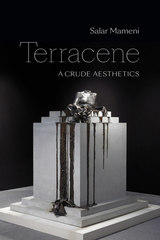
front cover of Terracene
Terracene
A Crude Aesthetics
Salar Mameni
Duke University Press, 2023
In Terracene Salar Mameni historicizes the popularization of the scientific notion of the Anthropocene alongside the emergence of the global war on terror. Mameni theorizes the Terracene as an epoch marked by a convergence of racialized militarism and environmental destruction. Both the Anthropocene and the war on terror centered the antagonist figures of the Anthropos and the terrorist as responsible for epochal changes in the new geological and geopolitical world orders. In response, Mameni shows how the Terracene requires radically new engagements with terra (the earth), whose intelligence resides in matters such as oil and phenomena like earthquakes and fires. Drawing on the work of artists whose practices interrogate histories of settler-colonial and imperial interests in land and resources in Iran, Iraq, Yemen, Kuwait, Syria, Palestine, and other regions most affected by the war on terror, Mameni offers speculative paths into the aesthetics of the Terracene.
[more]

front cover of The Time beneath the Concrete
The Time beneath the Concrete
Palestine between Camp and Colony
Nasser Abourahme
Duke University Press, 2025
In The Time beneath the Concrete, Nasser Abourahme argues that settler colonialism is always as much an attempt to conquer time as it is to conquer land. Taking as his primary object  Palestinian refugee camps, created in the fallout of the eliminatory violence of Israel’s founding, Abourahme shows how these camps become the primary place where settler colonial attempts to dominate space and time encounter Indigenous refusal. Seen from the camps, Israel becomes a settler colonial project defined by its inability to move past the past—a project stuck at its foundational moment of conquest. At the same time, the Palestinian insistence on return is a refusal to abide by the closure of the past into settler futurity. Palestinian struggle does not just happen in the open time of dispossession; it happens over this time. That struggle, Abourahme demonstrates, is a form of anticolonial refusal that draws its power not from any decisive finality, but precisely from irresolution and keeping time open.
[more]

front cover of The Turkishness Contract
The Turkishness Contract
Baris Ünlü
Temple University Press, 2025
The Turkishness Contract places Critical Race Theory in conversation with literature on Turkey and nation-state making via a historical study enriched by in-depth interviews. In this new English-language edition, Barış Ünlü makes a number of comprehensive changes to his widely read and much discussed 2018 Turkish book, including a new preface and a new sweeping and theoretical introduction.

Ünlü uses Critical Race Theory to present a historical–sociological model to examine not only the historical constitution and contemporary functioning of the Turkish nation-state, but also the affective and bodily modalities of being Turkish. He also develops a framework for rethinking the complex relations between the socio-genesis of the Turkish nation and state and the psycho-genesis of the Turkish people, their cognitive habits and emotional orientations, and the structural privileges and unconsciousness strategies of Turkishness.

The Turkishness Contract addresses broader theoretical concerns including histories of colonialism, ethnic/racial social contracts, privilege, Armenian Genocide and the Kurdish question, as well as the unraveling of Turkey’s social contract at a moment of contemporary right-wing authoritarianism. 

In the series Critical Race, Indigeneity, and Relationality
[more]

front cover of Unrecognized
Unrecognized
A Palestinian Bedouin Feminist in Israel
Lihi Ben Shitrit
Rutgers University Press, 2027

In 1998, when Mona Al-Habanin was twenty-eight years old and pregnant with her sixth child, she stood before a council of al-Naqab Bedouin shaykhs and faced the most difficult decision of her life: give up her children or be responsible for more killings in her tribe.

This book tells the extraordinary story of Mona Al-Habanin (b. 1970), the first Bedouin woman to run for elected office in Israel's Negev Desert. Through Mona's life, it illuminates Indigenous Bedouin women's traumas and resilience while documenting a genealogy of contemporary Palestinian Bedouin feminism. It traces her journey from desert tent dwelling through forced dislocation, her community's struggles with violence against women, and her battle for her children—against state-sanctioned tribal justice rooted in British colonial paradigms and Zionist settler-native relations—and to her turn to fierce and irreverent activism, taboo-breaking, and political trailblazing. This book tells the story of an unrecognized community under siege and of a new form of Indigenous feminism that bravely defies the violence of silencing. 

[more]

front cover of Unsettled Labors
Unsettled Labors
Migrant Care Work in Palestine/Israel
Rachel H. Brown
Duke University Press, 2024
In Unsettled Labors, Rachel H. Brown explores the overlooked labor of migrant workers in Israel’s eldercare industry. Brown argues that live-in eldercare in Palestine/Israel, which is primarily done by migrant workers, is an often invisible area where settler colonialism is reproduced culturally, economically, and biologically. Situating Israeli labor markets within a longer history of imperialism and dispossession of Palestinian land, Brown positions migrant eldercare within the resulting tangle of Israeli laws, policies, and social discourses. She draws from interviews with caretakers, public statements, court documents, and first-hand fieldwork to uncover the inherently contradictory nature of elder care work: the intimate presence of South and Southeast Asian workers in the home unsettles the idea of the Israeli home as an exclusively Jewish space. By paying close attention to the comparative racialization of migrant workers, Palestinians, asylum seekers, and Mizrahi and Ashkenazi settlers, Brown raises important questions of labor, social reproduction, displacement, and citizenship told through the stories of collective care provided by migrant workers in a settler colonial state.
[more]

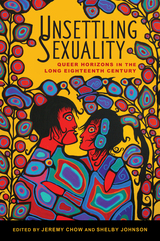
front cover of Unsettling Sexuality
Unsettling Sexuality
Queer Horizons in the Long Eighteenth Century
Jeremy Chow
University of Delaware Press, 2025

This book is also freely available online as an open access digital edition on Manifold, here: https://openpub.udel.edu/projects/unsettling-sexuality.

Unsettling Sexuality: Queer Horizons in the Long Eighteenth Century challenges the traditional ways that scholarship has approached sexuality, gender nonconformity, and sex (as well as its absence) in the long eighteenth century. Drawing from recent and emerging criticisms in Middle Eastern and Asian studies, Black studies, and Native American and Indigenous studies, the collected authors perform intersectional queer readings, reimagine queer historiographic methods, and spearhead new citational models that can invigorate the field. Contributors read with and against diverse European, transatlantic, and global archives to explore mutually informative frameworks of gender, sexuality, race, indigeneity, ability, and class. In charting multidirectional queer horizons, this collection locates new prospective desires and intimacies in the literature, culture, and media of the period to imagine new directions and simultaneously unsettle eighteenth-century studies.

[more]

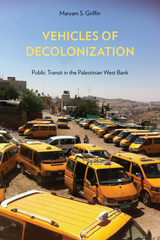
front cover of Vehicles of Decolonization
Vehicles of Decolonization
Public Transit in the Palestinian West Bank
Maryam S. Griffin
Temple University Press, 2022

Examining the border-enclosure strategy Israel uses to impose Palestinian im/mobilization, Maryam Griffin considers the ways public transportation in the Palestinian West Bank is a constant site of social struggle. Her illuminating book, Vehicles of Decolonization, studies collective movement, resistance, and everyday life in the West Bank to show how Palestinians assert a kind of Indigenous self-determination over mobility that Israeli settler colonialism seeks to undermine. 

Having immersed herself in a year of fieldwork, Griffin maps multiple engagements with the flexible bus, shared van, and private taxi services to demonstrate that the politics of mobility are shaped by ongoing settler colonialism and Indigenous struggle. Griffin uses critical border studies to look at the contested nature of mobility at the sites of transit, where Palestinians practice self-determination through routine participation, spectacular political organizing and demonstration, and artistic renderings. 

Featuring a variety of street images, Vehicles of Decolonization shows that multiple registers of people power work in concert not only to resist settler colonial logics but to reinhabit the land through the practice and preservation of alternative relations of mobility.
[more]

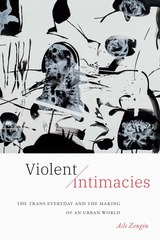
front cover of Violent Intimacies
Violent Intimacies
The Trans Everyday and the Making of an Urban World
Asli Zengin
Duke University Press, 2024
In Violent Intimacies, Aslı Zengin traces how trans people in Turkey creatively negotiate and resist everyday cisheteronormative violence. Drawing on the history and ethnography of the trans communal life in Istanbul, Zengin develops an understanding of cisheteronormative violence that expands beyond sex, gender and sexuality. She shows how cisheteronormativity forms a connective tissue among neoliberal governmentality, biopolitical and necropolitical regimes, nationalist religiosity and authoritarian management of social difference. As much as trans people are shaped by these processes, they also transform them in intimate ways. Transness in Turkey provides an insightful site for developing new perspectives on statecraft, securitization and surveillance, family and kin-making, urban geography, and political life. Zengin offers the concept of violent intimacies to theorize this entangled world of the trans everyday where violence and intimacy are co-constitutive. Violent intimacies emerge from trans people’s everyday interactions with the police, religious and medical institutions, street life, family and kinship, and trans femicides and funerals. The dynamic of violent intimacies prompts new understandings of violence and intimacy and the world-making struggles of trans people in a Middle Eastern context.
[more]

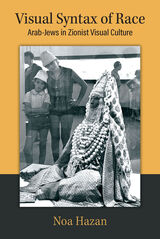
front cover of Visual Syntax of Race
Visual Syntax of Race
Arab-Jews in Zionist Visual Culture
Noa Hazan
University of Michigan Press, 2022

Analyzing the visual syntax and display rhetoric applied in newspaper photos, national historical albums, and museum exhibitions, Noa Hazan shows that although racial thought was and still is verbally suppressed in Israel, it is vividly present in its nonverbal official and public visual sphere. The racist perspective of newspaper editors, book publishers, photographers, and museum curators were morally justified in its time by such patronizing ideals as realistic news coverage or the salvation of Jewish heritage assets. Although their perspectives played a dominant role in establishing a visual syntax of race in Israel, they were not seen as racially discriminating at the time. The racist motifs and actions are revealed here by colligating multiple cases into a coherent narrative in retrospect. 

This book points to a direct influence of the anti-Semitic discourse in Europe toward Mizrahim in Israel, highlighting the shared visual stereotypes used in both Europe and the fledgling state of Israel. Engraved in their body, these cultural traits were depicted and understood as racial-biological qualities and were visually manipulated to silo Ashkenazim and Mizrahim in Israel as distinct racial types. 
[more]

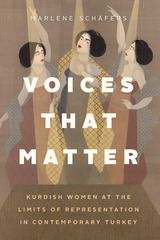
front cover of Voices That Matter
Voices That Matter
Kurdish Women at the Limits of Representation in Contemporary Turkey
Marlene Schäfers
University of Chicago Press, 2023

A fine-grained ethnography exploring the sociopolitical power of Kurdish women’s voices in contemporary Turkey.

“Raise your voice!” and “Speak up!” are familiar refrains that assume, all too easily, that gaining voice will lead to empowerment, healing, and inclusion for marginalized subjects. Marlene Schäfers’s Voices That Matter reveals where such assumptions fall short, demonstrating that “raising one’s voice” is no straightforward path to emancipation but fraught with anxieties, dilemmas, and contradictions. In its attention to the voice as form, this book examines not only what voices say but also how they do so, focusing on Kurdish contexts where oral genres have a long, rich legacy. Examining the social labor that voices carry out as they sound, speak, and resonate, Schäfers shows that where new vocal practices arise, they produce new selves and practices of social relations. In Turkey, recent decades have seen Kurdish voices gain increasing moral and political value as metaphors of representation and resistance. Women’s voices, in particular, are understood as potent means to withstand patriarchal restrictions and political oppression. By ethnographically tracing the transformations in how Kurdish women relate to and employ their voices as a result of these shifts, Schäfers illustrates how contemporary politics foster not only new hopes and desires but also create novel vulnerabilities as they valorize, elicit, and discipline voice in the name of empowerment and liberation.
[more]

front cover of We Are All Armenian
We Are All Armenian
Voices from the Diaspora
Edited by Aram Mrjoian
University of Texas Press, 2023

A collection of essays about Armenian identity and belonging in the diaspora.

In the century since the Armenian Genocide, Armenian survivors and their descendants have written of a vast range of experiences using storytelling and activism, two important aspects of Armenian culture. Wrestling with questions of home and self, diasporan Armenian writers bear the burden of repeatedly telling their history, as it remains widely erased and obfuscated. Telling this history requires a tangled balance of contextualizing the past and reporting on the present, of respecting a culture even while feeling lost within it.

We Are All Armenian brings together established and emerging Armenian authors to reflect on the complications of Armenian ethnic identity today. These personal essays elevate diasporic voices that have been historically silenced inside and outside of their communities, including queer, multiracial, and multiethnic writers. The eighteen contributors to this contemporary anthology explore issues of displacement, assimilation, inheritance, and broader definitions of home. Through engaging creative nonfiction, many of them question what it is to be Armenian enough inside an often unacknowledged community.
[more]

front cover of Working Women in Jordan
Working Women in Jordan
Education, Migration, and Aspiration
Fida J. Adely
University of Chicago Press, 2024
A surprising look at the meaningful social changes in Jordan as lived and navigated by educated women.
 
Jordan has witnessed tremendous societal transformation in its relatively short history. Today it has one of the most highly educated populations in the region, and women have outnumbered and outperformed their male counterparts for more than a decade. Yet, despite their education and professional status, many women still struggle to build a secure future and a life befitting of their aspirations.
 
In Working Women in Jordan anthropologist Fida J. Adely turns to college-educated women in Jordan who migrate from rural provinces to Amman for employment opportunities. Building on twelve years of ethnographic research and extensive interviews with dozens of women, as well as some of their family members, Adely analyzes the effects of developments such as expanded educational opportunities, urbanization, privatization, and the restructuring of the labor market on women’s life trajectories, gender roles, the institution of marriage, and kinship relations. Through these rich narrative accounts and the analysis of broader socio-economic shifts, Adely explains how educational structures can act as both facilitators and obstacles to workforce entry—along with cascading consequences for family and social life. Deeply thorough and compelling, Working Women in Jordan asks readers to think more critically about what counts as development, and for whom.
 
[more]


Send via email Share on Facebook Share on Twitter