
 A SCHOLARLY BOOK REPOSITORY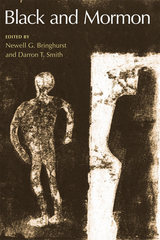
This challenging collection is required reading for anyone concerned with the history of racism, discrimination, and the Latter-day Saints.
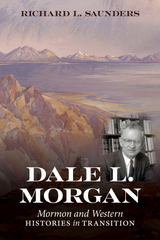
This is the first biography of Dale L. Morgan, preeminent Western historian of the fur trade, historic trails, and the Latter Day Saint movement. The book explores how, despite personal struggles, Morgan committed his life to tracking down sources and interpreting the past on the strength of documentary evidence. Connecting Morgan’s life with some of the broad cultural changes that shaped his experiences, this book engages with methodological shifts in the historical profession, the mid-twentieth-century collision of interpretations within Latter Day Saint history, and the development of a descriptive, scholarly approach to that history.
Morgan’s body of work and commitment to serious scholarship signaled the start of new ways of understanding, studying, and retelling history, and he motivated a generation of historians from the 1930s to the 1970s to transform their historical approaches. Sounding board, mentor, and close friend to Nels Anderson, Fawn Brodie, Juanita Brooks, Bernard DeVoto, Wallace Stegner, and Leonard Arrington, Dale Morgan is the common factor linking this influential generation of mid-twentieth-century historians of western America.
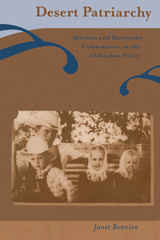
Janet Bennion has lived and worked among these people, and in this book she introduces a new paradigm—"desert patriarchy"—to explain their way of life. This perspective sheds light not only on these particular communities but also on the role of the desert environment in the development and maintenance of fundamentalist ideology in other parts of the United States and around the globe.
Making new connections between the arid environment, opposition to technology, and gender ideology, Bennion shows that it is the interplay of the desert and the unique social traditions and gender dynamics embedded in Anglo patriarchal fundamentalism that accounts for the successful longevity of the Mexican colonies. Her model defines the process by which male supremacy, female autonomous networking, and religious fundamentalism all facilitate successful adaptation to the environment.
More than a theoretical analysis, Desert Patriarchy provides an intimate glimpse into the daily lives of these people, showing how they have taken refuge in the desert to escape religious persecution, the forced secular education of their children, and economic and political marginalization. It particularly sheds light on the ironic autonomy of women within a patriarchal system, showing how fundamentalist women in Chihuahua are finding numerous creative ways to access power and satisfaction in a society structured to subordinate and even degrade them.
Desert Patriarchy richly expands the literature on nontraditional religious movements as it enhances our understanding of how environment can shape society. It offers unique insights into women's status in patriarchal communities and provides a new way of looking at similar communities worldwide.

Contributors in the first section discuss foundational issues such as the Book of Mormon’s moral psychology, its minimalist and covenantal moralities, the nature of the good and how the good is known, the question of whether value depends on a certain kind of future, the Book of Mormon's strategy for moral persuasion, and God’s participation in human choices. In the second section, the essayists turn to everyday ethical questions concerning resistance to forced cultural assimilation, clothing and dress, authority, and memory. The final chapter further explores practical moral visions.
A rich and thought-provoking analysis, Moral Visions examines the Book of Mormon through a variety of methods while aiming to deepen understanding of both the text’s messages and its potential place in future discussions of ethics. Contributors: Daniel Becerra, Courtney S. Campbell, Ryan Davis, Michael D. K. Ing, Ariel Bybee Laughton, Kimberly Matheson, Rachel Esplin Odell, Kelly Sorensen, Joseph M. Spencer

In Unsettling Scripture: Iroquois and the Book of Mormon, anthropologist Thomas W Murphy delves into the visions of Seneca prophet Handsome Lake, the epic narratives of the Iroquois Confederacy, and the origin story of the Book of Mormon, revealing surprising parallels between Indigenous and Mormon traditions.
Through ethnohistorical research and decolonizing methodologies, Murphy reexamines how both communities understand their origins, faith, and prophecy. From Handsome Lake’s revelations to Joseph Smith’s seer stone, from ancient sibling rivalries to the Great Peace, this book unsettles traditional narratives while opening new conversations on scripture, identity, and cultural exchange. Drawing from living Indigenous voices, Unsettling Scripture challenges readers to rethink sacred texts and the histories they tell.
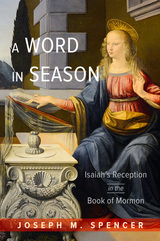
The Book of Mormon’s narrative privileges Isaiah over other sources, provocatively interpreting and at times inventively reworking the biblical text. Joseph M. Spencer sees within the Book of Mormon a programmatic investigation regarding the meaning and relevance of the Book of Isaiah in a world increasingly removed from the context of the times that produced it. Working from the crossroads of reception studies and Mormon studies, Spencer investigates and clarifies the Book of Mormon’s questions about the vitality of Isaiah’s prophetic project. Spencer’s analysis focuses on the Book of Mormon’s three interactions with the prophet: the character of Abinadi; the resurrected Jesus Christ; and the nation-founding figure of Nephi. Working from the Book of Mormon as it was dictated, Spencer details its vital and overlooked place in Isaiah’s reception while recognizing the interpretation of Isaiah as an organizing force behind the Book of Mormon.
READERS
Browse our collection.
PUBLISHERS
See BiblioVault's publisher services.
STUDENT SERVICES
Files for college accessibility offices.
RECENTLY PUBLISHED




UChicago Accessibility Resources
home | accessibility | search | about | contact us
BiblioVault ® 2001 - 2025
The University of Chicago Press