
 A SCHOLARLY BOOK REPOSITORY
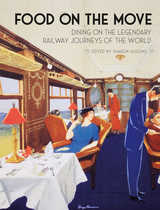
A delight for rail enthusiasts, foodies, and armchair travelers alike, Food on the Move serves up the culinary history of these famous journeys on five continents, from the earliest days of rail travel to the present. Chapters invite us to table for the haute cuisine of the elegant dining carriages on the Orient Express; the classic American feast of steak-and-eggs on the Santa Fe Super Chief; and home-cooked regional foods along the Trans-Siberian tracks. We eat our way across Canada’s vast interior and Australia’s spectacular and colorful Outback; grab an infamous “British railway sandwich” to munch on the Flying Scotsman; snack on spicy samosas on the Darjeeling Himalayan Toy Train; dine at high speed on Japan’s bullet train, the Shinkansen; and sip South African wines in a Blue Train—a luxury lounge-car featuring windows of glass fused with gold dust.
Written by eight authors who have traveled on those legendary lines, these chapters include recipes from the dining cars and station eateries, taken from historical menus and contributed by contemporary chefs, as well as a bounty of illustrations. A toothsome commingling of dinner triangles and train whistles, this collection is a veritable feast of meals on the move.

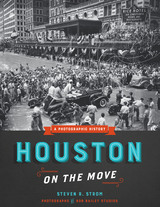
Houston completely transformed itself during the twentieth century, burgeoning from a regional hub into a world-class international powerhouse. This remarkable metamorphosis is captured in the Bob Bailey Studios Photographic Archive, an unparalleled visual record of Houston life from the 1930s to the early 1990s. Founded by the commercial photographer Bob Bailey in 1929, the Bailey Studios produced more than 500,000 photographs and fifty-two 16 mm films, making its archive the largest and most comprehensive collection of images ever taken in and around Houston. The Bob Bailey Studios Archive is now owned by the Dolph Briscoe Center for American History at the University of Texas at Austin.
Houston on the Move presents over two hundred of the Bailey archive’s most memorable and important photographs with extended captions that detail the photos’ subjects and the reasons for their significance. These images, most never before published, document everything from key events in Houston’s modern history—World War II; the Texas City Disaster; the building of the Astrodome; and the development of the Ship Channel, Medical Center, and Johnson Space Center—to nostalgic scenes of daily life. Bob Bailey’s expertly composed photographs reveal a great city in the making: a downtown striving to be the best, biggest, and tallest; birthday parties, snow days, celebrations, and rodeos; opulent department stores; Hollywood stars and political leaders; rapid industrial and commercial growth; and the inexorable march of the suburbs. An irresistible “remember that?” book for long-time Houstonians, Houston on the Move will also be an essential reference for historians, photographers, designers, and city planners.
Engaging critical human rights studies from an interdisciplinary arts and humanities perspective, Human Rights on the Move addresses a range of human rights violations in contemporary society, including the carceral systems that prevent movement, the gendered and racial restrictions placed on movement, the lack of access that assures movement only for those who have the ability to move, and the histories of movements such as settler colonialism. The approaches to human rights in this wide-ranging collection are also “on the move,” emphasizing a nimble, cross-disciplinary approach that considers the intersection of politics, culture, and the arts.
Contributing artists, activists, and scholars expose the fundamental paradox of human rights (namely that nation-states are violators and guarantors of rights) while also showing how people facing violence and persecution move with the hope of more livable and equitable futures. The assembled scholarly essays, interviews, and creative pieces demonstrate the importance of a more relational and contextual understanding of human rights—one that can destabilize current definitions and open space for new formulations.
Contributors:
nora chipaumire, Víctor M. Espinosa, Bridget M. Haas, Wendy S. Hesford, Sona Kazemi, Wendy Kozol, Guisela LaTorre, Rachel Lewis, Faustin Linyekula, Paloma Martinez-Cruz, Tiyi M. Morris, Momar K. Ndiaye, Eleanor Paynter, Cristian Pineda, Elaine Richardson, Amy Shuman, Jennifer Suchland, Mary E. Thomas, Shui-yin Sharon Yam
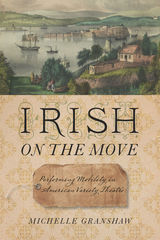
A little over a century ago, the Irish in America were the targets of intense xenophobic anxiety. Much of that anxiety centered on their mobility, whether that was traveling across the ocean to the U.S., searching for employment in urban centers, mixing with other ethnic groups, or forming communities of their own. Granshaw argues that American variety theatre, a precursor to vaudeville, was a crucial battleground for these anxieties, as it appealed to both the fears and the fantasies that accompanied the rapid economic and social changes of the Gilded Age.

This book brings together scholars from architectural studies, design, art history, and other fields to challenge and expand concepts of Islamic architecture. Ranging from eighteenth-century Ottoman tents to manifestations of Islamic motifs in 1960s Hawaii, this richly illustrated volume raises key questions about Islamic architecture, and, more broadly, about how we can rethink our understanding of material, artistic, and cultural mobility in the modern world.

Beautifully illustrated with a generous selection of Carroll’s work and that of other photographers of the period, this book gives fans of Carroll’s writing a new way to understand his creative genius.

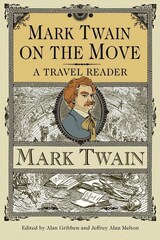
Gathers the very best passages from all five of Mark Twain’s travel narratives
Mark Twain on the Move gathers the very best passages from all five of Mark Twain’s travel narratives: The Innocents Abroad (1869), Roughing It (1872), A Tramp Abroad (1880), Life on the Mississippi (1883), and Following the Equator (1897). Although Twain’s travel narratives were his best sellers throughout his career, modern readers are largely unfamiliar with them. Thus, readers are not only missing some of Twain’s most hilarious and insightful material, they are also missing a complete understanding of a beloved literary and cultural icon.
Mark Twain on the Move presents the best of these works--sometimes respectful, often irreverent and outlandish--at their most lively and captures his renowned experiences as an American tourist. And they demonstrate why Twain’s greatest popularity in his lifetime derived from his travel writings rather than from his novels. Twain was always entertaining and provocative while on the move and this collection captures that fabled energy for modern readers.

Feldman-Savelsberg introduces readers to several Cameroonian mothers, each with her own unique history, concerns, and voice. Through scenes of their lives—at a hometown association’s year-end party, a celebration for a new baby, a visit to the Foreigners’ Office, and many others—as well as the stories they tell one another, Feldman-Savelsberg enlivens our thinking about migrants’ lives and the networks and repertoires that they draw on to find stability and, ultimately, belonging. Placing women’s individual voices within international social contexts, this book unveils new, intimate links between the geographical and the generational as they intersect in the dreams, frustrations, uncertainties, and resolve of strong women holding families together across continents.
A Booklist Top 10 Arts Book of 2019
A No Depression Top Music Book of 2019
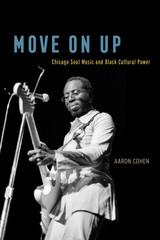
Curtis Mayfield. The Chi-Lites. Chaka Khan. Chicago’s place in the history of soul music is rock solid. But for Chicagoans, soul music in its heyday from the 1960s to the 1980s was more than just a series of hits: it was a marker and a source of black empowerment. In Move On Up, Aaron Cohen tells the remarkable story of the explosion of soul music in Chicago. Together, soul music and black-owned businesses thrived. Record producers and song-writers broadcast optimism for black America’s future through their sophisticated, jazz-inspired productions for the Dells and many others. Curtis Mayfield boldly sang of uplift with unmistakable grooves like “We’re a Winner” and “I Plan to Stay a Believer.” Musicians like Phil Cohran and the Pharaohs used their music to voice Afrocentric philosophies that challenged racism and segregation, while Maurice White of Earth, Wind, and Fire and Chaka Khan created music that inspired black consciousness. Soul music also accompanied the rise of African American advertisers and the campaign of Chicago’s first black mayor, Harold Washington, in 1983. This empowerment was set in stark relief by the social unrest roiling in Chicago and across the nation: as Chicago’s homegrown record labels produced rising stars singing songs of progress and freedom, Chicago’s black middle class faced limited economic opportunities and deep-seated segregation, all against a backdrop of nationwide deindustrialization.
Drawing on more than one hundred interviews and a music critic’s passion for the unmistakable Chicago soul sound, Cohen shows us how soul music became the voice of inspiration and change for a city in turmoil.


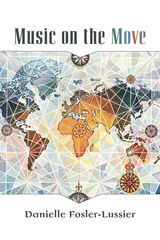
With its innovative multimodal approach, Music on the Move invites readers to listen and engage with many different types of music as they read. The text introduces a variety of concepts related to music’s travels—with or without its makers—including colonialism, migration, diaspora, mediation, propaganda, copyright, and hybridity. The case studies represent a variety of musical genres and styles, Western and non-Western, concert music, traditional music, and popular music. Highly accessible, jargon-free, and media-rich, Music on the Move is suitable for students as well as general-interest readers.
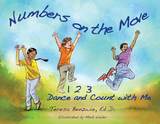
"Move with the numbers, count to the beat. Clap your hands. Tap your feet. Count one two three four, with your Head Shoulders Elbows Hands Arms Hips Knees Feet!"
Early childhood educator Teresa Benzwie believes that dance and movement foster imagination, which is essential to the learning process. Her philosophy—that creative movement helps children gain knowledge through the body—is incorporated in Numbers on the Move, an appealing and entertaining book that urges kids to dance, stretch, and move as they learn to count and play with numbers.
Featuring playful, full-color illustrations, this book offers dynamic activities for children, who learn most readily from experience. For parents and teachers, Benzwie provides additional games and activities to try with children. Kids will develop a concrete awareness of numbers as they connect in deep, direct ways with their own expressive movement.

Few American states can match the rich and diverse transportation heritage of Ohio. Every major form of public conveyance eventually served the Buckeye state. From the “Canal Age” to the “Interurban Era,” Ohio emerged as a national leader. The state’s central location, abundant natural resources, impressive wealth, shrewd business leadership, and episodes of good fortune explain the dynamic nature of its transport past.
Ohio on the Move is the first systematic scholarly account of the transportation history of Ohio. To date, little has appeared on several subjects discussed here, including intercity bus and truck operations and commercial aviation. The more familiar topics of river and lake transport, canals, steam railroads, electric interurbans, and mass transit are extensively explored in the Ohio context.
In this inaugural volume of Ohio University Press’s Ohio Bicentennial Series, Professor Grant demonstrates the truth of the slogan that Ohio is “the heart of it all” - not solely by location but also in the impressive network of transportation arteries that have linked the state, whether natural waterways and air space or various artificial land-travel routes.
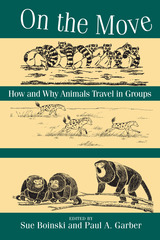
On the Move addresses these questions, examining the social, cognitive, and ecological processes that underlie patterns and strategies of group travel. Chapters discuss how factors such as group size, resource distribution and availability, the costs of travel, predation, social cohesion, and cognitive skills affect how individuals as well as social groups exploit their environment. Most chapters focus on field studies of a wide range of human and nonhuman primate groups, from squirrel monkeys to Turkana pastoralists, but chapters covering group travel in hyenas, birds, dolphins, and bees provide a broad taxonomic perspective and offer new insights into comparative questions, such as whether primates are unique in their ability to coordinate group-level activities.
This collection gathers a unique group of contributors, including representatives from Congress, the United Nations, and Israel’s Ministry of Justice, as well as senior diplomats from Canada, Bulgaria, Portugal, Spain, and Turkey. Presenting their diverse perspectives, the contributors address regional and policy issues related to the mass migration of people, as well as questions concerning citizenship and national security, human trafficking in the form of prostitution, and cultural discrimination. The result is a multifaceted exploration of issues underlying many of the world’s economic, security, and social challenges. Other topics include the impact of state failure on migration, immigration in California, security measures and “preferred” immigrants in Canada after September 11, 2001, and Albanian migration into Greece.
Contributors. Alexandre Afonso, David Binder, Andrew C. Danopoulos, Constantine P. Danopoulos, Francis M. Deng, Mohamed A. El-Khawas, Omar G. Encarnación, Rochelle Gershuni, Larry L. Gerston, Ahmet Içduygu, Benjamin Kline, Bojan Korenic, Erin Kruger, Robert S. Leiken, Marlene Mulder, Elena Poptodorova, Tom Tancredo
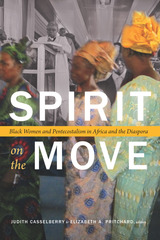
Contributors. Paula Aymer, John Burdick, Judith Casselberry, Deidre Helen Crumbley, Elizabeth McAlister, Laura Premack, Elizabeth A. Pritchard, Jane Soothill, Linda van de Kamp
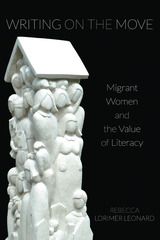
In this book, Rebecca Lorimer Leonard shows how multilingual migrant women both succeed and struggle in their writing contexts. Based on a qualitative study of everyday multilingual writers in the United States, she shows how migrants’ literacies are revalued because they move with writers among their different languages and around the world. Writing on the Move builds a theory of literate valuation, in which socioeconomic values shape how multilingual migrant writers do or do not move forward in their lives. The book details the complicated reality of multilingual literacy, which is lived at the nexus of prejudice, prestige, and power.
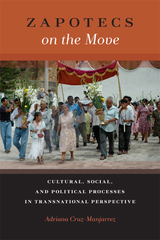
Based on multi-site fieldwork conducted over a five-year period, Adriana Cruz-Manjarrez analyzes how and why Yalálag Zapotec identity and culture have been reconfigured in the United States, using such cultural practices as music, dance, and religious rituals as a lens to bring this dynamic process into focus. By illustrating the sociocultural, economic, and political practices that link immigrants in Los Angeles to those left behind, the book documents how transnational migration has reflected, shaped, and transformed these practices in both their place of origin and immigration.
READERS
Browse our collection.
PUBLISHERS
See BiblioVault's publisher services.
STUDENT SERVICES
Files for college accessibility offices.
RECENTLY PUBLISHED







UChicago Accessibility Resources
home | accessibility | search | about | contact us
BiblioVault ® 2001 - 2024
The University of Chicago Press