
 A SCHOLARLY BOOK REPOSITORY
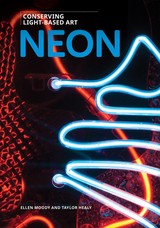
The first of its kind, this authoritative open-access volume offers tips, guidelines, and best practices on preserving, installing, and storing neon artworks.
Neon lighting first emerged as a cutting-edge technology in the late nineteenth century, illuminating the night sky with bright, colorful commercial signage. Artists soon began to test its potential, and figures like Chryssa, Bruce Nauman, Dan Flavin, Mary Weatherford, and Glenn Ligon created iconic works that established neon as a legitimate artistic medium. As the earliest neon artworks approach one hundred years old, their conservation becomes ever more important. Unfortunately, the practice of preserving light-based art is absent from most conservation training programs. This publication fills that gap, offering an invaluable resource for conservators, collectors, preparators, and anyone else with a professional involvement with, or just curiosity about, neon artifacts.
Ellen Moody and Taylor Healy, conservators working with light- and time-based art, have created a comprehensive manual to serve as a practical tool kit for the installation, preservation, and storage of neon art. They provide foundational knowledge on history, technology, terminology, and best practices, along with step-by-step instructions, real-world case studies, and templates for documentation and identification. The online version of the publication is enhanced with informative, practical videos that give hands-on guidance on repairs and maintenance. This is an indispensable compendium for anyone actively engaged with or interested in the preservation of neon.
The free online edition of this open-access publication is available at getty.edu/publications/neon/ and includes zoomable illustrations, videos, and downloadable appendices. Also available are free PDF and EPUB downloads of the book.
READERS
Browse our collection.
PUBLISHERS
See BiblioVault's publisher services.
STUDENT SERVICES
Files for college accessibility offices.
RECENTLY PUBLISHED




UChicago Accessibility Resources
home | accessibility | search | about | contact us
BiblioVault ® 2001 - 2026
The University of Chicago Press