
 A SCHOLARLY BOOK REPOSITORY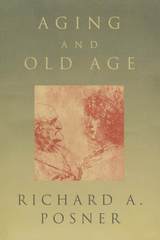
Aging and Old Age offers fresh insight into a wide range of social and political issues relating to the elderly, such as health care, crime, social security, and discrimination. From the dread of death to the inordinate law-abidingness of the old, from their loquacity to their penny-pinching, Posner paints a surprisingly rich, revealing, and unsentimental portrait of the millions of elderly people in the United States. He explores issues such as age discrimination in employment, creativity and leadership as functions of age, and the changing social status of the elderly. Why are old people, presumably with less to lose, more unwilling to take risks than young people? Why don't the elderly in the United States command the respect and affection they once did and still do in other countries? How does aging affect driving and criminal records? And how does aging relate to creativity across different careers?

You are old, ill, in pain, and your doctor asks you what you want to do about it. You may be uncertain but you're definitely not alone. By the year 2020, some 50 million Americans will be over sixty-five, and as the nation ages we must all ask what we ought to do about the health and medical care of our elderly. Our response will have profound consequences, not just for individuals and families, but for society as a whole. This book helps us start to form an answer.
To make decisions about medical care in old age, we need to know more about the reality of being elderly and sick, and Choosing Medical Care in Old Age gives us the opportunity. Muriel Gillick, a noted physician who specializes in the care of the elderly and in medical ethics, presents a panoply of stories drawn from her clinical experience. These encounters, with the robust and the frail, the demented and the dying, capture the texture of the experience of being old and faced with critical medical questions. From the stories of older people struggling to make choices in the face of acute illness, stories that are often poignant and sometimes tragic, Gillick develops broad guidelines for medical decision–making for the elderly. Within this framework, she confronts particular concerns and questions. When are certain procedures too burdensome to be justified? What are unacceptable risks? Should family members serve as exclusive spokespersons for relatives who can no longer speak for themselves? Gillick's bold and personal prescription for medical care for the elderly calls for a change in the way medicine is understood and practiced, as well as for changes in the institutions that serve the elderly, such as hospitals and nursing homes. An intelligent and deeply compassionate inquiry into the difficult issues and real–life dilemmas raised by current practices, her book offers a first step toward those changes.

Minois shows how, in ancient Greece, the cult of youth and beauty on the one hand, and the reverence for the figure of the Homeric sage, on the other, created an ambivalent attitude toward the aged. This ambiguity appears again in the contrast between the active role that older citizens played in Roman politics and their depiction in satirical literature of the period. Christian literature in the Middle Ages also played a large part in defining society's perception of the old, both in the image of the revered holy sage and in the total condemnation of the aged sinner.
Drawing on literary texts throughout, Minois considers the interrelation of literary, religious, medical, and political factors in determining the social fate of the elderly and their relationship to society. This book will be of great interest to social and cultural historians, as well as to general readers interested in the subject of the aged in society today.

Old Age, New Science explores how a group of American and British life scientists contributed to gerontology’s development as a multidisciplinary field. It examines the foundational “biosocial visions” they shared, a byproduct of both their research and the social problems they encountered. Hyung Wook Park shows how these visions shaped popular discourses on aging, directly influenced the institutionalization of gerontology, and also reflected the class, gender, and race biases of their founders.

We all hope that we will be cared for as we age. But the details of that care, for caretaker and recipient alike, raise some of life’s most vexing questions. From the mid-nineteenth to the mid-twentieth century, as an explosive economy and shifting social opportunities drew the young away from home, the elderly used promises of inheritance to keep children at their side. Hendrik Hartog tells the riveting, heartbreaking stories of how families fought over the work of care and its compensation.
Someday All This Will Be Yours narrates the legal and emotional strategies mobilized by older people, and explores the ambivalences of family members as they struggled with expectations of love and duty. Court cases offer an extraordinary glimpse of the mundane, painful, and intimate predicaments of family life. They reveal what it meant to be old without the pensions, Social Security, and nursing homes that now do much of the work of serving the elderly. From demented grandparents to fickle fathers, from litigious sons to grateful daughters, Hartog guides us into a world of disputed promises and broken hearts, and helps us feel the terrible tangle of love and commitments and money.
From one of the bedrocks of the human condition—the tension between the infirmities of the elderly and the longings of the young—emerges a pioneering work of exploration into the darker recesses of family life. Ultimately, Hartog forces us to reflect on what we owe and are owed as members of a family.
READERS
Browse our collection.
PUBLISHERS
See BiblioVault's publisher services.
STUDENT SERVICES
Files for college accessibility offices.
RECENTLY PUBLISHED



UChicago Accessibility Resources
home | accessibility | search | about | contact us
BiblioVault ® 2001 - 2024
The University of Chicago Press