
 A SCHOLARLY BOOK REPOSITORY
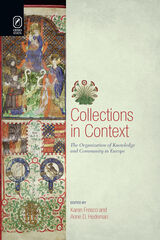
The fourteen essays that comprise Collections in Context: The Organization of Knowledge and Community in Europe interrogate questions posed by French, Flemish, English, and Italian collections of all sorts—libraries as a whole, anthologies and miscellanies assembled within a single manuscript or printed book, and even illustrated ivory boxes.
Wini Breines traces the evolution of the New Left movement through the Free Speech Movement, Students for a Democratic Society (SDS), and SDS's community organization projects. For Breines, the movement's goal of participatory decision-making, even when it was not achieved, made up for its failure to take practical and direct action. By the late 1960s, antiwar activism contributed to the decline of the New Left, as the movement was flooded with new participants who did not share the founding generation's political experiences or values.
Originally published in 1982, Wini Breines's classic work now includes a new preface in which she reassesses, and for the most part affirms, her initial views of the movement. She argues that the movement remains effective in the midst of radical changes in activist movements. Breines also summarizes and evaluates the new and growing scholarship on the 1960s. Her provocative analysis of the New Left remains important today.
Forrest Maltzman argues that none of these models fully captures the role performed by congressional committees and that committee members attempt to balance the interests of the chamber, the party caucus, and outside constituencies. Over time, and with the changing importance of a committee's agenda to these groups, the responsiveness of members of committees will vary. Maltzman argues that the responsiveness of the committee to these groups is driven by changes in procedure, the strength of the party caucus, and the salience of a committee's agenda. Maltzman tests his theory against historical data.
This book will appeal to social scientists interested in the study of Congress and legislative bodies, as well as those interested in studying the impact of institutional structure on the policy-making process.
"This specialized study, of value to congressional scholars and partisan activists, enriches an understanding of the increasingly predictable patterns of committee variety." --Choice
Forrest Maltzman is Assistant Professor of Political Science, George Washington University.

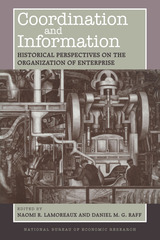
In an ideal world, the market would be the optimal provider of coordination, but in the real world of incomplete information, some activities are better coordinated in other ways. Divided into three parts, this book addresses coordination within firms, at the borders of firms, and outside firms, providing a picture of the overall incidence and logic of economic coordination. The case studies—drawn from the late nineteenth and early twentieth century, when the modern business enterprise was evolving, address such issues as the relationship between coordination mechanisms and production techniques, the logic of coordination in industrial districts, and the consequences of regulation for coordination.
Continuing the work on information and organization presented in the influential Inside the Business Enterprise, this book provides material for business historians and economists who want to study the development of the dissemination of information and the coordination of economic activity within and between firms.


Throughout, the sociology of organizations and of culture serves as Powell's interpretive framework. Powell shows how scholarly publishers help define what is "good" social science research and how the history and tradition of a publishing house contribute to the development of an organizational identity. Powell's review of actual correspondence, from outside letters proposing projects to internal "kill" letters of rejection, suggests that editors and authors at times form their own quasi-organization with external allegiances and bonds beyond those of the publishing house.
"This is a welcome addition to the literature on the life of the organizations that produce our science and our culture. Powell's intimate look at two scholarly publishing companies has an insider's appreciation of the book business and an outsider's eye for questions the editors are not asking themselves."—Michael Schudson, University of California at San Diego
"Getting Into Print will long be the book about how academic editors choose the titles they sponsor. Even experienced editors and authors will find new insights here and revealing comparisons with decision-making in other kinds of organizations."—Edward Tenner, Los Angeles Times Book Review
"Getting Into Print is an unusually outstanding ethnographic study in that it reflects the evocative richness of detail associated with the ethnographic approach while simultaneously maintaining a clear-headed, analytical distance from the subject that allows for a meaningful theoretical contribution. Powell is an astute ethnographer who presents a vital and compelling 'insider's view' of the decision-making process in scholarly publishing, making this book fascinating reading for all those involved in the 'publish-or-perish' syndrome."—Barbara Levitt, American Journal of Sociology

In the 1930s, George Herbert Mead and other leading social scientists established the modern empirical analysis of social interaction and communication, enabling theories of cognitive development, language acquisition, interaction, government, law and legal processes, and the social construction of the self. However, they could not provide a comparably empirical analysis of human organization.
The theory in this book fills in the missing analysis of organizations and specifies more precisely the pragmatic analysis of communication with an adaptation of information theory to ordinary unmediated communications. The study also provides the theoretical basis for understanding the success of pragmatically grounded public policies, from the New Deal through the postwar reconstruction of Europe and Japan to the ongoing development of the European Union, in contrast to the persistent failure of positivistic and Marxist policies and programs.

Pierpont Stackpole was a Boston lawyer who in January 1918 became aide to Lieutenant General Hunter Liggett, soon to be commander of the first American corps in France. Stackpole’s diary, published here for the first time, is a major eyewitness account of the American Expeditionary Forces’ experience on the Western Front, offering an insider’s view into the workings of Liggett’s commands, his day-to-day business, and how he orchestrated his commands in trying and confusing situations.
Hunter Liggett did not fit John J. Pershing’s concept of the trim and energetic officer, but Pershing entrusted to him a corps and then an army command. Liggett assumed leadership of the U.S. First Army in mid-October of 1918, and after reorganizing, reinforcing, and resting, the battle-weary troops broke through the German lines in a fourth attack at the Meuse-Argonne—accomplishing what Pershing had failed to do in three previous attempts. The victory paved the way to armistice on November 11.
Liggett has long been a shadowy figure in the development of the American high command. He was “Old Army,” a veteran of Indian wars who nevertheless kept abreast of changes in warfare and more than other American officers was ready for the novelties of 1914–1918. Because few of his papers have survived, the diary of his aide—who rode in the general’s staff car as Liggett unburdened himself about fellow generals and their sometimes abysmal tactical notions—provides especially valuable insights into command within the AEF.
Stackpole’s diary also sheds light on other figures of the war, presenting a different view of the controversial Major General Clarence Edwards than has recently been recorded and relating the general staff’s attitudes about the flamboyant aviation figure Billy Mitchell. General Liggett built the American army in France, and the best measure of his achievement is this diary of his aide. That record stands here as a fascinating and authentic look at the Great War.
There are one billion Catholics in the world today, spread over every continent, speaking almost every conceivable language, and all answering to a single authority. The Vatican is a unique international organization, both in terms of its extraordinary power and influence, and in terms of its endurance. Popes come and go, but the elaborate and complex bureaucracy called the Vatican lives on. For centuries, it has served and sometimes undermined popes; it has been praised and blamed for the actions of the pope and for the state of the church. Yet an objective examination of the workings of the Vatican has been unavailable until now.
Drawing on more than a hundred interviews with Vatican officials, this book affords a firsthand look at the people, the politics, and the organization behind the institution. Reese brings remarkable clarity to the almost Byzantine bureaucracy of congregations, agencies, secretariats, tribunals, nunciature, and offices, showing how they serve the pope and, through him, the universal church. He gives a lively account of how popes are elected and bishops appointed, how dissident theologians are disciplined and civil authorities dealt with. Throughout, revealing and colorful anecdotes from church history and the present day bring the unique culture of the Vatican to life.
The Vatican is a fascinating institution, a model of continuity and adaptation, which remains constant while functioning powerfully in a changing world. As never before, this book provides a clear, objective perspective on how the enormously complex institution surrounding the papacy operates on a day-to-day level, how it has adapted and endured for close to two thousand years, and how it is likely to face the challenges of the next millennium.
Leadership and Values provides new material in two key areas. First, it is an in-depth study of the organization and administration of large-scale Chinese enterprises, with considerable detail on Chinese behavior in such settings. Second, the author constructs from the Chinese data a framework for the cross-cultural analysis of large-scale organizations. This framework identifies key variables that, when considered systematically, permit a clearer understanding of the role of cultural factors in organizational behavior and design.
The data for this study were gathered by participant-observer techniques at firms in Taiwan, and many of the findings are assumed to apply in large part to behavioral patterns on the mainland and in other areas of Chinese culture.

In this blunt critique of the senior leadership of the U.S. Army, Proctor contends that after the fall of the Soviet Union, the U.S. Army stubbornly refused to reshape itself in response to the new strategic reality, a decision that saw it struggle through one low-intensity conflict after another—some inconclusive, some tragic—in the 1980s and 1990s, and leaving it largely unprepared when it found itself engaged—seemingly forever—in wars in Afghanistan and Iraq. The first book-length study to connect the failures of these wars to America’s disastrous performance in the war on terror, Proctor’s work serves as an attempt to convince Army leaders to avoid repeating the same mistakes.
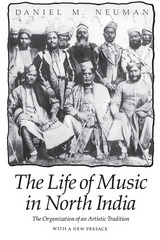
Drawing primarily from fieldwork performed in Delhi in 1969-71—from interviewing musicians, learning and performing on the Indian fiddle, and speaking with music connoisseurs—Neuman examines the cultural and social matrix in which Hindustani music is nurtured, listened and attended to, cultivated, and consumed in contemporary India. Through his interpretation of the impact that modern media, educational institutions, and public performances exert on the music and musicians, Neuman highlights the drama of a great musical tradition engaging a changing world, and presents the adaptive strategies its practitioners employ to practice their art. His work has gained the distinction of introducing a new approach to research on Indian music, and appears in this edition with a new preface by the author.
These essays by one of America's most distinguished experts in business management and human relations were written between 1928 and 1968. Some are published here for the first time. They are addressed primarily to business practitioners, but are also of considerable interest to social scientists concerned with matters of organization, administration, motivation, and communication. The essays might be said to constitute the author's adventure over a period of forty years with an idea that he felt had important implications for administrative practices.
The early pieces begin with the exposition of a new way of thinking about the behavior of people in organizations, and the research from which it arose. Some of the recent essays express concern with the way in which the area of human relations has been developing—namely, as a fad, a cult, and the way to salvation instead of as a road toward competence. Among the topics discussed are: the relation of theory to practice in administrative matters; the training and education of the generalist as opposed to the specialist; training in human relations; efficiency and cooperative behavior; the administration of change; and technical change and social organization.
Guillén's study of two liberal-democratic societies (the United States and Great Britain) and two corporatist societies (Germany and Spain) reveals significant differences in the way managerial elites and firms have adopted the three models. His data show that ideas themselves—independent of material interests and technology—can cause organizational change. Throughout the book, contrasts between modernist-technocratic and liberal-humanist mentalities, as well as between Protestant and Catholic religious backgrounds, emerge as decisive factors in determining managerial ideology and practice.
In addition to analyzing management methods in organizations, Guillén explores larger issues: the interaction among managerial, government, and labor elites; the impact of the state and the professions on managerial behavior; and the role that managers play in modern societies.


involved in real-world managing are not always willing to reveal the intricacies of their
everyday muddles. Barbara Czarniawska argues that in order to understand these uncharted
territories, we need to gather local and concrete stories about organizational life and subject
them to abstract and metaphorical interpretation.
Using a narrative approach unique to organizational studies, Czarniawska employs literary
devices to uncover the hidden workings of organizations. She applies cultural metaphors to
public administration in Sweden to demonstrate, for example, how the dynamics of a
screenplay can illuminate the budget disputes of an organization. She shows how the
interpretive description of organizational worlds works as a distinct genre of social analysis,
and her investigations ultimately disclose the paradoxical nature of organizational life: we follow
routines in order to change, and decentralize in order to control. By confronting such
paradoxes, we bring crisis to existing institutions and enable them to change.
In their introduction, the editors discuss points of convergence and disagreement with institutionally oriented research in economics and political science, and locate the "institutional" approach in relation to major developments in contemporary sociological theory. Several chapters consolidate the theoretical advances of the past decade, identify and clarify the paradigm's key ambiguities, and push the theoretical agenda in novel ways by developing sophisticated arguments about the linkage between institutional patterns and forms of social structure. The empirical studies that follow—involving such diverse topics as mental health clinics, art museums, large corporations, civil-service systems, and national polities—illustrate the explanatory power of institutional theory in the analysis of organizational change.
Required reading for anyone interested in the sociology of organizations, the volume should appeal to scholars concerned with culture, political institutions, and social change.
The Organization of Firms in a Global Economy presents a new research program that is transforming the study of international trade. Driven by the availability of new micro data sets and innovative theoretical models, it focuses on the level of firms, products, and stages of production rather than on countries and industries. It addresses such questions as why only a small proportion of firms in a given industry export and why an even smaller proportion invest abroad; why exporters tend to be more productive than nonexporters; why almost one-third of international trade takes place between units of the same firm and why as much as two-thirds involves multinational firms as exporter, importer, or both; and why international trade may have been the most important driver of organizational changes in the corporation that have been taking place in the last decade.
Until a few years ago, models of international trade did not recognize the heterogeneity of firms and exporters, and could not provide good explanations of international production networks. Now such models exist and are explored in this volume.
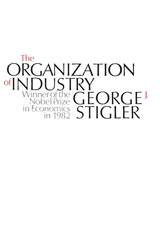
In part one, Stigler examines the nature of competition and monopoly. In part two he discusses the forces that determine the size structure of industry, including barriers to entry, economics of scale, and mergers. Part three contains articles on a wide range of topics, such as profitability, delivered price systems, block booking, the economics of information, and the kinky oligopoly demand curve and rigid price. Part four offers a discussion of antitrust policy and includes Stigler's recommendations for future policy as well as an examination of the effects of past policies.
"Stigler's writings might well be subtitled 'The Joys of Doing Economics.' He, more than any other contemporary American economist, dispels the gloom surrounding economic theory. It is impossible to confront the subject treated with such humor and verve and come away still believing that economics is the dismal science."—Shirley B. Johnson, American Scholar

In this landmark volume, an international group of scientists has synthesized their collective expertise and insight into a newly unified vision of insect societies and what they can reveal about how sociality has arisen as an evolutionary strategy.
Jürgen Gadau and Jennifer Fewell have assembled leading researchers from the fields of molecular biology, evolutionary genetics, neurophysiology, behavioral ecology, and evolutionary theory to reexamine the question of sociality in insects. Recent advances in social complexity theory and the sequencing of the honeybee genome ensure that this book will be valued by anyone working on sociality in insects. At the same time, the theoretical ideas presented will be of broad-ranging significance to those interested in social evolution and complex systems.
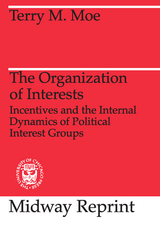
"The Organization of Interests is a valuable addition to the literature. It reminds us that the interior life of groups has political significance and gives us a conceptual framework for exploring that life. It balances nicely between the pluralists—who tend to interpret interest group behaviour entirely in political terms—and Olson—who has no satisfactory explanation for behaviour that is not attributable to economic self-interest. In the concept of the entrepreneur Moe gives us a useful analytical device which deserves operationalization. The book is well worth study."—A. Paul Pross, Canadian Journal of Political Science

In recent years, Western bureaucracies have continued to expand, but are citizens better served? In this volume, sixteen contributors analyze the problems of government organization, both in individual cases and in a broader comparative context.
Contributors: Joel D. Aberbach; Peter Aucoin; Richard A. Chapman; Michael G. Hansen; Peter Hennessy; Brian W. Hogwood; Mohammad Mohabbat Kahn; Ulrich Klöti; Charles H. Levine; Johan P. Olsen; Bert A. Rockman; Richard Rose; Norman C. Thomas; John Warhurst; and the editors.

Using rare, in-depth interviews with twenty-nine members of the Front elite, as well as public opinion survey data and electoral results, DeClair examines the internal structure of the Front, its political agenda, and its growing influence in France. DeClair shows how the party has dramatically expanded its traditionally narrow core constituency by capitalizing upon anxieties about national identity, immigration, European unification, and rising unemployment. In illustrating how the rhetoric surrounding such topics is key to the Front’s success, DeClair examines the Front’s legacy by detailing the links between the French far-right and similar movements in such countries as Germany, Belgium, Austria, Italy, and the United States. Finally, Politics on the Fringe offers not only a complete picture of the Front’s increasingly influential role in French partisan politics but also further insight into the resurgence of right-wing extremism throughout western societies in the late twentieth century.
This volume will be of primary importance to political scientists and those engaged with European politics, culture, and history. It will also appeal to those concerned with right-wing populism and political movements.
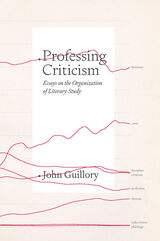
As the humanities in higher education struggle with a labor crisis and with declining enrollments, the travails of literary study are especially profound. No scholar has analyzed the discipline’s contradictions as authoritatively as John Guillory. In this much-anticipated new book, Guillory shows how the study of literature has been organized, both historically and in the modern era, both before and after its professionalization. The traces of this volatile history, he reveals, have solidified into permanent features of the university. Literary study continues to be troubled by the relation between discipline and profession, both in its ambivalence about the literary object and in its anxious embrace of a professionalism that betrays the discipline’s relation to its amateur precursor: criticism.
In a series of timely essays, Professing Criticism offers an incisive explanation for the perennial churn in literary study, the constant revolutionizing of its methods and objects, and the permanent crisis of its professional identification. It closes with a robust outline of five key rationales for literary study, offering a credible account of the aims of the discipline and a reminder to the professoriate of what they already do, and often do well.

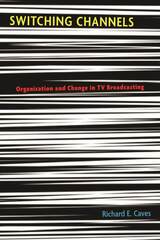
Media critics invariably disparage the quality of programming produced by the U.S. television industry. But why the industry produces what it does is a question largely unasked. It is this question, at the crux of American popular culture, that Switching Channels explores.
In the past twenty-five years, the expansion of cable and satellite systems has transformed television. Richard Caves examines the economics of this phenomenon--and the nature and logic of the broadcast networks' response to the incursion of cable TV, especially the shift to inexpensive unscripted game and "reality" shows and "news" magazines. An explanation of these changes, Caves argues, requires an understanding of two very different sectors: the "creative industry," which produces programs; and the commercial channels, which bring them to viewers. His book shows how distributors' judgment of profitability determines the quality and character of the programs the creative industry produces. This determination, writes Caves, depends on the number and types of viewers that various programs can attract and advertisers' willingness to pay for their attention, as well as the organization of the networks that package programs, the distributors that transmit them, and the deals these parties strike with one another.
READERS
Browse our collection.
PUBLISHERS
See BiblioVault's publisher services.
STUDENT SERVICES
Files for college accessibility offices.
RECENTLY PUBLISHED







UChicago Accessibility Resources
home | accessibility | search | about | contact us
BiblioVault ® 2001 - 2024
The University of Chicago Press